


Affiliate tracking software helps businesses monitor performance across their partner programs, and in 2026, it has become essential as campaigns spread across TikTok, Instagram, YouTube Shorts, and email, while third-party cookies phase out. Voluum, Everflow, and PartnerStack stand out as some of the best affiliate tracking software this year, thanks to their accuracy, automation, and fraud protection.
Choosing the right one comes down to a few practical factors: how well it handles fraud detection, how deep its integrations go with platforms like Shopify or HubSpot, and whether its pricing model actually fits your scale, whether that’s a small store or a multi-region enterprise program.
What is Affiliate Tracking Software?
Affiliate tracking software is a tool that records clicks, impressions, conversions, and payouts across an affiliate program, ensuring affiliates get accurate credit for the traffic and sales they generate. It works by assigning a unique identifier to every affiliate link, then logging each click, conversion, and payout through methods like postback URLs, pixel tracking, or API calls. This is what separates it from general-purpose analytics tools.
Affiliate tracking software vs. analytics tools:
- Affiliate tracking software: measures partner-level attribution, prevents fraud, and automates payouts
- Google Analytics or Mixpanel: measure general website traffic and on-site user behavior
Upon closer review, this distinction is why businesses relying only on general analytics often struggle to answer a simple question: which affiliate actually drove this sale. Dedicated tracking software is built specifically to answer that.
Why is Affiliate Tracking Essential in 2026?
Affiliate tracking has become essential in 2026 mainly because of tightening privacy regulations and the shift away from third-party cookies. Affiliates now promote across TikTok, YouTube Shorts, Instagram, email, and PPC at the same time, making cross-channel attribution harder to get right, and businesses without reliable tracking risk losing a meaningful share of revenue to fraud from fake clicks and bot-driven leads. A few key drivers are behind this shift:
- Privacy-first regulation: GDPR, CCPA, and Google’s Privacy Sandbox are reshaping how tracking data can be collected
- Decline of third-party cookies: brands must shift to first-party and server-side tracking
- Multi-channel complexity: affiliates now promote across TikTok, YouTube Shorts, Instagram, email, and PPC
- Fraud risk: fake clicks and bot leads can quietly drain campaign budgets
- AI-powered attribution: helps map the real customer journey across touchpoints
How Does Affiliate Tracking Software Work?
Affiliate tracking software runs on a click ID that connects a click to a conversion, even after the visitor leaves the page:
- Click ID generation: When someone clicks an affiliate link, the platform creates a unique click ID and attaches it to the URL sent to the advertiser’s site
- Session storage: The advertiser’s server stores that click ID against the visitor’s session, ready to be matched later
- Postback confirmation: If the visitor completes a purchase or signup, the advertiser’s server sends the same click ID back to the tracking platform through a postback URL, a direct server-to-server request that confirms the conversion happened
- Attribution and payout: The platform matches the click ID to the original click, credits the correct affiliate, and calculates the payout automatically based on the program’s commission rules
This server-to-server method is different from older pixel-based tracking, which fires in the visitor’s browser and can be blocked by ad blockers, cookie restrictions, or privacy settings. Because postback tracking happens on the server side, it keeps working even when the browser doesn’t cooperate.
What Features Should You Look for in Affiliate Tracking Software?
The right affiliate tracking software in 2026 comes down to accuracy, automation, and compliance, not just price. Here are the features that matter most:
- Tracking accuracy: First-party and server-to-server tracking that holds up across mobile, desktop, and app environments
- Real-time analytics: Live dashboards and customizable reports that surface winning campaigns before the budget gets wasted on losing ones
- Fraud protection: AI-driven fraud detection, IP filtering, and bot recognition to catch fake clicks and leads
- Integrations: Native connections to platforms like Shopify, WooCommerce, HubSpot, or Salesforce to avoid manual data entry
- Affiliate management tools: Streamlined onboarding, bulk invites, and custom approval workflows for scaling a program, similar to the recruitment tools used in lead generation affiliate programs.
- Multi-currency and multi-language support: Necessary for programs with affiliates outside a single region
- Transparent, scalable pricing: Tiered plans or pay-as-you-grow pricing that won’t force a switch as the program grows
Best Affiliate Tracking Software in 2026
Here are the top affiliate tracking platforms worth considering in 2026, based on tracking accuracy, fraud protection, and integration depth:
- Voluum
- Everflow
- PartnerStack
- Post Affiliate Pro
- Tapfiliate
- Refersion
- RedTrack
1. Voluum
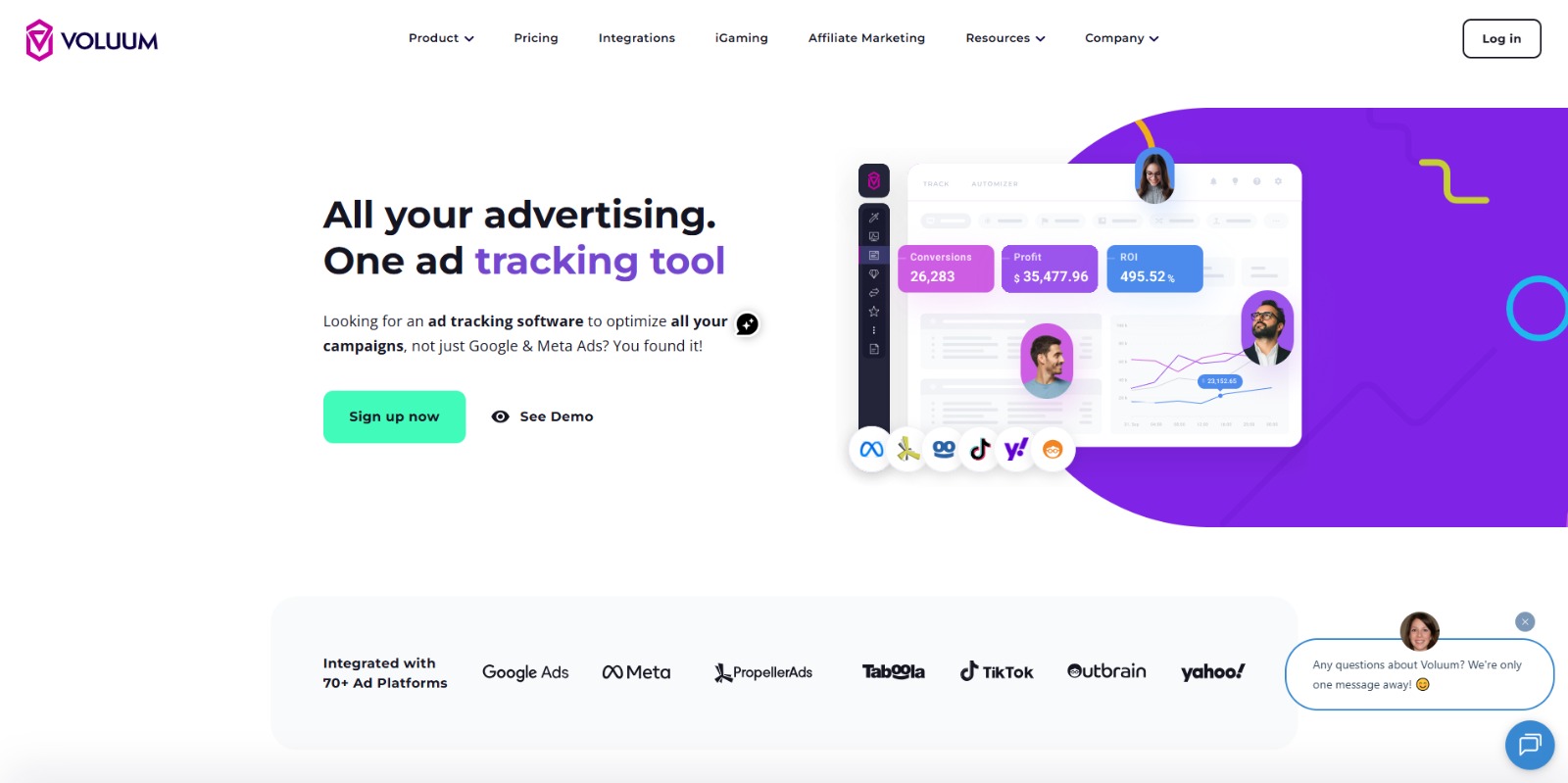
Voluum is a cloud-hosted ad and affiliate tracker built for media buyers who run paid traffic across multiple channels. It combines real-time tracking with AI-driven traffic distribution, automatically shifting spend toward the landing pages and offers that are converting best, which makes it a stronger fit for active campaign optimization than for simple, passive affiliate link tracking.
Best for: media buyers, ad networks, and agencies running paid traffic at scale.
Program Details
- Starting Price: $119-$149/month
- Pricing Model: Tiered subscription, event-based
- Free Trial: 14 days
- Fraud Protection: Built-in Anti-Fraud Kit
- Key Integrations: Meta, Google Ads, TikTok
Pros
- AI-driven traffic routing that reduces manual split testing
- Built-in fraud detection across multiple traffic signals
- Strong native integrations with major ad platforms
- Real-time reporting with cohort-level detail
Cons
- Pricing climbs quickly at higher tiers
- Steep learning curve for teams new to performance tracking
- Event overage fees can add unexpected costs
- Can feel like more infrastructure than small affiliates need
2. Everflow
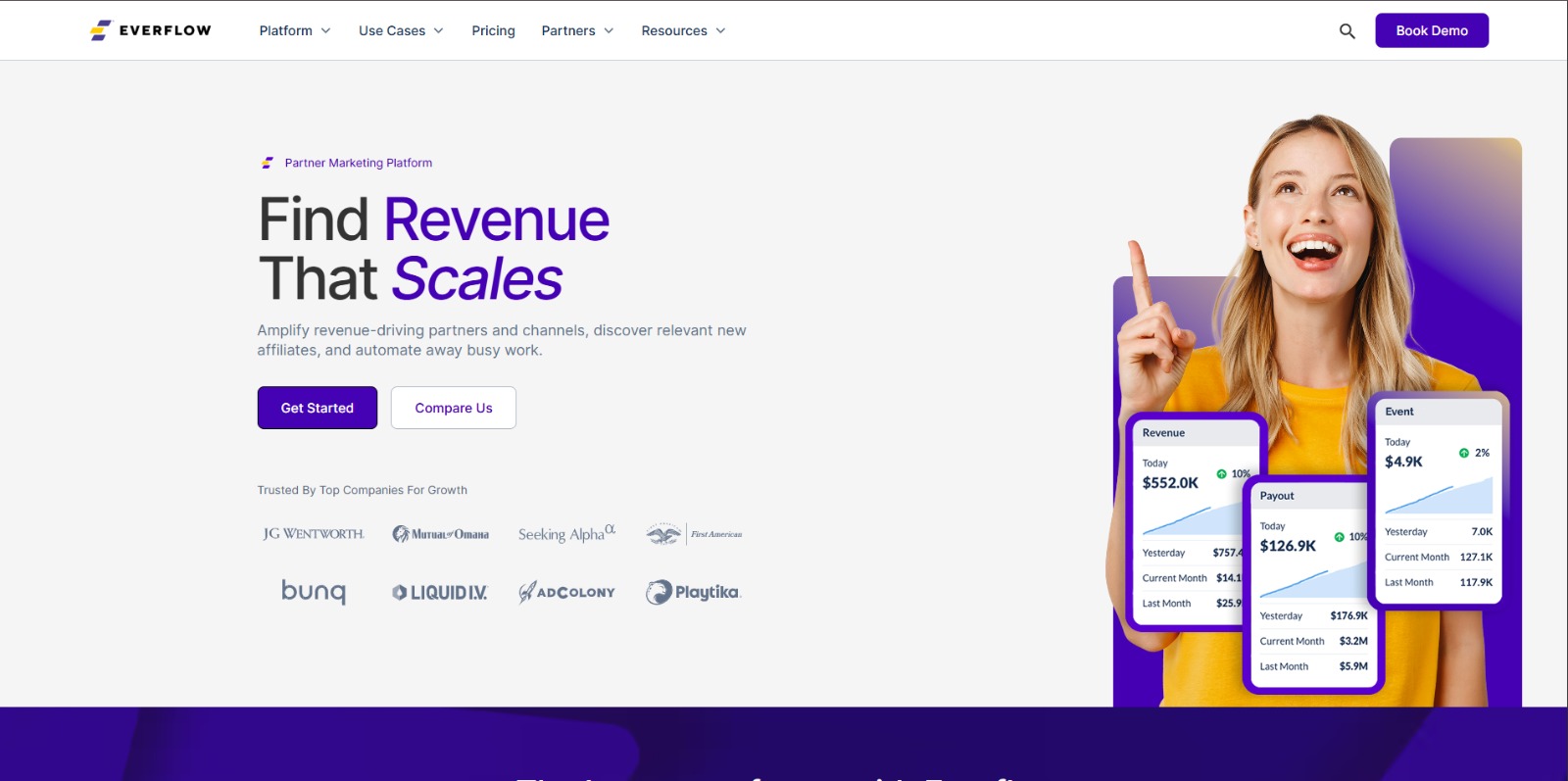
Everflow is built for businesses managing complex, multi-partner programs, combining affiliate tracking with influencer, media buying, and in-app attribution in a single platform. Its API-first architecture and smart links are designed for teams that need granular control over attribution across many partner types and regions.
Best for: Large businesses, agencies, and enterprises managing multiple partner types at once.
Program Details
- Starting Price: ~$750/month (reported, contract required)
- Pricing Model: Custom quote only
- Free Trial: Not publicly listed
- Fraud Protection: Manual rule-based blocking
- Key Integrations: Salesforce, HubSpot, Google, Meta, TikTok
Pros
- Handles affiliate, influencer, and media buying attribution in one system
- Deep customization for enterprise-level reporting and permissions
- Strong API access for custom integrations
- Multi-currency and multi-region support
Cons
- Pricing requires a sales quote, with no self-serve tier
- Setup typically requires developer involvement
- Steeper learning curve than lighter tracking tools
- Better suited to established programs than first-time managers
3. PartnerStack
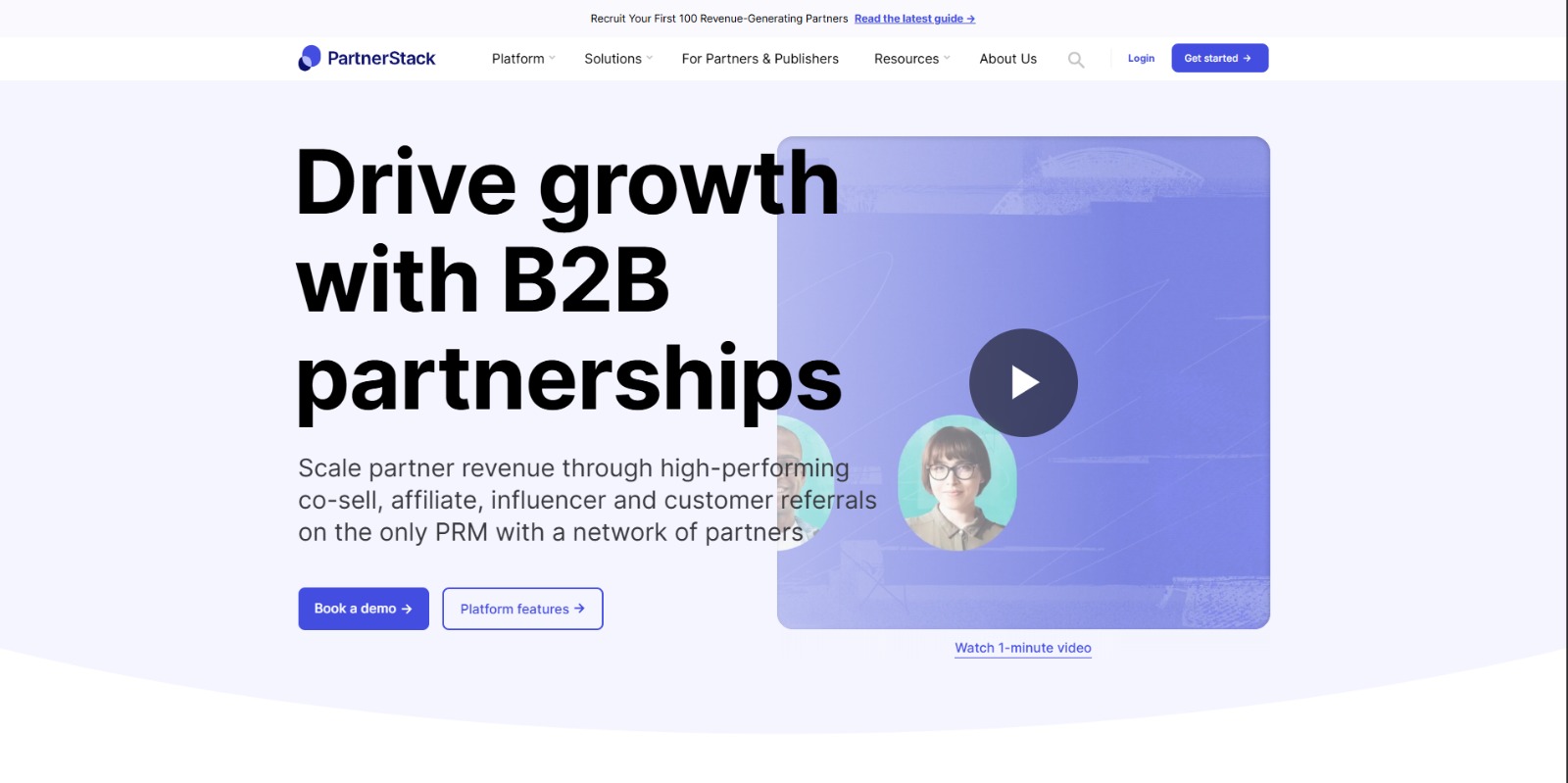
PartnerStack is a partner ecosystem platform built specifically for B2B SaaS companies, connecting programs to a marketplace of active partners rather than functioning as a standalone tracker. It’s designed around recurring SaaS billing, so commissions can follow a subscription over its full lifetime.
Best for: B2B SaaS companies scaling affiliate, referral, and reseller programs together.
Program Details
- Starting Price: ~$500-$800/month (reported, plus transaction fees)
- Pricing Model: Custom quote plus commission-based fees
- Free Trial: Demo-based, no self-serve trial
- Partner Marketplace: 100,000+ active B2B partners
- Key Integrations: Salesforce, HubSpot, Stripe, Shopify
Pros
- Purpose-built for recurring SaaS commission structures
- Partner marketplace helps with recruitment, not just tracking
- Automated monthly payouts consolidated into one invoice
- Full-funnel analytics from click to signup to revenue
Cons
- No public pricing, requires a sales demo
- Commission-based transaction fees add to the base cost
- Better suited to established SaaS companies than early startups
- The interface can feel cluttered with multiple partner types
4. Post Affiliate Pro
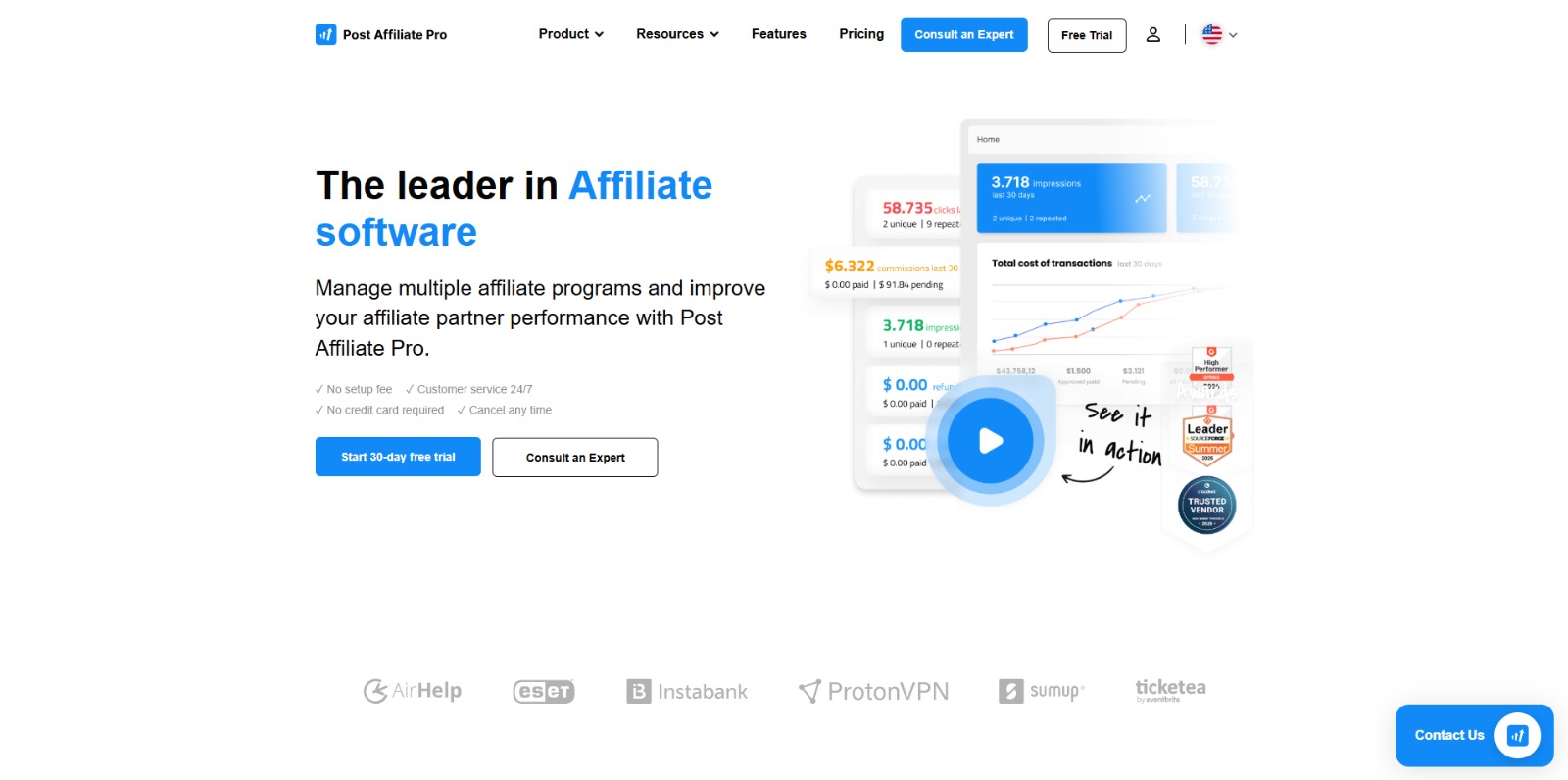
Post Affiliate Pro is one of the longest-running platforms in this category, offering both cloud-hosted and self-hosted deployment. It leans on a large integration library and flexible commission logic, making it a reliable option for SMBs that want deep customization.
Best for: SMBs and startups that want an affordable, highly customizable affiliate platform.
Program Details
- Starting Price: $79-$89/month
- Pricing Model: Tiered subscription, cloud, or self-hosted
- Free Trial: 30 days
- Integrations: 200+ available
- Deployment: SaaS or on-premise license
Pros
- Highly reliable tracking with minimal downtime
- Deep customization for complex commission structures
- Flexible deployment, cloud or self-hosted
- Strong fraud protection even on lower tiers
Cons
- Interface feels dated compared to newer platforms
- Some advanced features require paid add-ons
- Real learning curve for non-technical teams
- No native Zapier integration on the entry-level plan
5. Tapfiliate
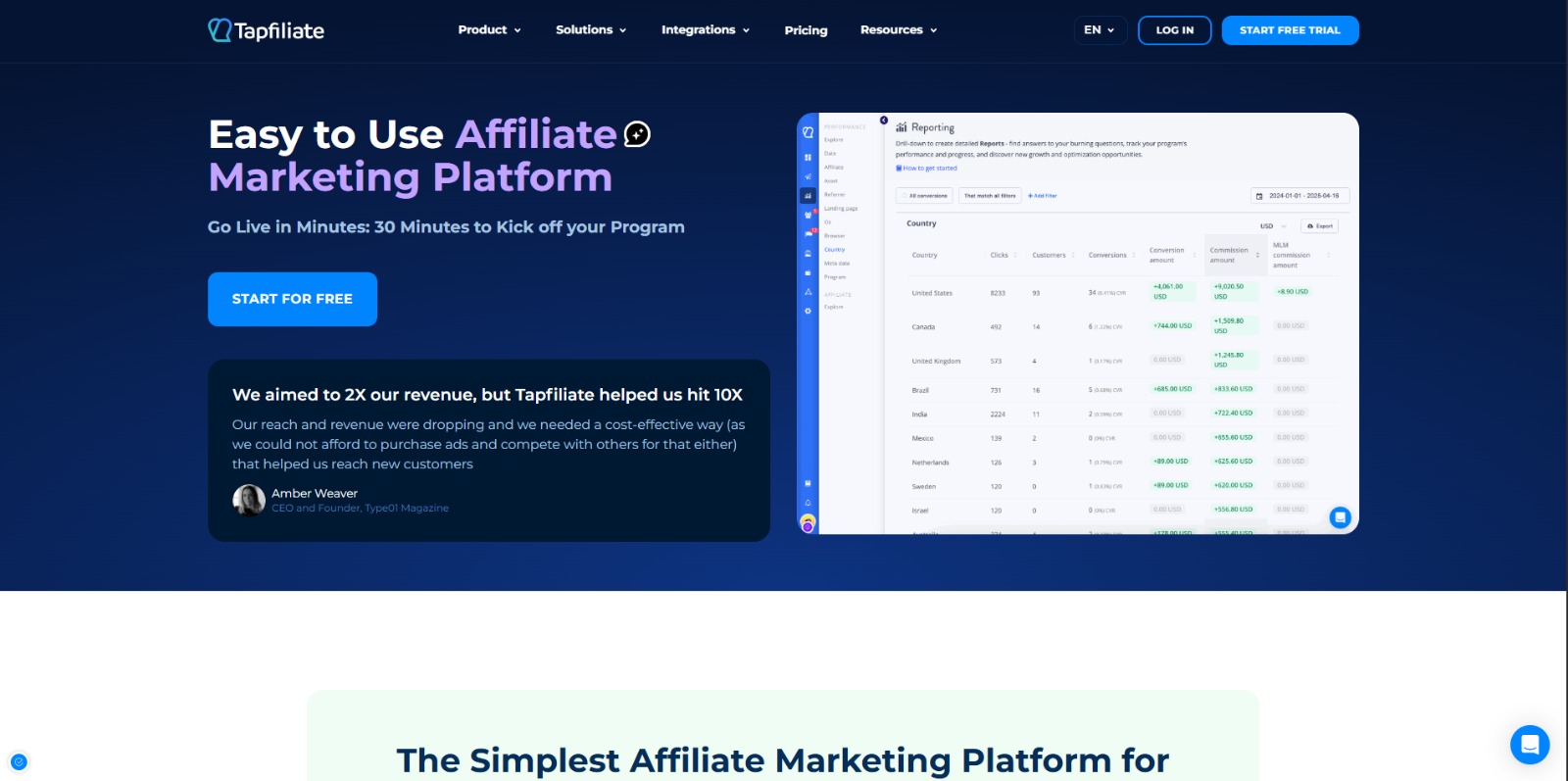
Tapfiliate is a cloud-based platform aimed at eCommerce and SaaS brands that want to launch an affiliate program quickly without developer resources. It charges a flat subscription rather than taking a percentage of affiliate-driven sales.
Best for: eCommerce and SaaS companies that want a fast, self-serve setup with predictable flat pricing.
Program Details
- Starting Price: $69-$89/month
- Pricing Model: Flat subscription, no transaction fees
- Free Trial: 14 days
- Setup Time: Under 30 minutes (per vendor)
- Key Integrations: Shopify, WooCommerce, Stripe
Pros
- Fast setup, often live within 30 minutes
- Flat subscription pricing with no transaction-based fees
- Flexible commission types, including recurring and lifetime
- Clean, beginner-friendly interface
Cons
- Fewer advanced reporting and automation features
- Some integrations still require technical setup
- Higher-tier features are Enterprise-only
- Less suited to complex, multi-network programs
6. Refersion
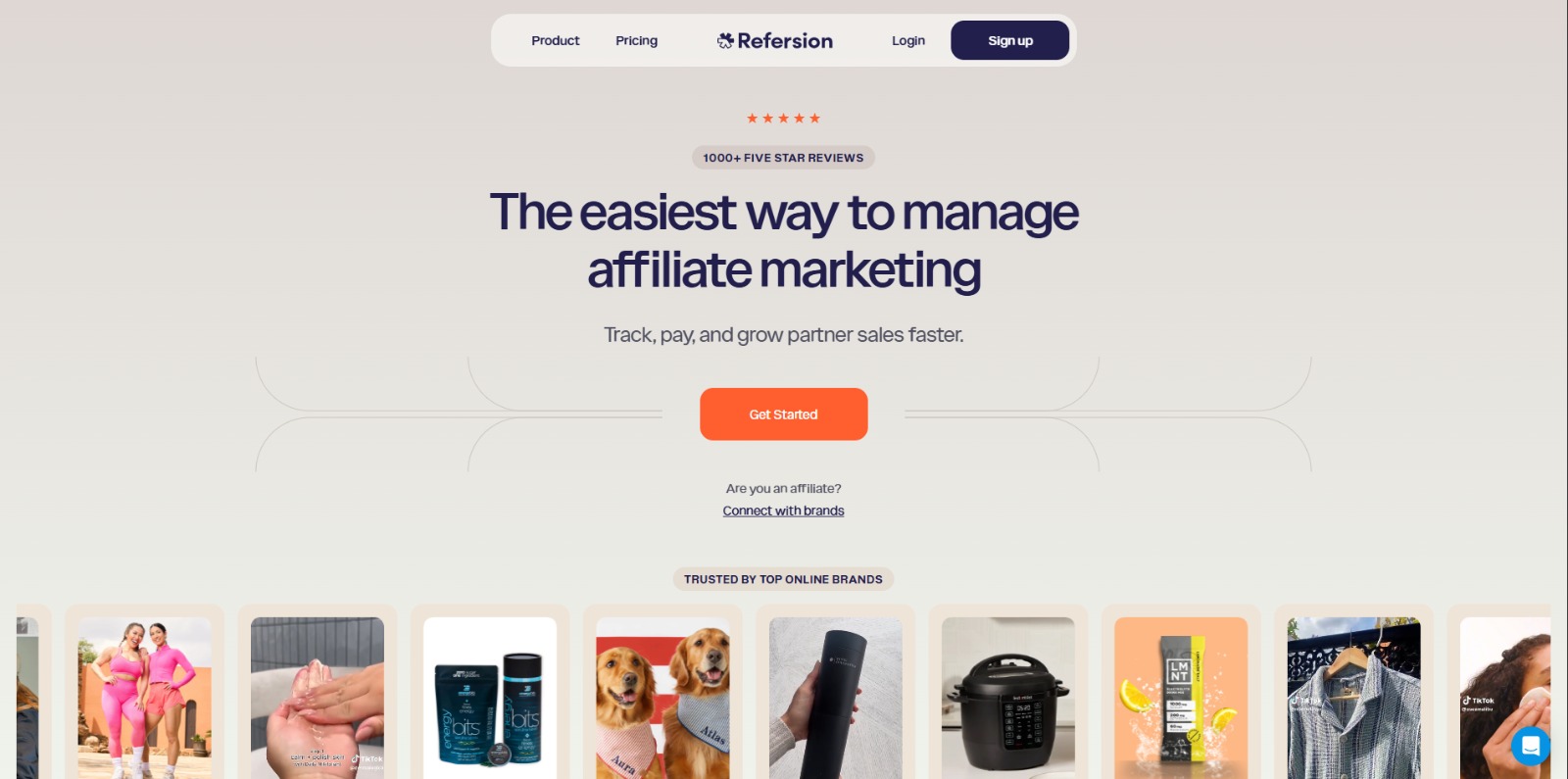
Refersion is built specifically for eCommerce brands, with especially deep integration into Shopify and WooCommerce. Its pricing combines a base subscription with a percentage of affiliate-driven sales, scaling cost with performance rather than program size alone.
Best for: Shopify and WooCommerce merchants running affiliate or ambassador programs.
Program Details
- Starting Price: $39/month + 3% of affiliate sales
- Pricing Model: Base fee plus declining commission percentage
- Free Trial: 14 days
- Affiliate Cap: Unlimited on every plan
- Key Integrations: Shopify, WooCommerce
Pros
- Deep, native integration with Shopify and WooCommerce
- Simple, affordable entry point for smaller stores
- Access to a marketplace for affiliate and influencer recruitment
- Automated payout and tax form handling for US affiliates
Cons
- Percentage-based fees add up as sales grow
- Weaker fit for non-Shopify/WooCommerce businesses
- Less built-in influencer discovery than dedicated platforms
- Advanced reporting limited to higher tiers
7. RedTrack
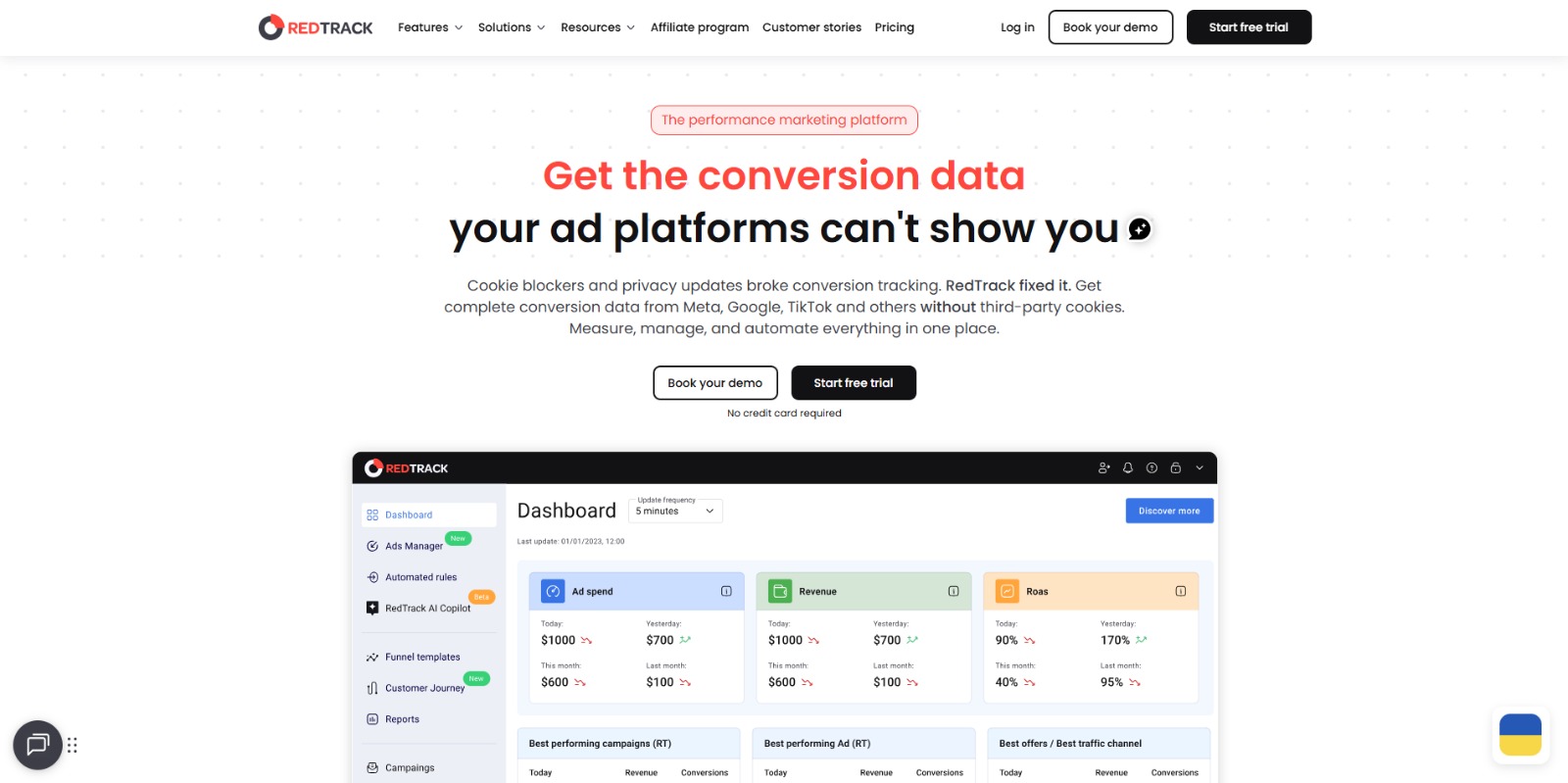
RedTrack combines ad tracking with affiliate attribution, making it a hybrid tool for media buyers who need to monitor both paid campaigns and affiliate performance in one dashboard, with an emphasis on server-side tracking.
Best for: Media buyers, PPC marketers, and performance-focused affiliates tracking paid and affiliate traffic together.
Program Details
- Starting Price: $149/month
- Pricing Model: Tiered subscription plus usage-based add-ons
- Free Trial: 14 days, no credit card required
- Fraud/Compliance: Conversion API for Meta, TikTok, Google
- Key Integrations: Meta, Google, TikTok, Shopify
Pros
- Combines ad tracking and affiliate tracking in a single platform
- Strong Conversion API support for privacy-restricted browsers
- Automation rules that adjust campaigns without manual work
- Published pricing with clearly listed overage rates
Cons
- Add-on costs can meaningfully raise the real monthly bill
- Solo plan support is email-only, no live chat
- No dedicated account manager, even on the top-tier plan
- Less relevant for Shopify-only brands without affiliate operations
Other Affiliate Tracking Tools Worth Considering
Beyond the top 7, a few platforms serve more specific use cases and are worth a mention:
- Keitaro: A self-hosted tracker built for technical marketers who want full control over their data, hosting, and privacy rather than relying on a cloud vendor.
- BeMob: A beginner-friendly option with a free plan, useful for affiliates who want to test tracking before committing to a paid tool.
- FunnelFlux: Built around a visual, flow-based campaign builder, letting marketers map out entire funnels instead of viewing data as flat reports.
- ThriveTracker: Focused specifically on mobile ad performance, aimed at affiliates running large-scale mobile campaigns.
- Scaleo: Goes beyond tracking to help businesses build an affiliate network from the ground up, including recruitment and network management tools.
- WeCanTrack: Connects affiliate tracking data directly into analytics platforms like Google Analytics and Looker Studio, useful for teams that want affiliate performance sitting alongside their broader marketing data.
These tools won’t fit every business, but each one solves a specific problem that the top 7 platforms don’t always cover as directly.
How to Choose the Right Affiliate Tracking Software
The right choice depends less on which tool is “best” overall and more on what kind of program you’re running:
- eCommerce stores on Shopify or WooCommerce tend to do well with Refersion or Tapfiliate, since both integrate natively with those platforms and simplify affiliate management without extra development work.
- SaaS companies running recurring billing should look at PartnerStack, which is built specifically around subscription commissions and B2B partner recruitment.
- Affiliate networks or businesses building a partner program from scratch are better served by enterprise-grade platforms like Everflow or Scaleo, which offer the scalability and network-building tools that smaller tools don’t.
- Agencies and media buyers running large paid campaigns typically lean on Voluum or RedTrack, both of which combine ad tracking with affiliate attribution and traffic optimization.
- Small and medium-sized businesses that want a flexible, budget-friendly option without enterprise complexity often do well with Post Affiliate Pro or BeMob.
Rather than picking a tool based on popularity, matching it to your program type, whether that’s eCommerce, SaaS, agency, or network, tends to produce a better long-term fit.
Future Trends in Affiliate Tracking
Affiliate tracking is moving beyond simple click-and-payout logging toward smarter, more transparent systems. A few trends are shaping where the space is headed next:
- AI-driven fraud detection: Trackers are increasingly using machine learning to catch fake clicks and fraudulent leads in real time, rather than relying on static rules alone
- Blockchain-based transparency: Some platforms are exploring blockchain to make transactions auditable and immutable, building more trust between advertisers and affiliates
- Multi-platform tracking: Tools are adapting to newer formats like TikTok, Instagram Reels, and YouTube Shorts, where attribution is harder to capture than on traditional web or app-install traffic tracked by CPI networks.
- Integration with AI search and chat tools: Linking tracking data with tools like Perplexity or ChatGPT is starting to enable predictive insights and more advanced reporting
- Growth-focused flexibility: Newer platforms are prioritizing scalable, modular pricing so businesses aren’t locked into rigid tiers as their programs grow
Conclusion
Choosing the right affiliate tracking software comes down to matching the tool to how your program actually runs, not picking whichever name shows up most often in search results. A Shopify store, a B2B SaaS company, and an agency running paid traffic all need very different things from a tracker, even though they’re solving the same basic problem of crediting the right affiliate for the right sale.
Voluum, Everflow, PartnerStack, Post Affiliate Pro, Tapfiliate, Refersion, and RedTrack each take a different approach, and the right one is whichever fits your platform, budget, and how hands-on you want to be with setup. Before committing, confirm current pricing directly with the vendor, test the integrations you actually need, and start with a free trial where one’s available so you’re not locked into a decision based on a features list alone. It’s also worth reviewing common affiliate marketing mistakes before scaling your program, since a poor tracking setup tends to compound other early errors.
Frequently Asked Questions (FAQs)
What is the best affiliate tracking software in 2026?
It depends on your program. Voluum and RedTrack suit paid traffic, Everflow and PartnerStack fit larger, or SaaS programs, and Tapfiliate or Refersion work well for Shopify or WooCommerce stores.
How much does affiliate tracking software cost?
Entry-level plans range from about $39 to $150 per month. Enterprise platforms like Everflow and PartnerStack require a custom quote, and some tools add a percentage fee on top.
Is affiliate tracking software worth it for a small business?
Yes, once you have more than a few affiliates, spreadsheets stop being reliable. Flat-fee tools like Tapfiliate or Post Affiliate Pro offer the best value at a small scale.
How is affiliate commission usually calculated?
Commission is typically a flat fee or a percentage of the sale, set by the business running the program. Some platforms also support tiered or recurring commissions for subscription-based products.
Does affiliate tracking software work without cookies?
Yes, modern platforms rely on first-party cookies and server-to-server (S2S) tracking instead of third-party cookies, which keeps tracking accurate even as browsers restrict cookie use.
Can affiliate tracking software detect fraud?
Most platforms include fraud detection, such as IP filtering or bot recognition. Voluum and RedTrack include this at the entry tier.
Do I need developer help to set up affiliate tracking software?
Tapfiliate and Refersion are built for self-serve setup. Everflow and Post Affiliate Pro often need more technical configuration for postback or S2S tracking.
What’s the difference between affiliate tracking software and an affiliate network?
Tracking software lets you run and track your own program. A network connects you to affiliates already promoting other brands. PartnerStack blends both.
Can I switch affiliate tracking software without losing my data?
Most platforms support migration through CSV exports or API-based transfers, but click history and past attribution rarely carry over cleanly, so run both systems in parallel during the switch.
