


Display advertising remains one of the most reliable ways for publishers to monetize websites, blogs, online magazines, SaaS products, forums, and digital communities. While affiliate marketing, sponsored content, and subscription models continue to grow, display ads still generate billions of dollars in annual publisher revenue worldwide.
The display advertising ecosystem has evolved significantly in recent years. Artificial intelligence now plays a central role in ad optimization, header bidding has become more accessible, privacy regulations continue to reshape audience targeting, and Google’s Privacy Sandbox is changing how advertisers reach users without third-party cookies.
As a result, choosing the right display ad network is no longer just about finding the highest CPM. Publishers must also evaluate:
- Revenue optimization technology
- Ad quality
- User experience
- Core Web Vitals impact
- Payment reliability
- Geographic coverage
- Privacy compliance
- AI-powered optimization
- Publisher support
- Traffic requirements
This comprehensive guide compares the leading display ad networks available in 2026 to help you select the platform that best aligns with your website’s size, audience, and revenue goals.
Whether you’re launching your first blog or managing a high-traffic publication, you’ll find practical insights, side-by-side comparisons, and expert recommendations to make an informed decision.
What Is a Display Ad Network?
A display ad network is a platform that connects advertisers with publishers by buying and selling digital advertising inventory. It enables website owners to monetize their content by displaying banner ads, responsive ads, video ads, native ads, and other visual advertising formats.
Unlike direct advertising, where publishers negotiate with advertisers individually, display ad networks automate this process by matching available ad space with advertiser demand.
Simplified Workflow
Advertiser
    ↓
Display Ad Network
        ↓
Website Publisher
        ↓
Visitor Views or Clicks Ad
        ↓
Publisher Earns Revenue
The ad network manages campaign delivery, bidding, targeting, reporting, fraud detection, and publisher payments, allowing website owners to focus on creating content.
Ad Network vs Ad Exchange
These two terms cause endless confusion. Here is the clean distinction:
- Ad Network: Aggregates inventory from multiple publishers and sells it in packages to advertisers. The network sets the rules, floors, and targeting. Publishers have less visibility into who buys their inventory. Google AdSense is the classic example.
- Ad Exchange: A real-time marketplace where publishers and advertisers transact directly via automated auctions (real-time bidding, or RTB). More transparent, more control for both sides. Google Ad Exchange (AdX) is the dominant player here.
Ad Network vs DSP (Demand-Side Platform)
- Ad Network: Works primarily on the publisher side, aggregating supply and selling it.
- DSP: Works primarily on the advertiser side, allowing brands to bid on inventory across multiple exchanges and networks from a single dashboard. Examples: The Trade Desk, DV360, Amazon DSP.
As a publisher, your relationship is with ad networks and SSPs (Supply-Side Platforms), not DSPs directly, though your inventory may ultimately be purchased by DSP buyers through programmatic pipes.
How Display Ad Networks Work?
Display ad networks collect advertising inventory from publishers and sell it to advertisers through automated auctions or direct deals. When a visitor loads a webpage, the network selects the highest-value eligible advertisement and serves it in milliseconds.
Step-by-Step Process
- A publisher signs up with a display ad network.
- The network reviews and approves the website.
- The publisher installs the provided ad code.
- Advertisers bid to show ads to the publisher’s audience.
- The highest eligible bid wins the auction.
- The ad is displayed to the visitor.
- The publisher earns revenue based on the pricing model.
This entire process typically occurs in under 200 milliseconds, ensuring minimal delay for users.
Display Ad Network vs Ad Exchange vs SSP
These terms are often used interchangeably, but they represent different components of the digital advertising ecosystem.
| Feature | Display Ad Network | Ad Exchange | SSP (Supply-Side Platform) |
|---|---|---|---|
| Purpose | Connects advertisers and publishers | Real-time marketplace for buying and selling inventory | Helps publishers maximize ad revenue |
| Auction Type | Managed or automated | Real-time bidding (RTB) | Integrates with multiple exchanges |
| Best For | Small to medium publishers | Large advertisers and agencies | Medium to enterprise publishers |
| Complexity | Low | High | Medium to High |
| Examples | Google AdSense, Media.net | Google Ad Manager Exchange, OpenX | Setupad, Publift, Snigel |
Which One Should You Choose?
- Beginners → Display Ad Networks
- Growing publishers → SSPs with Header Bidding
- Enterprise publishers → Multiple SSPs + Ad Exchanges
Types of Display Ad Networks
Not all display ad networks are created equal. Understanding the categories helps you narrow your shortlist quickly.
1. Premium Display Ad Networks
These networks require significant traffic (often 50K–100K+ sessions/month), offer managed service, and deliver premium CPMs through exclusive advertiser relationships. Examples: Mediavine, AdThrive/Raptive, Setupad. Best for established content sites with engaged audiences.
2. Programmatic Display Networks
Technology-first platforms that automate the buying and selling of ad inventory via real-time bidding. They connect publisher supply to DSP demand at a massive scale. Examples: Google AdSense, Ezoic, Adsterra. Best for sites wanting algorithmic optimization across a broad demand pool.
3. Self-Serve Ad Networks
Publishers set up accounts, configure placements, and manage everything themselves without a dedicated account manager. Lower approval barriers but require more hands-on optimization. Examples: PropellerAds, BuySellAds, Infolinks. Best for early-stage sites and niche publishers.
4. Native + Display Hybrid Networks
Platforms that blend native content recommendation widgets with traditional display banners — resulting in higher engagement and often better RPM. Examples: Taboola, Outbrain, Revcontent. Best for content-heavy editorial sites where blending matters.
5. Mobile Display Ad Networks
Specialized in serving ads within mobile web and app environments, with formats optimized for small screens. Examples: HilltopAds, AdMob (Google), PropellerAds. Best for sites with high mobile traffic percentages (typically 65%+ mobile share).
Best Display Ad Networks In 2026:
Below is a detailed breakdown of every major display advertising platform worth considering in 2026. We cover key features, minimum requirements, estimated CPM ranges, and which networks each suits best. Networks are ordered roughly from highest traffic requirements to lowest, so you can scan to your tier.
- EpicAds
- Push. House
- BitMedia
- AdMaven
- Pop ads
- Vibrant Media
- Revenue Hits
- Reklam Store
- Undertone
- Epom
- Airnow Media
- Lead Bolt
- Info Links
- Clickadu
- Propeller ads
1. Google AdSense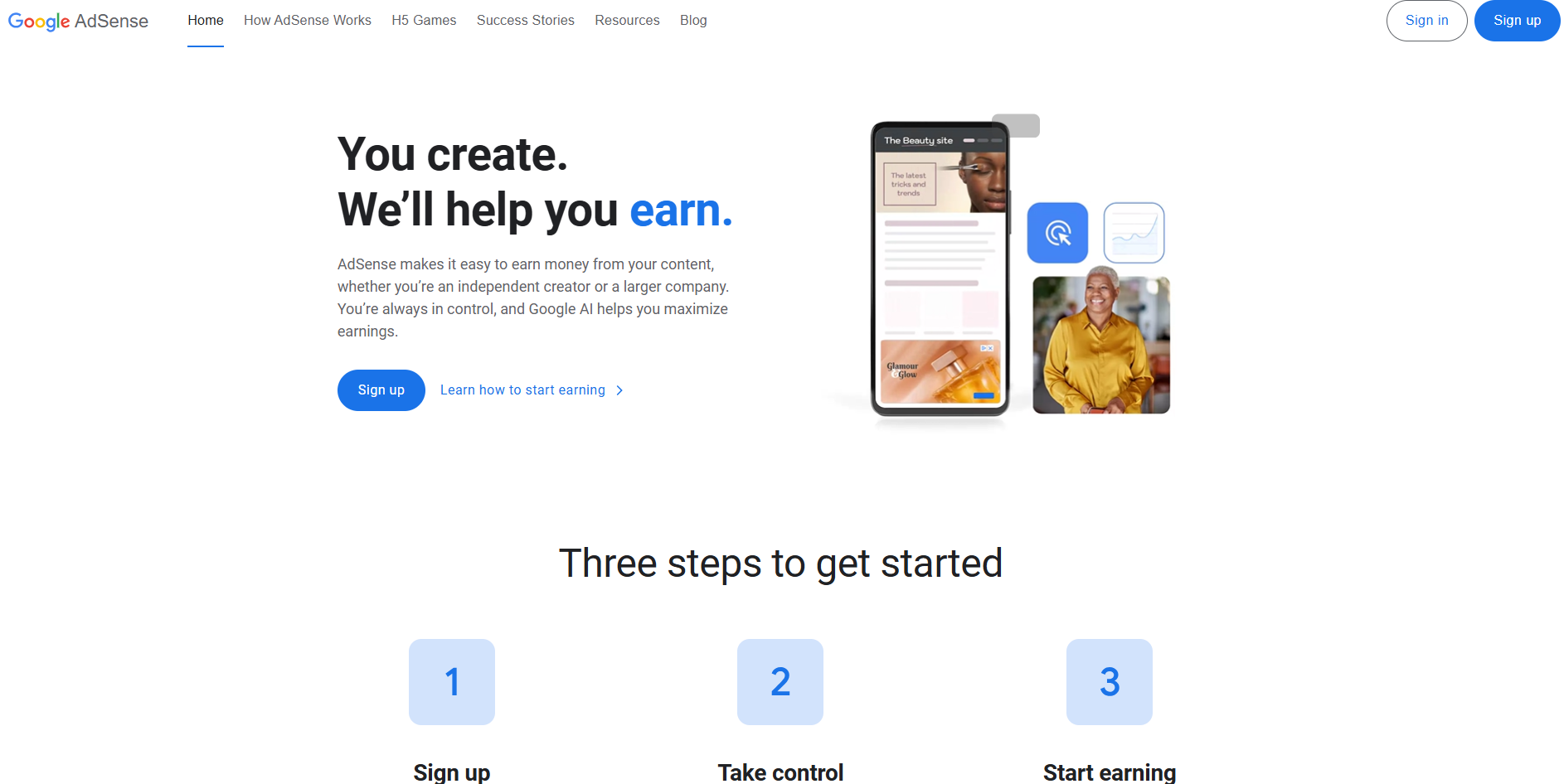
Google AdSense remains the world’s largest and most accessible display ad network in 2026. It’s the default starting point for the vast majority of publishers and for good reason. With access to Google’s enormous advertiser demand pool, AdSense fills inventory consistently across virtually every niche and geography. Its ease of setup and global reach make it irreplaceable for new publishers.
Key Features
- Auto ads for fully automated placement optimization
- Responsive ad units adapting to any screen size
- Contextual + interest-based targeting via Google’s data
- Integrated with Google Analytics for unified reporting
- Page-level ads and in-feed/in-article formats
Pros
- Massive advertiser demand globally
- No minimum traffic requirement
- Reliable monthly payments
- Strong brand-safe inventory
Cons
- Strict policy enforcement makes it easy to get banned
- Lower CPMs vs premium alternatives
- Limited customer support for small publishers
- Revenue share is lower than that of some competitors
Best For: New bloggers, entry-level content sites, publishers in any niche needing a reliable baseline monetization layer.
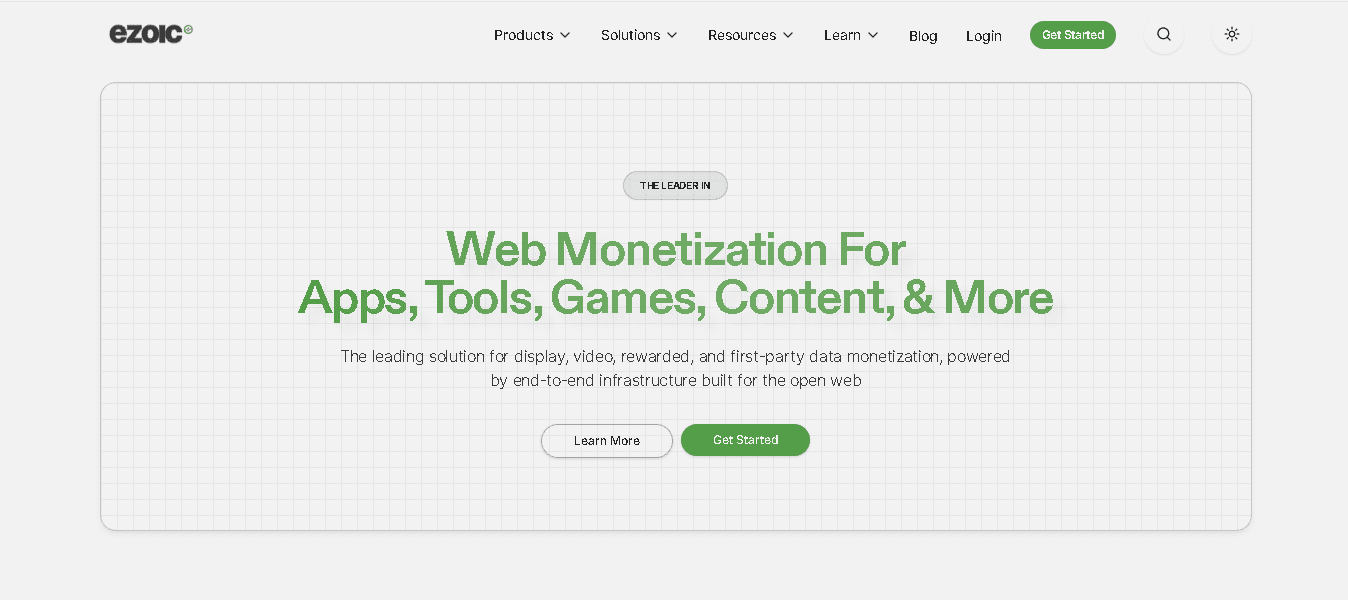
2. Ezoic
Key Features
- AI-driven ad layout testing (1,000s of variations tested automatically)
- EPMV (Earnings Per Mille Visitors) metric better than RPM alone
- Free CDN and site speed tools included
- Humix video network for passive video ad revenue
- Tag Tester and SEO tools in the dashboard
Pros
- Revenue is typically 50–300% higher than AdSense alone
- Free performance tools bundled in
- Works alongside the existing AdSense account
- Active publisher community and good support
Cons
- Setup complexity requires technical integration
- Can slow page load if not configured carefully
- Earnings fluctuate during the optimization phase
3. Mediavine
Key Features
- Lazy-loading ad technology for Core Web Vitals compliance
- Mediavine Journey first-party data platform for cookieless targeting
- Video player monetization built in
- Exclusive premium advertiser relationships
- Publisher forum and outstanding community support
Pros
- Best CPMs in the mid-tier publisher market
- Publisher-first culture and policies
- Excellent site speed technology
- Strong seasonal revenue spikes (Q4)
Cons
- 50K session minimum is a real barrier
- Exclusivity clause can’t run other networks
- US/UK/AU traffic is weighted heavily in CPM
Best For: Established content creators in lifestyle niches with 50K+ monthly sessions and primarily US/UK audience traffic.
4. AdThrive Now Raptive

Pros
- Highest average CPMs in the industry
- 100% fill rate guarantee
- Dedicated account manager for all publishers
- Advanced audience monetization tools
Cons
- 100K pageview barrier is very hard to reach
- Strict content quality and niche requirements
- Locked-in; can’t run other networks simultaneously
5. Setupad
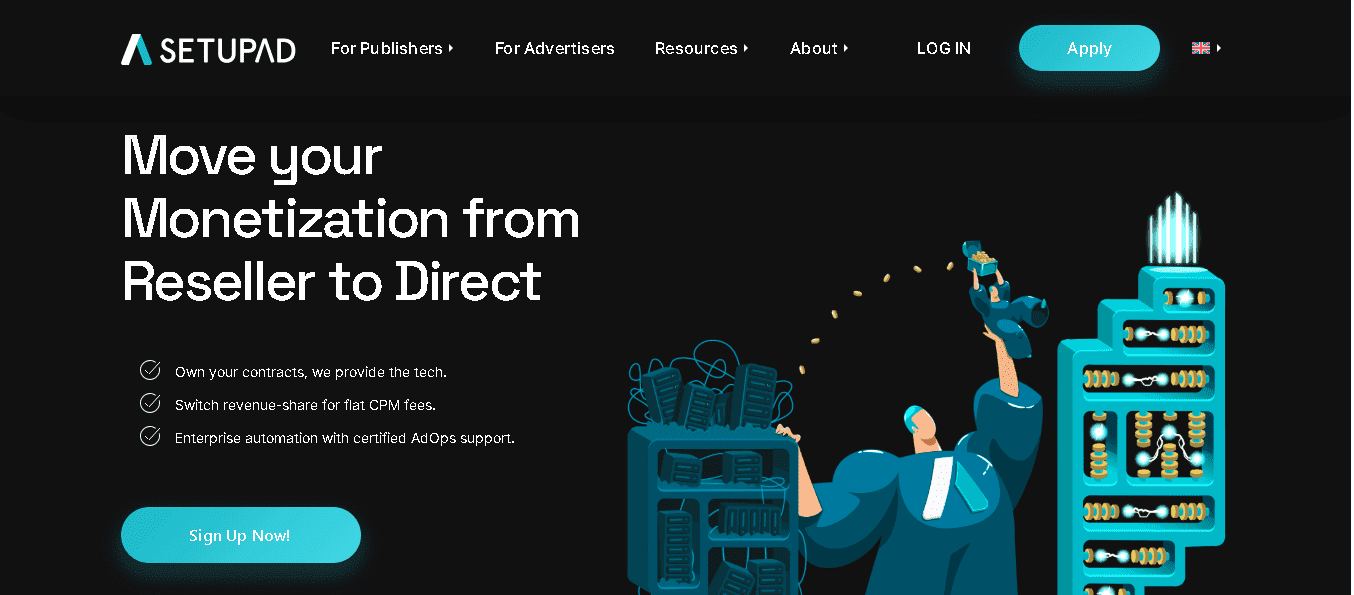
Setupad is a premium publisher monetization platform from Latvia that uses advanced header bidding technology to connect publishers with 20+ premium SSPs simultaneously. This competition drives up CPMs significantly beyond what AdSense alone can deliver. With a 100K monthly visits minimum, it sits in the same tier as Raptive but appeals more to European publishers and non-English content.
Pros
- Excellent for European traffic
- Strong header bidding setupwith 20+ SSP partners
- Fast onboarding and good account management
Cons
- Limited niche coverage vs US-focused networks
- Less well-known, fewer independent reviews
6. Monumetric

Monumetric (formerly The Blogger Network) bridges the gap between AdSense-level networks and premium players like Mediavine. With a 10,000 monthly pageviews minimum, it is accessible to growing blogs and delivers meaningfully higher CPMs than AdSense alone by using header bidding and direct advertiser relationships. There is a one-time setup fee for sites below 80K monthly pageviews, which is worth factoring in.
Pros
- Lower traffic threshold than Mediavine
- Strong RPM improvements over AdSense
- Good publisher support and onboarding
Cons
- One-time $99 setup fee for smaller sites
- Not as strong as Mediavine for premium niches
7. PropellerAds
PropellerAds is a large performance-focused ad network particularly strong for non-mainstream content, entertainment sites, utility tools, and high-traffic international sites. With no minimum traffic requirement and instant approval, it is one of the most accessible networks available. Its push notification and interstitial formats drive high engagement, though these can be disruptive if misused.
Pros
- No minimum traffic for any site qualifies
- Instant approval process
- Strong international / Tier-2 & Tier-3 traffic monetization
Cons
- Intrusive ad formats can hurt UX
- Lower CPMs for premium niches
- Not ideal for premium lifestyle/content sites
8. Adsterra
Adsterra is a global display ad network founded in 2013, now serving 30B+ ad impressions per month across 248 countries. It is particularly valued for monetizing non-English and Tier-2/3 geographic traffic that other networks underserve. Its Social Bar format is a unique engagement-driving ad unit that consistently outperforms standard banners in CTR.
Pros
- Excellent for global/international traffic
- Multiple payment methods including crypto
- Social Bar format drives strong engagement
Cons
- Ad quality can be inconsistent
- Some formats are intrusive (pop-unders)
9. Infolinks
Infolinks pioneered in-text and intent-driven display advertising. Rather than relying solely on banner placements, it analyzes page content and wraps relevant keywords in clickable ad links a format that bypasses traditional banner blindness. It runs alongside other networks without conflict and is particularly effective for text-heavy editorial sites where contextual relevance is high.
Pros
- Runs alongside AdSense and other networks
- Unique in-text format avoids banner blindness
- No minimum traffic; easy entry
Cons
- Lower revenue ceiling than banner-focused networks
- In-text ads can feel intrusive to readers
10. Media.net
Media.net is powered by Yahoo and Bing’s advertiser demand, making it the largest contextual advertising network outside of Google. For publishers with US/UK/Canadian audiences, especially in finance, tech, and B2B niches, Media.net regularly delivers CPMs that rival or exceed AdSense. Its contextual targeting is particularly effective on text-rich, high-intent content.
Pros
- Excellent CPMs for English-language high-intent content
- Strong contextual targeting via Bing/Yahoo
- Clean ad formats that blend with editorial content
Cons
- Week fill rates for non-English / non-Tier traffic
- Approval can be inconsistent
11. Taboola
Taboola is the world’s largest content discovery and native advertising platform, powering “recommended content” widgets on major news sites globally. While categorized as native advertising, Taboola blends seamlessly with display monetization strategies and is particularly valuable for news, entertainment, and editorial publishers with high pageviews per session metrics.
Key Features
- Industry-leading content recommendation widgets (“Around the Web” / “Recommended for You”)
- Advanced personalization using behavioral and contextual signals
- Seamless integration with editorial layouts (native-display hybrid)
- Access to premium advertiser demand from major global brands
- Detailed engagement analytics (CTR, scroll depth, session impact)
Pros
- High engagement compared to traditional banner ads
- Strong monetization for high pageview-per-session sites
- Works well alongside display ad networks (non-exclusive)
- Premium advertiser pool improves ad quality
Cons
- Requires very high traffic (~1M+ pageviews)
- Can reduce user trust if recommendations feel clickbait-heavy
- Lower CPM than premium banner networks in some niches
Best For: Large-scale editorial, news, and entertainment publishers
12. Outbrain
Outbrain is Taboola’s primary competitor and similarly targets premium editorial publishers. Its content recommendation widgets are deployed across CNN, The Guardian, Le Monde, and hundreds of other tier-1 publishers. Outbrain is generally considered to have slightly higher content quality standards and brand-safety controls than Taboola, making it preferred by news organizations with strict editorial policies.
Key Features
- Premium native ad marketplace with strict content quality filters
- Contextual + interest-based recommendation engine
- Strong brand-safety controls for publishers
- Integration with top-tier publishers (CNN, Guardian, etc.)
- Real-time optimization for engagement and revenue
Pros
- Higher content quality vs many competitors
- Strong brand safety trusted by premium publishers
- Better user experience due to stricter ad moderation
Cons
- Very selective approval process
- Requires high traffic (~1M+ pageviews)
- Revenue depends heavily on audience engagement behavior
Best For: Premium news and editorial publishers prioritizing brand safety
13. Revcontent
Revcontent is a content recommendation and display ad network that distinguishes itself through higher engagement rates than Taboola and Outbrain by running a more curated publisher marketplace. With lower traffic thresholds than the two giants, it is accessible to mid-tier publishers who want the benefits of native display advertising without the 1M+ pageview gatekeeping.
Key Features
- Native + display hybrid recommendation widgets
- Curated advertiser marketplace (less spammy than competitors)
- Customizable widget design for better UX alignment
- High CTR optimization engine
- Flexible API integrations
Pros
- Higher engagement rates than many native networks
- Lower entry barrier (~50K visits/month)
- Better control over ad quality and placements
Cons
- Still requires moderate traffic to qualify
- CPMs lower than premium display networks
- Performance varies by niche (stronger in entertainment/news)
Best For: Mid-tier publishers wanting native monetization without 1M+ traffic
14. BuySellAds
BuySellAds connects publishers directly with advertisers for guaranteed direct campaigns — bypassing programmatic auctions entirely. For niche publishers with highly engaged, professional audiences (tech, design, developer communities), BuySellAds can deliver extraordinarily high CPMs ($10–$100+) because advertisers are paying a premium to reach a specific, qualified demographic rather than a broadly targeted audience.
Key Features
- Direct advertiser-to-publisher marketplace (no RTB dependency)
- Fixed-rate sponsorships and placements
- Supports newsletters, podcasts, and display inventory
- Premium advertiser access in niche verticals
- Transparent pricing and full publisher control
Pros
- Extremely high CPM potential ($10–$100+)
- No middleman auction compression
- Ideal for niche authority sites
- Predictable revenue via direct deals
Cons
- Requires strong niche authority or audience
- Approval is selective and manual
- Revenue not guaranteed (depends on advertiser demand)
Best For: SaaS, developers, design, and professional niche publishers
15. Sovrn
Sovrn is a publisher-first SSP (Supply-Side Platform) that helps independent publishers connect with hundreds of DSPs and advertisers through header bidding. Unlike networks with fixed CPMs, Sovrn maximizes yield by running real auctions across its demand pool. Its Commerce (formerly VigLink/Narrativ) affiliate monetization layer provides an additional revenue stream for commerce-focused content.
Key Features
- Header bidding infrastructure connecting multiple DSPs
- Access to hundreds of demand partners
- Commerce monetization (affiliate link automation)
- Transparent reporting and analytics dashboard
- Supports display, video, and native demand
Pros
- Open programmatic access increases competition (higher CPMs)
- No strict traffic minimum
- Additional affiliate revenue layer (Commerce)
- Publisher-first approach
Cons
- Requires technical setup for optimal performance
- CPMs fluctuate due to auction dynamics
- Not beginner-friendly without ad ops knowledge
Best For: Independent publishers wanting open programmatic access plus an affiliate commerce revenue layer from a trusted publisher partner.
16. HilltopAds
HilltopAds is a performance advertising network with a strong presence in mainstream and adult-adjacent content verticals. It offers a range of ad formats, including popunder, in-page push, banner, and interstitial, with no minimum traffic requirements. Its strength lies in monetizing high-volume, less brand-sensitive traffic from entertainment, gaming, and utility niches globally.
Key Features
- Multiple formats: popunder, in-page push, banner, interstitial
- High global fill rate across all GEOs
- Real-time performance tracking dashboard
- Anti-adblock monetization solutions
- Fast approval process
Pros
- No minimum traffic requirement
- Excellent for Tier-2/3 traffic monetization
- High fill rates even in low-demand regions
Cons
- Intrusive ad formats can harm UX
- Lower CPMs for premium audiences
- Not suitable for brand-sensitive sites
Best For: Entertainment, gaming, and high-volume global traffic sites
17. AdPushup
AdPushup is a revenue optimization platform that helps publishers maximize yield from their existing ad setup through A/B testing, header bidding, ad layout optimization, and ad mediation. Rather than being a standalone network, it layers on top of your current monetization and intelligently routes impressions to the highest-paying demand source. Publishers typically see 20–40% revenue lifts after deployment.
Key Features
- Automated A/B testing of ad layouts and placements
- Header bidding integration with multiple demand partners
- Ad mediation to route impressions to the highest bidder
- Lazy loading and UX optimization tools
- Detailed revenue analytics and reporting
Pros
- 20–40% average revenue uplift
- Works on top of existing ad networks
- Reduces manual optimization effort
- Improves Core Web Vitals with smart loading
Cons
- Requires existing traffic/revenue to be effective
- Selective approval process
- Revenue share reduces marginal gains
Best For: Publishers already monetizing who want to maximize yield
18. SHE Media

SHE Media (formerly BlogHer) is a premium ad network specifically designed for women-focused publishers in lifestyle, parenting, beauty, food, and health niches. With deeply specialized advertiser relationships in these categories and a strong editorial brand, it delivers premium CPMs to publishers whose audiences match its demographic. It remains one of the most targeted niche publisher networks in the industry.
Key Features
- Niche-focused monetization (female audiences)
- Premium brand partnerships in lifestyle categories
- Sponsored content and display monetization
- Community-driven publisher network
- Editorial and monetization support
Pros
- High CPMs in targeted niches
- Strong advertiser alignment (beauty, parenting, lifestyle)
- Additional revenue via sponsorships
Cons
- Limited to specific audience demographics
- Selective approval
- Not suitable for general or unrelated niches
Best For: Female-audience publishers in lifestyle, beauty, parenting, and food niches wanting niche-premium CPMs from targeted advertiser relationships.
19. Sharethrough

Sharethrough is a technology company that pioneered the native ad standard and continues to lead in native display advertising infrastructure. Through its integration with major SSPs and its proprietary native ad marketplace, publishers can access premium native demand that outperforms standard display on engagement metrics. It also offers Green Media Products carbon-neutral ad placements that attract ESG-focused advertisers at premium rates.
Key Features
- Industry-leading native ad exchange
- Integration with major SSPs and header bidding setups
- Proprietary native ad formats optimized for engagement
- Green Media Products (carbon-neutral ads)
- Advanced attention-based metrics
Pros
- Premium native demand
- Higher engagement vs standard display
- ESG-friendly ad inventory attracts premium advertisers
Cons
- Requires SSP/header bidding integration
- Not a standalone beginner-friendly network
- Works best at scale
Best For: Mid-to-large publishers integrating native ad formats through header bidding who want access to premium native and environmentally-conscious advertisers.
20. Primis (Video)
Primis is a video discovery platform that places a contextual video player on publisher pages — monetizing with pre-roll and mid-roll video ads from premium advertisers without publishers needing to produce their own video content. Video CPMs consistently run 3–5x higher than banner display CPMs, making Primis an excellent incremental revenue layer for content publishers who lack a native video strategy.
Key Features
- Contextual video player with auto-curated content
- Monetization via pre-roll and mid-roll video ads
- No need to produce original video content
- Integrates with existing ad stack
- Access to premium video advertisers
Pros
- Video CPMs 3–5x higher than display
- Easy way to add video revenue
- Strong incremental earnings layer
Cons
- Requires decent traffic (~100K pageviews)
- Adds additional scripts (potential performance impact)
- Depends on user engagement with video
Best For: Publishers wanting to add video ad revenue without producing video content, strong incremental CPM lift alongside existing banner monetization.
Comparison Table: Display Ad Networks 2026
Use this table to quickly shortlist networks based on your current traffic level, geographic audience, and monetization goals. CPM figures are estimates based on average publisher reports for US/UK Tier-1 traffic.
| Network | Min. Traffic | Avg. CPM (US) | Ad Types | Best For | Approval |
|---|---|---|---|---|---|
| Google AdSense | None | $0.50–$5 | Banner, Responsive, In-article | All publishers | Moderate |
| Ezoic | 10K visits/mo | $1.50–$8 | Banner, Video, Native | Growing blogs | Easy |
| Mediavine | 50K sessions/mo | $10–$35 | Banner, Video, Sidebar | Lifestyle/food/travel | Selective |
| Raptive (AdThrive) | 100K pageviews/mo | $15–$50 | Banner, Video, Display | Large premium sites | Very Selective |
| Setupad | 100K visits/mo | $3–$20 | Banner, Header Bidding | European publishers | Selective |
| Monumetric | 10K pageviews/mo | $2–$10 | Banner, In-content | Growing bloggers | Moderate |
| PropellerAds | None | $0.10–$4 | Push, Pop, Banner | Entertainment / global | Instant |
| Adsterra | None stated | $0.50–$5 | Banner, Pop, Push, Social Bar | Global / Tier-2 traffic | Moderate |
| Infolinks | None | $0.20–$2 | In-text, Banner, Fold | Text-heavy blogs | Easy |
| Media.net | Quality-based | $1–$10 | Banner, Contextual | Finance/tech (US) | Moderate |
| Taboola | ~1M pageviews/mo | $1–$8 | Native widget, Display | Large news sites | Selective |
| BuySellAds | Quality-based | $5–$100+ (direct) | Banner, Native, Newsletter | Niche professional sites | Selective |
| Sovrn | None stated | $0.50–$8 | Banner, SSP, Affiliate | Independent publishers | Moderate |
| SHE Media | ~20K pageviews/mo | $5–$20 | Banner, Sponsored | Women-audience sites | Selective |
| AdPushup | ~5K pageviews/day | +20–40% lift | Optimization layer | Publishers wanting yield increase | Selective |
| HilltopAds | None | $0.10–$3 | Pop, Push, Banner | Entertainment / global | Easy |
| Primis | ~100K pageviews/mo | $3–$15 (video) | Video player, Pre-roll | No-video publishers | Moderate |
How to Choose the Best Display Ad Network
With 20+ options available, the right choice depends entirely on your specific situation. Here is a practical decision framework for publishers.
Step 1: Assess Your Traffic Volume
Your monthly traffic determines which premium tiers are open to you. As a rough guide:
- Under 10K sessions/month: Google AdSense, PropellerAds, Infolinks, Adsterra
- 10K – 50K sessions/month: Ezoic, Monumetric, Media.net
- 50K – 100K sessions/month: Mediavine, SHE Media, Revcontent
- 100K+ sessions/month: Raptive, Setupad, Primis, Taboola
Step 2: Know Your Audience Geography
CPMs vary enormously by geography. US, UK, Canadian, and Australian traffic commands the highest rates, often 5–10x more than Southeast Asian or African traffic. If your traffic is primarily Tier-2/3 (India, Brazil, Southeast Asia, Africa), networks like Adsterra, PropellerAds, and HilltopAds will serve you better than premium US-focused networks like Raptive or Mediavine.
Step 3: Consider Your Niche
Some niches command premium CPMs because advertisers compete aggressively for those audiences:
- Finance / Insurance / Legal: $5–$30+ CPM — use Media.net, BuySellAds, Raptive
- Food / Lifestyle / Parenting: $8–$25 CPM — Mediavine or Raptive ideal
- Tech / Developer / SaaS: $5–$50+ direct deals — BuySellAds excels here
- Entertainment / Gaming / News: $1–$8 CPM — Taboola, Revcontent, Adsterra
- International / General: $0.50–$3 CPM — Ezoic, PropellerAds, Infolinks
Step 4: Define Your Monetization Goal
Are you optimizing for maximum passive income? Brand safety and editorial quality? Speed to revenue? Stacking multiple networks? The answer shapes your choice significantly. Most serious publishers run a primary premium network plus one or two supplementary layers (e.g., Mediavine as primary + Primis for video + Infolinks for in-text).
Display Ad Sizes & Formats in 2026
Understanding standard banner ad sizes and their typical performance is fundamental knowledge for any publisher. Google and IAB define the most widely-used display ad size standards.
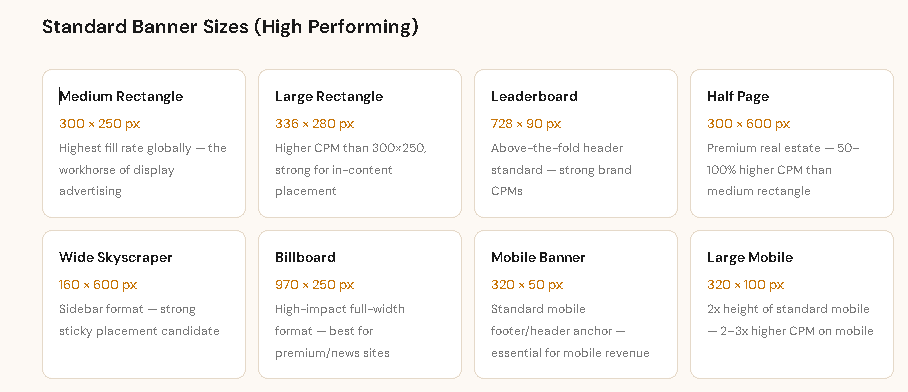
Responsive & Modern Ad Formats
- Responsive Display Ads: Auto-adapt to any available space; Google’s preferred format for AdSense. Highest fill rate across devices.
- In-Feed Native Ads: Match the look and feel of editorial content delivered by Taboola, Outbrain, and Sharethrough.
- Interstitial Ads: Full-screen between-page transitions high impact, but Google penalizes mobile interstitials that appear immediately on page load.
- Anchor/Sticky Ads: Fixed to screen edge during scroll among the highest viewability formats available. Strong CPM lift.
- In-Article Ads: AdSense’s format is designed specifically for between-paragraphs and blends with editorial content naturally.
How Much Do Display Ads Pay?
This is the question every publisher wants a straight answer to. Here is an honest breakdown.
Understanding the Metrics of CPM vs CPC vs RPM
- CPM (Cost Per Mille): What advertisers pay per 1,000 impressions of their ad. This is the metric used to price inventory. US finance CPMs can exceed $30; Tier-3 country CPMs can be under $0.10.
- CPC (Cost Per Click): What advertisers pay when a user clicks their ad. Ranges from $0.05 for general entertainment to $50+ for insurance or B2B SaaS keywords.
- RPM (Revenue Per Mille): What you, as a publisher, actually earn per 1,000 pageviews after the network’s revenue share cut. This is your real-world earnings metric. RPM = (Total Revenue / Total Pageviews) × 1,000.
- EPMV (Earnings Per Mille Visitors): Ezoic’s superior metric earnings per 1,000 visitors (not pageviews), accounting for multi-page sessions. More accurate for measuring true yield.
Factors That Affect Display Ad Revenue
Traffic geography is the single biggest lever. A US visitor is worth 5–20x more than an equivalent visitor from India or Indonesia on most networks. Publishers with primarily Tier-1 traffic (US, UK, CA, AU, NL, DE) earn dramatically more per visitor.
Niche determines advertiser competition and bid prices. Finance, legal, health, and B2B software are the highest-CPM niches. Entertainment, recipes, and general lifestyle are moderate. Humor, gaming, and celebrity gossip tend to be lower.
Session depth matters because more pageviews per visit means more impressions per visitor. Sites with strong internal linking and compelling content that keep users on-site for 3–5 pages earn significantly more per visitor than single-page-view sites.
Seasonality creates massive revenue swings. Q4 (October–December) is when display ad CPMs peak globally due to holiday advertiser budgets. Publishers routinely see 40–100% RPM increases compared to Q1. Plan your content calendar accordingly.
