

A web developer affiliate program lets developers earn a commission for recommending the hosting providers, page builders, plugins, and tools they already use on client projects. In practice, this means the advice you’re giving away for free, “use this host,” “install this plugin,” can be turned into a second income stream without adding extra hours to your workload.
Based on my research into commission structures, cookie durations, and payout reliability across dozens of hosting, design, and plugin affiliate programs, I’ve narrowed this down to the 15 best web developer affiliate programs that genuinely fit a developer’s workflow in 2026. Below, you’ll find what each affiliate program pays, how long you get credit for a referral, and which type of client or project it’s best suited for.
What Are Web Developer Affiliate Programs?
A web developer affiliate program is a partnership between a software or hosting company and a developer, where the developer earns a commission for referring new customers through a unique tracking link. Sharing that link in a client proposal, tutorial, or comparison page and having someone sign up through it earns a one-time payout, a recurring percentage, or a hybrid of both.
This model works especially well for developers because the recommendation already exists. Every project involves choosing a host, a CMS, and a handful of plugins; developers make these calls for clients regardless of whether they’re earning from it. During my evaluation of the programs in this list, the ones that converted best weren’t always the highest-paying, but the ones that matched the tools developers were recommending anyway.
How Affiliate Marketing Benefits Web Developers
For most developers, affiliate income isn’t a separate hustle; it’s a byproduct of work already being done. Every hosting recommendation, every plugin suggestion, every “use this instead” comment on a client call is a decision that can carry a payout attached to it, without changing how the project gets delivered.
- Extra income from existing recommendations: Commissions on tools already being suggested, with no new sales process required
- Low overhead: No product to build, host, or support
- Recurring revenue potential: Several programs pay for the life of the subscription, not just the initial signup
- Stronger client trust: Recommending tools that consistently perform well reinforces credibility, independent of the commission earned
- Early access and partner perks: Many programs offer beta features or discounts unavailable to regular customers
- Fewer project headaches: Sticking to a small set of trusted, high-performing tools tends to reduce the troubleshooting and plugin conflicts that come from picking unfamiliar ones
- Diversified income: A buffer against slow months in client work
- Personal brand growth: Consistent, honest recommendations position a developer as a go-to resource, which often brings in referral work independent of the affiliate income itself
How I Evaluated These Web Developer Affiliate Programs
Before ranking anything, I looked at four factors for each program:
- Commission structure: Whether it pays one-time, recurring, or a hybrid of both
- Cookie duration: How long you get credit for a referral after the initial click
- Payout reliability: Minimum thresholds, payment frequency, and how consistently affiliates report getting paid
- Relevance to developer workflows: Based on public discussions, community forums, and program documentation, whether the tool actually comes up in real client projects rather than general consumer use
Programs that scored well on paper but rarely showed up in real developer use were ranked lower or left off the list entirely. This is also why you won’t find every hosting or SaaS affiliate program here; the goal wasn’t to list every option available, but to surface the ones that fit naturally into client work without feeling like a sales pitch.
15 Best Web Developer Affiliate Programs in 2026
Here are the top 15 best affiliate programs for web developers in 2026:
- Kinsta
- Elementor
- Bluehost
- Webflow
- Shopify
- SiteGround
- Cloudways
- WP Engine
- Leadpages
- Namecheap
- Wix
- Squarespace
- Crocoblock
- PowerPack for Elementor
- Style Kits by AnalogWP
1. Kinsta
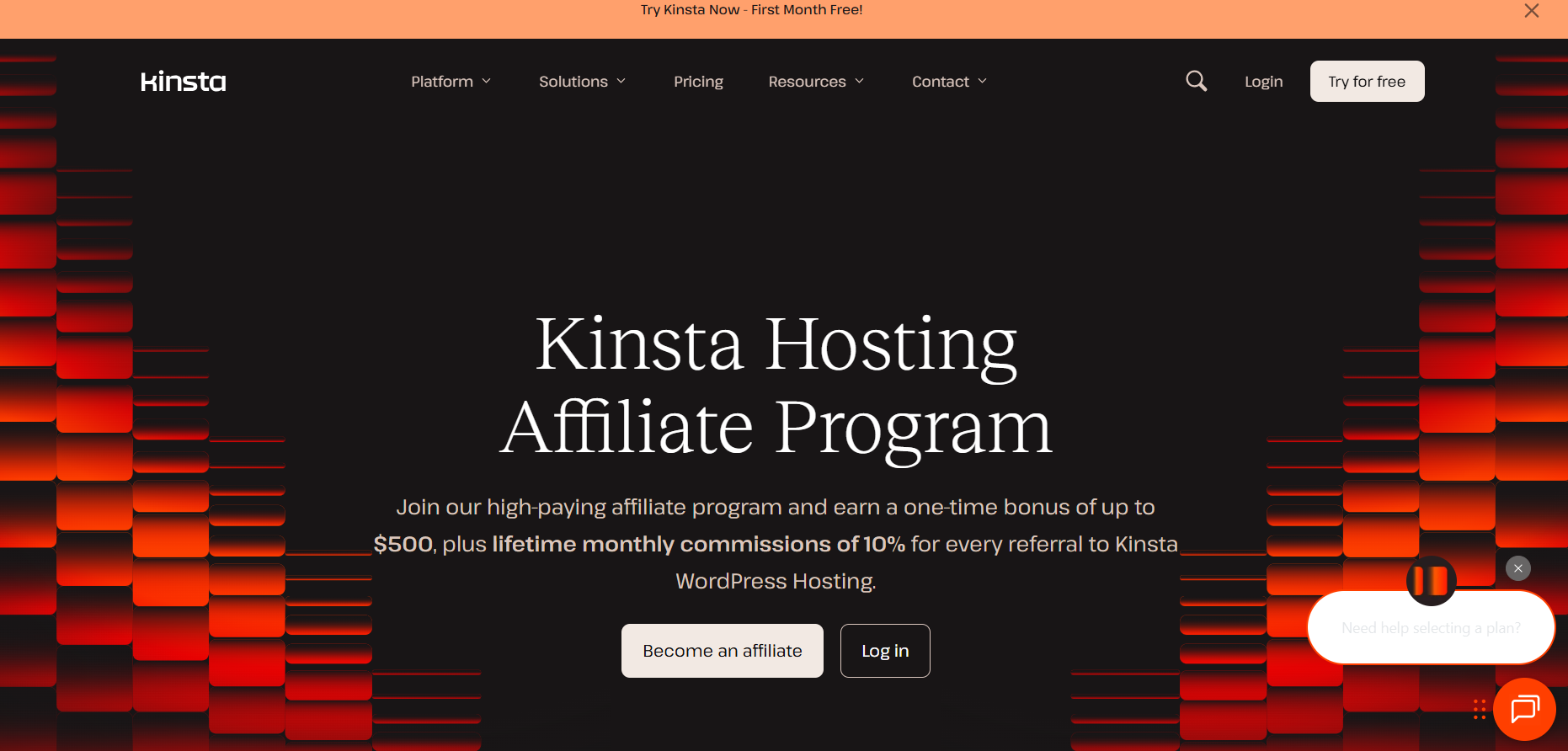
Kinsta provides premium managed WordPress hosting, renowned for its exceptional performance, reliability, and suite of developer-centric features. The affiliate program is designed to reward partners who refer clients to its high-quality hosting plans. For developers specializing in WordPress or managing client migrations, Kinsta offers the potential for substantial, consistent commissions. It offers a highly profitable in-house affiliate program that operates on a CPS (Cost Per Sale) model.
Best For: Developers and agencies with a premium or business-facing audience who can justify recommending a higher-priced managed WordPress host.
Program Details
- Commission: $50–$500 one-time bonus per referral (based on plan) plus 10% recurring commission for the lifetime of the customer
- Cookie duration: 60 days, last-touch attribution
- Minimum payout: $50, paid monthly via PayPal
- Churn rate: under 4%, which supports long-term recurring value
Pros
- Genuine lifetime recurring commission, not just a one-time bounty
- Low customer churn means recurring income tends to hold up
- In-house real-time tracking dashboard, no third-party network needed
Cons
- Premium positioning makes it a harder sell to budget-conscious clients
- No commission for new Application/Database Hosting referrals (only existing ones)
- 60-day cookie is shorter than some competitors like WP Engine
2. Elementor
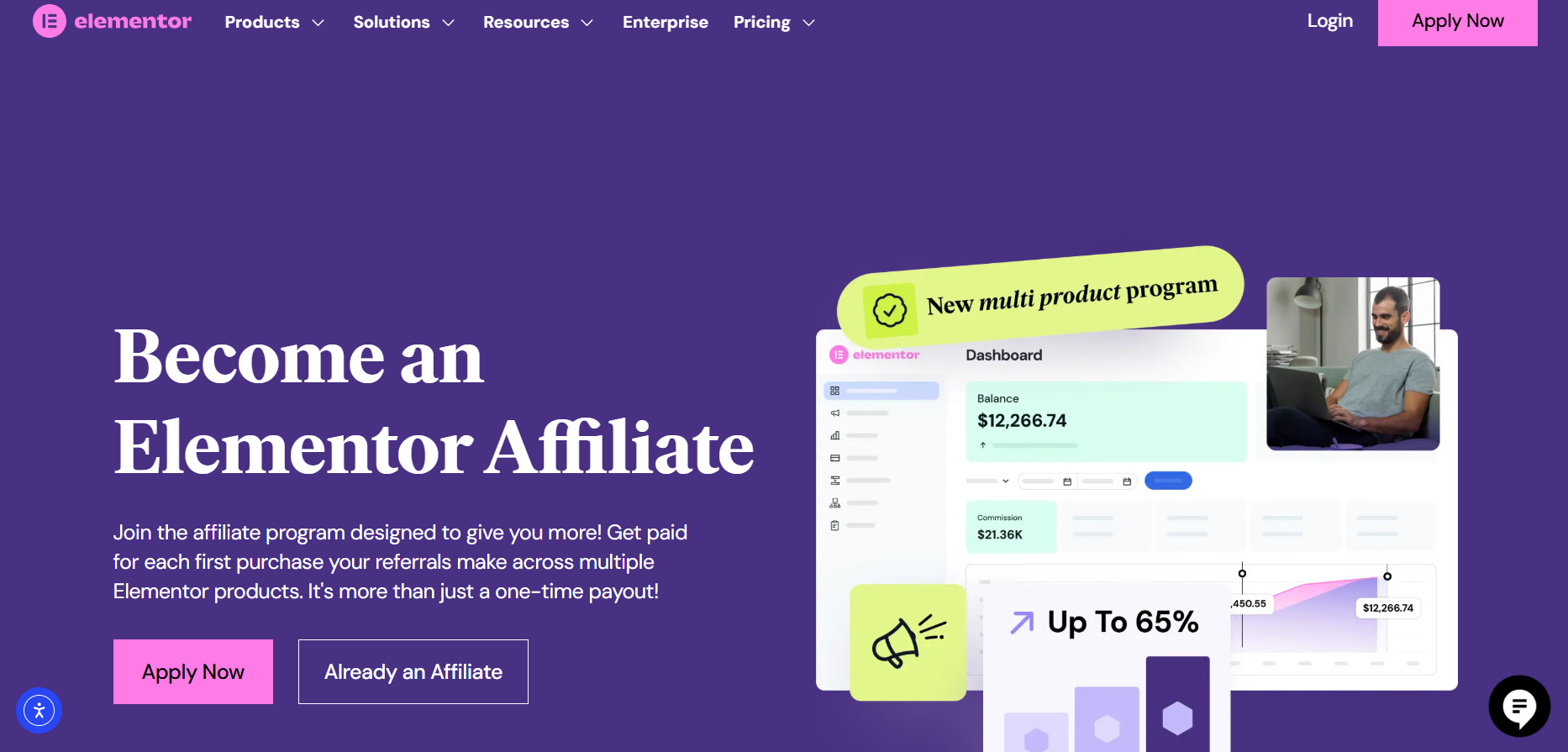
Elementor is one of the most widely used drag-and-drop page builders for WordPress, and its affiliate network is equally popular. The program offers attractive one-time commissions for each new subscription sold through a referral link. Since a vast number of developers already use Elementor for client projects, promoting it is a natural extension of their workflow. It allows you to monetize your existing skills and recommendations, making it an authentic way to generate income while building websites.
Best For: Developers and designers already embedded in the Elementor ecosystem who create tutorials, reviews, or comparison content.
Program Details
- Commission: 45% on Editor Pro/Elementor Host, 55% on Elementor One (first purchase only; renewals not commissionable)
- Cookie duration: 45 days, last-click attribution
- Minimum payout: $200, paid via PayPal
- Payment timing: processed roughly 60 days after the end of the transaction month
Pros
- High commission percentage on first purchases
- Massive built-in audience already searching for Elementor content
- Multiple products (Editor Pro, Host, One) to match different audience needs
Cons
- Commissions apply to the first purchase only, no renewal or upgrade income
- $200 minimum payout is high for smaller affiliates
- 60-day payment delay after the earning month
3. Bluehost
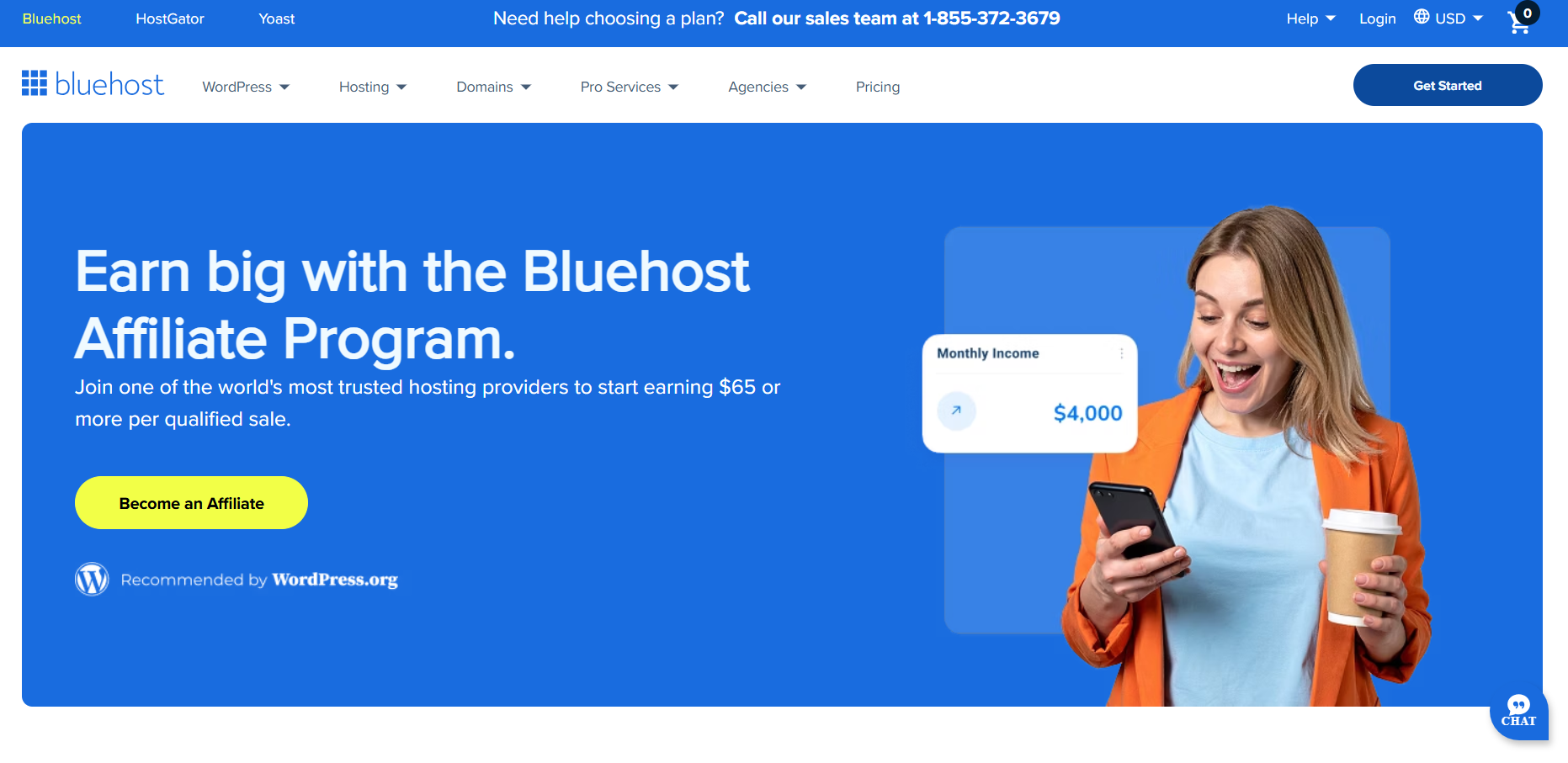
Bluehost is one of the most recognized names in web hosting and an enduring favourite among affiliate marketers. Officially recommended by WordPress.org, its program provides a simple, flat-rate commission for each qualified signup. This straightforward model is particularly appealing for developers who regularly onboard new clients needing basic, affordable hosting. The brand’s strong recognition helps simplify the sales process, as many clients are already familiar with the name.
Best For: Developers who onboard beginner clients or small businesses needing straightforward, affordable hosting.
Program Details
- Commission: $65 flat per qualified signup
- Cookie duration: 30 days
- Tracking platform: Impact
- Minimum payout: as low as $10–$100
Pros
- WordPress.org’s official recommendation boosts trust and conversion
- Simple flat-rate CPA makes earnings easy to calculate
- Low barrier to entry, no need to be an existing customer
Cons
- No recurring commission, one-time payout only
- 30-day cookie is shorter than premium hosting competitors (WP Engine’s 180 days)
- Lower per-sale payout than developer-focused hosts like Kinsta or WP Engine
4. Webflow
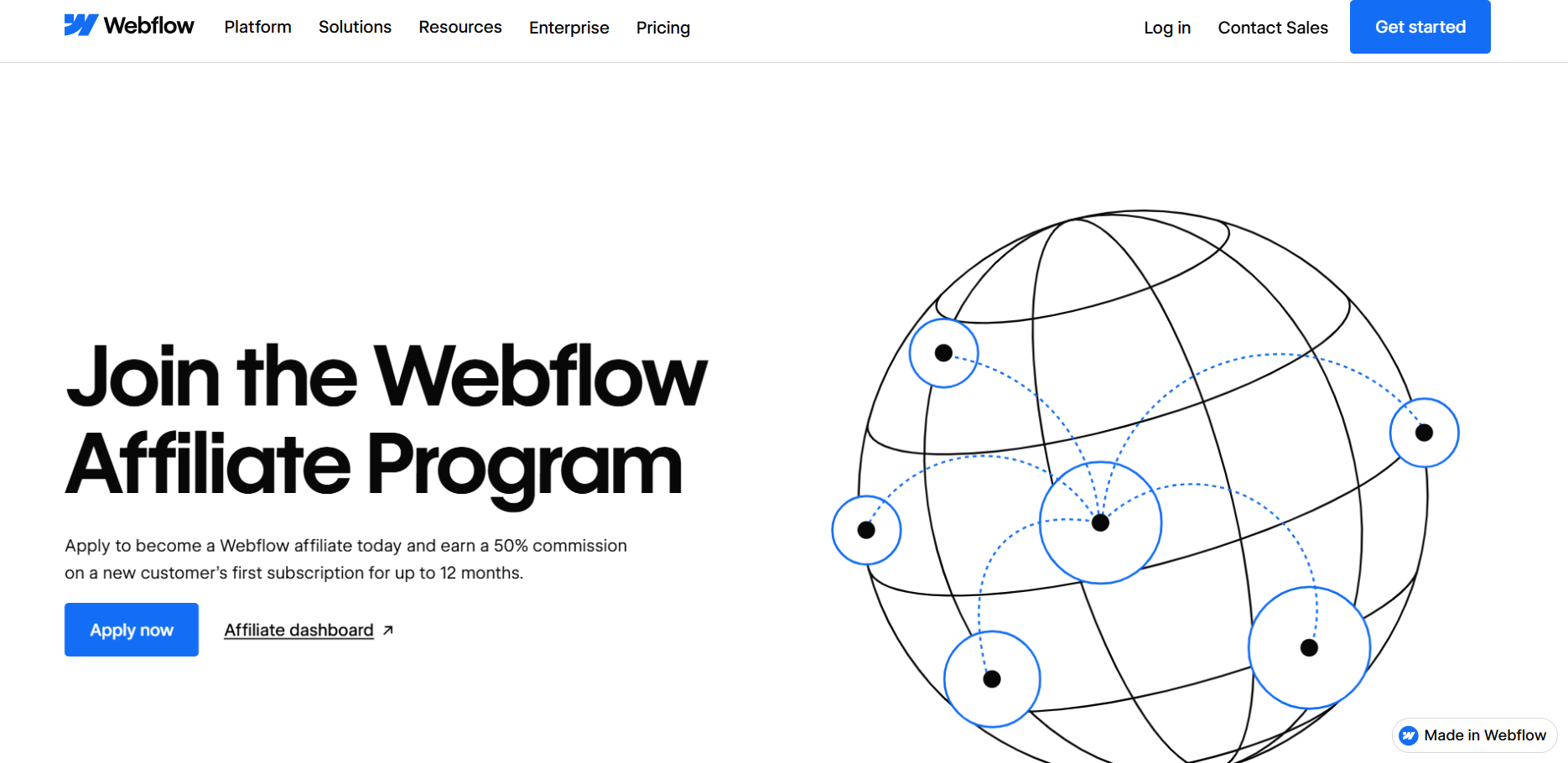
Webflow is a powerful visual web development platform that bridges the gap between design and code, allowing users to build production-ready websites without writing code manually. Its affiliate program is an excellent fit for designers and developers who cater to clients seeking custom, high-performance sites. The program rewards partners with a generous recurring commission for customers who subscribe to Webflow plans, making it a lucrative option for those who build and recommend it as part of their agency services.
Best For: Content creators, educators, and bloggers with a design/marketing audience, not client-work referrals.
Program Details
- Commission: 50% of a new customer’s first subscription for up to 12 months
- Cookie duration: 90 days
- Eligibility: content creators/influencers only; does not pay out on direct client referrals
- Payment: via PayPal or Stripe
Pros
- High 50% commission rate on the first year of a subscription
- Long 90-day cookie window
- No cap on total earnings
Cons
- Explicitly excludes agencies/freelancers referring their own clients (must use Partner Program instead)
- Commission stops after 12 months, no lifetime recurring
- Requires an established content audience to apply successfully
5. Shopify
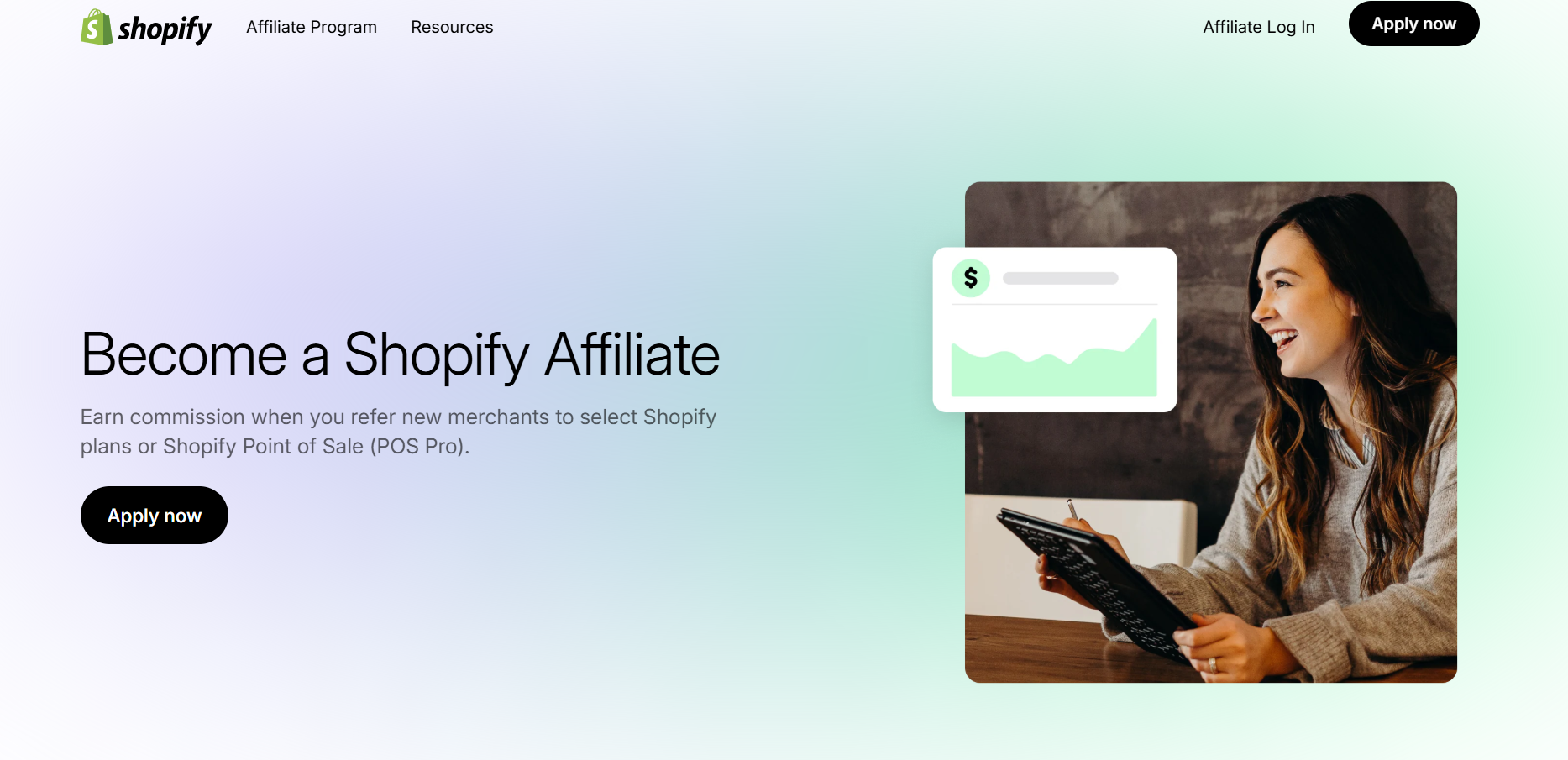
Shopify is the dominant force in the e-commerce space, offering an all-in-one platform for building and managing online stores. Its affiliate program is one of the most respected and profitable in the industry. It’s ideal for developers who build online stores for clients, create e-commerce tutorials, or blog about online business. Affiliates earn a commission for each merchant they refer who signs up for a paid Shopify plan, offering significant earning potential due to the platform’s popularity and high user retention.
Best For: Developers and educators producing e-commerce-focused tutorials, comparisons, or case studies.
Program Details
- Commission: paid per qualified merchant referral on a full-priced plan purchase (no cap on earnings)
- Cookie duration: 30 days standard, extended tracking of up to 400 days for trial-to-paid conversion
- Minimum payout: $10 balance
- Payment: direct deposit or bank transfer, processed monthly
Pros
- Extended trial-tracking window (up to 400 days) is unusually generous
- No cap on total commissions
- Fast application approval, typically within 24 hours
Cons
- Requires an active audience and original content to be approved
- One-time commission, not recurring
- Standard 30-day cookie for the initial click is shorter than some SaaS competitors
6. SiteGround
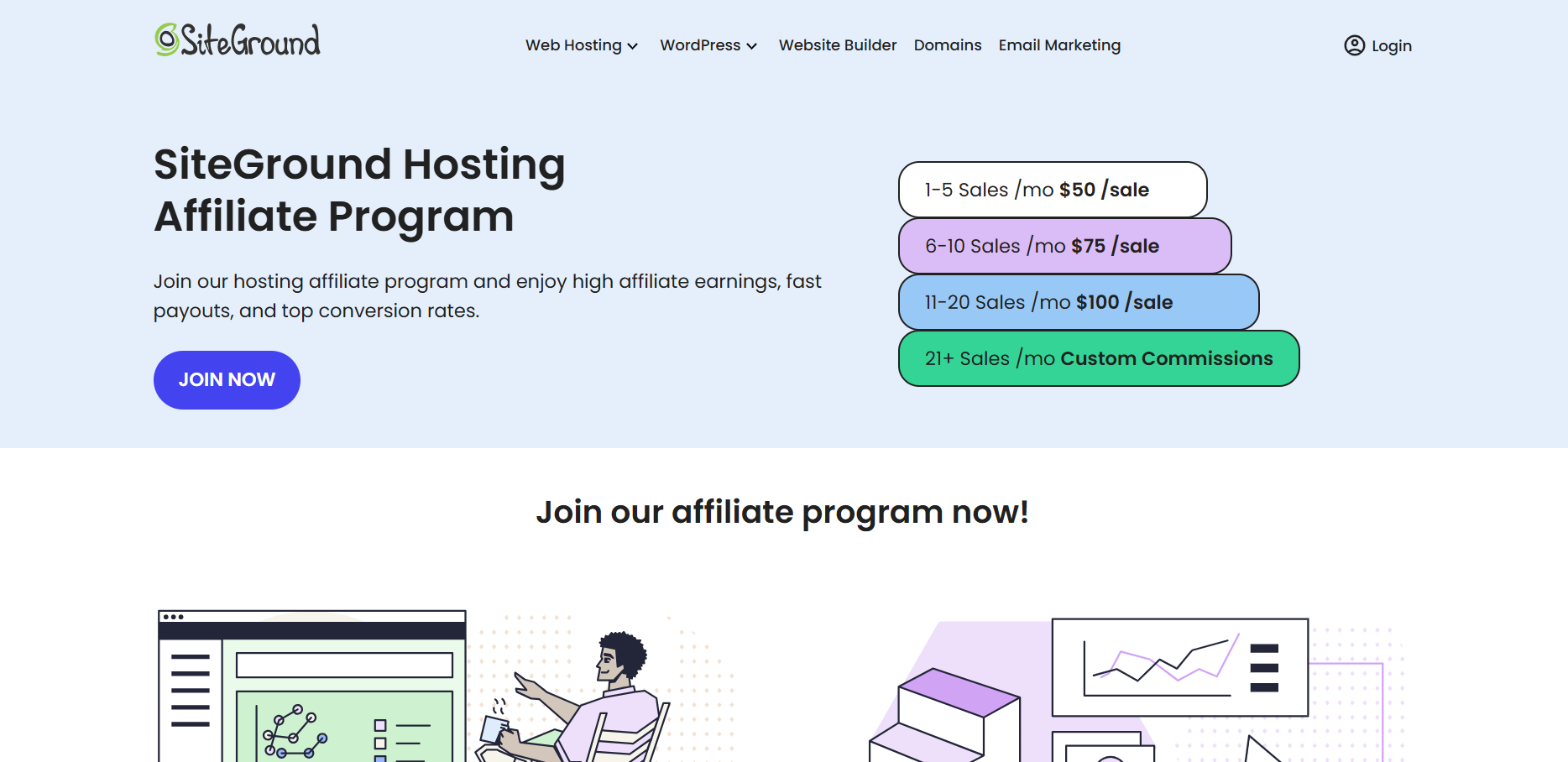
SiteGround is a popular web hosting company known for its developer-friendly features, outstanding customer support, and excellent performance. Its web hosting affiliate programs are highly regarded for transparent reporting and an attractive tiered commission structure, which rewards high-volume affiliates. Developers who prioritize speed, security, and reliable support for their clients will find SiteGround an easy product to recommend. It’s a great fit for those building WordPress sites or managing multiple client projects.
Best For: Developers with steady monthly referral volume who want commissions that scale with performance.
Program Details
- Commission: tiered, starting around $50 per sale and increasing with monthly referral volume (custom rates for 21+ referrals/month)
- Cookie duration: 30 days
- Payment: weekly payouts, no minimum payout requirement
- Also offers 60% commission on Website Builder/Ecommerce and SiteGround AI Studio sales
Pros
- Weekly payouts with no minimum threshold
- Tiered structure rewards consistent, high-volume affiliates
- Strong reputation for customer support, which helps conversion
Cons
- No recurring commission, one-time payout per sale
- Lower base commission than some hosting competitors until volume increases
- Program isn’t available in all countries
7. Cloudways
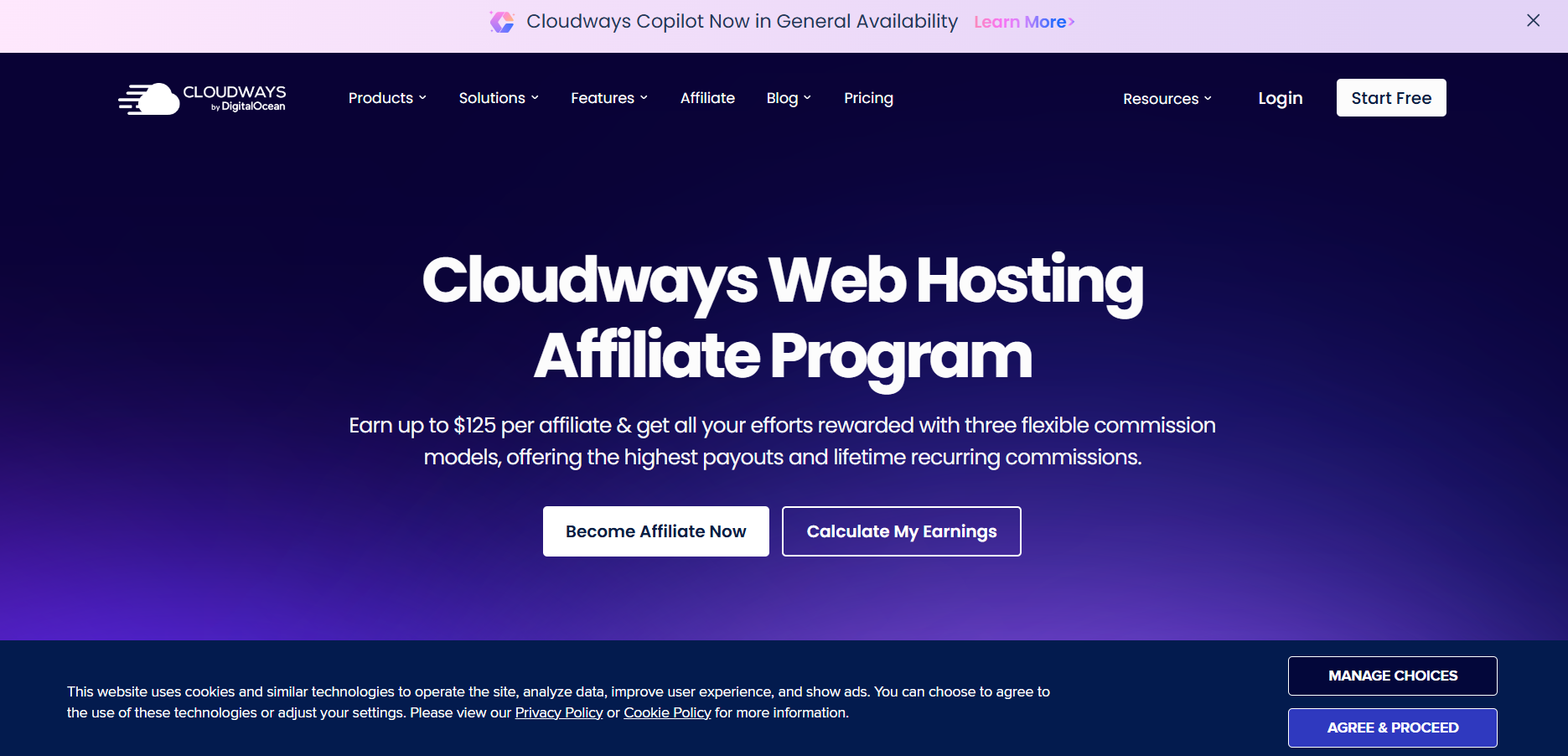
Cloudways is a managed cloud hosting platform that offers flexibility and scalability by partnering with top infrastructure providers like AWS, Google Cloud, and DigitalOcean. Its affiliate program is uniquely appealing to developers and agencies due to its choice of commission models: a high one-time payout or a hybrid model with a smaller upfront bonus plus lifetime recurring commissions. This flexibility allows developers to choose the monetization strategy that best aligns with their business model, making it a powerful option for those with a more technical client base.
Best For: Developers and agencies with a technical audience who want to choose between an upfront payout or long-term recurring income.
Program Details
- Commission: Slab model up to $125/sale (performance tiers); Hybrid model $30 upfront + 7% lifetime recurring; Custom plans available for high performers
- Cookie duration: 90 days
- Minimum payout: $250 via PayPal, $1,000 for wire transfer
- Churn rate: around 3%, supporting recurring income
Pros
- Flexibility to switch between Slab, Hybrid, or Custom commission models
- Long 90-day cookie window
- Dedicated affiliate manager support
Cons
- $250 minimum payout is high relative to some competitors
- Commission structure change requests only take effect the following month
- More technical audience required to convert well
8. WP Engine
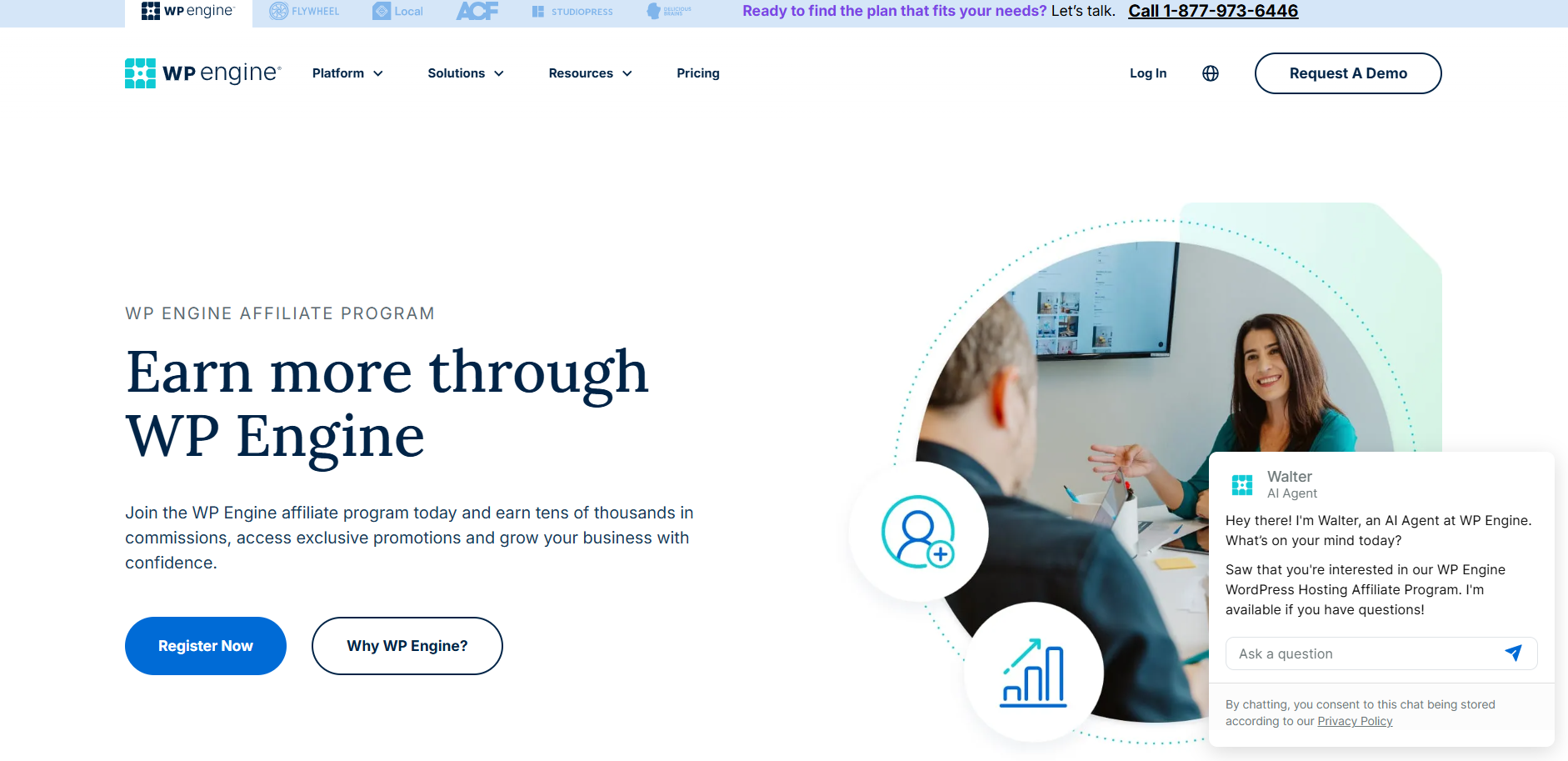
WP Engine is a market leader in premium managed WordPress hosting, specifically catering to agencies, enterprises, and businesses that require top-tier performance, security, and scalability. Its affiliate program is one of the most lucrative in the hosting industry, offering substantial one-time commissions. Developers who build and manage high-stakes WordPress sites for professional clients can earn significant income by referring them to WP Engine’s robust platform. The program also offers commissions on theme sales from StudioPress.
Best For: Developers and agencies serving business or enterprise clients who need premium, high-performance WordPress hosting.
Program Details
- Commission: minimum $200 per sale or 100% of the customer’s first month’s payment, whichever is higher
- Cookie duration: 180 days for hosting; 60 days for StudioPress themes
- Tracking platform: ShareASale (Everflow also referenced)
- Payment: monthly, minimum $50 balance
Pros
- Industry-leading 180-day cookie window
- High flat-rate commission compared to most hosting programs
- Strong brand trust in the premium WordPress space
Cons
- Premium pricing makes it a harder sell for budget-conscious clients
- One-time payout only, no recurring revenue
- Requires an established, relevant website to get approved
9. Leadpages
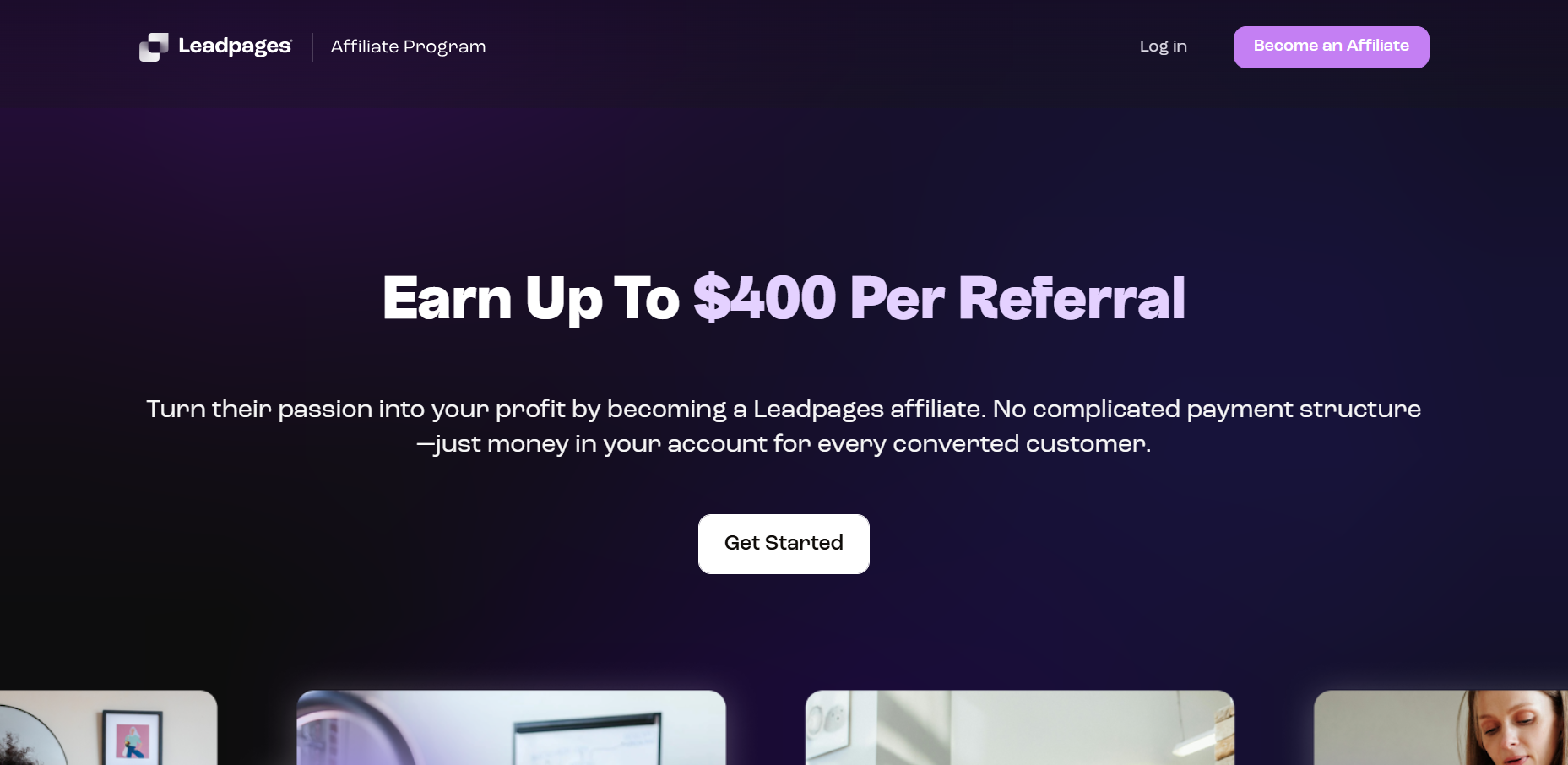
Leadpages is a popular conversion-focused tool that helps businesses create high-converting landing pages, pop-ups, and alert bars. Its affiliate program is well-suited for web developers who specialize in building marketing funnels, campaign sites, or lead generation systems for clients. The program stands out by offering a lifetime recurring commission, which can build into a stable, passive income stream over time. Since Leadpages is designed for marketers, it’s an easy upsell for clients looking to improve their conversion rates.
Best For: Developers and consultants who build marketing funnels or landing pages and want ongoing recurring income.
Program Details
- Commission: 10% base recurring, scaling up to 40–50% based on prior 30-day sales volume
- Cookie duration: 90 days
- Tracking platform: PartnerStack
- Payment: monthly via PayPal, Stripe, or bank transfer; $5 minimum payout
Pros
- True lifetime recurring commission, not capped to a set period
- Low $5 minimum payout threshold
- Affiliates who use the product themselves report roughly double the average earnings
Cons
- Base commission tier (10%) is low until volume thresholds are hit
- Requires ongoing monthly sales volume to maintain higher commission tiers
- Smaller brand recognition compared to hosting giants, which can affect conversion
10. Namecheap
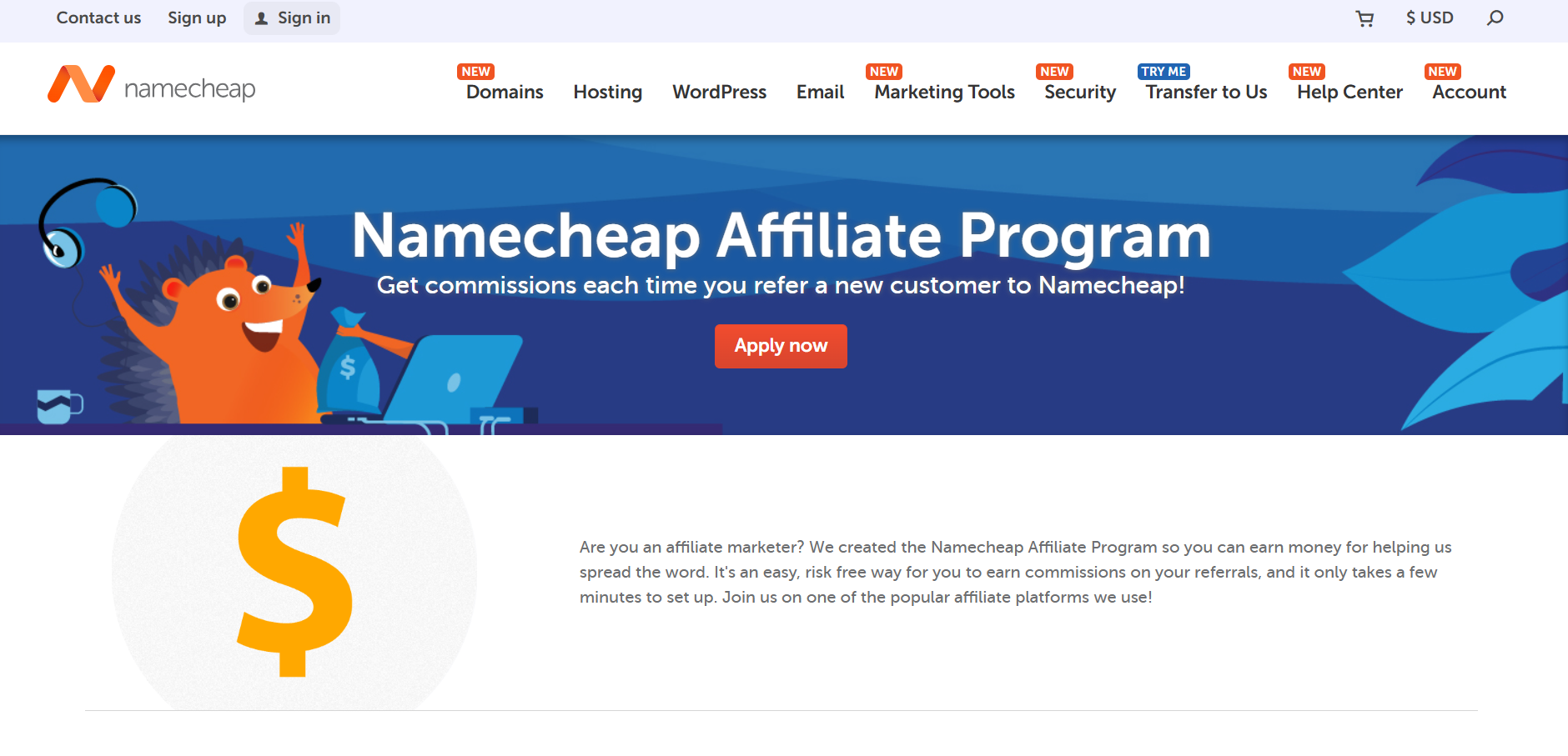
Namecheap is a leading ICANN-accredited domain registrar and web hosting provider known for its competitive pricing and customer-centric approach. Its affiliate program is an excellent entry point for developers, offering commissions on a wide range of products, including domain registrations, hosting plans, SSL certificates, and professional email. Because nearly every web project starts with a domain name, Namecheap is an incredibly easy and natural product to recommend, providing a steady stream of small-ticket commissions.
Best For: Developers looking for an easy, low-friction add-on program since nearly every project needs a domain.
Program Details
- Commission: roughly 20% on domains, up to 35–38% on hosting/SSL products (tiered by product type)
- Cookie duration: 30 days
- Tracking platforms: Impact, Commission Junction, or ShareASale (affiliate’s choice)
- Minimum payout: $10–$50, depending on the platform used
Pros
- Product breadth means multiple commission opportunities per client
- Long-running, stable program (since 2009) with consistent terms
- Multiple tracking platform options to fit existing affiliate setups
Cons
- 30-day cookie is shorter than several hosting competitors
- First purchase only, no commission on existing customers’ repeat purchases
- 0% commission on apps, hosting add-ons, and premium domains
11. Wix
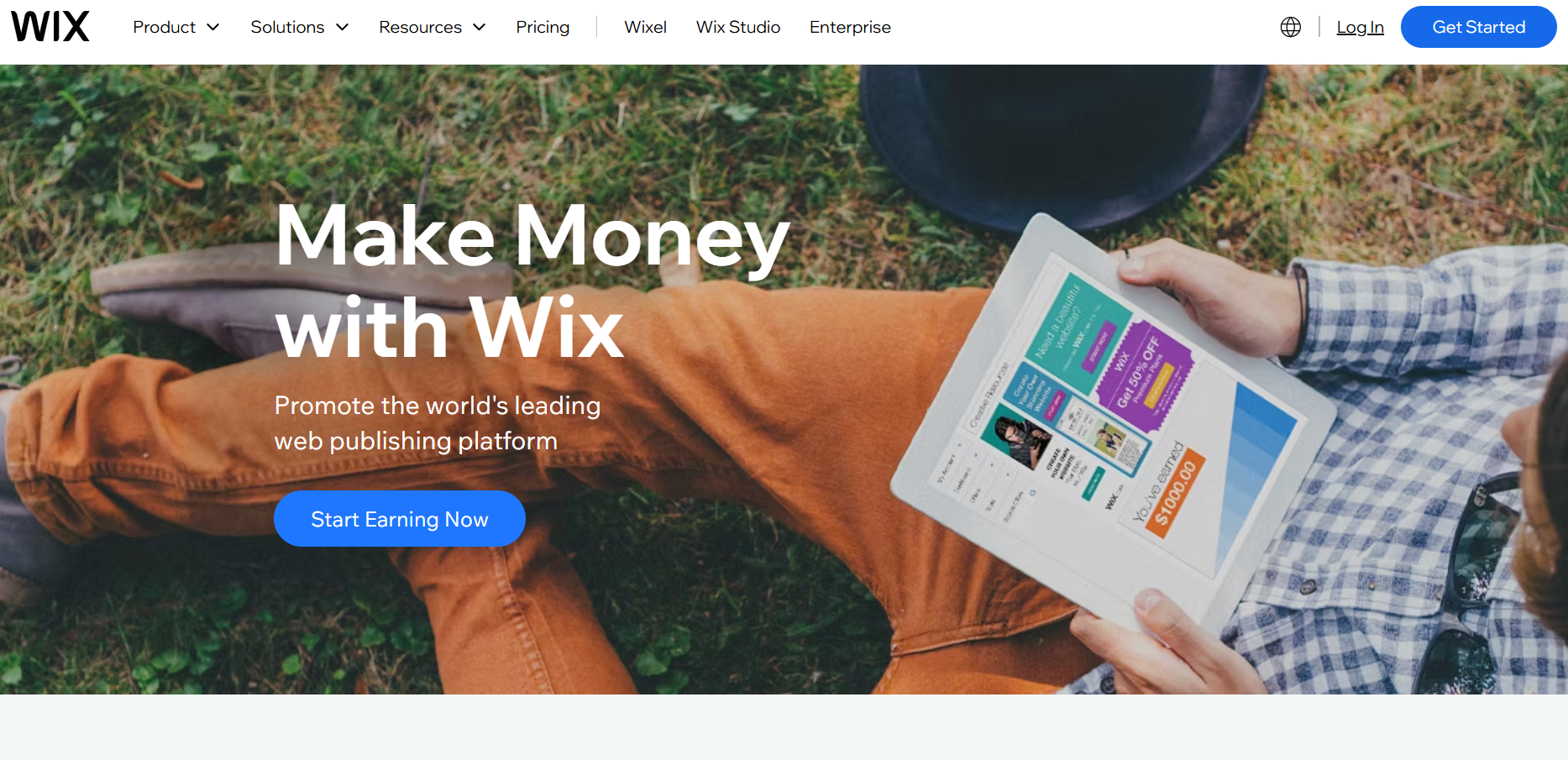
Wix is a cloud-based website builder platform that empowers users with little to no coding knowledge to create professional websites. Its affiliate program is geared toward those who serve small businesses, entrepreneurs, and beginners. Affiliates earn a generous one-time commission when a referred user signs up for a Wix Premium Plan. For developers who work with clients needing a simple, all-in-one solution that they can manage themselves post-launch, Wix can be a profitable recommendation.
Best For: Developers whose clients want a simple, self-manageable website after launch rather than an ongoing WordPress build.
Program Details
- Commission: $100 flat per Premium plan sale
- Cookie duration: 30 days, first-click attribution
- Minimum payout: $300 monthly balance required
- Payment: processed around the 15th of the month
Pros
- Simple flat-rate payout, easy to calculate
- No cap on the total number of referrals
- High brand recognition drives easier conversions
Cons
- $300 minimum payout is one of the higher thresholds on this list
- No recurring commission on renewals
- 30-day cookie is on the shorter side for a considered purchase
12. Squarespace

Squarespace is an elegant, all-in-one platform for creating beautiful websites, portfolios, and online stores. Its affiliate program, managed through Impact Radius, is ideal for developers and designers who work with creative professionals, bloggers, and small businesses seeking a polished and easy-to-use solution. Unlike many other builder programs, Squarespace offers a recurring commission structure, providing a steady income stream for as long as the referred customer remains active.
Best For: Designers and developers whose clients are creative professionals, restaurants, or small businesses wanting a polished, templated site.
Program Details
- Commission: $100–$200 per qualifying sale (higher rate for Commerce Annual/Monthly plans); $45 per Acuity Scheduling referral
- Cookie duration: 45 days
- Tracking platform: Impact
- Payment: minimum $10–$400 depending on source; validated after a ~80-day holding period
Pros
- Longest cookie window among major website builders on this list (45 days)
- Above-average flat payout compared to Wix or typical hosting programs
- No cap on referrals
Cons
- No recurring commission, one-time payout only
- Payout can take up to roughly three months to clear
- Strict policy against also promoting direct competitors (Wix, GoDaddy, WordPress, etc.)
13. Crocoblock
Crocoblock is a toolkit for WordPress developers that offers a suite of advanced plugins, known as JetPlugins, designed to extend the functionality of the Elementor and Gutenberg page builders. Its affiliate program is a perfect match for developers who are already building websites within the Elementor ecosystem. By recommending Crocoblock’s powerful widgets and design kits, you can earn generous one-time commissions. It’s a niche but highly relevant product for developers looking to add sophisticated features to their client sites.
Best For: Elementor-focused developers who already build with JetPlugins and can speak to specific use cases.
Program Details
- Commission: 50% of every unique first-time purchase
- Cookie duration: 30 days, first-cookie (not last-click) attribution
- Minimum payout: $400 via PayPal
- Payment: after a 30-day money-back guarantee period passes
Pros
- High 50% commission rate
- Live tracking dashboard for real-time performance
- Niche audience fit means higher relevance/conversion for Elementor-focused content
Cons
- The high $400 minimum payout is a barrier for smaller affiliates
- The first cookie model means you lose credit if the customer has already visited the site before
- A niche product limits the addressable audience compared to hosting or builders
14. PowerPack for Elementor
PowerPack is another popular add-on for Elementor that extends its capabilities with over 70 creative widgets and extensions. Its affiliate program is ideal for content creators, bloggers, and developers who produce tutorials or work with clients on a smaller scale. While the commissions are smaller than some larger programs, they can provide a consistent stream of income due to the product’s relevance and affordable price point. It’s an easy add-on to recommend to anyone already using Elementor.
Best For: Developers producing Elementor tutorials who want a lightweight, easy-approval affiliate add-on.
Program Details
- Commission: flat 20% on every sale
- Cookie duration: 45 days
- Minimum payout: $100
- No minimum sales requirement to join; free to apply
Pros
- No cap on affiliate earnings
- Straightforward flat commission, easy to calculate
- Free and low-barrier application process
Cons
- Lower commission percentage than Elementor itself or Crocoblock
- Smaller product category limits scale compared to hosting programs
- Less brand recognition than the platforms it plugs into
15. Style Kits by Elementor
Style Kits for Elementor, created by AnalogWP, offers a unique approach to WordPress design by providing a theme-agnostic styling system. Instead of individual widgets, it provides pre-designed layouts, color palettes, and typography presets that streamline the design process. Its affiliate program is tailored to developers and designers who build sites with Elementor and want to promote a tool that enhances design efficiency. Recommending Style Kits can help your clients achieve a polished look quickly, making it a valuable and easily monetizable tool.
Best For: Designers and developers focused on Elementor design consistency and styling workflows rather than functional widgets.
Program Details
- Commission: 30% on every sale generated
- Cookie duration: 30 days
- Tracking: affiliate portal with click, impression, and conversion tracking
- Payment: processed once the minimum threshold is reached (exact figure not published; confirm in-dashboard)
Pros
- Straightforward 30% flat commission
- Robust affiliate portal for tracking performance
- Complements other Elementor plugin promotions (Crocoblock, PowerPack) without overlapping functionality
Cons
- Niche product with a narrower addressable audience
- Less publicly documented payout threshold/schedule than larger programs
- Smaller brand recognition may require more educational content to convert
Affiliate Marketing Strategies That Actually Work
Succeeding with affiliate marketing as a developer has less to do with how many links get posted and more to do with where and how they show up. Based on my research into what separates high-converting affiliates from those that see little to no traction, here are some affiliate marketing strategies that work:
- Lead with real content: Comparison posts, tutorials, and resource pages convert far better than a bare link dropped into a conversation
- Feature tools inside actual work: A plugin walkthrough or a “how I set up this client’s hosting” post does more than a generic banner ad
- Stay consistent: Regularly testing new tools and updating recommendations keeps content relevant instead of going stale
- Disclose clearly: Upfront disclosure builds trust rather than undermining it, and it’s legally required in most regions
- Avoid overlapping promotions: Recommending five competing hosting providers on the same page dilutes credibility more than it multiplies clicks
Conclusion
Affiliate marketing works for web developers because it doesn’t ask for anything new; it just attaches a payout to recommendations already being made on every project. Based on my research, the programs that pay off aren’t necessarily the highest-commission ones, but the ones that match a developer’s actual workflow, whether that’s a hosting provider, a page builder, or a domain registrar already in regular use.
Picking two or three programs that reflect real client work, tracking what actually converts, and staying consistent with honest content is what turns this into a steady second income stream rather than a one-off bonus. Start with whichever program overlaps most with what’s already being recommended, and expand from there.
Frequently Asked Questions (FAQs)
What is a web developer affiliate program?
It’s a partnership where developers earn a commission for recommending tools they already use on client projects, hosting, page builders, plugins, or domains through a unique tracking link.
How do I pick the right program?
Match the program to what’s already being recommended on real projects. A tool that’s genuinely part of the workflow converts better and holds up longer than one picked purely for a higher commission rate.
Can I join more than one affiliate program?
Yes. Most developers run two or three programs that map onto different parts of a project, hosting, a builder, and a domain registrar, for example, rather than one program covering everything.
How do I track my earnings?
Each program provides its own dashboard showing clicks, conversions, and commissions. Programs using networks like Impact, ShareASale, or PartnerStack centralize this tracking across multiple merchants if more than one program is run through the same network.
Are there fees to join affiliate programs?
No. Every program covered here is free to join. Some, like Elementor or WP Engine, require manual approval, but there’s no cost to apply.
What’s the best way to promote affiliate links?
Through tutorials, comparison content, and client-facing resource pages rather than standalone links. Disclosure is required in most regions, so it’s worth stating the affiliate relationship clearly rather than treating it as optional.
How much can developers realistically earn?
It depends heavily on the program and traffic. One-time payouts (Bluehost, Wix) can add up quickly with volume, while recurring models (Kinsta, Leadpages) build more slowly but compound over time. Community feedback across most of these programs suggests a handful of well-placed recommendations outperform a large volume of low-context links.
Do I need to disclose affiliate links?
Yes. This is a legal requirement in most regions, not just a best practice, and most programs’ terms explicitly require it as a condition of participation.
