


Small website ad networks are platforms that match advertisers with small publishers, enabling website owners to earn revenue through targeted ads while maximizing ad performance and user experience.
The best ad networks for small websites in 2026 and 2027 are Google AdSense, Ezoic, Media.net, Infolinks, and PropellerAds. These platforms accept low-traffic sites, offer beginner-friendly setup, and pay through CPC, CPM, or CPA models. AdSense and Ezoic lead for publishers wanting trusted, AI-optimized monetization, while Infolinks and PropellerAds work well for very new sites with minimal traffic requirements.
Based on my research into approval requirements, payout models, and ad formats across small-publisher-friendly networks, this guide breaks down which platform fits which stage of website growth.
Why Small Websites Need the Right Ad Network
Running a small website comes with real constraints: limited traffic, smaller budgets, and fewer resources to manage complex monetization strategies. Choosing the right advertising network turns these limitations into opportunities rather than obstacles.
The right network lets small websites generate passive income without manually managing ads, while also showing relevant, non-intrusive placements that keep visitors engaged. As a site grows, a good network scales revenue naturally, so earnings increase alongside traffic rather than requiring a full platform switch every time the site reaches a new tier. This applies whether you’re running a personal blog, a startup’s marketing site, or a content hub aimed at bloggers building an audience from scratch.
How Does An Ad Network Work?
Ad networks act as intermediaries connecting advertisers who want to promote products or services with website owners looking to monetize content. The process generally follows four steps:
- Advertisers Join the Network : Companies submit ad creatives, targeting preferences, and budgets.
- Publishers Register Their Websites : Small website owners sign up to display ads on their platforms.
- Ad Placement and Targeting :The network automatically selects which ads to display based on user behavior, content, and demographics.
- Revenue Sharing :Publishers earn through models such as CPC (cost per click), CPM (cost per thousand impressions), or CPA (cost per acquisition), depending on the agreement.
Based on my research, understanding this flow is what separates publishers who pick a network reactively from those who choose deliberately based on their traffic level and content niche.
How to Choose the Right Ad Network
Not all ad networks are built the same, and the right choice can mean the difference between mediocre earnings and consistent revenue growth.
- Traffic Volume : Some networks require 10,000+ monthly visitors, while others, including several self-service ad networks, accept even low-traffic sites.
- Niche Compatibility : A tech blog performs better with tech-related ads, while a food blog benefits from lifestyle or recipe-focused placements.
- Ad Formats : Networks specialize in different formats, including native ads, display, push notifications, video, or interstitials. Pick formats that blend with your site rather than disrupting it.
- Revenue Models : High-traffic, low-click sites often do better with CPM, while highly engaged audiences may earn more through CPC or CPA.
- Support and Analytics : Reliable networks provide real-time dashboards and strong customer support to help track and optimize earnings.
Top Ad Networks for Small Websites in 2027
Here is the list of the best ad networks for small websites and bloggers that publishers can join in 2026 and 2027 to maximize revenue.
- Google AdSense
- Ezoic
- Media.net
- Infolinks
- AdPushup
- Monumetric
- PropellerAds
1. Google AdSense
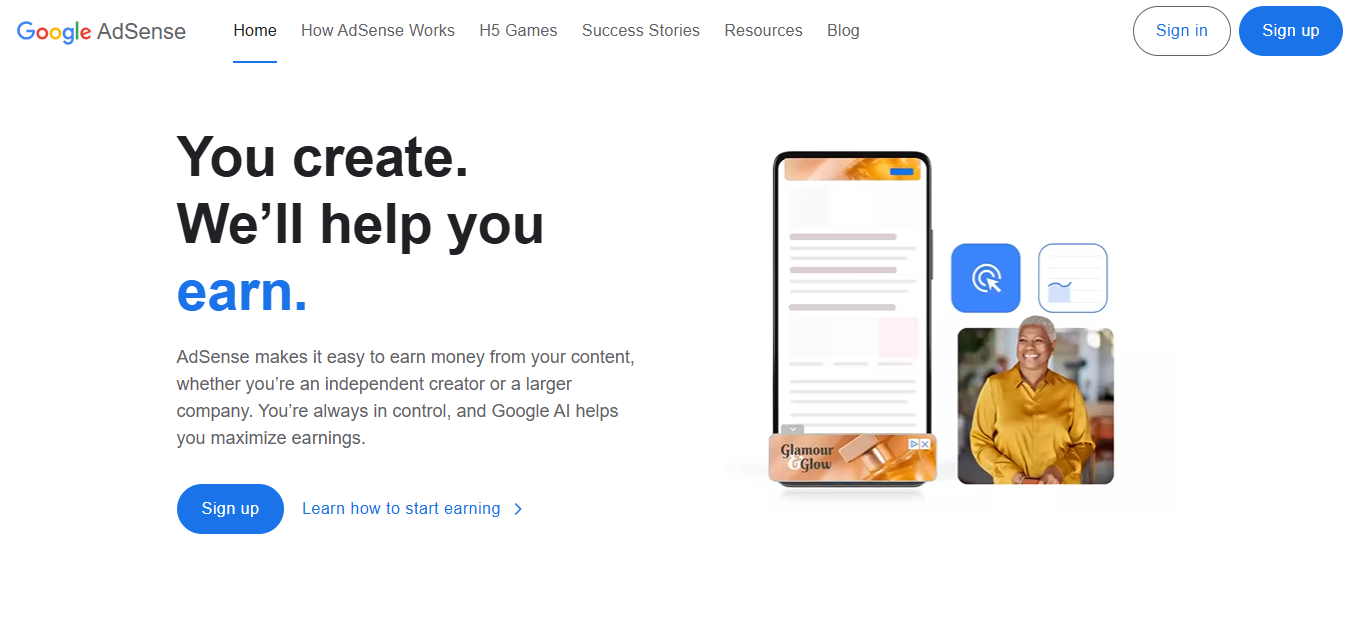
Google AdSense remains the most widely used ad network in 2026 and 2027, thanks to its large advertiser base, credibility, and ease of integration. Once approved, publishers place the AdSense code on their site, and Google’s algorithms scan page content and user behavior to deliver contextually relevant ads.
Payment Details:
- Minimum Payout: $100 ·
- Methods: EFT/ACH, Wire Transfer, Western Union, Check ·
- Frequency: Monthly (21st–26th) ·
- Revenue Share: Publishers keep 80% after advertiser platform fees
Pros:
- High credibility and trust from advertisers.
- Easy setup and automated ad optimization.
- Reliable monthly payments directly from Google.
- Works well even for small publishers with limited traffic.
Cons:
- Strict approval process for new websites.
- Policy violations can lead to account suspension.
- Earnings may be lower for very low-traffic sites.
Best For: Small website owners who want a trusted, beginner-friendly ad network with global reach and automated optimization. It’s ideal for publishers who prioritize reliability, long-term stability, and passive income.
2. Ezoic
Ezoic is a Google-certified publishing partner that uses machine learning to test ad placements, formats, and sizes in real time. Rather than using static ad slots, it continuously experiments to find the highest-earning combination for each visitor, making it one of the most genuinely data-driven options for small publishers.
Payment Details:
- Minimum Payout: No stated minimum (earnings accrue and pay out regularly) ·
- Methods: PayPal, Payoneer, Direct Deposit, Wire Transfer ·
- Frequency: Net-30 ·
- Revenue Share: Variable, Ezoic retains a service percentage
Pros:
- Maximizes earnings with AI-driven optimization.
- Supports small websites with lower traffic thresholds.
- Additional tools like Site Speed Accelerator improve performance.
Cons:
- Setup can be more technical compared to AdSense.
- The revenue share model means Ezoic keeps a percentage of ad income.
- Requires ongoing testing to achieve the best results.
Best For: Small to medium-sized websites looking for a data-driven, AI-optimized solution to increase ad revenue without compromising user experience. Especially useful for publishers who want to experiment and scale gradually.
3. Media.net
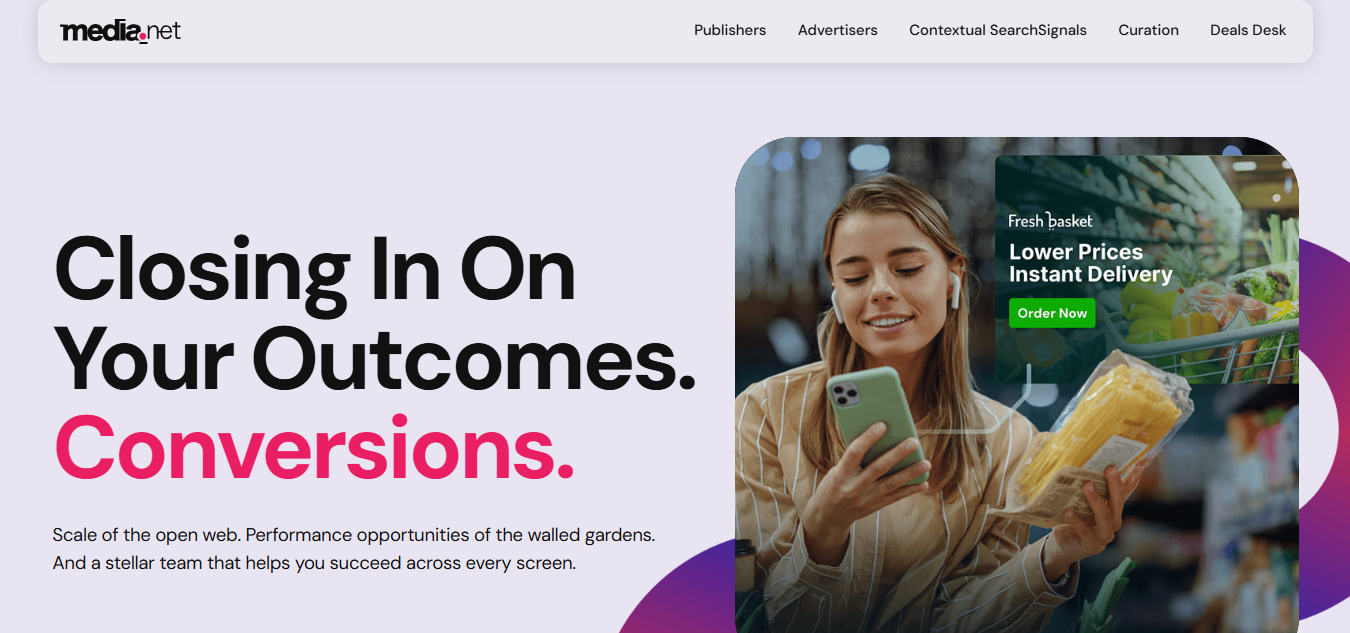
Media.net, powered by the Yahoo and Bing advertising network, is one of the world’s largest contextual advertising platforms. It scans page content and matches semantically relevant ads, often in native formats that blend naturally into editorial layouts, making it one of the strongest AdSense complements for English-language content sites.
Payment Details:
- Minimum Payout: $100 ·
- Methods: Wire Transfer, PayPal ·
- Frequency: Net-30 ·
Pros:
- High-quality contextual ads improve click-through rates.
- Better payouts in competitive niches (tech, finance, etc.).
- Customizable ad layouts for better user experience.
Cons:
- Strongest results come from traffic in the U.S., U.K., and Canada.
- The approval process can be strict for very new or low-content websites.
- Earnings may be lower for sites outside premium niches.
Best For: Small to mid-sized publishers who want contextual, premium-quality ads that enhance user experience while generating stable income. It’s particularly effective for websites with English-speaking audiences in competitive niches.
4. Infolinks

Infolinks specializes in in-text advertising, a format fundamentally different from traditional display networks. It scans page content automatically, highlights relevant keywords, and serves ads when users hover or click — complementing rather than replacing existing display setups. It also offers in-fold, in-frame, and in-tag formats for additional placement flexibility.
Payment Details:
- Minimum Payout: $50 (PayPal, Payoneer), $100 (Bank Transfer) ·
- Methods: PayPal, Payoneer, Wire Transfer, ACH, eCheck ·
- Frequency: Net-45
Pros:
- Unique monetization opportunities through in-text advertising.
- Non-intrusive ad formats that don’t take up extra space.
- Easy setup and quick approval process.
- Accepts small websites and blogs with low traffic.
- Can be combined with other ad networks like AdSense.
Cons:
- Lower earnings potential compared to premium ad networks like Mediavine or AdThrive.
- Ads may feel distracting to some users if not customized properly.
- Works best with English-language content.
Best For: Small publishers and bloggers looking for innovative, non-traditional ad formats that don’t require large amounts of traffic. Infolinks is especially useful for content-heavy websites that want to monetize keywords naturally within their articles.
5. AdPushup
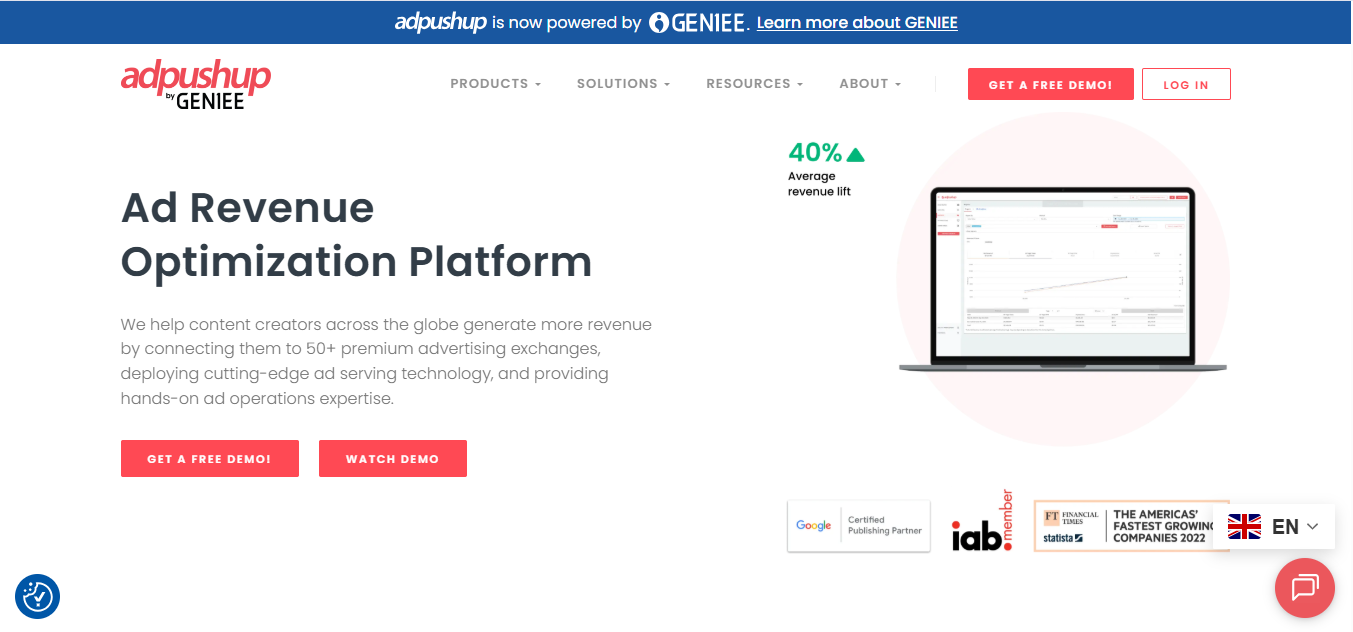
AdPushup is a header bidding and ad optimization platform rather than a traditional ad network. It connects publisher inventory to multiple demand partners simultaneously including Google AdX, Rubicon, and AppNexus letting advertisers compete in real time for each impression. This competitive bidding structure consistently drives CPMs higher than single-network setups.
Payment Details:
- Minimum Payout: $50 ·
- Methods: PayPal, Wire Transfer, Alipay, Paxum ·
- Frequency: Net-7, Net-30, or Net-45 depending on account tier ·
Pros:
- Increases ad revenue with header bidding.
- Automated testing saves time and boosts performance.
- Strong demand partnerships provide access to premium advertisers.
- Excellent support and account management.
Cons:
- Requires moderate traffic (not the best for very new sites).
- More complex setup compared to plug-and-play networks like AdSense.
- Revenue share means AdPushup takes a percentage of earnings.
Best For: Small to mid-sized publishers who already have consistent traffic and want to boost their CPMs and ad earnings through header bidding and optimization. It’s especially useful for website owners aiming to grow premium ad revenue rather than just basic monetization.
6. Monumetric

Monumetric is a full-service ad management network that works directly with publishers to build customized ad strategies, rather than offering a self-serve plug-and-play setup. Its team manages ad placement testing, layout optimization, and demand partnerships on the publisher’s behalf, producing higher average RPMs than most entry-level networks.
Payment Details:
- Minimum Payout: $10 ·
- Methods: Direct Deposit, PayPal, Wire Transfer ·
- Frequency: Net-60 ·
- Revenue Share: 70% to publisher, 30% to Monumetric ·
Pros:
- Excellent customer support with a personal touch.
- High-quality ads that improve site credibility.
- Better payouts compared to beginner networks.
- Great balance between monetization and user experience.
Cons:
- Requires at least 10,000 monthly views (not for very new sites).
- A setup fee applies for sites under 80,000 monthly views.
- Slightly longer approval process than instant-approval networks.
Best For: Small to mid-sized publishers who want personalized ad management and access to premium advertisers while ensuring a smooth, non-intrusive user experience.
7. PropellerAds
PropellerAds is a self-serve ad network with the lowest entry barriers on this list, accepting publishers regardless of traffic volume and approving most accounts within hours. It supports push notifications, popunders, native ads, and interstitials a format range much wider than most beginner-accessible networks with AI-driven optimization and a $5 minimum payout.
Payment Details:
- Minimum Payout: $5 ·
- Methods: PayPal, Payoneer, Bitcoin, Wire Transfer, Skrill ·
- Frequency: Weekly ·
Pros:
- Very beginner-friendly with fast approval.
- Monetizes even low-traffic websites effectively.
- Wide range of ad formats to choose from.
- Global advertiser base.
Cons:
- Some ad formats (such as pop-ups and interstitials) may be intrusive to users.
- Lower payouts compared to premium networks.
- Works better for entertainment, downloads, and casual niches rather than professional sites.
Best For: Small blogs, entertainment sites, and mobile-friendly websites that want quick approval and easy monetization through diverse ad formats.
Factors to Consider When Choosing an Ad Network
When selecting the best ad network for small websites, a few key factors can make a big difference in your revenue potential and user experience:
- Traffic Volume: Some networks have strict entry requirements, while others accept small sites with low traffic. Match your site’s size to the right platform.
- Niche Compatibility: Pick a network that serves ads relevant to your content. For example, a food blog benefits from lifestyle ads, while a tech blog performs better with software or gadget ads.
- Ad Formats: Different networks offer display, native, video, or in-text ads. Choose formats that fit naturally into your site’s design without overwhelming visitors.
- Revenue Model: Networks pay using CPC (per click), CPM (per impression), or CPA (per action). Select the model that best suits your audience engagement and traffic type.
The right balance of these factors ensures your website earns steady revenue while keeping your visitors engaged and satisfied.
Tips to Maximize Ad Revenue
Based on my research, optimization matters more than placement alone once a network is live:
- Optimize Ad Placement : Above-the-fold, within content, and at article endings capture attention without disrupting browsing. Avoid clustering ads in sidebars only.
- Test Different Ad Formats : Compare display, native, in-text, and push formats to see which resonates best with your specific audience segment.
- Monitor Performance Weekly : Regular review of impressions, CTR, and RPM trends helps identify underperforming placements before they compound.
- Ensure Mobile Compatibility : With most traffic now coming from smartphones, responsive ad units are not optional non-mobile-optimized ads directly reduce revenue.
How Do Small Websites Get Approved by Ad Networks in 2027?
Approval requirements vary significantly across networks, but industry feedback suggests these four factors consistently determine outcomes across most platforms:
- Content Quality : Networks scan for original, well-written content. Thin pages, duplicate content, or sites with fewer than 10–15 substantive posts are typically rejected by AdSense and Media.net, though not by PropellerAds or Infolinks.
- Site Policy Compliance : Gambling, adult content, misleading claims, and copyright-infringing material trigger automatic rejection across all major networks. Clearing these issues before applying saves time.
- Traffic Geography : Networks with premium advertiser demand (AdSense, Media.net) look for meaningful traffic from Tier-1 countries. Mostly bot or low-engagement traffic causes rejection regardless of volume.
- Technical Setup : A properly configured website with clear navigation, a privacy policy page, and no broken links signals credibility. Based on publicly available information from network approval guidelines, these basics meaningfully improve approval rates for new applicants.
Conclusion
Choosing the best ad network for a small website in 2027 isn’t just about picking the highest advertised CPM it’s about matching the right platform to your current traffic level, content niche, and growth timeline. PropellerAds and Infolinks provide the most accessible entry points with no traffic minimums. Google AdSense remains the most trusted general-purpose option. Ezoic and Monumetric deliver the strongest RPMs once traffic builds to a qualifying level.
Based on my analysis, publishers who see the strongest long-term revenue growth treat ad network selection as a progression rather than a permanent choice starting with accessible networks, optimizing consistently, and graduating to premium managed platforms as traffic matures. The goal isn’t the highest payout on day one; it’s building a revenue foundation that scales reliably alongside the site.
Frequently Asked Questions (FAQs)
What are the best ad networks for small websites?
The best ad networks for small websites include Google AdSense, Ezoic, and Media.net. These networks are beginner-friendly, easy to set up, and offer reliable revenue. They display relevant ads that match your content, helping maintain a positive user experience. Small website owners can start earning without needing large traffic or complex setups.
How do the best ad networks for small websites pay publishers?
These networks pay publishers using models like CPC (cost per click), CPM (cost per 1,000 impressions), or CPA (cost per action). Payments depend on the advertiser’s goals and the network’s policies. Most networks handle tracking, reporting, and payment automatically. This allows publishers to focus on content while earning passive income.
Which of the best ad networks for small websites generate the highest revenue?
Premium networks like Mediavine and AdThrive often provide the highest earnings. However, they typically require higher traffic compared to AdSense or Ezoic. Small websites can still earn well with beginner-friendly networks by optimizing placements and ad formats. Choosing the right network based on traffic and niche is key to maximizing revenue.
Can I use multiple best ad networks for small websites on the same site?
Yes, many publishers combine different networks to increase ad fill rates and overall revenue. It’s important to follow each network’s policies to avoid violations. Using multiple networks allows you to monetize different ad spaces effectively. This strategy helps small websites grow their earnings without relying on a single source.
How much traffic is needed for the best ad networks for small websites?
Some networks, like AdSense or Infolinks, accept sites with low traffic, making them suitable for beginners. Premium networks such as Mediavine or AdThrive require at least 50,000+ monthly visits. Small websites should choose networks that match their traffic level. Gradually, as traffic grows, publishers can switch to higher-paying networks.
Are the best ad networks for small websites safe for publishers?
Yes, trusted networks like Google AdSense, Ezoic, and Media.net are safe for small publishers. Following network guidelines and avoiding invalid clicks ensures account safety. These networks provide secure payment methods and reliable support. Safety allows website owners to focus on content creation and monetization without risks.
How can I quickly boost revenue with the best ad networks for small websites?
To increase earnings, place ads in high-visibility areas like above the fold or within content. Experiment with ad formats such as native, display, video, or in-text ads. Ensure all ads are mobile-friendly and responsive for smartphone users. Monitor performance regularly and adjust placements to maximize click-through rates and revenue.
Do ad networks for small websites slow down page load speed?
Some can, particularly heavier ad formats like video or multiple display units. Based on our research, networks with built-in optimization for Core Web Vitals like Ezoic’s Site Speed Accelerator tend to manage this tradeoff better than networks relying purely on third-party ad tags loaded synchronously.
What is the difference between CPM and CPC for small websites?
CPM pays per 1,000 impressions regardless of clicks better for high-traffic, lower-engagement sites. CPC pays only when a visitor clicks better for highly engaged, niche audiences. Industry feedback suggests small sites with strong niche audiences often earn more with CPC, while general-interest sites with volume benefit more from CPM.
Which ad networks accept new websites with no traffic in 2027?
PropellerAds, Infolinks, and RevenueHits accept publishers with no existing traffic or traffic history. These networks are designed around accessibility, making them the practical first step for new sites before graduating to approval-based networks like AdSense or Ezoic as content and traffic build up.
