

Are you looking for the Best Self Service Advertising Networks in 2026 to automate your sales and streamline your marketing efforts? If so, you’ve come to the right place. In this article, we’ll dive into the details of self-serve ad networks and how they can help your business achieve its advertising goals.
Self-service advertising networks are platforms where advertisers and publishers can create, manage, and optimize ad campaigns directly through an automated dashboard without needing manual support.They provide full control over targeting, budget, and performance in real time, making ad buying faster, easier, and more scalable.
The best self-service ad networks in 2026 include EpicAds, Adsterra, and ClickAdilla for fast, low-friction popunder and push monetization; InMobi, Start.io, and Smaato for global mobile in-app advertising; AdLib DSP and Zoomd for programmatic, performance-driven buying; and Entravision and Doble via Latam for regional markets like Hispanic US and LATAM audiences. Verified minimum payouts range from $5 (Adsterra) to $100 (InMobi wire, Smaato, Entravision), with payment cycles from weekly to NET-60.
What Are Self-Service Ad Networks?
Self-service ad networks are digital advertising platforms that enable marketers to launch, manage, and optimize ad campaigns without a dedicated sales team or third-party involvement. These platforms provide detailed reporting and enable businesses to target specific audiences with precision, all through a self-managed dashboard rather than a manual insertion order process.
A self-service ad network is a platform where advertisers and publishers can independently set up, launch, monitor, and optimize campaigns through an online dashboard, without requiring a dedicated account manager or sales negotiation for every transaction.
Well-known examples include Meta Ads, X Ads, and Google Ads, alongside a large ecosystem of smaller, more specialized self-serve networks covering push, popunder, native, and mobile app formats. The shift toward self-serve platforms is a growing trend in digital advertising, giving marketers greater control over their ad campaigns a trend covered in more depth in our mobile ad networks guide for app-focused advertisers specifically.
Benefits of Self-Service Ad Networks
Self-serve ad platforms have gained traction due to their flexibility and cost-effectiveness, making them essential tools for modern marketers. Here are some key benefits:
- 24/7 Access to Advertising Platforms: Advertisers can manage their campaigns at any time, providing the flexibility to make adjustments on the go.
- Cost and Time Savings: Self-serve platforms eliminate the need for middlemen, enabling advertisers to save both time and money, which are crucial resources for any business.
- Increased Control and Customisation: Advertisers can tailor their campaigns to better reach their target audience, leading to more efficient ad spending and higher ROI.
- Prototyping for Future Campaigns: Self-serve ad networks can serve as valuable testing grounds for new initiatives, helping marketers refine their strategies before scaling up.
- Scalability: These platforms allow businesses to easily scale their ad campaigns up or down based on budget and performance, making them ideal for companies of all sizes.
Why Self-Service Ad Networks Are the Future of Advertising?
As digital marketing continues to evolve, demand for platforms that deliver flexibility, transparency, and efficiency is increasing. Self-serve ad networks address these needs by letting advertisers manage every aspect of their campaigns, from budgeting and targeting to performance tracking. This hands-on approach enables data-driven decisions and quick responses to changing market conditions the same underlying flexibility that makes CPM-based self-serve buying attractive to smaller advertisers who can’t commit to a large managed-service contract.
List of Best Self-Service Ad Networks
Here is a list of the top self-service ad networks for 2026
- EpicAds.Net
- Adsterra
- InMobi
- Entravision
- Double Via Latam
- AdLib DSP
- MAAS powered by Affle
- ClickAdilla
- Zoomd
- Smadex
- AdsCompass
- Start.io
- Clickadu
- Smaato
- PropellerAds
1. EpicAds.Net
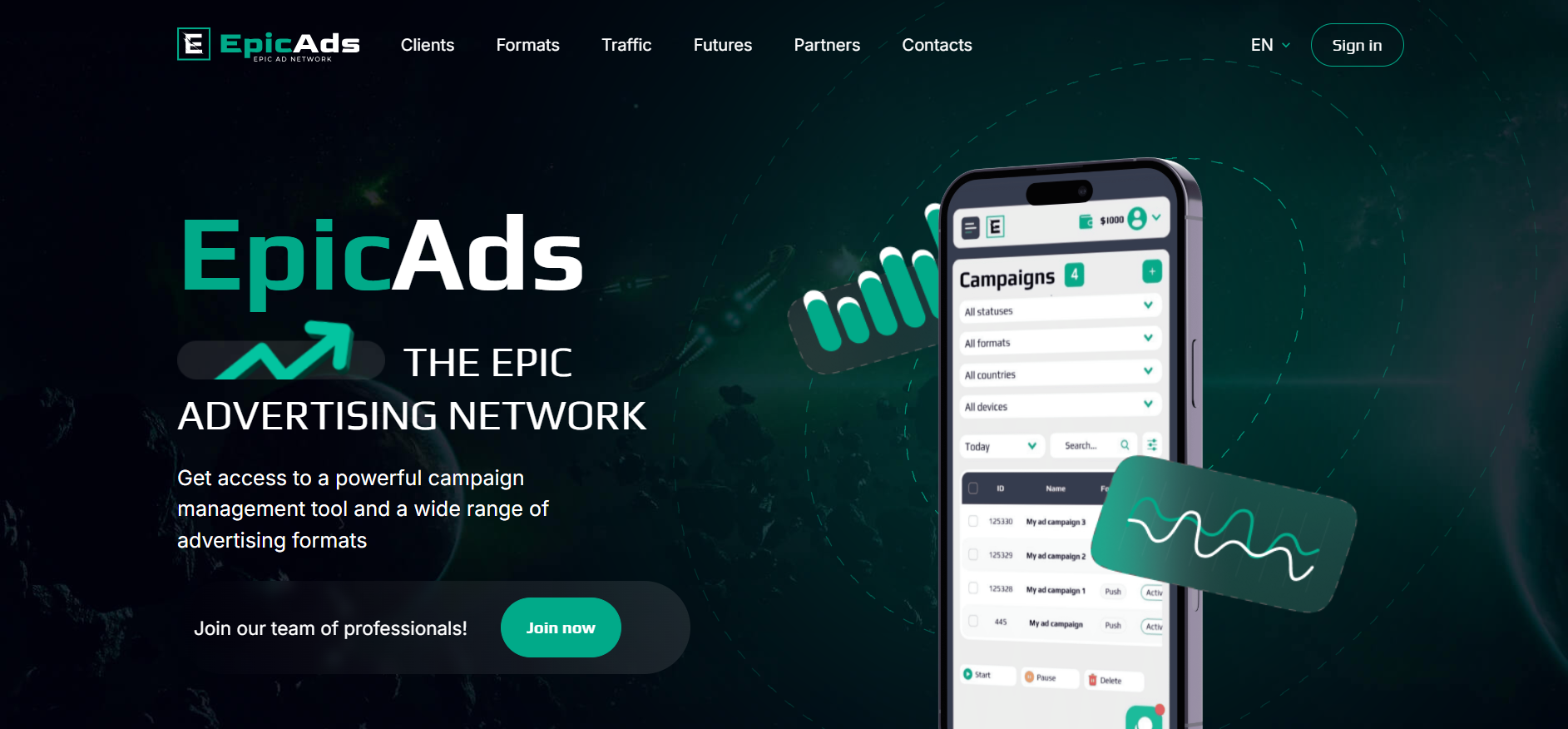
EpicAds.Net operates as a performance ad network specializing in popunder, push notification, and display formats for global publishers, processing billions of monthly impressions with a focus on Tier 1 traffic. It complements a broader push notification ad network strategy for publishers wanting anti-adblock recovery alongside standard placements.
Payment Details:
- Minimum payout: $50
- Payment methods: PayPal, Capitalist, USDT (TRC-20), wire transfer
- Payment frequency: Weekly, NET-7
Pros:
- Anti-adblock technology recovers impressions that would otherwise be lost entirely.
- Weekly NET-7 payment schedule keeps cash flow predictable.
- Direct advertiser relationships and real-time bidding help optimize revenue per visitor.
Cons:
- Payment options lean toward crypto and Capitalist, with fewer traditional banking choices in some regions.
- Best suited to entertainment, news, and lifestyle verticals rather than every content category.
- Some older reviews cite a lower $25 payout figure; this guide uses EpicAds’ more recently confirmed $50 minimum.
Best For: Publishers wanting fast weekly payouts across popunder, push, and display formats with adblock-recovery built in.
2. Adsterra
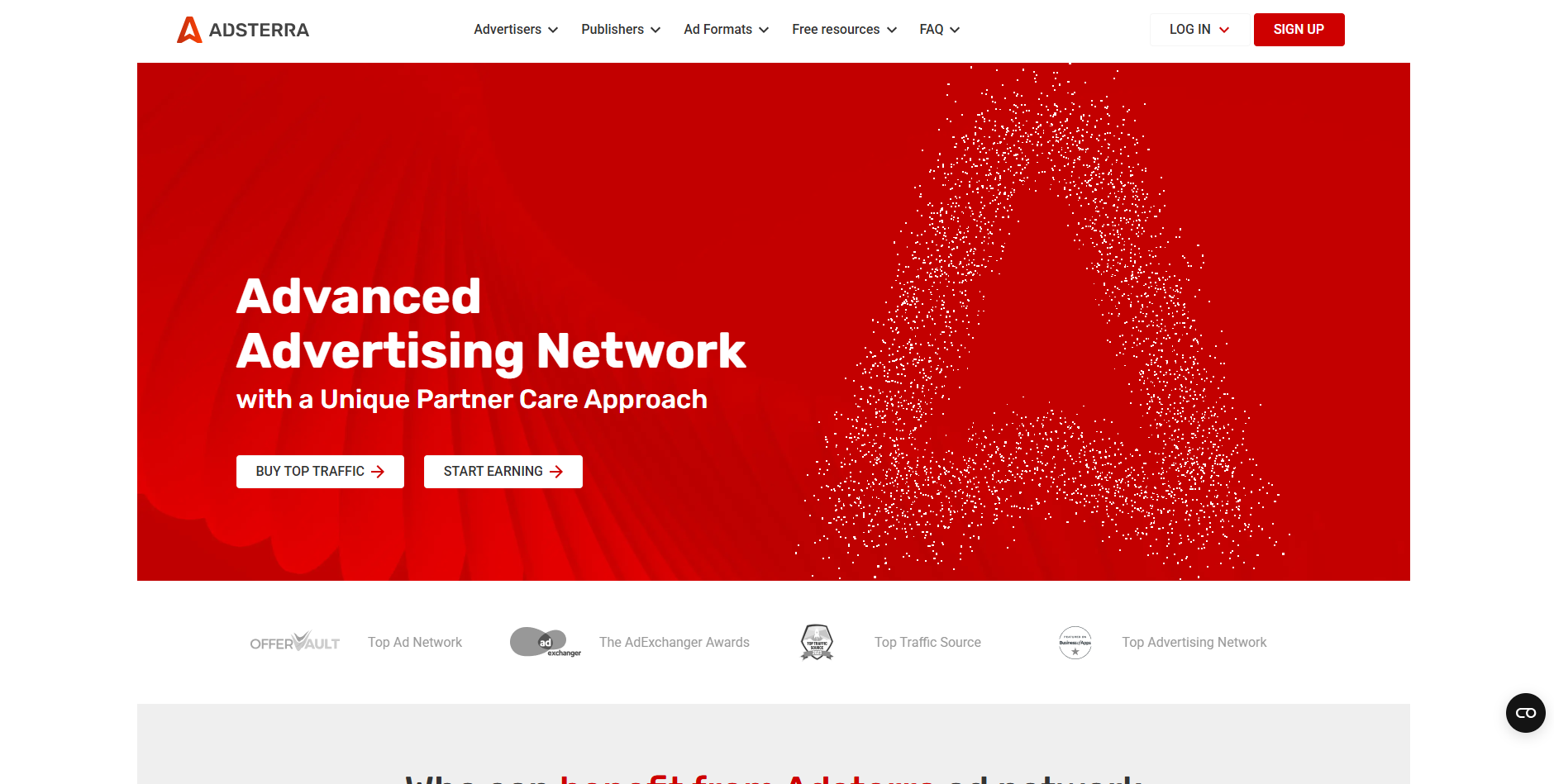
Adsterra is a global advertising network serving more than 30 billion ad impressions monthly across 248 countries and territories, connecting publishers and advertisers through display, popunder, push, and native ad formats. It’s a strong complement to a native ad networks strategy for publishers wanting a Social Bar format alongside traditional placements. Publishers can access multiple ad formats simultaneously, optimising monetisation across different traffic sources. Adsterra maintains strict quality standard,s filtering malicious ads and ensuring brand-safe environments for premium advertisers.
Payment Details:
- Minimum payout: $5 (Paxum), $25 (PayPal), $1,000 (wire transfer); local bank transfer available from $25
- Payment methods: Paxum, PayPal, WebMoney, wire transfer, local bank transfers (40+ countries)
- Payment frequency: NET-15, paid twice monthly
Pros:
- No minimum traffic requirement, so both new and established sites can join.
- Confirmed $5 Paxum minimum is among the lowest payout thresholds in the industry.
- Multiple ad formats let publishers test what performs best for their specific audience.
Cons:
- Some publishers report inconsistent CPMs across different geographies and niches.
- Wire transfer’s $1,000 minimum is far higher than the network’s own digital-payment thresholds.
- Popunder and interstitial formats can hurt user experience if overused.
Best For: Publishers and advertisers wanting massive global reach with the lowest verified payout threshold on this list.
3. InMobi
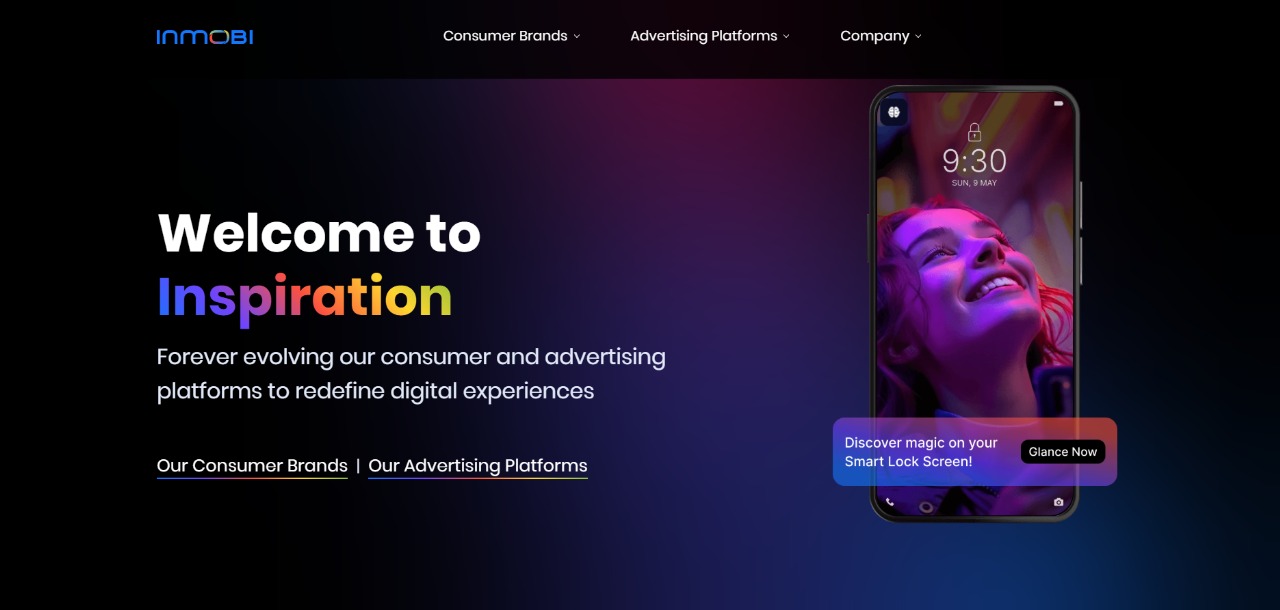 bi delivers mobile advertising solutions reaching more than a billion unique mobile devices globally through programmatic and direct campaigns, specializing in in-app advertising with advanced behavioral targeting. It’s a solid pick for publishers running a broader display ad network strategy who want to add dedicated in-app demand.
The network maintains partnerships with Fortune 500 brands and agencies seeking mobile-first advertising strategies. InMobi provides SDK integration for app developers, with mediation capabilities that connect multiple ad networks simultaneously.
Payment Details:
- Minimum payout: $50 (PayPal); $300 (wire transfer/EFT)
- Payment methods: PayPal, Electronic Funds Transfer, ACH direct deposit
- Payment frequency: NET-60
Pros:
- Advanced targeting increases relevance and eCPM for app publishers.
- Multi-format support (banner, interstitial, native, rewarded video) from one SDK integration.
- Strong global advertiser base spanning multiple industries, including Fortune 500 brands.
Cons:
- NET-60 payment cycle is one of the slower schedules on this list.
- Requires SDK integration, adding technical setup compared to web-based tag networks.
- Performance can vary meaningfully by region and app vertical.
Best For: Mobile app publishers wanting strong global advertiser demand with robust behavioral and demographic targeting.
4. Entravision

Entravision operates as a diversified media and advertising company focusing on Hispanic and multicultural audiences across digital platforms. The network provides programmatic advertising solutions through owned-and-operated properties plus publisher partnerships reaching 50+ million monthly users. Entravision specializes in audio streaming, digital video, and display advertising targeting Spanish-speaking demographics in US markets. Publishers access premium demand from brands seeking culturally relevant audience segments with high engagement rates. The platform combines first-party data with contextual targeting delivering personalized ad experiences across desktop and mobile inventory. Entravision maintains direct relationships with major agencies and allocates significant budgets to Hispanic market penetration campaigns.
Payment Details:
- Minimum payout: $100 (wire transfer, ACH, or business check)
- Payment methods: Wire transfer, ACH direct deposit, business checks
- Payment frequency: NET-45
Pros:
- Deep specialization in Spanish-speaking US demographics gives advertisers culturally relevant targeting most general networks can’t match
- Direct relationships with major agencies bring dedicated advertiser budgets to this specific audience segment
- Combines first-party data with contextual targeting across desktop and mobile inventory
Cons:
- $100 minimum payout and NET-45 cycle are on the slower, higher-threshold end for smaller publishers
- Narrower audience focus (Hispanic/multicultural US) limits fit for general-market content sites
- Onboarding as a publisher partner is less self-serve than pure programmatic platforms, given Entravision’s media-company structure
Best For: Publishers with meaningful Spanish-language or Hispanic-audience traffic in US markets.
5. Doble via Latam

Double Via Latam specialises in Latin American digital advertising, connecting publishers with brands targeting LATAM audiences. The platform processes programmatic transactions across display, video, and mobile inventory sourced from regional publishers and apps. Double Via focuses on the Brazilian, Mexican, Argentinian, Colombian, and Chilean markets, offering localised payment solutions and Spanish/Portuguese support. Publishers benefit from region-specific demand, which generates higher CPMs than global networks treat LATAM as a secondary market. The network provides fraud detection and traffic quality monitoring ensuring advertiser satisfaction and long-term campaign sustainability. Double Via maintains direct sales teams in major LATAM cities, securing premium deals unavailable through automated exchanges.
Payment Details:
- Minimum Payout: $50 for local bank transfer and PayPal
- Payment Schedule: Net-30 terms with monthly processing
- Payment Methods: Local bank transfer, PayPal, Western Union, PIX
- Currency Support: USD, BRL, MXN, ARS, COP in local currencies
Pros:
- Region-specific demand can generate higher CPMs than global networks that treat LATAM as a secondary market.
- Local payment options (including PIX for Brazil) reduce currency-conversion friction for regional publishers.
- Direct sales teams in major LATAM cities can secure premium deals unavailable through automated exchanges alone.
Cons:
- Independently verifiable public payment documentation is limited compared to larger global networks.
- Narrower regional focus means less relevance for publishers outside the specified LATAM markets.
- Smaller overall scale than global platforms like Adsterra or InMobi.
Best For: Publishers with meaningful Brazilian, Mexican, Argentinian, Colombian, or Chilean traffic wanting regionally specialized demand.
6. AdLib DSP
AdLib DSP operates as a demand-side platform enabling advertisers to purchase inventory programmatically across display, video, and native formats, integrating with major ad exchanges. It’s a useful complement to a PPC-billed buying strategy for advertisers who want CPC alongside CPM and CPA bidding options.
Payment Details:
- Minimum Payout: $100 for wire transfer through SSP partners
- Payment Schedule: Net-30 to Net-60 terms, depending on SSP agreements
- Payment Methods: Wire transfer, ACH direct deposit via SSP
- Currency Support: USD standard with multi-currency through SSP integrations
Pros:
- Machine-learning bid optimization aims to direct spend toward the highest-performing placements automatically.
- Supports multiple bidding strategies (CPC, CPM, CPA) from one dashboard.
- Transparent reporting on impression delivery, CTR, and conversion tracking across campaigns.
Cons:
- As a DSP, payment terms flow through SSP partnerships rather than a single published rate, reducing transparency for smaller advertisers.
- Requires more technical/strategic setup than simpler tag-based self-serve networks.
- Better suited to advertisers with meaningful budget than very small test campaigns.
Best For: Advertisers wanting programmatic access to multiple ad exchanges through one DSP dashboard rather than negotiating publisher-by-publisher.
7. MAAS powered by Affle
MAAS (Mobile Advertising-as-a-Service) powered by Affle delivers mobile marketing solutions across emerging markets, including India, Southeast Asia, and Africa. The platform combines mobile advertising, user acquisition, and app monetisation tools, serving 1.4 billion mobile consumers. MAAS specialises in carrier data partnerships, leveraging telecom operator information for precise audience targeting without third-party cookies. Publishers monetise mobile web and in-app inventory through display, native, and video ad formats with dynamic pricing. Affle’s technology stack includes fraud prevention, viewability verification, and brand safety controls, ensuring advertiser confidence.
Payment Details:
- Minimum Payout: $50 for PayPal and wire transfer
- Payment Schedule: Net-45 terms with monthly processing
- Payment Methods: Wire transfer, PayPal, UPI, regional banking
- Currency Support: USD, INR, SGD, and local Southeast Asian currencies
Pros:
- Carrier data partnerships enable precise targeting without relying on third-party cookies.
- Strong focus on emerging markets that many global networks under-serve.
- Fraud prevention, viewability verification, and brand safety controls are built into the platform.
Cons:
- Independently verifiable public payment documentation is limited compared to larger global networks.
- Regional focus on India, Southeast Asia, and Africa limits relevance for publishers targeting Western markets primarily.
- Smaller overall brand recognition than AdMob, InMobi, or Smaato.
Best For: Publishers and advertisers with meaningful traffic in India, Southeast Asia, or Africa wanting carrier-data-driven targeting.
8. ClickAdilla
ClickAdilla operates as an adult-friendly advertising network supporting mainstream and adult content publishers globally. The platform delivers popunder, push notification, banner, and native ad formats with high CPM rates for adult traffic. ClickAdilla processes over 4.5 billion monthly impressions across desktop and mobile inventory from 195 countries. Publishers benefit from no minimum traffic requirements, enabling small and medium sites to monetise immediately. The network provides anti-adblock solutions and multiple ad format combinations, maximizing revenue per visitor. ClickAdilla maintains advertiser demand across dating, sweepstakes, gaming, and mainstream verticals beyond adult content categories.
Payment Details:
- Minimum Payout: $50 for Paxum and WebMoney, $100 for wire transfer
- Payment Schedule: Weekly and bi-weekly cycles with net-7 terms
- Payment Methods: Paxum, WebMoney, wire transfer, Bitcoin, Ethereum, USDT
- Currency Support: USD and EUR with crypto under 24 hours
Pros:
- No minimum traffic requirement lets small and medium sites monetize immediately.
- Anti-adblock solutions help recover otherwise-lost impressions.
- Multiple ad format combinations (popunder, push, banner, native, video) maximize revenue per visitor.
Cons:
- Wire transfer requires a much higher $500 minimum than digital payment methods.
- Adult-friendly positioning may not suit every advertiser’s brand-safety requirements.
- Real, effective testing budgets ($300+) are recommended over the bare minimum for meaningful data on the advertiser side.
Best For: Publishers and advertisers in adult, dating, sweepstakes, or gaming verticals wanting a no-minimum, self-serve entry point.
9. Zoomd

Zoomd operates as a marketing technology platform unifying user acquisition and monetisation tools for app developers and advertisers. The platform aggregates demand from 600+ advertising channels, enabling centralised campaign management across multiple traffic sources. Zoomd specialises in mobile app install campaigns using machine learning algorithms to optimise budget allocation toward the highest-performing networks. Publishers and app developers monetise through an integrated SDK that connects to premium demand sources and uses dynamic floor pricing. The platform provides fraud detection, attribution tracking, and ROI reporting across all connected advertising channels. Zoomd serves gaming, ecommerce, and utility app verticals with performance-based pricing models, ensuring advertiser satisfaction.
Payment Details:
- Minimum Payout: $100 for wire transfer and PayPal
- Payment Schedule: Net-30 terms with monthly processing
- Payment Methods: Wire transfer, PayPal, ACH direct deposit
- Currency Support: USD, EUR, and GBP with multi-currency invoicing
Pros:
- Centralized campaign management across many connected advertising channels saves significant manual coordination time.
- Machine-learning budget allocation directs spend toward the highest-performing networks automatically.
- Fraud detection and ROI reporting are built in across all connected channels, not sold as a separate add-on.
Cons:
- As an aggregation/mediation layer, payment terms depend on the specific connected demand sources rather than a single published rate.
- Best suited to app developers with existing user-acquisition infrastructure rather than brand-new publishers.
- Smaller standalone brand recognition than pure-play networks like Adsterra or InMobi.
Best For: App developers wanting centralized, ML-optimized budget allocation across many advertising channels from one dashboard.
10. Samdex

Smadex delivers programmatic mobile advertising solutions, specialising in app-install campaigns and performance marketing across iOS and Android. The platform operates a self-serve DSP processing billions of monthly bid requests from premium mobile ad exchanges. Smadex focuses on machine learning optimization automatically adjusting bids based on conversion likelihood and user lifetime value predictions. Publishers connect through integrated ad exchanges that compete in real-time auctions for performance-based advertiser budgets. The network supports CPI, CPA, and CPC bidding models with granular targeting, including device type, carrier, and behavioural segments. Smadex maintains transparent reporting showing install attribution, post-install events, and ROAS metrics across campaigns.
Payment Details:
- Minimum Payout: Varies by ad exchange partner integration
- Payment Schedule: Net-60 terms through SSP relationships
- Payment Methods: Wire transfer, PayPal via ad exchanges
- Currency Support: USD primary, with EUR and GBP available
Pros:
- Machine-learning optimization automatically adjusts bids based on conversion likelihood and predicted user lifetime value.
- Supports multiple performance models (CPI, CPA, CPC) with granular targeting by device, carrier, and behavior.
- Transparent reporting on install attribution, post-install events, and ROAS.
Cons:
- As a DSP working through ad exchanges, payment terms vary by exchange partner rather than one published rate.
- Best suited to performance marketers focused on app installs rather than general display or content monetization.
- NET-60 cycle reported through SSP relationships is slower than several self-serve alternatives.
Best For: Performance marketers and app developers running CPI/CPA-based user-acquisition campaigns across iOS and Android.
11. AdsCompass
 AdsCompass operates as a performance marketing network connecting publishers with CPA, CPL, and CPI offers across multiple verticals. The platform specialises in dating, sweepstakes, mobile content, and finance offers, generating high EPCs for targeted traffic sources. AdsCompass provides smartlinks automatically rotating offers based on visitor geography, device type, and conversion probability. Publishers access real-time reporting on clicks, conversions, and earnings, updated every 15 minutes, to optimise. The network maintains direct relationships with advertisers, securing exclusive offers unavailable through competing affiliate networks. AdsCompass supports mainstream and adult traffic with separate offer categories, ensuring compliance and advertiser satisfaction.
Payment Details:
- Minimum Payout: $50 for WebMoney and Paxum, $100 for wire transfer
- Payment Schedule: Weekly, bi-weekly, and monthly cycles available
- Payment Methods: PayPal, Paxum, WebMoney, wire transfer, Bitcoin
- Currency Support: USD and EUR with automatic conversion
Pros:
- Smartlink technology automatically rotates offers based on visitor geography, device, and conversion probability.
- Real-time reporting updated every 15 minutes supports fast campaign optimization.
- Direct advertiser relationships can secure exclusive offers unavailable through competing affiliate networks.
Cons:
- Independently verifiable public payment documentation is limited compared to larger, more established affiliate networks.
- Best suited to publishers already comfortable with performance/CPA-style monetization rather than flat CPM.
- Mainstream and adult traffic are handled in separate offer categories, adding a layer of account setup complexity.
Best For: Affiliates and publishers wanting smartlink-optimized CPA/CPL/CPI offers in dating, sweepstakes, mobile, or finance verticals.
12. Start.io

Start.io provides mobile monetization solutions reaching billions of monthly ad requests through in-app advertising, specializing in interstitial, native, video, and rewarded formats optimized for emerging markets including India, Indonesia, Brazil, and the Middle East. The network focuses on emerging markets, including India, Indonesia, Brazil, and the Middle East, and offers competitive rates. Start.io provides personalised ad experiences using behavioural data and contextual signals, improving user engagement and advertiser ROI.
Payment Details:
- Minimum Payout: $50 for PayPal and wire transfer
- Payment Schedule: Net-60 terms with monthly processing
- Payment Methods: Wire transfer, PayPal, ACH direct deposit
- Currency Support: USD with multi-currency invoicing available
Pros:
- Strong focus on emerging markets where many premium networks under-serve.
- Lightweight SDK supports mediation with other ad networks, improving fill rates and eCPMs.
- Personalized ad experiences using behavioral and contextual data support stronger engagement.
Cons:
- Revenue can fluctuate significantly depending on app category and user location.
- Some publishers report intrusive ad placements if not optimized carefully.
- Limited support for advanced targeting compared to larger networks like AdMob or InMobi.
Best For: App developers with meaningful traffic in emerging markets wanting mediation-friendly, multi-format monetization.
13. Clickadu
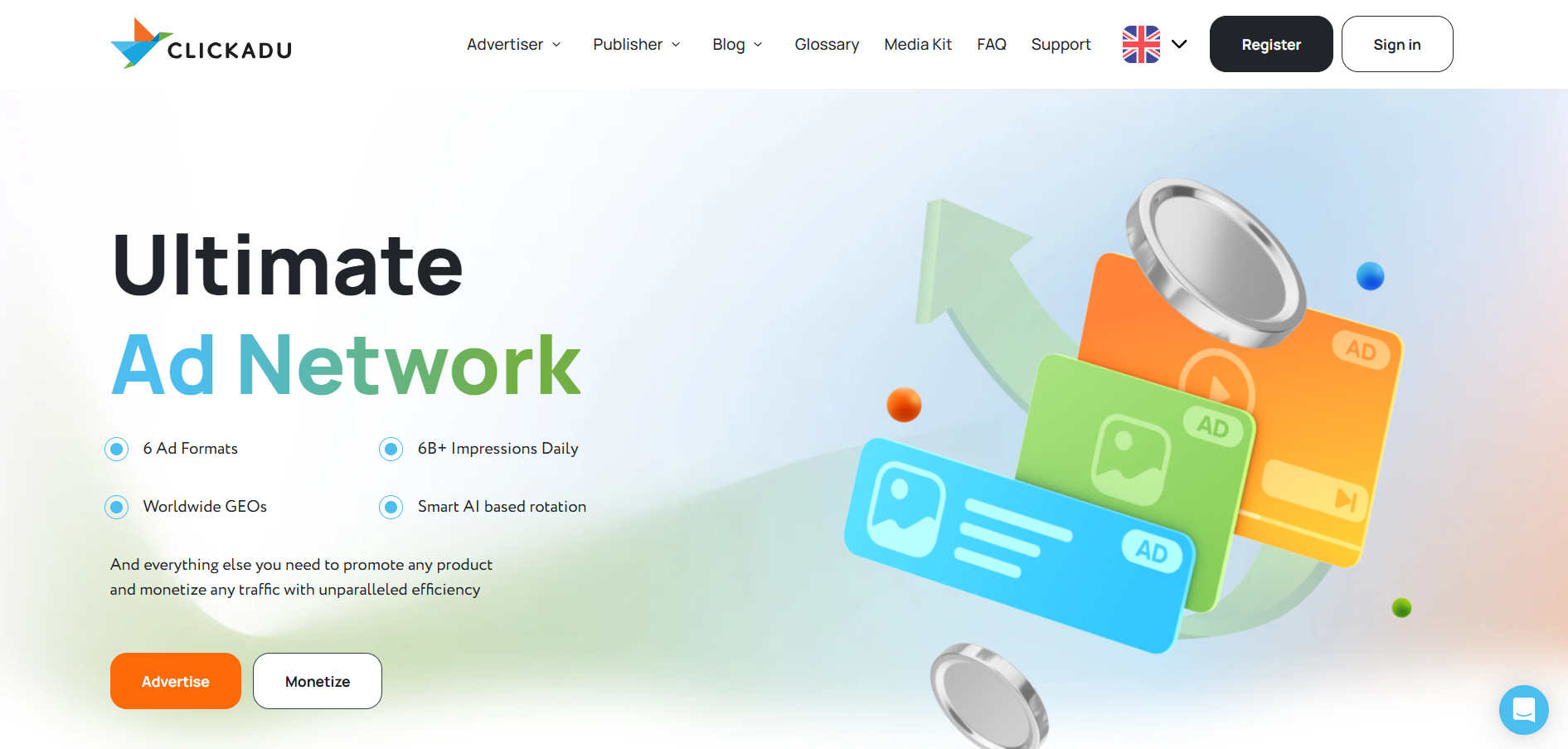
ClickAdu is a self-serve advertiser and publisher platform overseeing billions of daily ad impressions across popunder, push, video slider, and banner formats, with transparent published CPM benchmarks by ad format. It’s a strong complement to video ad network strategies given its video slider format specifically.
Payment Details:
- Minimum Payout: $50 for Paxum and WebMoney, $100 for wire transfer
- Payment Schedule: Weekly and bi-weekly with net-7 terms
- Payment Methods: Paxum, WebMoney, wire transfer, PayPal, Bitcoin, Ethereum
- Currency Support: USD and EUR with crypto within 24-48 hours
Pros:
- Transparent, published CPM benchmarks by format help advertisers plan budgets upfront.
- Referral program rewards publishers with a 5% lifetime commission bonus for recruiting new members.
- Multiple payment options (wire transfer, PayPal, WebMoney, Paxum) suit advertisers across regions.
Cons:
- $100 minimum deposit (advertiser side) is higher than several comparable self-serve pop/push networks.
- Approval process for new advertiser accounts is reported as stricter than some competitors.
- Best suited to popunder, push, and video formats rather than native or search-style placements.
Best For: Advertisers with limited testing budgets who want a transparent, published CPM structure across multiple formats.
14. Smaato

Smaato operates as an independent mobile advertising platform processing 90 billion monthly ad requests through its global ad exchange. The platform connects app developers and mobile web publishers with demand from 90+ DSPs and 350+ direct advertisers. Smaato specializes in programmatic RTB auctions supporting banner, interstitial, native, and rewarded video ad formats. Publishers integrate the SPX platform, accessing unified auction technology where all demand sources compete simultaneously for impressions. The network provides advanced analytics showing fill rates, eCPMs, and revenue trends segmented by geography and ad format. Smaato maintains COPPA and GDPR compliance tools ensuring regulatory adherence across global markets.
Payment Details:
- Minimum Payout: $100 for wire transfer
- Payment Schedule: Net-60 terms with monthly processing
- Payment Methods: Wire transfer, ACH direct deposit for US publishers
- Currency Support: USD, EUR, and GBP for international publishers
Pros:
- Self-serve, omnichannel platform gives publishers complete control over ad inventory across mobile, web, OTT/CTV, and DOOH channels.
- Real-time Dynamic Demand technology assesses all connected demand sources to optimize yield per impression.
- COPPA and GDPR compliance tools are built into the platform for regulatory adherence across global markets.
Cons:
- NET-60 payment cycle is one of the slower schedules on this list.
- Default 70/30 net revenue share means publishers should factor Smaato’s cut into rate expectations upfront.
- Requires SDK, API, or Prebid integration, adding technical setup compared to simple tag-based networks.
Best For: Publishers wanting a genuinely self-serve, omnichannel programmatic platform (mobile, web, CTV, DOOH) with transparent revenue-share terms.
15.PropellerAds
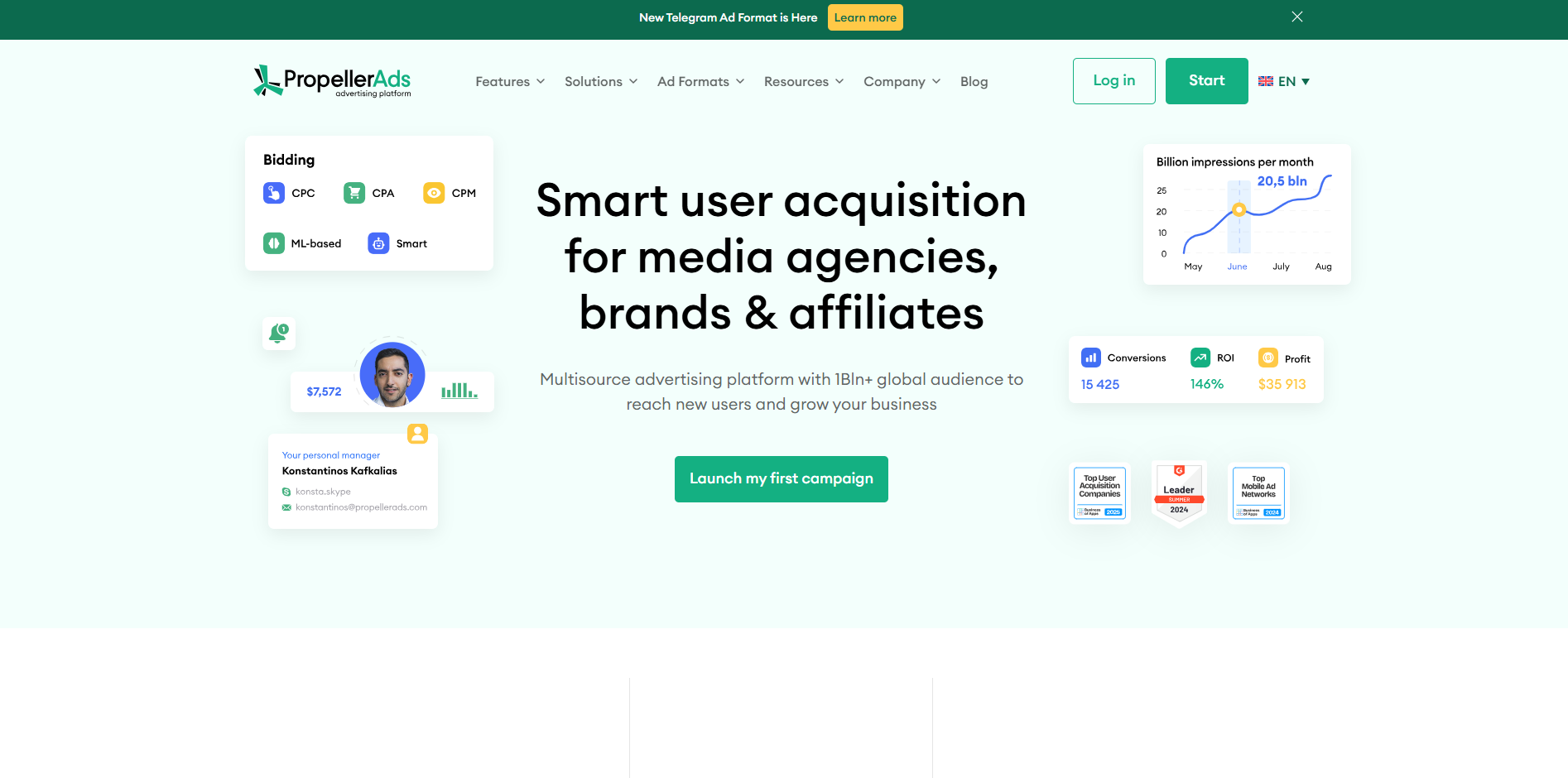
PropellerAds is a self-service advertising network that allows advertisers and publishers to run and monetize traffic through multiple ad formats such as push notifications, pop-unders, native ads, and interstitials. It is widely used for performance marketing campaigns with global traffic coverage.
Payment Details:
- Payment model: CPC, CPM, CPA (depending on campaign type).
- Payout frequency: Weekly and Net-30 options available.
- Minimum payout: Low threshold (varies by payment method)
- Payment methods: PayPal, Payoneer, WebMoney, wire transfer, crypto (availability may vary by region)
Pros:
- Easy self-service dashboard for creating and managing campaigns without manual support.
- Supports multiple ad formats like push notifications, native ads, pop-unders, and interstitials.
- Offers strong global traffic reach for scaling performance campaigns.
Cons:
- Traffic quality can be inconsistent depending on ad format and source.
- Some ad types (like pop-unders) may not suit all brands or audiences.
- Requires optimization experience to achieve strong ROI.
What Factors Should You Consider When Choosing a Self-Service Ad Network?
Choosing the right self-service advertising network depends on your campaign goals, traffic type, and budget flexibility. The most important factors include ad format availability (such as push, native, or in-app ads), targeting options (geo, device, and behavior-based targeting), and pricing models like CPC, CPM, or CPA. These elements directly impact how effectively you can reach and convert your target audience.
Another crucial consideration is payment terms and accessibility, including minimum payout thresholds, payment methods (PayPal, wire transfer, crypto), and payout frequency. Faster payments and lower thresholds are often better for small publishers and beginners, while larger advertisers may prioritize advanced optimization tools and global traffic quality over payout speed.
Conclusion
In the rapidly evolving digital marketplace of 2026, self-serve ad networks have become essential growth engines, putting total campaign control directly in the advertiser’s or publisher’s hands. Whether you’re looking to penetrate specific markets like LATAM with Doble Via Latam, scale mobile user acquisition through InMobi or Smaato, or leverage high-impact popunder and push formats through Adsterra or EpicAds, the power to optimize and scale lies directly with you.
Ultimately, the best network is not a one-size-fits-all solution; it is the one that aligns with your specific traffic needs, budget, and creative formats. By utilizing the platforms listed in this guide, you can bypass expensive intermediaries, access real-time data, and pivot your strategies instantly. Now is the time to experiment—start with one or two networks, test small, and use the insights you gain to build a robust, high-ROI advertising machine that drives your business forward.
Frequently Asked Questions (FAQs)
What is a self-serve ad network?
A self-serve ad network is a digital platform that enables advertisers to create, manage, and optimize their ad campaigns independently, without involving a sales team.
How do self-serve ad networks save money?
By eliminating intermediaries and allowing advertisers to manage their campaigns directly, self-serve ad networks reduce costs associated with hiring external agencies or sales teams.
Are self-serve ad networks suitable for small businesses?
Yes, self-serve ad networks are ideal for small businesses because they provide flexibility and control over advertising budgets, allowing businesses to scale campaigns based on performance.
What are some examples of popular self-serve ad networks?
Common examples include Facebook Ads, Google AdWords, Twitter Ads, and Snapchat Ad Manager, which enable advertisers to reach a large, diverse audience.
How can I choose the right self-serve ad network for my business?
Consider factors such as your target audience, budget, campaign goals, and the platform’s features to determine which self-serve ad network best meets your advertising needs.
Can self-serve ad networks be used for testing new campaigns?
Yes, self-serve ad networks are excellent for testing new campaigns. They allow advertisers to run small-budget experiments, test different creatives or audiences, and analyze real-time performance data before scaling successful campaigns.
Why do some networks in this guide lack a verified payment figure?
Several self-serve networks including Doble Via Latam, MAAS by Affle, AdsCompass, and Start.io don’t publish a single, centralized, official payment policy page the way larger platforms like Adsterra, InMobi, or Smaato do. Rather than presenting a commonly repeated but unsourced figure as verified fact, this guide labels those figures as independently unconfirmed and recommends checking current terms directly with the platform.
