


For small publishers, choosing the right ad network can make a significant difference in how effectively a website turns its traffic into revenue. However, not every ad network is suitable for every website. Factors such as traffic volume, audience location, niche, content quality, available ad formats, and user experience all influence how well a network can perform.
Among the available options, Google AdSense remains a practical starting point for many small publishers because it has no published minimum traffic requirement. As a website grows, publishers can explore more specialized platforms such as Mediavine Journey, Raptive, and Mediavine Official, depending on their traffic, revenue, and eligibility.
In this guide, we compare the best ad networks for small publishers in 2026, explain their strengths and limitations, and show which type of website each network may suit best.
What Are Ad Networks and How Do They Work?
An ad network connects publishers that have advertising space with advertisers looking to reach an audience. Instead of negotiating individually with advertisers, publishers can use an ad network to manage ad delivery, demand, reporting, and payments.
Depending on the network, publishers may earn through different monetization models:
- CPM (Cost per Mille): Revenue is based on ad impressions, usually measured per 1,000 impressions.
- CPC (Cost per Click): Publishers earn when visitors click on qualifying advertisements.
- CPA (Cost per Action): Revenue is generated when visitors complete a specified action, such as a registration or purchase.
- Revenue share: The publisher receives an agreed percentage of the advertising revenue generated through the network.
The right model depends on your traffic volume, audience engagement, content type, and the advertisers available for your niche.
What Should Small Publishers Look for in an Ad Network?
Before applying to an ad network, consider more than just the advertised earning potential.
- Eligibility Requirements: Check whether the network has minimum traffic, revenue, content, geographic, or quality requirements. A network that looks attractive but does not accept your current website is not a practical choice.
- Ad Quality and User Experience: Aggressive pop-ups, redirects, or excessive ad placements can frustrate visitors and potentially harm the overall browsing experience. Look for networks that give publishers reasonable control over ad placement and formats.
- Payment Terms: Compare the payout threshold, payment methods, payment schedule, and any applicable fees. These details matter more to small publishers because reaching a high payout threshold can take longer.
- Available Ad Formats: Common formats include display, native, video, in-content, sticky, and other specialized formats. Choose formats that fit your website rather than simply using every available option.
- Reporting and Optimization: A useful publisher dashboard should make it easy to understand impressions, clicks, revenue, RPM, and other performance metrics. Optimization tools can also help publishers identify better-performing placements.
- Traffic Geography: Advertiser demand varies by country. A website with a large percentage of traffic from higher-value advertising markets may have different monetization potential from a website with predominantly low-demand traffic.
Top 10 Best Ad Networks for Small Publishers in 2026
Here is the list of the Best Ad Networks for Small Publishers in 2026
- Google AdSense
- Mediavine Journey
- Raptive
- Mediavine Official
- Ezoic
- Monumetric
- PropellerAds
- Adsterra
- Infolinks
- Bidvertiser
1. Google AdSense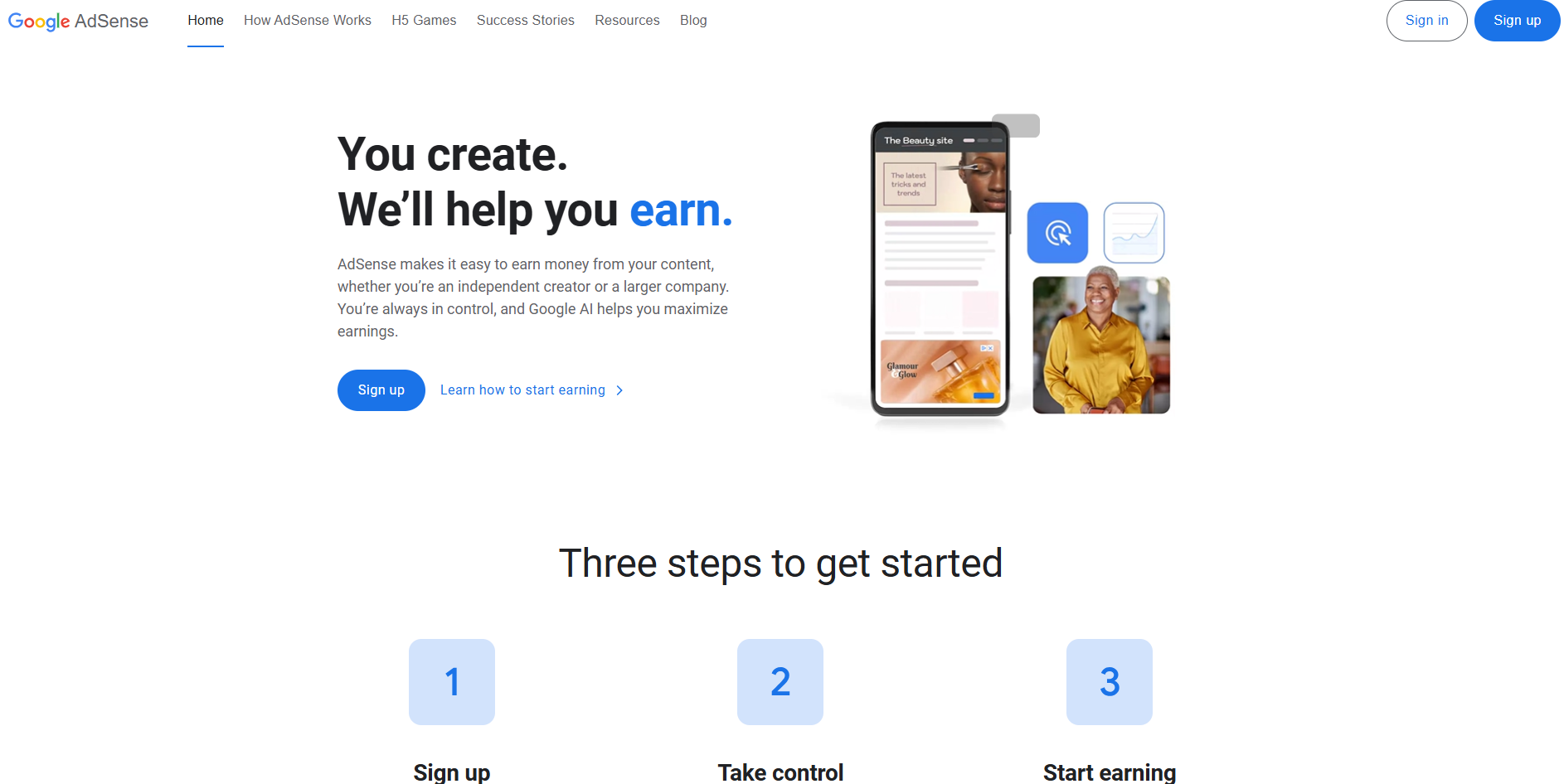
Google AdSense remains one of the most accessible options for website owners who are beginning to monetize their content. Google does not publish a minimum traffic requirement for standard AdSense eligibility. Instead, publishers need original content, ownership or control of the website, and compliance with AdSense policies.
AdSense can work across blogs, informational websites, niche sites, and other content-focused properties. Its large advertiser ecosystem can make it a useful starting point, although actual earnings depend heavily on traffic, audience location, niche, and ad demand.
Best for
- New and growing websites
- General informational websites
- Publishers looking for a mainstream starting option
Pros
- No published minimum traffic requirement
- Large advertiser ecosystem
- Straightforward integration
- Detailed reporting
- Suitable for many website niches
Cons
- Approval is still subject to Google’s policies
- Earnings can be modest with low traffic
- Some content categories have advertising restrictions
- Revenue varies significantly by audience and niche
2. Ezoic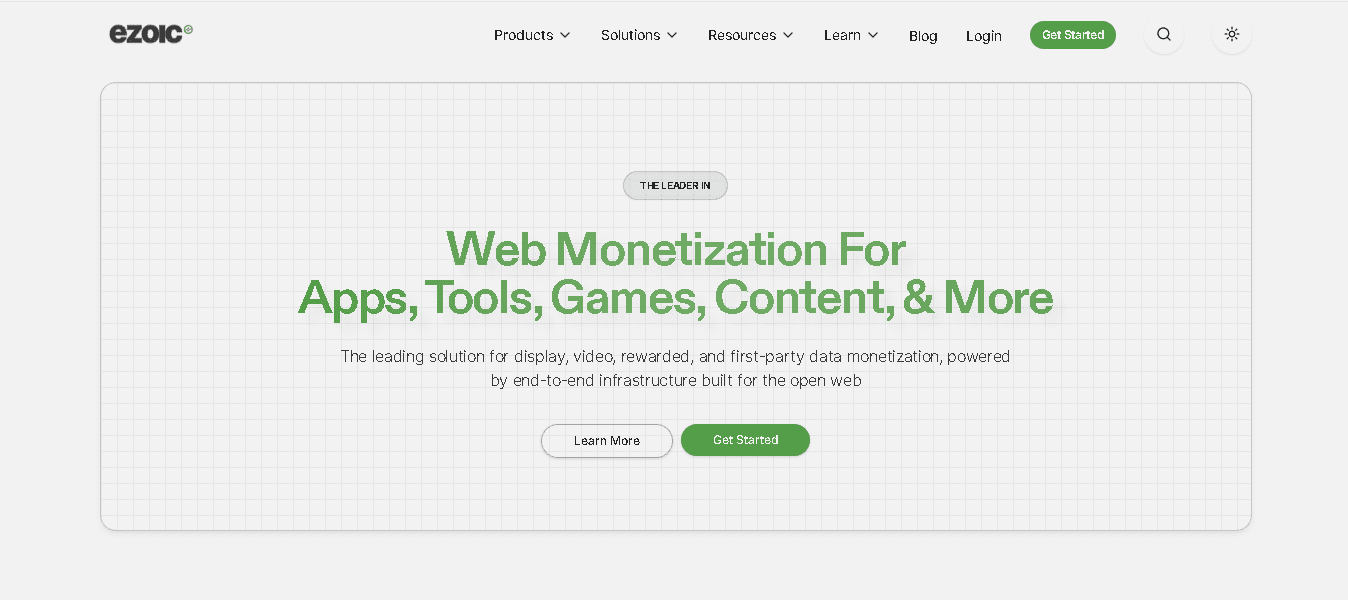
Ezoic uses machine learning and automated testing to optimize ad placements and other aspects of publisher monetization. However, its current requirements are substantially different from the low-traffic positioning often associated with older versions of Ezoic’s programs.
Ezoic’s current documentation states that sites generally need 250,000+ monthly active users to join, while publishers who were already using Ezoic before February 19, 2026 may have grandfathered status under certain conditions.
Best for
- Larger publishers
- Websites with substantial traffic
- Publishers interested in automated optimization
Pros
- Automated ad optimization
- Machine-learning-based testing
- Detailed analytics
- Focus on improving monetization efficiency
Cons
- Current traffic requirement makes it unsuitable for most genuinely small sites
- Setup and optimization can require technical understanding
- Results can vary by traffic quality and website configuration
3. Mediavine Journey
Journey by Mediavine is designed as an entry point for growing publishers. Mediavine currently states that Journey starts at 1,000 sessions and evaluates sites based on content quality, traffic quality, reader experience, and other factors.
This makes Journey more relevant to growing publishers than the older 50,000-session requirement that appeared in many outdated articles.
Best for
- Growing content websites
- Bloggers building toward premium ad management
- Publishers with at least 1,000 sessions
Pros
- Lower entry point through Journey
- Strong focus on content quality
- Emphasis on reader experience
- Access to professional ad-management technology
Cons
- Not designed for completely new sites with very little traffic
- Approval depends on more than traffic alone
- Revenue depends on audience, niche, and traffic quality
4. Mediavine Official
Mediavine Official is aimed at more established publishers. As of 2026, Mediavine states that sites need at least $5,000 in annual ad revenue to qualify for the Official program. It also reviews content quality, traffic quality, Google policy standing, and reader experience.
This means Mediavine Official should not be presented as a beginner network. For smaller sites still building traffic and revenue, Journey is the more relevant Mediavine entry point.
Best for
- Established content publishers
- Websites already generating meaningful ad revenue
- Publishers focused on long-term monetization
Pros
- Premium advertising demand
- Strong focus on publisher experience
- Advanced ad technology
- Optimization and support resources
Cons
- $5,000 annual ad revenue requirement
- High content and traffic-quality standards
- Not suitable for brand-new websites
5. Raptive
Raptive is a premium ad-management platform aimed at established content publishers. Its current eligibility documentation lists 25,000 monthly pageviews as the starting traffic threshold. Additional requirements apply, including traffic-quality and geographic considerations.
For sites between 25,000 and 99,999 monthly pageviews, Raptive’s published requirements include a higher share of traffic from specified countries. Publishers should check Raptive’s current eligibility documentation before applying because requirements can change.
Best for
- Established content websites
- Publishers with 25,000+ monthly pageviews
- Sites with strong traffic from major advertising markets
Pros
- Premium ad-management approach
- Advanced monetization technology
- Publisher-focused optimization
- Suitable for established content businesses
Cons
- Not suitable for very low-traffic websites
- Strict eligibility standards
- Geographic traffic requirements can affect eligibility
- Application approval is not guaranteed
6. Monumetric
Monumetric is another option for publishers looking for managed advertising and additional monetization opportunities. It can be considered by growing websites that have moved beyond the earliest stage of website development.
Because eligibility and payment terms can change, publishers should check Monumetric’s current requirements before applying rather than relying on fixed traffic or payout figures published in older articles.
Best for
- Growing websites
- Content publishers looking for managed monetization
- Publishers comparing alternatives to AdSense
Pros
- Managed monetization options
- Multiple advertising formats
- Publisher-focused optimization
- Suitable for growing content websites
Cons
- Eligibility requirements apply
- Revenue depends heavily on traffic quality
- Setup requirements may vary
- Not every site will qualify
7. PropellerAds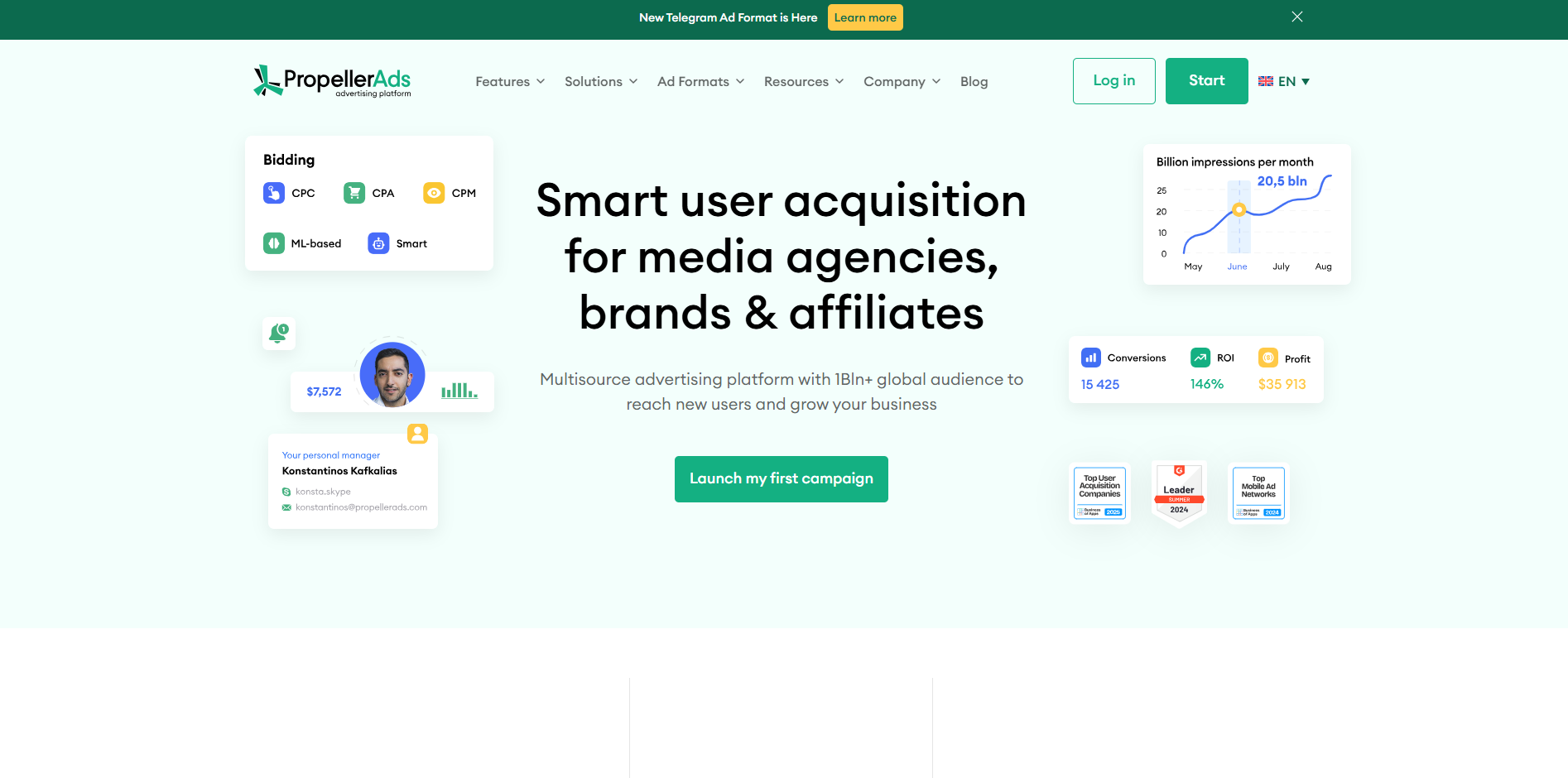
PropellerAds offers several advertising formats and can be useful for publishers looking for alternatives to traditional display advertising. Depending on the website and audience, available formats may include push, pop-under, native, and other advertising options.
The main advantage for small publishers is the variety of monetization formats. However, publishers should carefully evaluate user experience before enabling aggressive formats.
Best for
- Publishers seeking alternative ad formats
- International traffic
- Websites that need additional monetization options
Pros
- Variety of ad formats
- Flexible monetization options
- Accessible alternative to traditional ad networks
- Useful for some international audiences
Cons
- Some formats can be intrusive
- Aggressive formats may hurt user experience
- Revenue depends heavily on traffic quality
- Not every format suits every website
8. Adsterra
Adsterra provides multiple advertising formats and serves publishers across different niches and geographic markets. It can be considered by publishers who want more flexibility than a traditional display-only setup.
Its suitability depends on the website’s traffic quality, niche, audience location, and preferred ad formats.
Best for
- Niche websites
- International publishers
- Publishers looking for multiple ad formats
Pros
- Wide selection of formats
- Flexible monetization options
- Suitable for different traffic sources
- Useful alternative for publishers testing additional networks
Cons
- Some formats can affect user experience
- Revenue varies by traffic quality and geography
- Publishers should carefully control ad frequency
- Not all formats are appropriate for every site
9. Infolinks
Infolinks focuses on alternative advertising formats, including in-text and other content-integrated options. This approach can make it useful for content-heavy websites that want to experiment with monetization beyond standard display placements.
Best for
- Blogs and content-heavy websites
- Publishers testing additional monetization
- Websites looking for alternative ad formats
Pros
- Alternative advertising formats
- Easy to test alongside other monetization methods where policies allow
- Suitable for content-focused websites
- Can provide an additional revenue stream
Cons
- Revenue potential varies by niche
- Some formats may receive less attention from users
- Not ideal for every type of website
- Performance depends on traffic and audience engagement
10. Bidvertiser
Bidvertiser uses a bidding-based approach to advertising and supports multiple ad formats. It can be considered by small publishers looking for another monetization option, particularly when they want to test alternatives to larger networks.
Best for
- Small websites testing alternatives
- Publishers looking for flexible ad formats
- Websites with engaged audiences
Pros
- Multiple ad formats
- Bidding-based monetization
- Accessible alternative for smaller publishers
- Performance reporting
Cons
- Earnings depend on advertiser demand
- Results can vary significantly by niche
- Some formats may negatively affect user experience
- It may not provide the same demand depth as larger premium platforms
Quick Comparison: Best Ad Networks for Small Publishers
| Ad Network | Eligibility / Traffic Consideration | Monetization Approach | Best For |
| Google AdSense | No published minimum traffic requirement; site must meet Google policies | CPC/CPM | Beginners and general websites |
| Ezoic | Current requirements generally include 250K+ monthly active users | Automated ad optimization | Larger publishers |
| Mediavine Journey | Starts at 1K sessions | Managed ad monetization | Growing content sites |
| Mediavine Official | $5,000+ annual ad revenue | Managed ad monetization | Established publishers |
| Raptive | Starts at 25K monthly pageviews, plus traffic-quality requirements | Premium ad management | Established content publishers |
| Monumetric | Eligibility depends on current publisher requirements | Display and managed monetization | Growing publishers |
| PropellerAds | Requirements vary by publisher/site | Multiple ad formats | Publishers seeking alternative formats |
| Adsterra | Requirements vary by publisher/site | Multiple ad formats | International and niche traffic |
| Infolinks | Low-traffic publishers may be considered | In-text and alternative formats | Content-heavy websites |
| Bidvertiser | Requirements vary by publisher/site | CPC/CPA-style monetization | Small websites seeking alternatives |
How to Choose the Right Ad Network for Your Website
Instead of choosing a network simply because it promises high earnings, match the platform to your website’s current stage.
- If You Are Just Starting: Google AdSense is a logical option to investigate first because Google does not publish a minimum traffic requirement for standard AdSense eligibility. However, your website still needs original content and must comply with Google’s policies.
- If Your Site Is Growing: Mediavine Journey may be worth considering once your site reaches its current entry requirements. Journey starts at 1,000 sessions, although Mediavine also evaluates content, traffic quality, and user experience.
- If You Have an Established Content Business: Mediavine Official and Raptive become more relevant once your site reaches their respective eligibility requirements. Mediavine Official currently requires $5,000+ in annual ad revenue, while Raptive starts at 25,000 monthly pageviews subject to additional requirements.
- If You Want Alternative Ad Formats: Networks such as PropellerAds, Adsterra, Infolinks, and Bidvertiser can be worth testing depending on your audience and website type.
However, do not add aggressive formats simply because they promise higher short-term revenue. If ads make your site difficult to use, the additional revenue may not justify the loss in user experience.
How to Maximize Ad Revenue Without Hurting User Experience
Choosing a network is only one part of website monetization. Your implementation can have just as much impact on performance.
- Test Ad Placement: Do not place ads randomly. Test placements based on content visibility, user behavior, and engagement.
- Monitor RPM: RPM can help you compare revenue performance across pages, traffic sources, and periods. Avoid judging a network from a few days of data.
- Protect Page Speed: Ad scripts can add page weight and affect performance. Monitor Core Web Vitals and page speed after implementing or changing your advertising setup.
- Consider Traffic Quality: Traffic from different countries, devices, and sources can generate different advertising demand. Analyze where your visitors come from before deciding which network performs best.
- Avoid Ad Overload: More ads do not automatically mean more revenue. Excessive ads can reduce engagement and make visitors less likely to return.
Conclusion
Choosing the best ad network for small publishers depends on your website’s traffic, niche, audience, and monetization goals. Google AdSense is a practical starting point for new publishers, while Mediavine Journey can suit growing content websites. Established publishers can consider platforms such as Raptive or Mediavine Official, while networks like PropellerAds, Adsterra, Infolinks, and Bidvertiser offer alternative monetization options.
Instead of choosing a network based only on promised earnings, compare eligibility requirements, ad formats, RPM, payment terms, traffic geography, page performance, and user experience. The right network is the one that helps you increase revenue while keeping your website fast, useful, and easy to navigate.
Frequently Asked Questions (FAQs)
1. What is the best ad network for small publishers?
For many new publishers, Google AdSense is a practical starting point because Google does not publish a minimum traffic requirement for standard AdSense eligibility. However, the site must meet Google’s content and policy requirements.
2. How much traffic do I need to make money from ads?
There is no universal traffic number that guarantees a specific income. Earnings depend on traffic volume, audience location, niche, device mix, ad demand, viewability, and user engagement.
3. Can I use multiple ad networks on one website?
Sometimes, but you should always check each network’s current terms and policies before combining them. Some managed ad platforms may restrict other advertising arrangements, while certain supplemental formats may be permitted.
4. What is the best alternative to Google AdSense?
Mediavine Journey can be relevant for growing content publishers, while Raptive and Mediavine Official are aimed at more established publishers that meet their eligibility requirements. Other networks may be useful when you need alternative ad formats.
5. Is Mediavine still suitable for small publishers?
Yes, but the answer depends on which Mediavine program you mean. Journey starts at 1,000 sessions, while Mediavine Official requires $5,000+ in annual ad revenue under the current 2026 program structure.
6. What is Raptive’s minimum traffic requirement?
Raptive currently lists 25,000 monthly pageviews as its starting traffic threshold. Additional eligibility requirements, including traffic-quality and geographic considerations, also apply. Always check Raptive’s current requirements before applying.
7. Does Google AdSense require a minimum amount of traffic?
Google does not publish a minimum traffic requirement for standard AdSense eligibility. Instead, publishers need original content, control of the submitted website, and compliance with AdSense policies.
8. Do ad networks slow down websites?
They can. Advertising scripts, bidding technology, video units, and multiple third-party requests can affect page performance depending on implementation.
9. Should I choose CPM, CPC, or CPA monetization?
It depends on your website and audience. CPM can work well for websites with substantial impression volume, CPC depends on user clicks, and CPA is more dependent on users completing specific actions.
10. Can I switch ad networks later?
Yes. Publishers can generally change monetization providers, but the transition should be planned carefully. Compare revenue, page speed, user experience, and traffic performance before and after the change.
Final Verdict
The best ad network for a small publisher depends on the website’s current stage rather than a single universal ranking. Google AdSense is a practical starting point for many new websites because it has no published minimum traffic requirement and provides access to a broad advertising ecosystem. Mediavine Journey is worth considering for growing publishers that reach its 1,000-session entry point, while Mediavine Official is designed for sites generating at least $5,000 in annual ad revenue. Raptive is better suited to established publishers that meet its 25,000 monthly pageview threshold and other eligibility requirements.
For publishers that want alternative formats or additional monetization options, PropellerAds, Adsterra, Infolinks, and Bidvertiser can also be evaluated.Ultimately, the right choice is the network that provides a good balance between revenue, eligibility, ad quality, page performance, and user experience. Test carefully, monitor your data, and review your monetization strategy as your website grows.
