


Images are one of the most engaging elements on any website, making them valuable assets for monetization. In-image advertising allows publishers to display relevant ads directly on or around images, creating an additional revenue stream without affecting the overall user experience.
Whether you run a blog, news website, photography portfolio, or online magazine, the right in-image ad network can help you maximize earnings while keeping your content visually appealing. In this guide, we’ll explore the 12 best in-image ad networks in 2026 & 27 based on ad quality, payment reliability, and publisher performance.
So, instead of listing outdated names, this guide focuses on the best in-image and image-led advertising platforms that are still relevant for publishers and advertisers in 2026.
What Is In-Image Advertising?
In-image advertising is a digital advertising format that places ads directly on or around images displayed on a website. These ads are contextually relevant and usually appear when users hover over, click, or interact with an image.
Unlike traditional banner ads, in-image ads help publishers monetize existing visual content while maintaining a clean and engaging website layout.
For example, a travel article with hotel images may show travel-related ads. A food blog with recipe photos may display grocery, kitchen, or delivery-related ads. A fashion website may show apparel, beauty, or lifestyle campaigns near image-heavy content.
In-image ad networks usually help with:
- Image-based monetization
- Contextual ad matching
- Native visual placements
- High-impact display ads
- Brand-safe advertising
- Publisher revenue optimization
- Advertiser reach and engagement
How Does In-Image Advertising Work?
In-Image advertising operates by using keywords you provide to the platform. These keywords help the network determine where to place your ads, ensuring relevance to the content. It’s important to carefully select keywords, as misalignment could result in ads appearing on unrelated or irrelevant content.
Our editorial team also found that many modern in-image ad networks offer advanced targeting features beyond keyword matching, including geographic, demographic, device, and interest-based targeting. Some platforms also support contextual and event-based targeting, allowing advertisers to reach users who are more likely to engage with their ads and convert.
Once your campaign is configured, ads appear as interactive overlays on relevant images across a wide range of website categories, including Food, Health, Travel, Business, and Technology. When a user clicks an ad, they are directed to the advertiser’s landing page or website. Based on our review of industry best practices, combining relevant keyword targeting with advanced audience segmentation generally leads to better engagement, higher-quality traffic, and improved return on advertising investment (ROI).
Why In-Image Advertising Matters in 2026
In-image advertising is becoming more relevant because users often ignore traditional banner ads. Many websites also struggle with ad fatigue, low display engagement, poor viewability, and ad blocker pressure.
In-image and visual contextual ads can help because they appear where users are already paying attention: inside content and around images.
For publishers, this can create an additional revenue stream without relying only on standard banner placements. For advertisers, it can improve contextual relevance and brand visibility.
The main advantage is not only the ad format. The bigger advantage is context. When visual ads are placed beside relevant content, they usually feel more natural than random display banners.
Benefits of Using In-Image Ad Networks
Using an in-image advertising network offers several advantages for publishers, including:
- Generate additional revenue from website images.
- Improve content monetization without adding more banner ads.
- Display contextually relevant advertisements.
- Enhance user engagement.
- Easy integration with existing ad platforms.
- Mobile-friendly advertising formats.
- Works alongside other advertising networks.
How We Choose the Best In-Image Ad Networks?
Choosing the right In-Image ad network can significantly impact your website’s revenue and user experience. Based on our editorial research and evaluation of leading advertising platforms, we assessed each network using the following criteria:
- Revenue potential
- Ad quality
- Publisher reputation
- Payment reliability
- Ease of integration
- Customer support
- Overall publisher experience
Best In-Image Ad Networks in 2026
Here is the list of the 10 Best In-Image Ad Networks that you can join in 2026.
- GumGum
- Seedtag
- SmartFrame
- ADBRO
- Vibrant Media
- Admedia
- Adsterra
- Refinery89
- Infolinks
- Media.net
- ValueImpression
- PixFuture
1. GumGum
GumGum is a leading AI-powered in-image advertising network headquartered in Santa Monica, California, USA, with a global presence serving publishers worldwide. Founded in 2008. The platform is ideal for premium publishers and media websites, offering a CPM-based revenue model to monetize visual content effectively. Using advanced contextual advertising and computer vision technology instead of third-party cookies, GumGum analyzes images and webpage content to deliver highly relevant, brand-safe advertisements that enhance user experience while helping publishers maximize their advertising revenue.
Payment Details:
- Revenue Model: CPM
- Minimum Payout: Varies by publisher agreement
- Payment Frequency: Monthly
- Payment Methods: Bank Transfer
Pros:
- Direct relationships with major agencies like Dentsu, IPG, Publicis, WPP, and Havas, giving publishers access to demand outside the open market.
- Works with premium publishers like Daily Mail, Rolling Stone, Variety, and Business Insider, with no minimum traffic requirement.
- Non-intrusive in-image ad formats that don’t disrupt user experience.
Cons:
- CPM-only (no CPC), so publishers need strong traffic to make it worthwhile.
- Primary focus is on USA traffic, so it underperforms for other geographies.
- Some publisher reviews describe inconsistent quality/spam concerns.
Best For: GumGum is best for premium publishers, agencies, and advertisers that want high-impact visual advertising rather than basic banner inventory.
2. Seedtag

Seedtag is a leading contextual advertising platform headquartered in Madrid, Spain, with operations in 40+ countries worldwide. Founded in 2014, the platform is designed for contextual and cookieless advertising, offering a CPM-based revenue model that helps publishers monetize their content effectively. Using advanced AI and machine learning technology, Seedtag delivers highly relevant in-image and native ads based on webpage content rather than user cookies, providing a privacy-first advertising solution that enhances user experience across both desktop and mobile devices while helping publishers maximize their revenue.
Payment Details:
- Revenue Model: CPM
- Minimum Payout: Varies by publisher agreement
- Payment Frequency: Monthly
- Payment Methods: Bank Transfer
Pros:
- Strong contextual AI targeting with high viewability guarantees (90%+).
- Proven performance boost from dynamic ad placement (up to 164% in tests).
- Publisher-friendly with dedicated support, especially strong in Europe/LATAM.
Cons:
- Recently faced backlash over ads appearing on low-quality/content-poor sites.
- Still growing its presence in the U.S. market vs. Europe.
- Contextual/image matching can occasionally misplace ads in the wrong context.
Best For: Seedtag is an excellent choice for publishers looking for privacy-friendly contextual advertising. Its AI-powered technology, premium advertisers, and high-quality in-image ads make it one of the best alternatives to cookie-based advertising.
3. SmartFrame
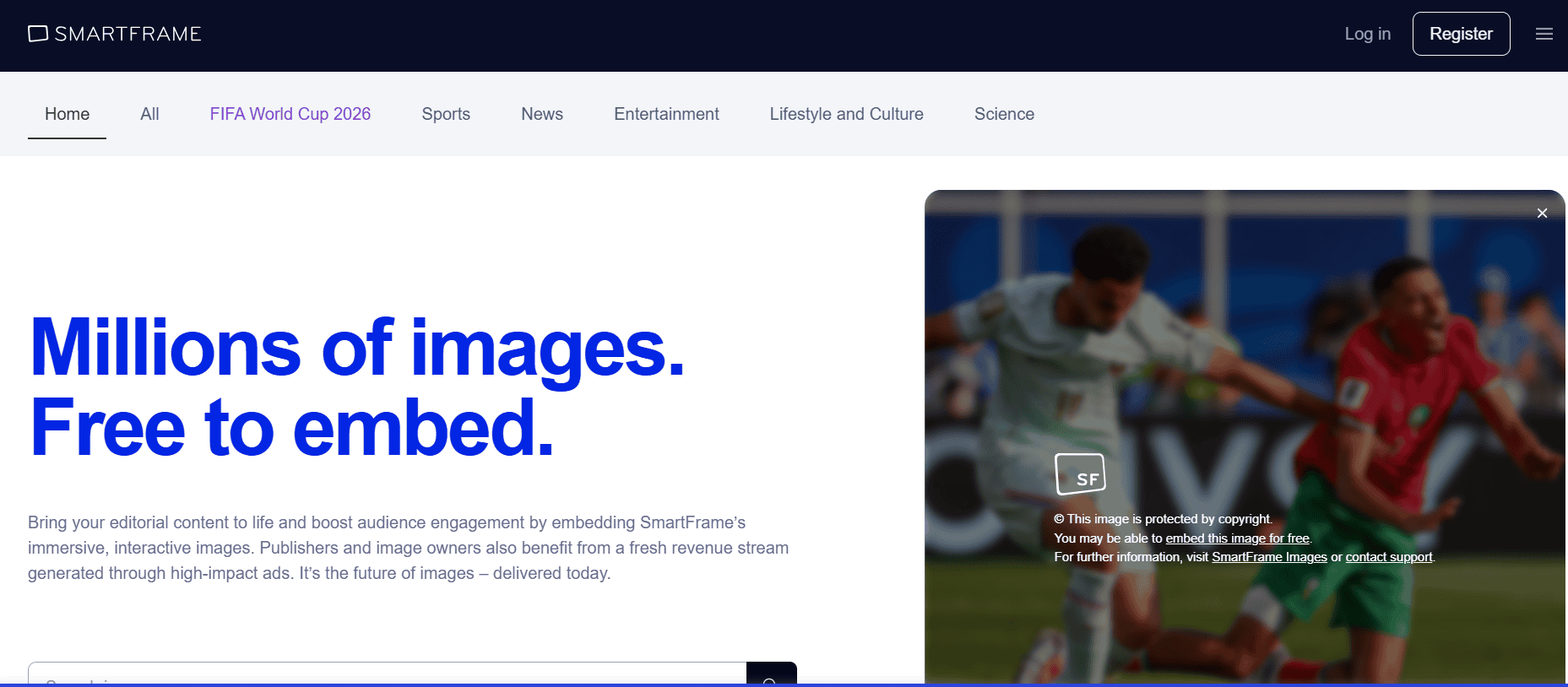
SmartFrame is an innovative image delivery and monetization platform headquartered in London, United Kingdom, serving publishers and content creators worldwide. Founded in 2015. The platform is designed for image monetization and licensing, offering a CPM-based revenue model that helps publishers and photographers generate revenue from their visual content. SmartFrame combines high-quality image streaming with in-image advertising while protecting copyrighted images through secure technology, making it a trusted solution for photography websites, publishers, and media companies.
Payment Details:
- Revenue Model: CPM
- Minimum Payout: Varies by agreement
- Payment Frequency: Monthly
- Payment Methods: Bank Transfer
Pros:
- In-image ads shown to be more engaging and memorable than standard display ads.
- Free image embedding for publishers plus a share of ad revenue, no licensing fees.
- Keeps site speed/performance intact despite high-quality interactive images.
Cons:
- Only accepts “premium” publishers, so smaller sites may not qualify.
- Works only for image-heavy content, limiting fit for text-first sites.
- Narrower ad format range compared to full-service networks.
Best For: SmartFrame is one of the best image monetization platforms for publishers who rely heavily on visual content. Its secure image technology and premium advertising solutions help maximize revenue without compromising image quality.
4. ADBRO
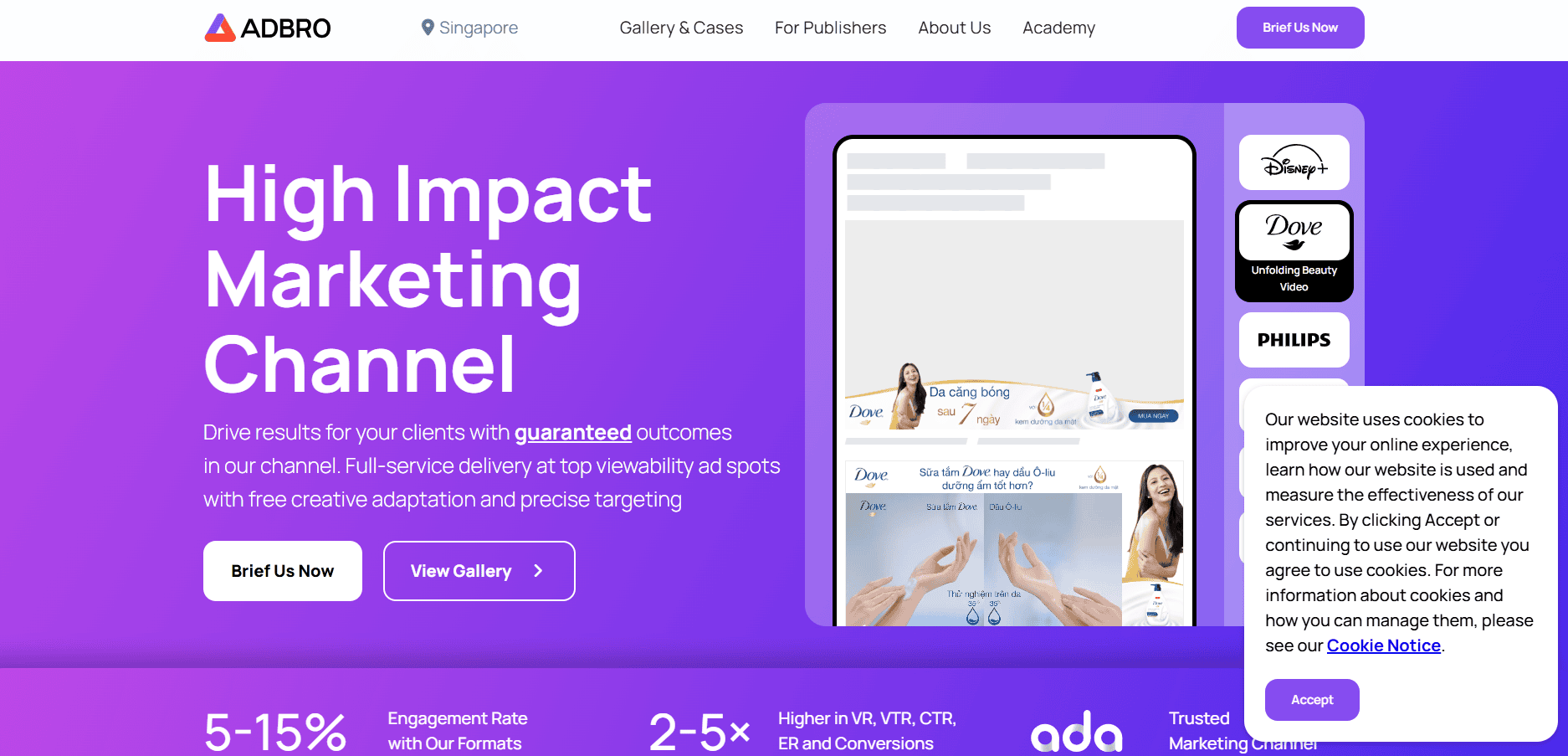
ADBRO is a Singapore-headquartered in-image advertising network that turns editorial images into high-impact, non-intrusive ad placements. Positioned as a “high-impact marketing channel,” it offers full-service campaign delivery with guaranteed outcomes, free creative adaptation, and precise targeting powered by behavioral and social demographic data, semantic and computer-vision content analysis, and contextual signals like geo, weather, dayparting, device, and telco operator. It works with brands such as Disney+, Dove, and Philips, and is used by global media agencies including PHD.
Payment Details:
- Revenue Model: Not publicly confirmed (likely CPM-based, common for in-image networks)
- Minimum Payout: Not disclosed
- Payment Frequency: Not disclosed
- Payment Methods: Not disclosed
Pros:
- Non-intrusive ad formats that don’t affect Cumulative Layout Shift (CLS) or Core Web Vitals, with lightweight asynchronous code that doesn’t slow page load.
- Risk-free entry for advertisers no minimum buy commitment, with free creative adaptation and unlimited design iterations at no extra cost.
- Strong reported performance: 5–15% engagement rate on its ad formats and 2–5x higher video-related metrics (VR, VTR, CTR, ER) and conversions versus standard formats.
Cons:
- Niche format limited to in-image (and related visual) placements, so it won’t suit text-only or low-image sites/campaigns.
- Reach is exclusive to its own publisher network (300M+ audience), which is smaller than open-exchange giants like Google Ad Manager.
- Publisher-facing payment specifics (NET terms, minimum payout) aren’t publicly disclosed you’ll need to apply and speak with their team to get exact figures.
Best For: ADBRO is best for publishers that want direct in-image monetization without disturbing existing ad placements.
5. Vibrant Media
Vibrant Media is one of the pioneers in contextual advertising, headquartered in New York, USA, with a global presence serving publishers worldwide. Founded in 2000. The platform specializes in contextual and in-image advertising and offers both CPC and CPM revenue models, enabling publishers to monetize their content effectively. Using intelligent contextual targeting technology, Vibrant Media delivers highly relevant ads based on webpage content, helping publishers improve user engagement, increase advertising performance, and maximize revenue through innovative in-image and in-text advertising solutions.
Payment Details:
- Revenue Model: CPC & CPM
- Minimum Payout: $50
- Payment Frequency: Monthly
- Payment Methods: PayPal, Bank Transfer
Pros:
- Full-service: web design, development, SEO, branding, AI automation.
- Positive reviews on strategic thinking, not just visuals.
- Broad experience across 50+ industries
Cons:
- Small review base, hard to judge track record at scale.
- No published pricing requires custom quote.
- Pakistan-based, so time zones may be a factor for some clients.
Best For: Vibrant Media is an excellent choice for publishers looking for contextual in-image advertising with premium advertisers and reliable monetization.
6. AdMedia
AdMedia is a trusted advertising network headquartered in California, USA, with a global reach serving publishers worldwide. Founded in 1998. The platform specializes in display and in-image advertising and offers both CPC and CPM revenue models, providing publishers with multiple monetization opportunities. Through its premium advertiser network, advanced targeting technology, and support for display, native, and in-image ads, AdMedia helps publishers maximize advertising revenue across a wide range of website categories while delivering relevant ads that enhance user engagement.
Payment Details:
- Revenue Model: CPC & CPM
- Minimum Payout: $100
- Payment Frequency: Monthly
- Payment Methods: PayPal, ACH, Wire Transfer
Pros:
- Reaches 200M+ US users across search, native, display, video, and mobile channels.
- Full-service account management with campaign optimization and reporting.
- Supports multiple ad formats (display, video, native, interstitial) with AI-driven targeting.
Cons:
- Not a major search engine, so exposure is limited vs. Google/Facebook.
- Heavy first-party data use raises some privacy concerns.
- Unclear validation process for its “quality traffic” claims.
Best For: AdMedia provides reliable monetization with quality advertisers, making it a strong option for publishers seeking stable advertising revenue.
7. Adsterra
 Adsterra is a global advertising network headquartered in Cyprus, serving publishers across 248+ GEOs worldwide. Founded in 2013. The platform is designed for global website monetization and supports CPM, CPC, and CPA revenue models, giving publishers multiple ways to generate advertising income. Adsterra offers a wide range of ad formats, advanced optimization tools, competitive payouts, and strong global advertiser demand, making it a popular choice for publishers of all sizes looking to maximize their website revenue.
Payment Details:
- Revenue Model: CPM, CPC & CPA
- Minimum Payout: $5
- Payment Frequency: Bi-weekly
- Payment Methods: PayPal, Payoneer, Wire Transfer, Cryptocurrency
Pros:
- No minimum traffic requirement, so any publisher can start monetizing quickly.
- Wide range of high-CPM ad formats (Popunder, Social Bar, In-Page Push, Native, Interstitial).
- 24/7 “Partner Care” support with dedicated account managers and built-in fraud/anti-malware protection.
Cons:
- Popunder and redirect-heavy ads can feel intrusive and hurt user experience.
- Minimum payouts can be steep for some methods (e.g., $1,000 minimum for wire transfer).
- Some users report bot/traffic-quality issues, and a few reviewers cite account bans or payment disputes.
Best For: Adsterra is one of the most publisher-friendly advertising networks, offering flexible monetization options, global advertiser demand, and fast payouts for websites of all sizes.
8. Refinery89
Refinery89 is a programmatic advertising network founded in 2018 by publishers, for publishers. Since then it has grown into one of the leading publisher-focused AdTech platforms in Europe and Latin America, and holds status as a Google Certified Publishing Partner and a member of IAB Europe’s Transparency & Consent Framework.
Rather than acting as a simple ad exchange, Refinery89 layers header-bidding technology, GDPR-compliant consent management, and dedicated account managers on top of a network of 25+ demand partners aiming to let publishers boost ad revenue without hurting site speed or user experience.
Payment Details:
- Revenue Model: CPM (Revenue Share)
- Minimum Payout: No fixed threshold (some sources cite ~$100)
- Payment Frequency: NET-45 (Monthly)
- Payment Methods: PayPal, Bank Transfer, eCheck, Wire Transfer
Pros:
- High CPMs via 25+ premium demand sources with dynamic SSP allocation.
- Fast setup single line of code, live same day, no site slowdown.
- Dedicated, native-speaking account managers with <12h response time.
Cons:
- Strict manual approval smaller sites may be rejected or delayed.
- Some reports of slow initial outreach responses and unsolicited emails.
- Limited integration depth with non-native SSPs/platforms.
Best For: Refinery89 is best for publishers that want programmatic ad management and revenue optimization.
9. Infolinks
Infolinks is one of the most established contextual advertising networks, headquartered in Israel, with operations in 100+ countries worldwide. Founded in 2007, the platform specializes in in-text and in-image advertising, offering both CPC and CPM revenue models to help publishers monetize their existing content. With multiple ad formats, simple integration, and a global advertiser network, Infolinks enables publishers to generate additional revenue without requiring extra banner space, making it a reliable choice for both new and experienced website owners.
Payment Details:
- Revenue Model: CPC & CPM
- Minimum Payout: $50
- Payment Frequency: Monthly
- Payment Methods: PayPal, Payoneer, Wire Transfer, eCheck
Pros:
- No minimum traffic requirement, with fast approval (often within 24–48 hours).
- Non-intrusive, contextual in-text ad formats (InText, InFold, InArticle, etc.) that don’t disrupt site design.
- Fully compatible with AdSense, so it can run alongside other ad networks.
Cons:
- Lower earnings/CPM compared to AdSense and other premium networks.
- Best only for low-traffic or new sites not competitive once you cross ~10K monthly views.
- Some users report unresponsive support and, in a few cases, ads running without full publisher consent.
Best For: Infolinks remains one of the best in-image advertising networks for publishers looking for easy integration, contextual advertising, and consistent earnings. Its multiple ad formats and compatibility with other ad networks make it a reliable choice in 2026.
10.Media.net
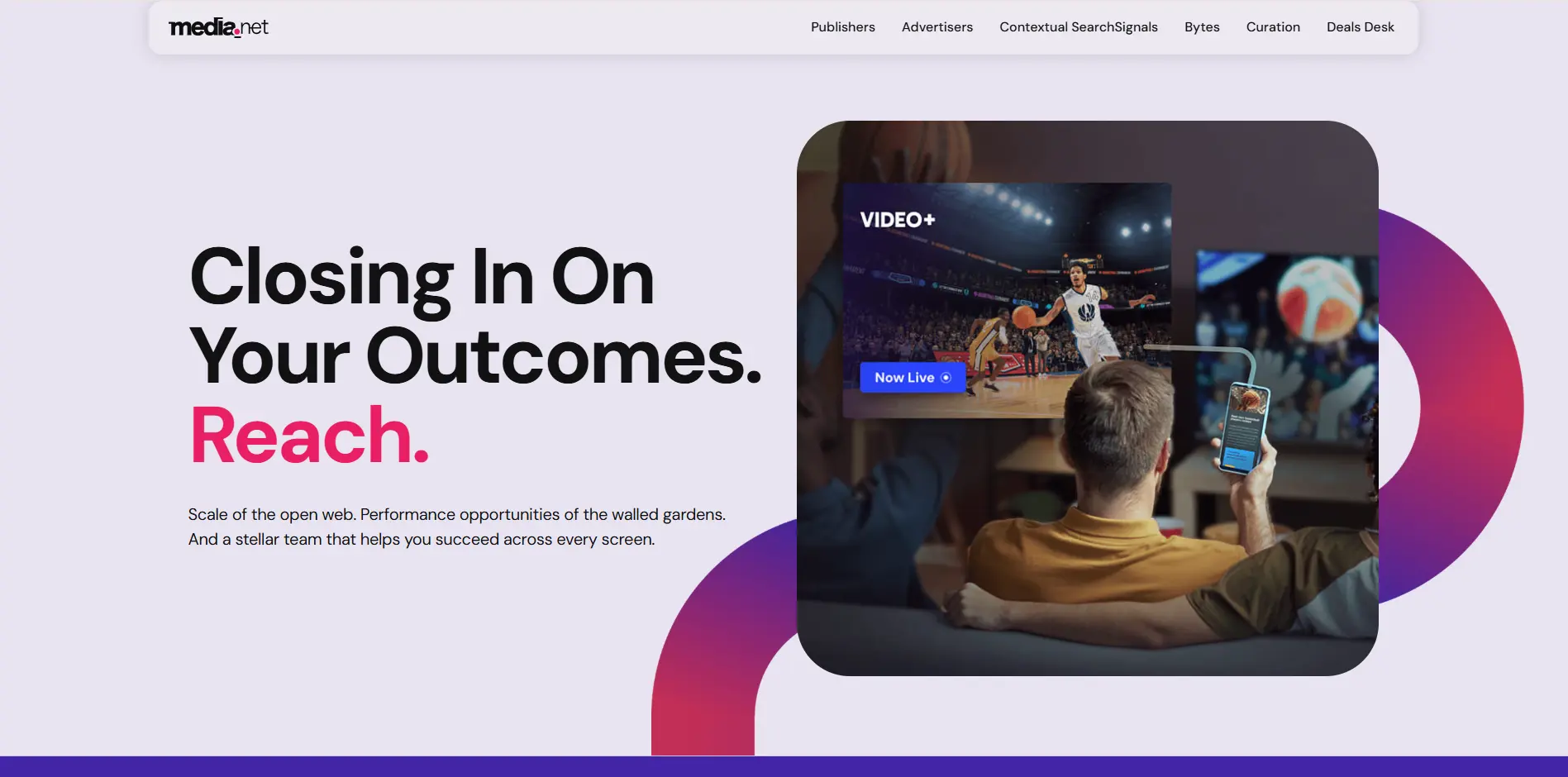
Media.net is one of the world’s largest contextual advertising networks, headquartered in New York, USA, with a global presence serving publishers worldwide. Founded in 2010, the platform is designed for contextual advertising and premium publishers, offering both CPC and CPM revenue models to maximize website monetization. Powered by Yahoo and Bing, Media.net delivers high-quality contextual, native, and image-rich advertising solutions backed by premium advertiser demand and advanced targeting technology, making it a trusted choice for publishers seeking relevant ads and strong revenue potential.
Payment Details:
- Revenue Model: CPC & CPM
- Minimum Payout: $100
- Payment Frequency: Monthly
- Payment Methods: PayPal, Wire Transfer
Pros:
- High-quality contextual ads powered by the Yahoo/Bing network, backed by a large advertiser pool.
- Customizable ad units with a dedicated account manager and real-time reporting dashboard.
- No hard traffic minimum quality content matters more than sheer volume.
Cons:
- Strict, invite-based approval favors sites with strong content and tier-1 (US/UK/Canada) traffic.
- USD-only payouts on a NET-30 cycle, which can be inconvenient for international publishers.
- RPMs can be inconsistent and are reported by some users as lower than other premium networks (e.g., Mediavine).
Best For: Media.net is an excellent option for publishers seeking premium contextual advertising with strong earning potential and reliable monthly payments.
11. ValueImpression
ValueImpression is a premium CPM ad network for established publishers, built around impression-based payouts (you get paid whether or not a visitor clicks) and a high-converting outstream video ad unit. It requires meaningful traffic to qualify and offers flexible, multi-method payouts but publisher reviews on support consistency and post-onboarding responsiveness are mixed.
Payment Details:
- Revenue Model: CPM
- Minimum Payout: $100 for PayPal, Payoneer, and Bitcoin/BCH $1,000 for Wire Transfer
- Payment Frequency: Monthly
- Payment Methods: PayPal, Payoneer, Wire Transfer, Cryptocurrency (Bitcoin/BCH)
Pros:
- You get paid for ad views, not just clicks.
- Multiple payout options: PayPal, Payoneer, wire transfer, crypto.
- You get a personal account manager to help you set up ads.
Cons:
- You need a lot of traffic to get approved (100K+ visitors/month).
- Support can be slow to respond after you’re approved.
- Some users report payment issues, so reviews are mixed.
Best For: ValueImpression is best for publishers with enough traffic to benefit from managed display, video, and header bidding monetization.
12. PixFuture
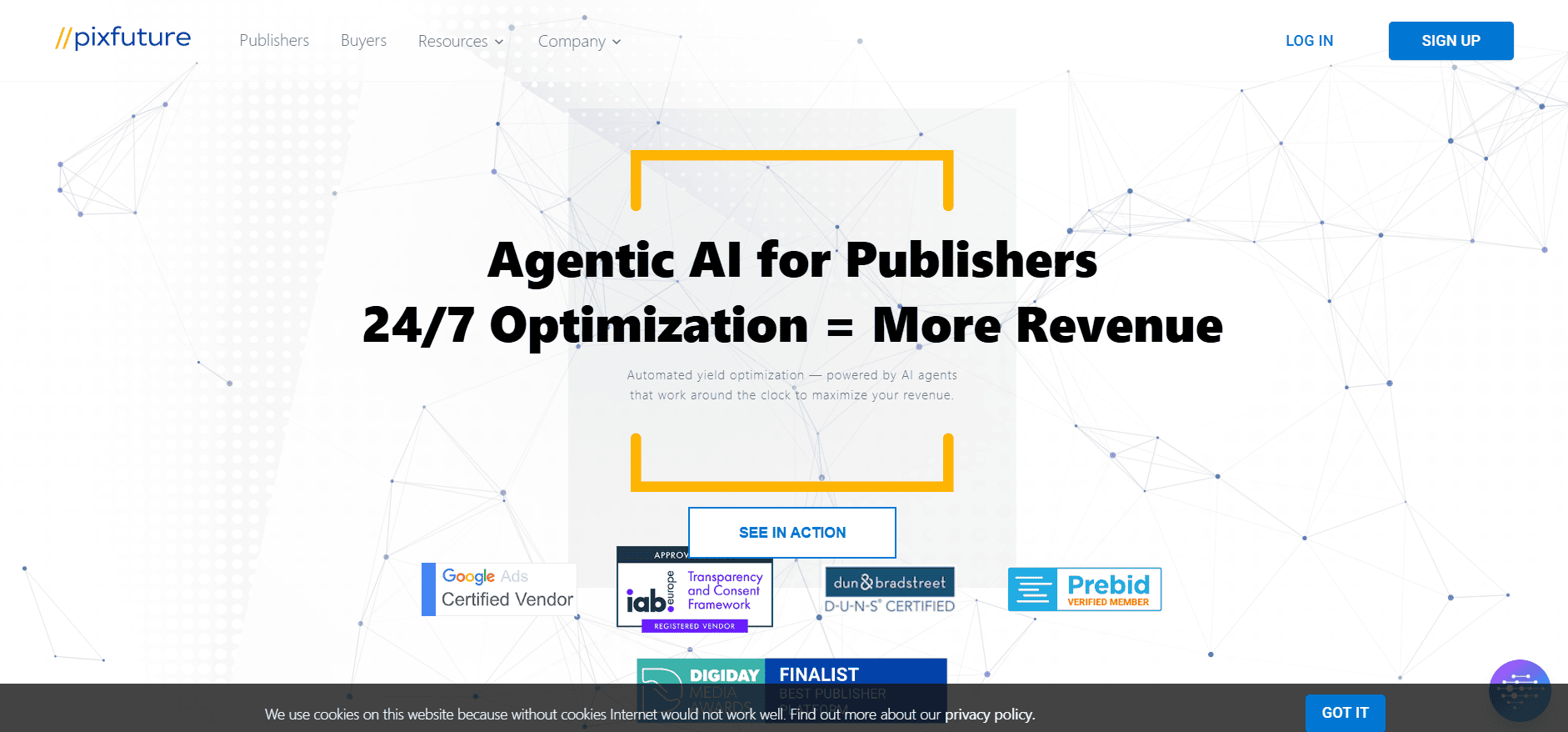
PixFuture is a Toronto-based ad network connecting publishers to major demand-side platforms (DSPs), agency trading desks, and over 1,000 direct advertisers. It reports serving roughly 4.1 billion monthly ad impressions across 141 million+ unique users, with strong English-language traffic coverage and a fairly even mobile/desktop split. Beyond standard banner, native, and sticky ad units, PixFuture also offers video and next-gen CTV/OTT monetization, making it a broader option than many pure-display networks.
Payment Details:
- Revenue Model: CPM/RPM
- Minimum Payout: Not officially published
- Payment Frequency: NET-30, paid in the first week of the next month
- Payment Methods: PayPal, Wire Transfer (some report Payoneer too)
Pros:
- Works with 1,000+ advertisers, so ads fill up well.
- Supports many ad types: display, video, native, even CTV/OTT.
- Most publishers report getting paid on time.
Cons:
- Each ad unit needs its own code, which can slow down your site.
- A few users report slow support or missing payments.
- Some ads have been flagged for malware in rare cases.
Best For: PixFuture is best for publishers looking for AI-assisted programmatic monetization.
Best Practices for Maximizing In-Image Ad Revenue
Maximizing revenue from an In-Image advertising network requires more than simply joining a platform. Based on our editorial research and industry best practices, the following strategies can help improve ad performance and increase your overall earnings:
- Use high-quality and relevant images throughout your content.
- Publish original, informative, and SEO-optimized articles.
- Place images naturally within the content instead of clustering them together.
- Optimize your website for mobile devices.
- Improve page loading speed to increase ad viewability.
- Monitor performance reports regularly and optimize low-performing pages.
- Test multiple ad placements to identify the highest-converting positions.
- Combine in-image advertising with other monetization methods, such as native ads or affiliate marketing, for better overall revenue.
Common Mistakes to Avoid
Many publishers fail to maximize their earnings because of avoidable mistakes. Here are the most common ones:
Ignoring Image Quality: Resolution or irrelevant images attract less engagement and reduce the effectiveness of in-image advertisements.
Using Too Many Advertisements: Displaying excessive ads can create a poor user experience and increase bounce rates.
Choosing the Wrong Network: Not every advertising platform is suitable for every website. Always compare features, payment terms, and advertiser quality before joining.
Neglecting Mobile Optimization: Since a large percentage of website traffic comes from mobile devices, your ads should be fully responsive and mobile-friendly.
Failing to Track Performance: Without reviewing analytics and revenue reports, it’s difficult to identify opportunities for optimization and higher earnings.
Conclusion
There’s no single “best” in-image ad network for every publisher in 2026 the right choice depends on your traffic volume, content type, and geography. High-traffic, premium publishers such as news sites, media outlets, and photography portfolios tend to get the most value from networks like GumGum, Seedtag, or SmartFrame, which offer strong agency demand and image-first ad technology, though they come with stricter entry requirements. Smaller or newer sites, on the other hand, are usually better served by Infolinks or AdMedia, since both have low or no traffic minimums and offer faster approval timelines.
Publishers looking for broader format flexibility including video, native, or CTV/OTT inventory should consider PixFuture or Adsterra, which pair in-image-style placements with wider monetization options beyond static visuals. European and LATAM-based publishers will likely find Refinery89 and Seedtag especially well-suited, given their regional focus and GDPR-first infrastructure. Meanwhile, contextual-first sites that prioritize brand safety and premium CPMs may get better results from Media.net or Vibrant Media.
Across all 12 platforms compared here, the networks that perform best over the long term tend to share three traits: transparent payment terms, non-intrusive ad placements that protect page speed and Core Web Vitals, and responsive account support that continues after onboarding rather than fading once a publisher is approved.
Rather than committing to a single network permanently, it’s worth testing two or three that match your traffic tier and niche, comparing real RPM and fill-rate data over a full billing cycle, and scaling up with whichever delivers the best balance of revenue and user experience. In-image advertising ultimately works best as part of a diversified monetization stack rather than a standalone strategy, so pairing it with native ads, contextual display, or affiliate revenue will typically outperform relying on any single network alone.
Frequently Asked Questions (FAQs)
1.What is in-image advertising?
In-image advertising is a digital ad format that places ads directly on or around images within a website’s content. Instead of relying on separate banner slots, in-image ad networks detect the images and context (or keywords) on a page and display contextually relevant ads that appear on hover, click, or as a subtle overlay letting publishers monetize visual content without disrupting the page layout.
2.How does in-image advertising differ from traditional banner ads?
Traditional banner ads occupy fixed, separate ad slots that users often scroll past or ignore due to banner blindness. In-image ad networks instead embed ads within existing visual content, so they appear where user attention is already focused. This typically leads to better viewability and engagement than standard display placements.
3.Why should publishers use in-image ad networks in 2026?
As ad blockers, banner fatigue, and declining click-through rates continue to affect standard display advertising, in-image ad networks offer publishers an additional, less intrusive revenue stream. Because these ads live inside existing images rather than adding new ad units, they let publishers increase monetization without cluttering the page or hurting user experience.
4. Are in-image ads compatible with mobile devices?
Yes, Most leading in-image ad networks including GumGum, Seedtag, and ADBRO build their ad formats to be fully responsive across mobile, tablet, and desktop. Since a large share of web traffic is now mobile, in-image ad networks that don’t optimize for smaller screens quickly lose relevance and revenue potential.
5. How do publishers earn through in-image ad networks?
Publishers typically earn through a CPM (cost-per-thousand-impressions) model, though some in-image ad networks like Vibrant Media, AdMedia, and Adsterra also support CPC or CPA models. Earnings depend on factors like image volume, traffic quality, niche, and geography, with premium networks generally paying higher rates for engaged, image-heavy content.
6. What types of in-image ads perform best?
Contextually matched overlay ads ones that align with the subject of the image, such as travel ads on a hotel photo or kitchen products on a recipe photo tend to perform best. In-image ad networks using AI and computer vision (like GumGum and Seedtag) to analyze image content, rather than relying only on manual keyword tagging, generally see stronger engagement and click-through rates.
7. Do in-image ads slow down website performance?
Not when implemented correctly. Reputable in-image ad networks use lightweight, asynchronous ad code designed to avoid affecting Core Web Vitals or Cumulative Layout Shift (CLS). That said, performance varies by network some require more scripts per ad unit than others, so it’s worth checking a network’s technical footprint before integrating it site-wide.
8. Which is the best in-image ad network in 2026?
The best in-image ad network depends on your traffic size, content type, and target geography. Premium publishers with strong traffic often prefer GumGum or Seedtag for their AI-driven contextual targeting, while smaller or newer sites tend to do better with lower-barrier networks like Infolinks or AdMedia. Reviewing payment terms, ad quality, and support responsiveness across a few networks is the most reliable way to find the right fit.
9. How can I increase my earnings from in-image advertising?
Focus on publishing high-quality content, using engaging images, improving page speed, attracting targeted traffic, and testing different advertising placements to optimize performance.
10. Do I need high website traffic to join an in-image advertising network?
It depends on the network. Some platforms accept smaller publishers, while premium networks may require consistent monthly traffic and high-quality content.
