


Looking to turn your website traffic into steady income?
Banner ad networks are among the best advertising solutions for publishers looking to monetize websites while maintaining a positive user experience. By displaying targeted banner ads in high-visibility placements, these networks help increase clicks, improve engagement, and maximize advertising revenue across desktop and mobile devices.
The best banner ad networks for publishers in 2026 include Google Ad Manager, Google AdSense, Media.net, Adsterra, Ezoic, PropellerAds, BuySellAds, InMobi, Clickadu, and Setupad. These platforms are trusted for their high fill rates, competitive CPMs, reliable payments, advanced targeting, and global advertiser demand, making them suitable for websites of all sizes.
Banner ad networks help publishers monetize websites with targeted display ads that increase engagement and revenue through CPM, CPC, or CPA models.This guide compares the best banner ad networks in 2026 based on CPM rates, payments, ad quality, and publisher features to help you choose the right platform.
What is Banner Advertising?
Banner advertising places visually appealing ads on websites, where they are easily seen by visitors, typically in high-traffic areas such as the top, side, or bottom of a page. When a publisher joins a banner ad network, they gain access to a pool of advertisers who want to promote their products or services.
Banner advertising places image, text, or rich-media ad units in high-visibility areas of a page typically the header, sidebar, or in-content zones where readers naturally scan. Publishers earn under one of three core pricing models:
- CPM (cost per mille): paid per 1,000 impressions, regardless of clicks.
- CPC (cost per click): paid only when a visitor clicks the ad.
- CPA (cost per action): paid when a click leads to a completed action, such as a signup.
What Are the Benefits of Using Banner Ad Networks?
Banner ad networks are advertising platforms that connect publishers with advertisers to display visual, image-based ads across websites and apps, earning publishers revenue per impression or click. These networks combine images, text, and graphics into visually appealing promotions designed to capture user attention and drive clicks, increasing traffic to advertisers’ products or services functioning as a core part of the broader display advertising ecosystem publishers rely on for consistent monetization.
Based on our research into how these platforms operate, banner networks simplify ad management by automating placement, optimizing campaigns in real time, and offering advanced targeting based on demographics, interests, and browsing behavior. Publishers also gain access to real-time analytics and performance tracking, giving them clear visibility into which placements actually convert all while keeping displayed ads relevant and engaging for their audience rather than generic filler.
Some popular targeting methods include:
- Geo-Targeting: Targets users in specific locations.
- Demographic Targeting: Focuses on age, gender, and interests.
- Behavioral Targeting: Shows ads based on browsing behavior.
Ad networks display ads in prominent locations on your website, such as the top of the page or within content. When a visitor interacts with the ad, they are directed to the advertiser’s landing page, increasing conversion potential.
How to Select the Best Banner Ad Network
When choosing a banner ad network, focus on factors that directly impact your website’s performance and revenue. Look for customizable ad placements that blend naturally with your site design, relevant ads that match your audience’s interests, and fast-loading technology that enhances user experience. Also, compare payment terms such as NET-30 or faster, and prioritize networks with strong advertiser demand, as higher competition often leads to better CPMs and increased earnings for publishers.
Top 10 Banner Ad Networks for Publishers in 2026
Here are the best banner ad networks for publishers in 2026, selected based on ad quality, CPM rates, global reach, payment reliability, and website monetization features.
- EpicAds
- Google AdSense
- Media.net
- PropellerAds
- Raptive
- Ezoic
- Monumetric
- Revcontent
- She Media
- Infolinks
1. EpicAds.Net
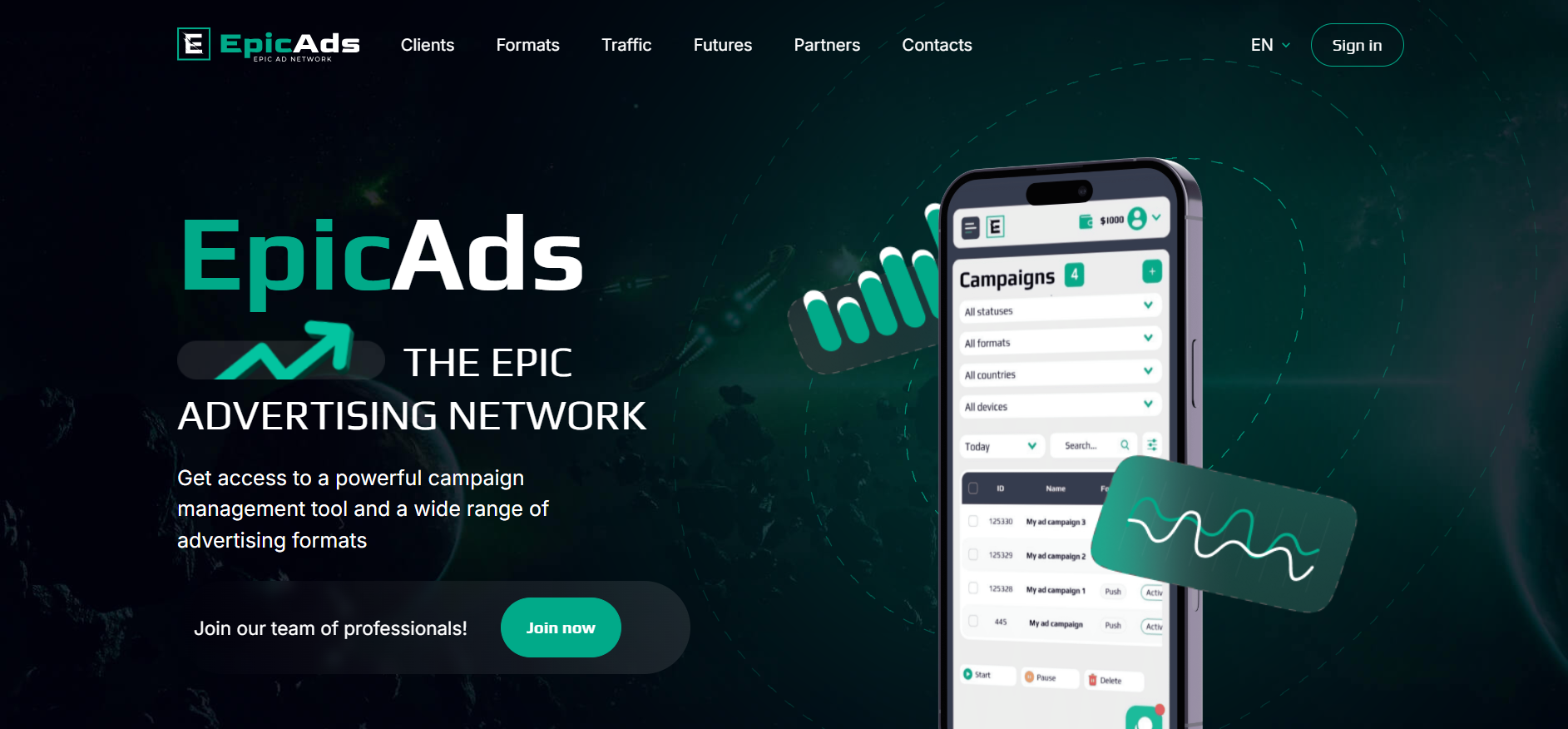
EpicAds is a performance-based banner ad network that helps publishers monetize websites with display, native, and push ads while giving advertisers access to global, targeted audiences. With competitive CPMs, high fill rates, real-time reporting, and advanced targeting, EpicAds is a strong choice for content websites, blogs, and high-traffic publishers seeking to maximize advertising revenue.
Payment Details:
- Minimum Payout: $50
- Payment Frequency: Varies by source (Net-7/15/30 reported by some, Net-60 by others)
- Payment Methods: PayPal, Capitalist, USDT (TRC-20); older listings also cite Payoneer, Skrill, bank transfer, wire
- Cookie Duration: Not publicly disclosed (referral program pays 5% lifetime revenue share, but no stated click-tracking window)
Pros:
- Weekly (Net-7) payout option is faster than most established networks.
- No steep traffic minimum, so newer sites can start monetizing quickly.
- Multiple ad formats run at once for more fill.
Cons:
- Younger network with a shorter public track record than AdSense or Media.net.
- Payment methods lean toward crypto and e-wallets in some regions.
- Best known for Tier-2/3 GEO traffic, so Tier-1 CPMs may lag more established networks.
Best For: Publishers in emerging markets, or with adult, dating, or sweepstakes-adjacent traffic, who prioritize fast, flexible payouts.
2. Google AdSense
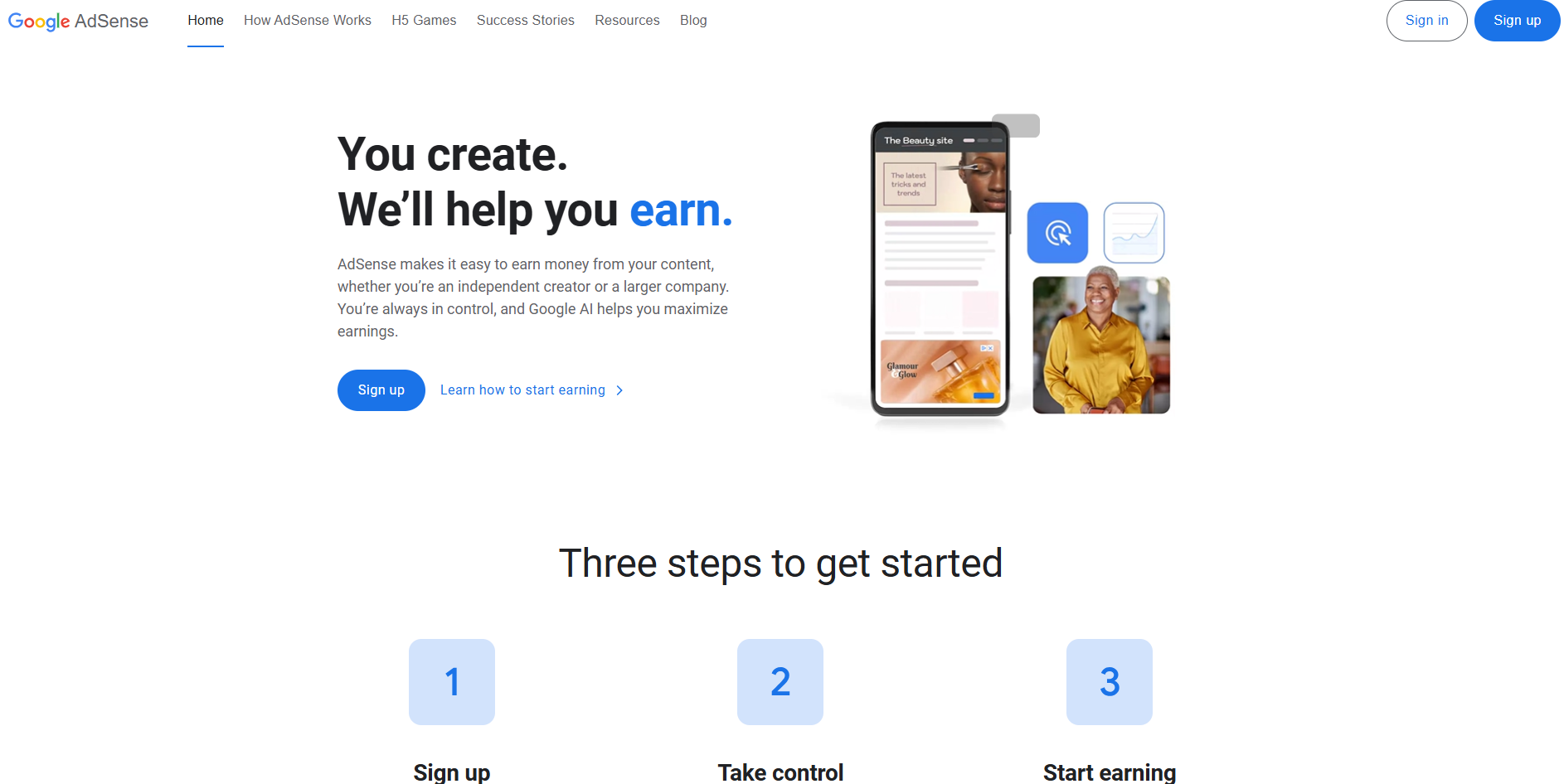
Google AdSense is one of the best banner ad networks for publishers, helping websites monetize traffic with high-quality display and responsive ads backed by Google’s global advertiser network. It offers automated ad optimization, contextual targeting, and reliable payments, making it an excellent choice for blogs, news sites, and content-rich websites.
Payment Details:
- Minimum Payout: $100
- Payment Frequency: Monthly
- Payment Methods: Direct deposit/EFT, wire transfer, check (varies by country)
- Cookie Duration: Not applicable
Pros:
- Largest advertiser pool on the web, supporting consistently strong fill rates.
- Fully automated setup no minimum traffic or manual approval wait for most publishers.
- Real-time reporting and granular ad-unit controls in the dashboard.
Cons:
- $100 threshold can take small sites months to reach.
- Support is largely self-service; no dedicated account manager for most publishers.
- Strict policy enforcement means accounts can be suspended with limited recourse.
Best For: New bloggers and website owners who want the simplest possible setup and the widest advertiser demand.
3. Media.net
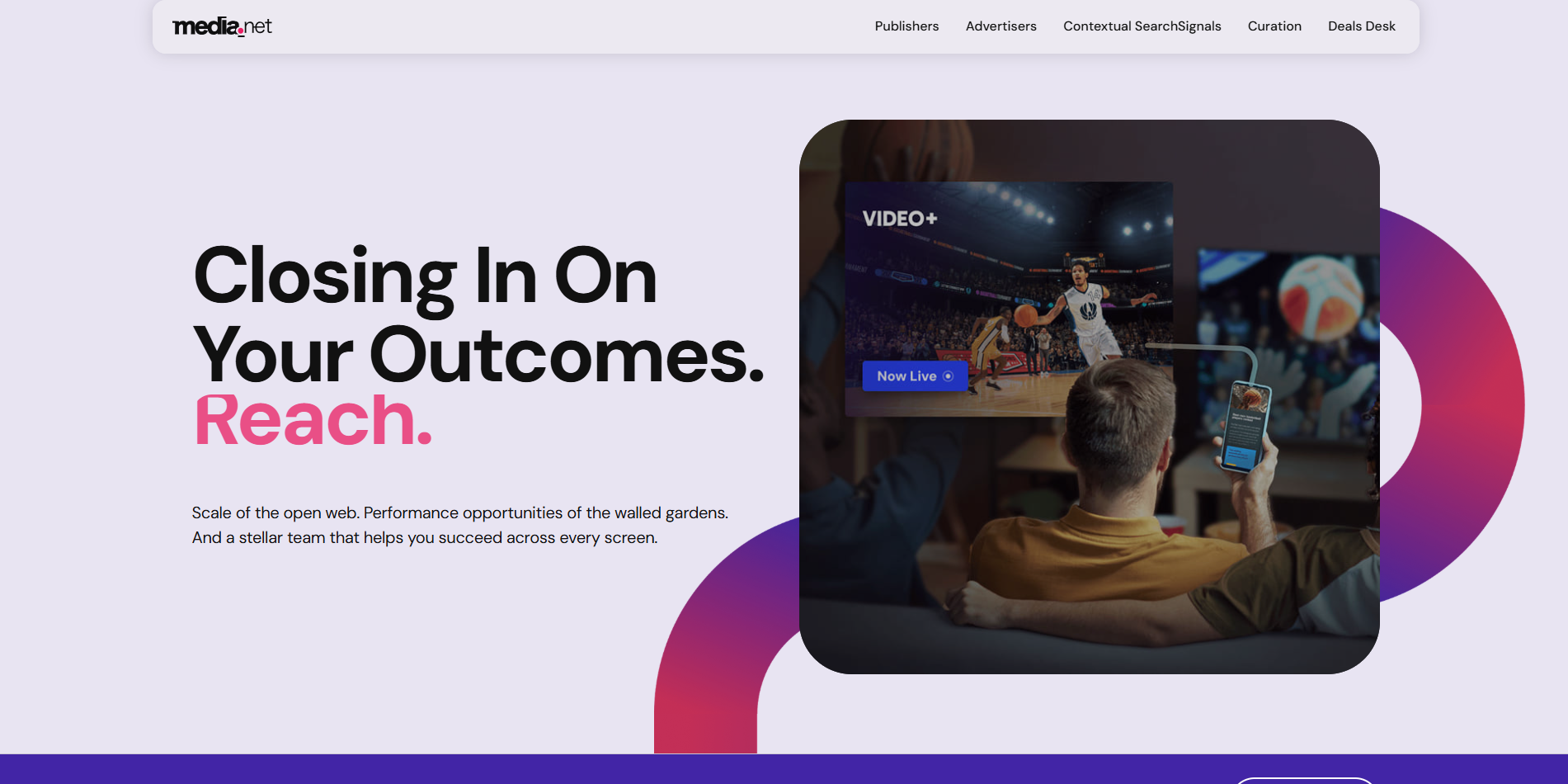
Media.net is a leading contextual advertising network powered by Yahoo and Bing. It automatically displays highly relevant native and display ads based on your website’s content, helping improve user engagement and click-through rates. For publishers, Media.net offers access to premium advertisers, competitive CPC earnings, and AI-powered ad optimization that blends naturally with website content. It’s an excellent choice for blogs, news websites, and content-focused publishers looking to monetize traffic while maintaining a fast, user-friendly browsing experience and long-term revenue potential.
Payment Details:
- Minimum Payout: $100
- Payment Frequency: Net-30 (paid ~25th–30th of the following month)
- Payment Methods: PayPal, Payoneer, wire transfer
- Cookie Duration: Not publicly disclosed
Pros:
- Contextual ads tend to blend naturally with content, supporting better engagement.
- Publishers get a dedicated account manager, unlike most self-serve networks.
- Strong RPMs reported for sites with US, UK, or Canadian traffic.
Cons:
- Publisher revenue share isn’t publicly disclosed.
- Payments are USD-only, adding conversion friction for non-US publishers.
- Requires majority traffic from tier-1 countries, limiting eligibility for smaller or regional sites.
Best For: English-language content sites with a meaningful share of US, UK, or Canadian visitors.
4. PropellerAds
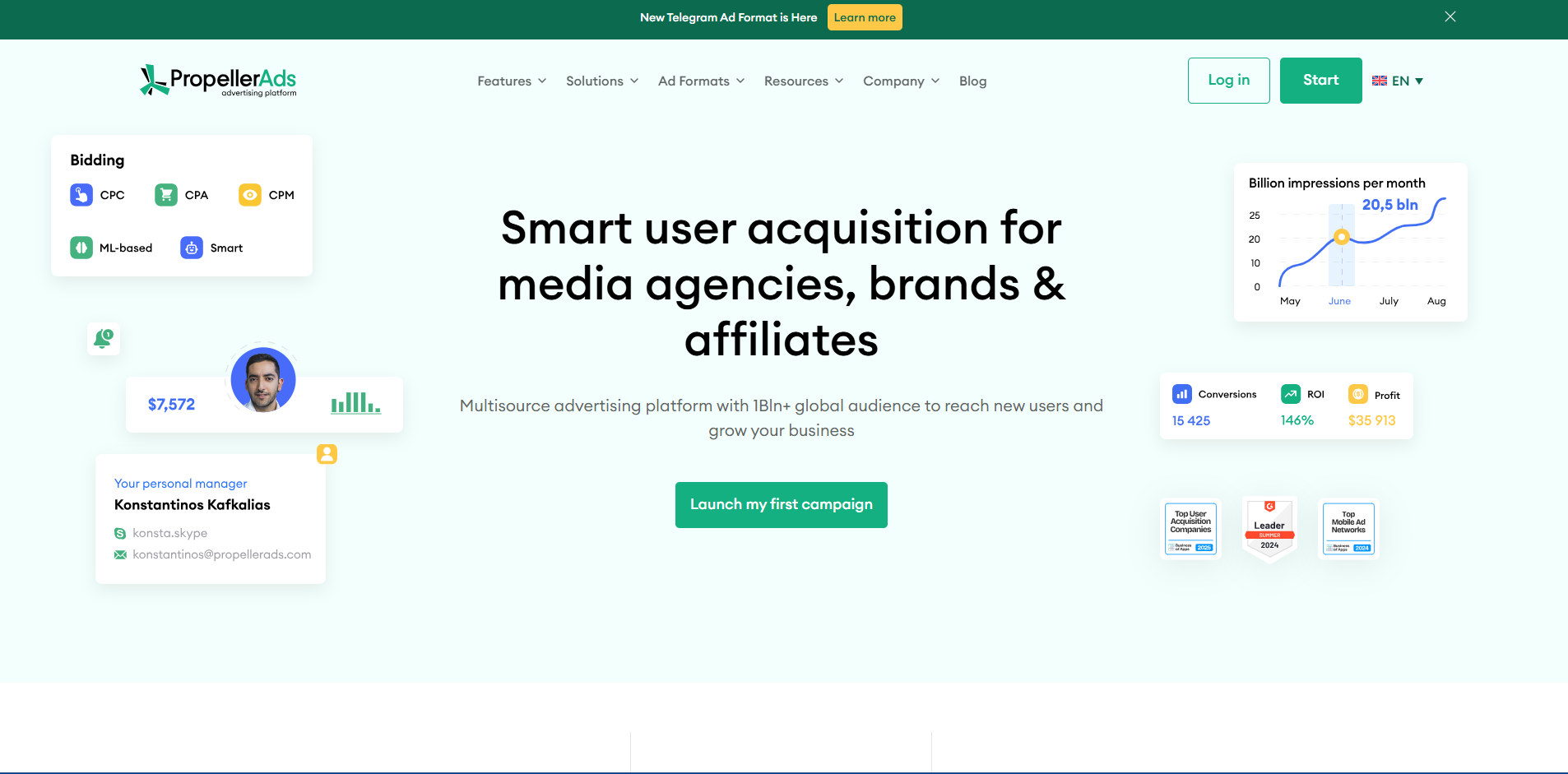
PropellerAds is a global ad network that offers multiple ad formats, including native, push, pop, and interstitial ads, to help publishers maximize website and app revenue. Its AI-powered optimization and high fill rates ensure consistent monetization across global traffic.
For advertisers, PropellerAds provides advanced targeting, real-time campaign tracking, and automated optimization to reach the right audience. It is an excellent choice for bloggers, app developers, and high-traffic websites looking for scalable, user-friendly monetization solutions.
Payment Details:
- Minimum Payout: $5 (e-wallets), $500 (wire)
- Payment Frequency: Weekly, monthly
- Payment Methods: PayPal, Payoneer, WebMoney, Skrill, ePayments, wire
- Cookie Duration: Not publicly disclosed
Pros:
- Lowest realistic entry barrier of any major network $5 minimum.
- No minimum traffic requirement, so brand-new sites can join immediately.
- Referral program pays a lifetime 5% share of referred publishers’ earnings.
Cons:
- Ad formats (popunders, push) can hurt user experience if overused.
- Weekly payout eligibility requires proving 10,000+ daily visitors.
- Some payment methods carry conversion or wire fees.
5. Raptive
Raptive is a premium ad network that helps publishers monetize their websites through native, display, and video ads. It offers high CPM rates, AI-powered optimization, and detailed performance insights to maximize revenue while maintaining a smooth user experience.
For advertisers, Raptive provides access to highly engaged audiences, advanced targeting, and real-time campaign tracking. It’s an ideal monetization platform for established bloggers, content creators, and high-traffic websites seeking sustainable revenue growth.
Payment Details:
- Minimum Payout: $25
- Payment Frequency: Net-45
- Payment Methods: Direct deposit/wire
- Cookie Duration: Not publicly disclosed
Pros:
- Transparent 75% revenue share, higher than many competitors disclose.
- Payment guarantee publishers get paid even if Raptive’s advertisers are late.
- Access to SEO tools, a creator community, and personalized account support at higher tiers.
Cons:
- Requires at least 25,000 monthly pageviews with meaningful traffic from top-tier countries.
- Net-45 is slower than AdSense’s roughly three-week cycle.
- 30-day cancellation notice period if you want to leave the network.
Best For: Established bloggers and content creators with 25,000+ monthly pageviews who want a managed, higher-payout alternative to AdSense.
6. Ezoic
Ezoic is an AI-powered ad optimization platform that helps publishers increase revenue with native, display, and video ads. Its smart testing technology automatically optimizes ad placements, layouts, and user experience to maximize earnings without slowing down your website.
For advertisers, Ezoic offers access to premium publisher inventory and highly engaged audiences through AI-driven optimization. It’s an excellent choice for blogs, news sites, and content-rich websites looking to grow ad revenue while maintaining a fast, user-friendly experience.
Payment Details:
- Minimum Payout: $20
- Payment Frequency: Net-30 / Net-60 / Net-90 (publisher’s choice, bonus for longer terms)
- Payment Methods: PayPal, Payoneer, bank transfer, check
- Cookie Duration: 14 days
Pros:
- Low $20 payout threshold, among the most accessible of the managed networks.
- AI-driven layout testing removes the guesswork from ad placement.
- No hard minimum traffic requirement.
Cons:
- Automated optimization can feel like a loss of creative control to some publishers.
- Choosing longer Net-60/90 terms for the bonus means waiting longer for cash.
- Some publishers report ad-heavy layouts if settings aren’t manually tuned.
Best For: Publishers of any size who want automated, data-driven ad optimization without needing to run their own tests.
7. Monumetric

Monumetric is a full-service ad management platform that helps bloggers and content creators maximize website revenue through optimized display and native ads. Its expert support, AI-driven ad optimization, and high CPM rates help increase earnings while maintaining a fast, user-friendly experience.
For advertisers, Monumetric provides access to premium, highly engaged audiences with targeted ad placements. It’s an excellent choice for lifestyle, parenting, and content-rich websites looking for reliable, long-term monetization.
Payment Details:
- Minimum Payout: $10 reported; $99 one-time setup fee (Propel tier)
- Payment Frequency: Net-60, paid on the 5th and 25th of each month
- Payment Methods: Direct deposit (US), PayPal (non-US)
- Cookie Duration: Not publicly disclosed
Pros:
- Dedicated Publisher Support team and custom ad-strategy calls, not just a dashboard.
- Dynamic video and in-image ad units beyond standard banners.
- Only 10,000 monthly pageviews needed to qualify lower than Raptive or Media.net.
Cons:
- Net-60 is the slowest payout cycle among the mainstream networks in this list.
- $99 one-time setup fee for smaller publishers.
- 30-day written notice required to leave the network.
Best For: Bloggers with 10,000+ monthly pageviews who want a personal account manager rather than a self-serve dashboard.
8. RevContent
Revcontent is a leading native advertising platform that helps publishers monetize their websites with sponsored content and high-performing native ads. Its customizable widgets, premium advertiser demand, and competitive CPMs help increase revenue while keeping ads naturally integrated into your site’s design.
For advertisers, Revcontent offers advanced audience targeting, real-time performance tracking, and access to highly engaged readers. It’s an excellent choice for blogs, news sites, and content-driven websites looking to boost engagement and generate sustainable ad revenue.
Payment Details:
- Minimum Payout: $100 (PayPal/ACH, $2,500 PayPal cap), $1,000 (wire)
- Payment Frequency: Net-30
- Payment Methods: ACH, wire transfer, PayPal
- Cookie Duration: Not publicly disclosed
Pros:
- Native widgets are highly customizable to match site design.
- Publishers keep full editorial control and can block unwanted advertisers.
- Rates reported in the $3–$40 CPM range for approved, high-quality sites.
Cons:
- A reportedly low application acceptance rate, based on figures cited across review sites.
- Requires 50,000+ monthly page impressions to apply.
- $100–$1,000 payout minimums are steep for smaller publishers.
Best For: Established, high-traffic content sites that want native recommendation widgets alongside or instead of display banners.
9. SHE Media

SHE Media is a premium advertising network focused on lifestyle, parenting, wellness, and women-centered content. It helps publishers increase revenue with high-quality display and native ads, customized placements, and data-driven optimization while maintaining an excellent user experience.
For advertisers, SHE Media provides access to a highly engaged female audience across trusted premium websites. It’s an ideal monetization platform for publishers creating content for women and brands looking to reach relevant, high-intent audiences.
Payment Details:
- Minimum Payout: $20
- Payment Frequency: Paid 35 days after month close
- Payment Methods: ACH (US), PayPal (international)
- Cookie Duration: Not publicly disclosed
Pros:
- High, published revenue share (up to 75%) plus access to direct-sold, high-CPM campaigns.
- Editorial exposure through SHE Media’s flagship brands.
- Publisher support team staffed by former bloggers, not just ad-ops generalists.
Cons:
- 20,000 monthly pageview minimum to join the Collective.
- 12-month contract with a 60-day notice period to cancel auto-renewal.
- Niche-focused (lifestyle/women’s content), so it’s not a fit for every vertical.
10. Infolinks
Infolinks is a global contextual advertising network that helps publishers monetize their websites with in-text, in-frame, in-article, and native ads. Its lightweight integration allows you to generate additional revenue without changing your website’s design or disrupting the user experience.
For advertisers, Infolinks offers contextual targeting that connects ads with relevant content, helping improve engagement and campaign performance. It’s an excellent choice for blogs, niche websites, and content-rich publishers looking for simple, scalable monetization.
Payment Details:
- Minimum Payout: $50 (PayPal/eCheck/ACH), $100 wire ($1,000 select countries)
- Payment Frequency: Net-45
- Payment Methods: PayPal, eCheck, ACH, wire
- Cookie Duration: Infolinks’ referral program pays 10% of a referred publisher’s revenue for one year rather than tracking via a cookie expiration
Pros:
- Ad units don’t require dedicated banner space, useful for text-dense or minimalist sites.
- Relatively low $50 payout minimum.
- No minimum traffic requirement, so any site can apply.
Cons:
- In-text ad formats can look intrusive or spammy if overused.
- Low RPMs on niche or low-traffic sites can mean months between payouts.
- Net-45 is slower than several self-serve competitors.
Best For: Small blogs and content-heavy sites that don’t have space for traditional display banners.
How to Combine Multiple Banner Ad Networks for Maximum Revenue
Running two or three complementary networks at once a practice known as ad mediation typically outperforms relying on a single network, because it increases fill rate and lets each network compete for your best-paying impressions.
Here’s how that works in practice. Most publishers pair a broad, always-fill network like Google AdSense with a contextual or native network such as Media.net, Ezoic, or Infolinks. When AdSense doesn’t have a high-paying ad to serve for a given impression, the second network steps in instead of leaving that space blank. The result is a lift in overall RPM (revenue per thousand impressions) without adding more ad units to the page.
A few things matter if you go this route:
- Check each network’s exclusivity terms first: Managed networks like Raptive and Monumetric generally require exclusive access to your ad inventory, so they don’t mix well with a second network. Self-serve networks like AdSense, PropellerAds, and Infolinks are built to run alongside others.
- Watch total ad density: Layering networks can tempt publishers to add more units than a page needs, which hurts Core Web Vitals and user experience and Google has been explicit that both affect long-term SEO performance.
- Give it real time before judging results: Header bidding and mediation setups typically need two to four weeks of data before the eCPM difference between networks becomes statistically meaningful.
Conclusion
There is no single network that pays the most for every publisher actual earnings depend on niche, traffic geography, and ad density, not just the advertised rate.
Based on our research, Raptive and SHE Media publish the highest transparent revenue shares (both around 75%), and Ezoic guarantees a minimum 82% share of net revenue. Media.net and Revcontent often post higher effective CPMs for US/UK/CA traffic but don’t disclose their exact publisher cut. Industry feedback suggests that for most small-to-mid publishers, running Google AdSense alongside a contextual network like Media.net sometimes called ad mediation tends to outperform relying on any single network.
Frequently Asked Questions (FAQs)
What are banner ad networks?
Banner ad networks are platforms that connect advertisers with publishers to display visual ads on websites. They automate ad placements and optimize campaigns for clicks and conversions. Using a reliable banner ad network helps maximize website monetization efficiently.
How do banner ad networks work?
Banner ad networks serve ads to targeted audiences based on factors like location, behavior, and interests. Publishers display these ads on their sites and earn through clicks or impressions. The networks handle bidding, placement, and performance tracking automatically.
What are the benefits of using banner ad networks?
Banner ad networks provide access to high-paying advertisers, advanced targeting options, and detailed analytics. They save time by automating ad management and help you earn consistent revenue. Additionally, they improve engagement with relevant, visually appealing ads.
How much does it cost to run ads through banner ad networks?
The cost depends on your pricing model CPC (cost per click) or CPM (cost per thousand impressions). Most banner ad networks offer flexible budgets for businesses of all sizes. Advertisers can start small and scale campaigns as performance improves.
Can I design my own ads for banner ad networks?
Yes, most banner ad networks let you upload your own custom creatives or use ready-made templates. You can design ads that align with your brand identity and drive clicks. Optimized, high-quality visuals often perform best in banner ad campaigns.
Which banner ad networks are best for small businesses?
Small businesses should choose banner ad networks with low payout thresholds and easy approval. Options like PropellerAds, Infolinks, and Ezoic are ideal for beginners. These platforms provide affordable campaigns and user-friendly dashboards to grow earnings.
How do banner ad networks help publishers earn money?
Publishers earn money when visitors view or click on ads displayed by banner ad networks. The network matches high-quality ads to your website’s niche for better engagement. With consistent traffic, you can generate a stable monthly income effortlessly.
Are banner ad networks suitable for all website types?
Yes, banner ad networks support nearly every niche, from blogs to e-commerce and news sites. They automatically deliver ads relevant to your audience. Whether you have a small blog or a large portal, you can monetize traffic effectively through them.
Can I use more than one banner ad network at the same time?
Yes, and many publishers do running AdSense alongside a contextual network like Media.net or Infolinks is a common way to increase overall fill rate, though managed networks like Raptive and Monumetric typically want to be the exclusive ad provider on your site.
Which banner ad network is easiest to get approved for?
Based on our research, Google AdSense, PropellerAds, Infolinks, and BidVertiser have the least restrictive approval processes, with no hard traffic minimum and largely automated review.
