


Looking to maximize your ad revenue without complicated setups? You’re in the right place. Thousands of publishers and app developers are already leveraging Header Bidding Ad Networks in 2026 and 2027 to boost profits and optimize their monetization strategies.
Header Bidding Ad Networks are advertising platforms that allow multiple advertisers to bid on ad inventory simultaneously before an ad is displayed. This real-time competition helps publishers increase CPMs, improve fill rates, and maximize ad revenue. For website owners, bloggers, media companies, and app developers, choosing the right header bidding ad network can significantly impact overall monetization performance.
Modern platforms now combine AI-powered optimization, real-time analytics, privacy-compliant targeting, and advanced bidding technology to help publishers maximize every impression. Whether you manage a content website, news portal, niche blog, or mobile application, this guide covers the best header bidding ad networks in 2026 and 2027, including their payment details, pros, cons, ideal use cases, and revenue potential.
What is Header Bidding?
Header bidding is a programmatic advertising technology that allows multiple advertisers and demand partners to bid on the same ad impression simultaneously before the publisher’s ad server makes a final decision. Unlike traditional waterfall advertising, where networks are called one after another, header bidding creates a real-time auction among multiple buyers. The highest bidder wins the impression, helping publishers increase CPMs and maximize revenue.
This approach gives publishers greater control over inventory pricing while ensuring advertisers have equal access to available impressions.
How the Header Bidding Affiliate Program Works?
A Header Bidding affiliate program allows publishers to increase their ad revenue by letting multiple advertisers bid on the same ad space before the website’s primary ad server makes a decision. This process takes place in the header section of your website, hence the name “header bidding.” When a visitor loads your page, all participating advertisers simultaneously submit bids, creating a competitive auction for each ad impression.
The highest bid wins, and the corresponding ad is displayed, ensuring publishers get the best possible price. Affiliates in the program earn a commission or a share of the revenue generated from these auctions. This system increases transparency, reduces reliance on a single ad network, and maximizes overall monetization potential for publishers. Understanding best header bidding platforms and top header bidder networks can help publishers optimize revenue and choose the most effective solutions.
Why Publishers Use Header Bidding in 2027?
Modern publishers increasingly rely on header bidding because it creates a more competitive marketplace for ad inventory.
Key Benefits of Header Bidding
Higher CPM Rates: Multiple advertisers compete for every impression, often resulting in significantly higher bids compared to traditional ad serving methods.
Better Fill Rates: More demand partners mean fewer unsold impressions and higher monetization opportunities.
Greater Revenue Transparency: Publishers can see which advertisers bid on inventory and how much they are willing to pay.
Access to Premium Advertisers: Header bidding connects publishers with premium demand sources that may not be available through traditional ad networks.
Improved Inventory Value: Real-time competition helps publishers discover the true market value of their traffic.
Reduced Dependence on One Network: Publishers are no longer reliant on a single ad platform for revenue generation.
Key Factors to Consider Before Choosing a Header Bidding Network
Before selecting a platform, publishers should evaluate:
- Traffic requirements
- Supported ad formats
- Header bidding technology
- Payment frequency
- Minimum payout threshold
- Geographic advertiser demand
- Analytics and reporting features
- Integration complexity
- Customer support quality
- Privacy compliance (GDPR, CCPA, Cookieless Advertising)
Best Header Bidding Ad Networks 2027
Here is the list of the best Header Bidding Ad Networks that you can join in 2026 and 2027.
- EpicAds
- Push. House
- MaxValue.Media
- OpenX.
- Magnite
- Index Exchange.
- Amazon.
- Criteo.
- Sovrn
- PubMatic
1. EpicAds.Net

EpicAds is a performance-driven ad network offering native, display, and push advertising solutions for publishers worldwide. Publishers benefit from strong fill rates, competitive CPMs, and multiple ad placements that integrate seamlessly into websites. Advertisers gain access to advanced targeting, real-time analytics, and flexible campaign management tools. The platform is ideal for blogs, content-heavy sites, and high-traffic portals seeking scalable monetization. EpicAds supports multiple ad formats, including banners, pop-unders, and push notifications. Its dashboard allows real-time reporting and optimization. Both publishers and advertisers can maximize ROI efficiently.
Payment Details:
- Minimum payout: $20
- Payment methods: PayPal, Wire, Crypto
- Payment frequency: Weekly
- Supported currency: USD
Pros:
- Low payout threshold
- Weekly payments
- Supports worldwide traffic
Cons:
- Smaller advertiser pool than major exchanges
- CPMs vary significantly by geography
- Limited brand recognition compared to larger networks
Best For: EpicAds is ideal for publishers seeking fast approvals, flexible ad formats, and global monetization opportunities. Small-to-medium publishers can often monetize international traffic effectively while maintaining strong fill rates across multiple regions.
2. Push.House
Push.House is a push notification ad network that allows publishers to monetize website traffic with subscription-based push campaigns. Publishers benefit from fast approvals, recurring user engagement, and high conversion rates. Advertisers gain access to global audiences with precision targeting. The platform offers automated optimization, ensuring campaigns perform efficiently. Push.House supports multiple verticals, including entertainment and e-commerce. Its dashboard provides detailed analytics for performance tracking. Both small and large publishers can scale campaigns effectively.
Payment Details:
- Minimum payout: $5
- Payment methods: PayPal, Wire, Skrill
- Payment frequency: Weekly
- Supported currency: USD
Pros:
- Extremely low payout threshold
- Fast approval process
- Generates recurring revenue opportunities
Cons:
- Limited to push-based advertising
- Subscriber quality affects earnings
- May not suit every website niche
Best For: Push.House is best for entertainment sites, gaming platforms, downloads, streaming websites, and publishers with highly engaged audiences willing to subscribe to push notifications
3. MaxValue.Media
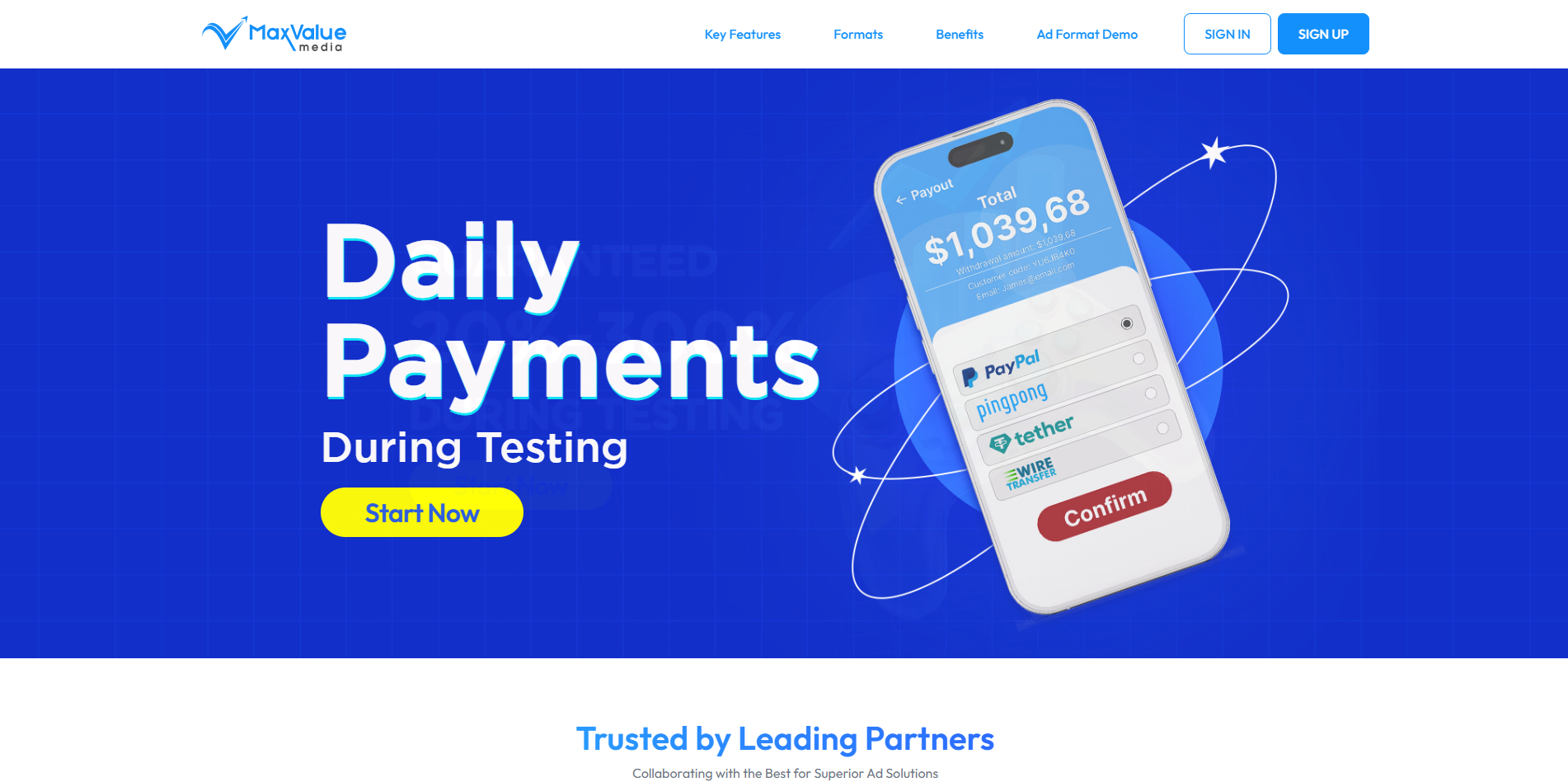
MaxValue.Media is a monetization network offering display, native, and video ad solutions. Publishers benefit from high CPM rates, multiple ad formats, and customizable placement options. Advertisers gain access to targeted audiences with campaign performance tracking. The platform provides real-time analytics and automated optimization tools. It is ideal for content-rich websites and blogs seeking consistent revenue. MaxValue.Media supports global traffic across multiple verticals. Publishers can integrate ads easily without affecting user experience.
Payment Details:
- Minimum payout: $20
- Payment methods: PayPal, Wire
- Payment frequency: Monthly
- Supported currency: USD
Pros:
- Competitive CPM rates
- Multiple ad formats available
- Easy integration process
Cons:
- Limited public information compared to larger exchanges
- Best performance often requires consistent traffic
- Smaller advertiser ecosystem than enterprise platforms
Best For: MaxValue.Media is best suited for content publishers, blogs, media websites, and growing digital properties looking for a flexible monetization platform that supports multiple advertising formats while maintaining user experience.
4. Openx
OpenX is a programmatic advertising exchange offering premium inventory for publishers and advertisers. Publishers benefit from access to high-quality demand and advanced ad management tools. Advertisers gain precise targeting, real-time bidding, and global reach. The platform supports multiple ad formats including display, video, and mobile. OpenX’s analytics dashboard provides insights into traffic and performance metrics. It is designed for medium to large publishers seeking scalable monetization. Integration with other programmatic tools enhances efficiency and ROI.
Payment Details:
- Minimum payout: $50
- Payment methods: Wire
- Payment frequency: Monthly
- Supported currency: USD
Pros:
- Access to premium advertisers.
- Strong CPM performance.
- Industry-leading transparency.
Cons:
- Higher entry requirements.
- Better suited for established publishers.
- Approval process can be selective.
Best For: OpenX is ideal for established publishers, news websites, media companies, and high-traffic content platforms seeking access to premium advertiser demand and enterprise-level monetization technology.
5. Magnite
Magnite is a full-stack programmatic advertising platform combining supply-side and demand-side services. Publishers benefit from premium inventory, header bidding, and high CPMs. Advertisers gain precise targeting, cross-device delivery, and real-time reporting. Magnite supports display, video, and connected TV campaigns. The platform is scalable for large publishers and enterprise clients. Analytics tools allow optimization across multiple ad formats. Magnite ensures brand-safe, high-performance ad delivery for both parties.
Payment Details:
- Minimum payout: $100
- Payment methods: Wire
- Payment frequency: Monthly
- Supported currency: USD
Pros:
- High CPM potential.
- Strong video monetization capabilities.
- Premium advertiser demand.
Cons:
- High traffic requirements.
- Complex setup for smaller publishers.
- Not ideal for beginners.
Best For: Magnite is best for enterprise publishers, media companies, streaming platforms, video publishers, and websites with significant monthly traffic looking to maximize premium advertising revenue.
6. Index Exchange
Index Exchange is a global advertising marketplace focused on transparency and programmatic efficiency. Publishers benefit from high-quality demand, header bidding support, and advanced reporting. Advertisers gain precise targeting, real-time analytics, and access to premium inventory. The platform supports display, mobile, and video ad formats. It is suitable for medium and large publishers seeking optimized revenue streams. Index Exchange ensures brand safety and performance for all campaigns. Integration with other programmatic tools enhances monetization potential.
Payment Details:
- Minimum payout: $50
- Payment methods: Wire
- Payment frequency: Monthly
- Supported currency: USD
Pros:
- Strong CPM performance.
- Transparent marketplace operations.
- Access to premium demand partners.
Cons:
- Better suited for established publishers.
- Higher approval standards.
- Technical implementation may require support.
Best For: Index Exchange is ideal for publishers focused on premium programmatic monetization, especially news sites, content publishers, and digital media companies seeking reliable long-term advertising revenue.
7. Amazon Publisher Services
Amazon Publisher Services (APS) provides programmatic solutions via Transparent Ad Marketplace (TAM). Publishers benefit from premium demand, high CPMs, and real-time reporting. Advertisers gain access to Amazon’s rich audience data and precise targeting. The platform supports display and video ad formats. Integration is straightforward for high-traffic websites. Amazon ensures transparency, brand safety, and efficient monetization. Reporting tools provide actionable insights for optimization.
Payment Details:
- Minimum payout: $100
- Payment methods: Wire
- Payment frequency: Monthly
- Supported currency: USD
Pros:
- Access to Amazon advertiser demand.
- Excellent revenue optimization.
- Strong brand reputation.
Cons:
- Better suited for larger publishers.
- Technical setup can be complex.
- Limited public information on requirements.
Best For: Amazon Publisher Services is best for growing publishers, eCommerce websites, product-focused content platforms, review sites, and enterprise publishers seeking premium demand sources and advanced header bidding technology.
8. Criteo
Criteo is a global advertising platform specializing in performance retargeting and programmatic campaigns. Publishers benefit from monetizing traffic with high-quality, performance-driven ads. Advertisers gain access to advanced targeting, personalized recommendations, and global reach. The platform supports display and native ad formats. Criteo’s analytics tools provide insights into campaign performance and audience engagement. It is suitable for e-commerce and content-rich sites. Publishers can integrate ads without affecting user experience.
Payment Details:
- Minimum payout: $50
- Payment methods: Wire
- Payment frequency: Monthly
- Supported currency: USD
Pros:
- Access to premium advertiser demand.
- Strong CPM performance for quality traffic.
- Reliable infrastructure backed by Amazon.
Cons:
- Not suitable for small publishers.
- Requires technical implementation.
- Higher traffic requirements than beginner networks.
Best For: APS works best for established publishers with significant traffic volumes that want enterprise-level header bidding technology and access to premium advertisers.
9. Sovrn
Sovrn is an ad network that provides programmatic solutions for publishers, including monetization and analytics tools. Publishers benefit from multiple ad formats, header bidding support, and high CPMs. Advertisers gain access to targeted audiences and performance-based campaigns. The platform supports display, native, and video advertising. Sovrn’s reporting dashboard provides actionable insights for optimization. It is suitable for content-heavy blogs and medium- to large-sized websites. Flexible integration allows easy setup without disrupting the user experience.
Payment Details:
- Minimum payout: $50
- Payment methods: Wire
- Payment frequency: Monthly
- Supported currency: USD
Pros:
- Multiple monetization opportunities.
- Strong reporting and analytics.
- Easy implementation process.
Cons:
- Revenue varies by niche.
- Premium traffic generates better results.
- Limited direct support for smaller publishers.
Best For: Sovrn works best for bloggers, content publishers, review websites, and media properties looking to combine display advertising with affiliate revenue opportunities.
10. PubMatic
PubMatic is a global programmatic advertising platform designed to help publishers maximize revenue through advanced monetization tools and premium demand sources. Publishers benefit from header bidding, real‑time analytics, and access to premium advertiser inventory that drives higher CPMs and fill rates. Advertisers gain precise targeting, cross‑device delivery, and performance optimization features to boost campaign ROI. The platform supports multiple ad formats, including display, video, and mobile, with tools built for scalability and transparency.
Payment Details:
- Minimum payout: $100
- Payment methods: Wire
- Payment frequency: Monthly
- Supported currency: USD
Pros:
- Excellent revenue optimization tools.
- Access to premium global demand.
- Supports multiple ad formats.
Cons:
- Better suited for medium and large publishers.
- Technical implementation required.
- Higher learning curve for beginners.
Best For: PubMatic is best for growing publishers, digital media companies, and enterprise websites seeking advanced monetization capabilities and premium advertiser demand.
Future Trends in Header Bidding for 2027
Header bidding continues to evolve as privacy regulations, AI-driven optimization, and server-side technologies reshape programmatic advertising. In 2026 and 2027, publishers are increasingly adopting server-side header bidding to improve page speed while maintaining auction competition.
Artificial intelligence is also playing a larger role in bid optimization, audience segmentation, and revenue forecasting. Publishers that combine header bidding with advanced analytics and first-party data strategies will be better positioned to maximize advertising revenue while delivering a positive user experience.
As competition for premium inventory grows, header bidding remains one of the most effective monetization technologies available to publishers seeking sustainable long-term revenue growth.
Final Thoughts
Header Bidding Ad Networks have become a cornerstone of modern publisher monetization strategies. By allowing multiple advertisers to compete simultaneously for every impression, publishers can increase CPMs, improve fill rates, and gain greater transparency into the auction process.
Whether you’re a growing content creator, an established publisher, or a mobile app developer, implementing the right header bidding solution can significantly increase advertising revenue. Platforms like EpicAds, OpenX, Magnite, Amazon Publisher Services, Criteo, Sovrn, and PubMatic each offer unique advantages, making it important to choose a solution that aligns with your traffic profile and business goals.
In 2027, publishers who leverage header bidding technology effectively will be better equipped to maximize inventory value, strengthen advertiser competition, and build sustainable advertising revenue streams.
Frequently Asked Questions (FAQs)
What is the difference between Header Bidding Ad Networks and traditional waterfall ad serving?
Header Bidding Ad Networks allow all demand partners to bid for ad inventory simultaneously, increasing competition and CPM rates. Traditional waterfall ad serving offers inventory sequentially, often resulting in lower bids and revenue for publishers. Header bidding ensures you get the best possible price for every impression.
How do Header Bidding Ad Networks improve transparency for publishers?
These networks provide publishers with full visibility into every auction, showing exactly how much each impression sells for. This transparency helps track ad placements, measure performance, and optimize revenue effectively.
Are there any drawbacks to using Header Bidding Ad Networks?
While they can significantly boost revenue, header bidding may slightly increase page load times if not implemented correctly. Using lightweight wrappers and optimized code ensures minimal impact on user experience while maintaining high CPMs.
What types of ads can I run through Header Bidding Ad Networks?
Header Bidding Ad Networks support multiple ad formats including display, video, native, interstitial, and pop-under ads. Publishers can select the formats that best fit their site design and audience engagement.
How do I get started with Header Bidding Ad Networks on my website?
To start, choose a reliable header bidding ad network, integrate the header bidding code, and configure a wrapper to manage demand partners. Partnering with experienced ad tech providers simplifies setup and ensures optimal revenue.
Which publishers benefit most from Header Bidding Ad Networks?
Websites, blogs, and mobile apps with high-quality traffic and sizable audience reach benefit most. Even small publishers can see improved CPMs and fill rates by choosing the right header bidding ad network.
Can Header Bidding Ad Networks work with mobile apps?
Yes, most header bidding networks provide SDKs or server-to-server solutions for mobile apps. This allows app developers to monetize traffic efficiently while maintaining smooth user experience and high-quality ad placements.
How do Header Bidding Ad Networks maximize revenue for publishers?
They create competition among multiple advertisers in real-time auctions, increasing CPM rates and inventory value. By offering full control and analytics, publishers can optimize placements and consistently earn higher revenue.
