


Do you really need thousands of visitors every day to start making money from your website?
The simple answer is no. Today, several ad networks are built specifically for the low-traffic websites, giving smaller publishers a fair chance to generate income without waiting years to grow.
An ad network is a digital platform that connects advertisers with publishers, helping businesses display ads and enabling website owners to earn revenue from their traffic. Ad Networks for Low-Traffic Sites are advertising platforms designed for small websites, new blogs, and niche publishers that don’t have large amounts of traffic. They help website owners monetize visitors through ad formats like display, native, and contextual ads, making it possible to earn revenue even with a smaller audience.
The best ad networks for low-traffic websites in 2026 are Google AdSense, Media.net, Ezoic, PropellerAds, Infolinks, Revcontent, Monumetric, Sovrn, Amazon Publisher Services (APS), and Raptive. These platforms help small publishers monetize websites with limited traffic through display ads, native advertising, contextual targeting, and AI-powered optimization.
Why Ad Networks Matter for Low-Traffic Websites?
For small publishers, ad networks provide the easiest path to monetization. Most website owners lack the resources to negotiate directly with advertisers, making ad networks an essential bridge between publishers and brands.
Modern ad networks automatically handle:
- Accept smaller publishers without strict traffic minimums: This ensures new bloggers don’t have to wait months or years before monetizing their content.
- Provide a fair revenue share and simple onboarding: Transparent payouts and easy setup give publishers confidence as they grow.
- Offer ad formats that blend well with niche content: For micro-niches, native ads, in-text ads, or contextual placements can feel less intrusive and more engaging.
- Ensure reliable and consistent payments: Since every dollar counts for smaller websites, dependable payment schedules are critical to building trust.
For many publishers, the right ad network becomes the foundation for future monetization through affiliate marketing, sponsored content, and premium advertising partnerships.
Key Considerations Before Choosing an Ad Network
Starting with the right ad network can make a huge difference for small publishers. Before applying to an ad network, evaluate these factors carefully.
- Traffic Requirements: Choose networks that accept low-traffic sites to start monetizing immediately.
- Ad Formats: Match ad types (native, display, video) to your content style and audience preferences.
- Payment Threshold & Methods: Look for low minimum payouts and convenient payment options like PayPal or Payoneer.
- Audience Location: Select networks that perform well with your primary traffic regions, not just Tier-1 countries.
- Ease of Setup & Optimization: Platforms with intuitive dashboards and automatic optimization save time and improve revenue.
- Support & Resources: Strong customer support and educational materials help you troubleshoot issues and maximize earnings.
Top 10 Ad Networks for Low-Traffic Websites in 2026
Here’s our list of the best ad networks for low-traffic websites in 2026, chosen for their easy approval process, reliable payments, and ability to help small publishers earn revenue from the start.
- Google Adsense
- Media.net
- Ezoic
- Propeller Ads
- Infolinks
- Revcontent
- Mounmetric
- Adthrive (Now Raptive)
- Sovrn
- Amazon Publisher Services (APS)
1. Google AdSense
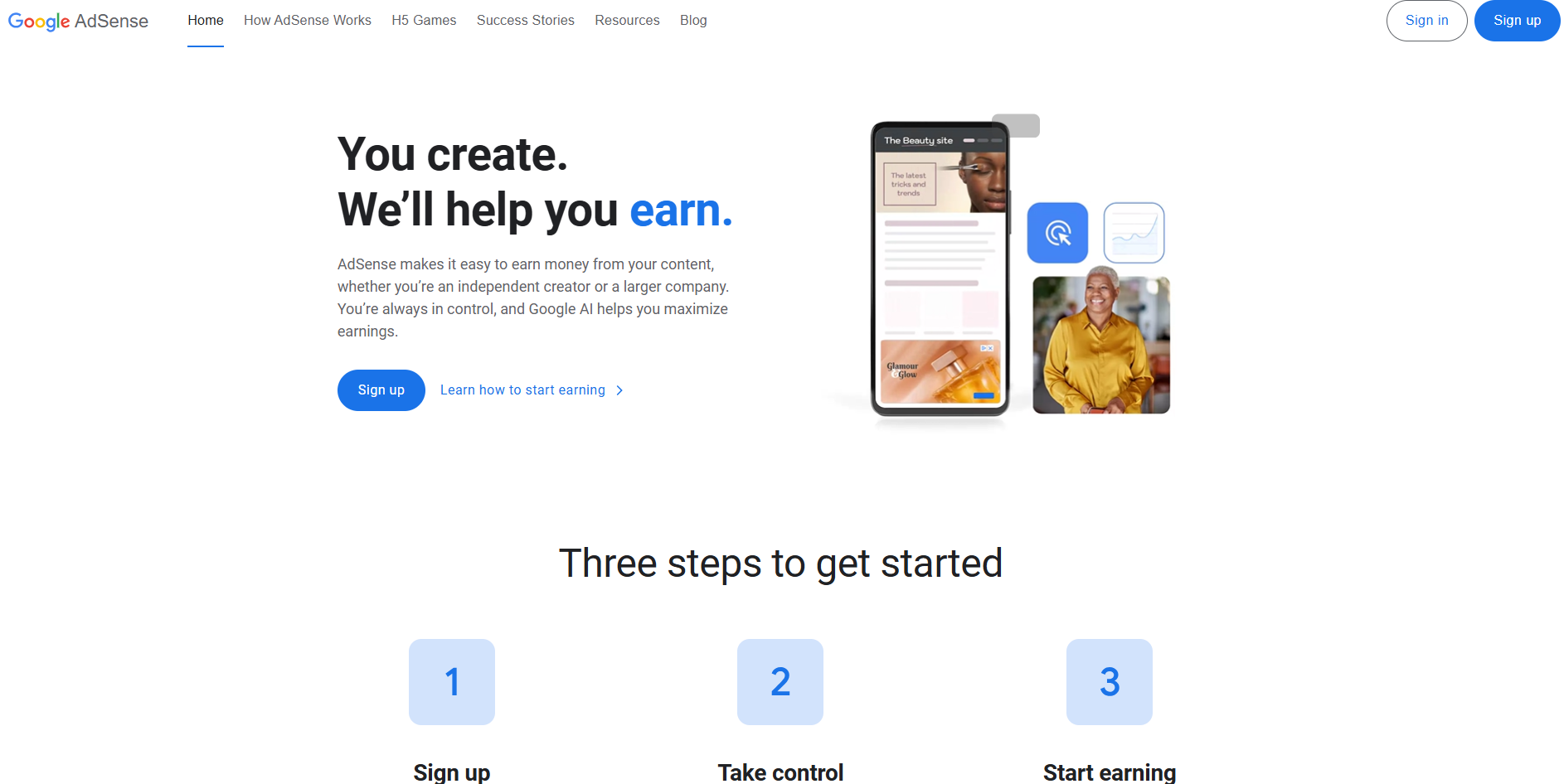
Google AdSense remains the world’s most popular ad network and continues to be one of the best monetization options for low-traffic websites in 2026. Powered by Google’s massive advertiser ecosystem, AdSense helps publishers display highly relevant ads based on website content and visitor behavior.
Because there is no official traffic requirement, AdSense remains one of the first monetization platforms most publishers apply for. Its advanced contextual targeting system helps maximize click-through rates while maintaining a positive user experience.
Key Features:
- Massive Advertiser Pool: Because AdSense connects with millions of advertisers, websites of all kinds—from hobby blogs to educational platforms can serve relevant ads. This ensures a steady supply of ad inventory.
- Smart Auto Ads: Instead of manually placing ads, Google’s AI analyzes your website layout and automatically inserts ads in high-performing areas, improving revenue without extra effort.
- Multiple Ad Types: Publishers can choose from display ads, text ads, in-article ads, and matched content, giving them flexibility to balance earnings with user experience.
- Reliable Payouts: Known for its on-time monthly payments, Google AdSense is one of the most trusted monetization platforms.
Payment Details:
- Revenue Model: CPC & CPM
- Minimum Payout: $100
- Payment Frequency: Monthly
- Payment Methods: Bank Transfer, Wire Transfer
Pros:
- Trusted by millions of publishers worldwide.
- Large advertiser inventory increases fill rates.
- Easy integration with most websites.
Cons:
- Strict approval process.
- High payout threshold for beginners.
- Policy violations can lead to account suspension.
Best For: Google AdSense is ideal for bloggers, informational websites, niche publishers, and content creators seeking a reliable long-term monetization platform. It works particularly well for websites focused on SEO-driven organic traffic.
2. Media.net
Media.net is one of the strongest alternatives to Google AdSense and is powered by Yahoo and Bing’s advertising network. The platform specializes in contextual advertising, delivering highly relevant ads based on page content and user intent.
For publishers operating in high-value niches such as finance, insurance, education, and technology, Media.net often delivers higher CPC rates than many competing networks.
Key Features:
- Contextual Targeting: Ads adapt to the keywords and themes of your content, making them more relevant to readers. For example, a finance blog will automatically show ads for investment services.
- High-Value Niches: Media.net excels in industries with high CPCs, such as insurance, finance, and technology. Even with low traffic, these niches can bring meaningful revenue.
- Fully Customizable Ads: Unlike rigid networks, Media.net allows publishers to customize ad styles, colors, and placements so they appear as a natural part of the site.
- Mobile Optimization: Since most traffic today comes from mobile devices, Media.net ensures ads load quickly and display correctly across all screen sizes.
Payment Details:
- Revenue Model: CPC & CPM
- Minimum Payout: $100
- Payment Frequency: Net-30
- Payment Methods: PayPal, Wire Transfer
Pros:
- Excellent CPC rates in competitive niches.
- Highly relevant contextual ads.
- Strong monetization for English-speaking traffic.
Cons:
- Performs best with Tier-1 traffic.
- Approval process can be selective.
- Earnings vary significantly by niche.
Best For: Media.net is best for publishers in finance, technology, education, legal, and business niches. Websites with substantial US and UK traffic typically achieve the strongest performance.
3. Ezoic
Ezoic has evolved from a traditional ad network into a sophisticated AI-powered publishing platform. Rather than simply displaying advertisements, Ezoic continuously tests thousands of ad combinations to identify the highest-performing layouts.
Its machine-learning technology helps publishers maximize revenue while maintaining user experience, making it one of the most powerful monetization solutions available for growing websites.
Key Features:
- AI-Powered Testing: Ezoic automatically experiments with ad positions, sizes, and combinations, learning which setups produce the highest earnings for your site.
- Access to Premium Advertisers: As a Google-certified publishing partner, Ezoic connects small publishers to high-paying ad exchanges they normally wouldn’t access.
- User Experience Tools: Features like Site Speed Accelerator help ensure ads don’t slow your site, protecting your rankings and user satisfaction.
- Flexible Entry: While more features unlock as traffic grows, even low-traffic sites can benefit from Ezoic’s basic tools.
Payment Details:
- Revenue Model: CPM
- Minimum Payout: $20
- Payment Frequency: Net-30
- Payment Methods: PayPal, Payoneer, Wire Transfer
Pros:
- Can significantly increase ad revenue.
- Excellent analytics and optimization tools.
- Low payout threshold.
Cons:
- Learning curve for beginners.
- Dashboard can feel overwhelming initially.
- Site integration may require technical adjustments.
Best For: Ezoic is ideal for publishers who want to maximize revenue from every visitor through automated testing and machine-learning optimization. It works particularly well for websites experiencing steady traffic growth and looking to scale earnings efficiently.
4. PropellerAds
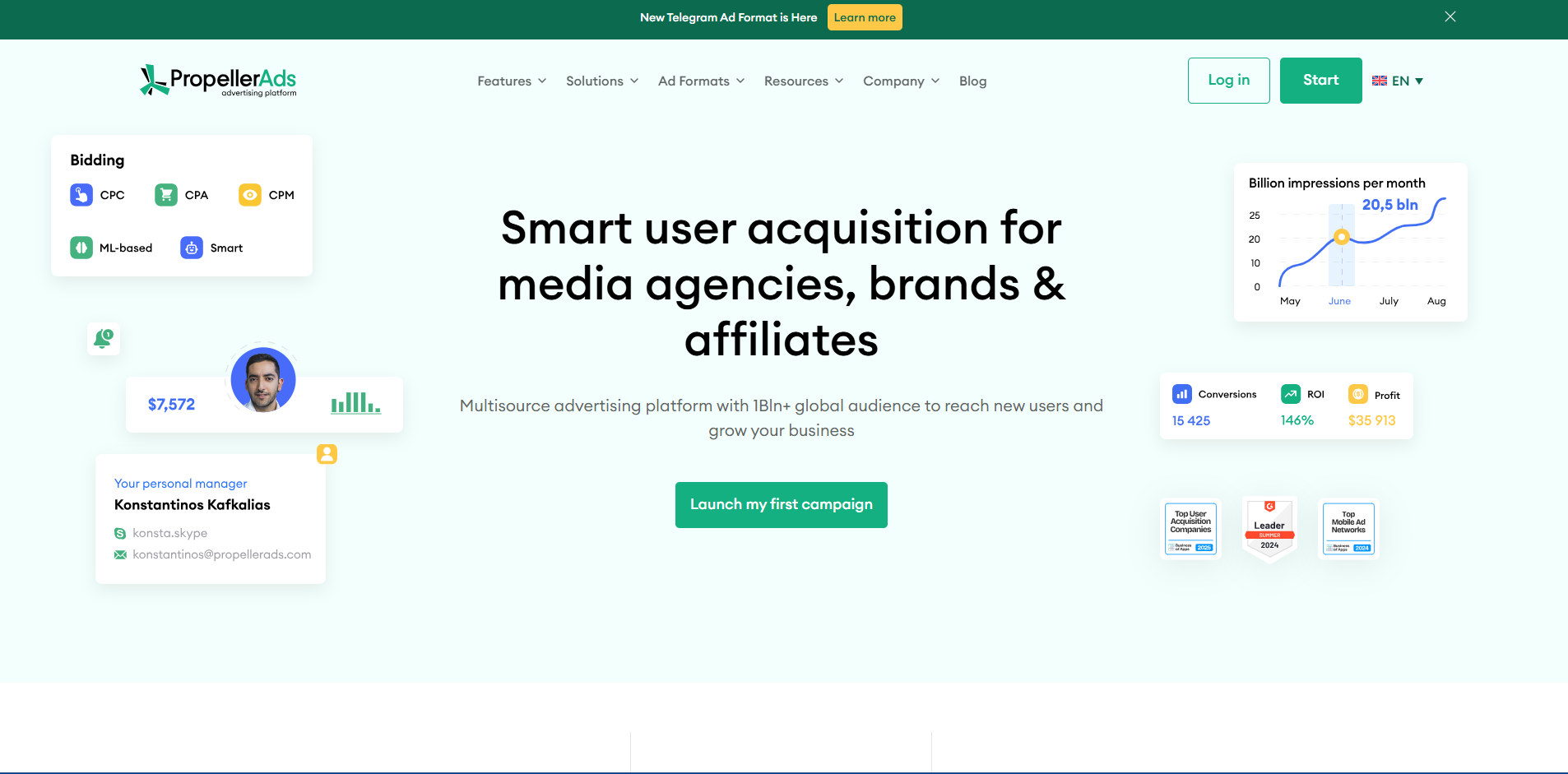
PropellerAds is a beginner-friendly ad network that allows publishers to start monetizing quickly, even with minimal traffic. It offers fast approval and a range of ad formats, including push notifications, pop-unders, and native ads, going beyond standard banner placements. The network is particularly effective for entertainment, gaming, and streaming sites, where engagement is high. PropellerAds also provides real-time reporting and flexible targeting options to optimize revenue. With low entry barriers and a simple setup, it’s ideal for small publishers looking to generate revenue without complex integration. Its global reach ensures consistent ad fill rates across diverse audiences.
Key Features:
- Push Notifications: Visitors can subscribe to receive browser push ads, generating ongoing revenue even when they leave your site.
- Pop-Under Ads: Open an advertiser’s page in a separate tab, delivering high impressions without disrupting your site’s layout.
- Self-Serve Dashboard: With an intuitive interface, publishers can easily track performance and earnings without technical skills.
- Worldwide Coverage: Strong fill rates ensure ads are delivered to users worldwide, making it ideal for sites with mixed audiences.
Payment Details:
- Revenue Model: CPM, CPC, CPA
- Minimum Payout: $5
- Payment Frequency: Weekly
- Payment Methods: PayPal, Skrill, Payoneer, Wire Transfer, Crypto
Pros:
- No minimum traffic requirement.
- Very low payout threshold.
- Supports worldwide traffic effectively.
Cons:
- Pop-under ads may affect user experience.
- Lower CPMs compared to premium networks.
- Some ad formats may not suit all website niches.
Best For: PropellerAds is best for new publishers, entertainment websites, download platforms, gaming sites, and blogs with international traffic. Publishers looking for quick approval and immediate monetization often find it one of the easiest networks to start with.
5. Infolinks

Infolinks takes a unique approach to website monetization by focusing on in-text and contextual advertising rather than traditional display banners. Instead of placing large ads around content, it transforms relevant keywords into monetized advertising opportunities. This approach works particularly well for content-heavy websites where publishers want to maintain a clean design while still generating revenue.
Since there are no strict traffic requirements, Infolinks remains a favorite among beginner bloggers and niche publishers. The platform serves ads based on user behavior and page content, helping publishers earn revenue without overwhelming visitors with intrusive advertisements.
Key Features:
- In-Text Ads: Turns specific keywords in your articles into clickable ad links, which blend naturally with your writing.
- Multiple Ad Formats: Includes in-screen (overlay ads), in-tag (keyword targeting), and in-fold (banner ads), giving publishers flexibility.
- No Minimum Traffic Requirement: Makes it one of the most accessible networks for complete beginners.
- Quick Setup: With simple installation, websites can start running ads within hours.
Payment Details:
- Revenue Model: CPC, CPM
- Minimum Payout: $50
- Payment Frequency: Monthly
- Payment Methods: PayPal, Payoneer, Wire Transfer, ACH
Pros:
- Easy approval process.
- Works alongside Google AdSense.
- Non-intrusive ad formats.
Cons:
- Lower earnings compared to premium display networks.
- Click-through rates depend heavily on content quality.
- Revenue can fluctuate across niches.
Best For: Infolinks is best for blogs, educational websites, tutorial platforms, and content-rich websites that want to monetize without adding excessive display advertisements. Publishers looking for supplemental income alongside other ad networks often benefit most.
6. Revcontent
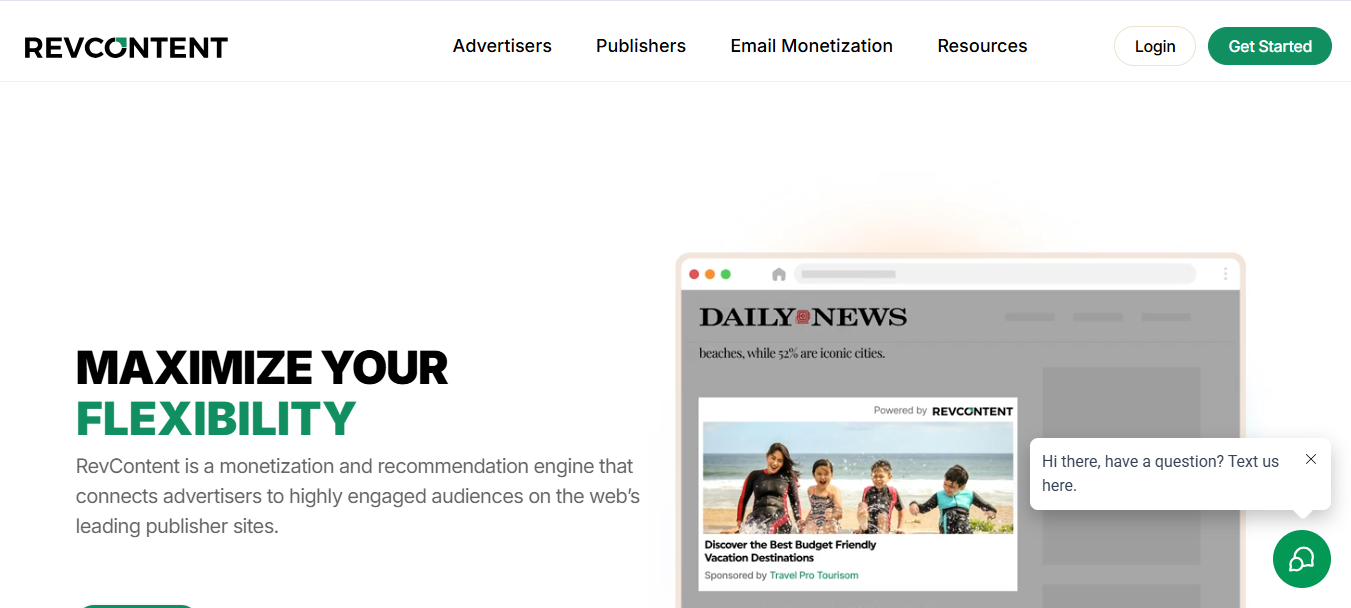
Revcontent is one of the largest native advertising networks in the world and specializes in content recommendation widgets. Instead of traditional banner ads, it displays sponsored articles and content suggestions that blend naturally into the website experience. Because native ads generally receive higher engagement rates than standard display ads, Revcontent can generate strong earnings for publishers with quality content and engaged audiences.
The platform focuses heavily on premium advertiser relationships and audience targeting, helping publishers maximize click-through rates while maintaining a positive user experience.
Key Features:
- Native Advertising: Ads appear as recommended content, increasing user trust and engagement.
- High CPC Rates: Known for offering some of the highest payouts among native ad networks.
- Customizable Widgets: Publishers can adjust the look of ad units so they match their branding.
- Advanced Targeting: Helps ensure ads are relevant to readers, improving click-through rates.
Payment Details:
- Revenue Model: CPC, CPM
- Minimum Payout: $50
- Payment Frequency: Net-30
- Payment Methods: PayPal, Wire Transfer
Pros:
- Higher engagement than traditional display ads.
- Strong native advertising revenue potential.
- Premium advertiser partnerships.
Cons:
- Better suited for established websites.
- Approval can be selective.
- Works best with high-quality editorial content.
Best For: Revcontent is ideal for news websites, magazines, lifestyle blogs, entertainment publishers, and content-driven websites that publish articles regularly. Sites with strong reader engagement often achieve the highest earnings.
7. Monumetric

Monumetric is a publisher-focused ad network designed specifically to help growing websites maximize advertising revenue. Unlike many premium competitors that require extremely high traffic levels, Monumetric offers monetization opportunities starting at approximately 10,000 monthly pageviews. The platform provides hands-on support and personalized optimization, helping publishers improve ad placement, user experience, and overall earnings.
Its focus on premium advertisers often results in higher CPM rates than beginner-focused networks. Monumetric has earned a strong reputation among bloggers, niche website owners, and content creators who want a balance between revenue growth and user satisfaction.
Key Features:
- Dedicated Account Managers: Each publisher is assigned support to help with ad placement, optimization, and performance tracking.
- High-Quality Ads: Focuses on partnerships with premium advertisers, which results in better-quality ads and higher payouts.
- Flexible Placement Options: Works well with blogs, recipe sites, and content-heavy websites.
- Transparent Reporting: Provides detailed insights into earnings and ad performance.
Payment Details:
- Revenue Model: CPM
- Minimum Payout: $10
- Payment Frequency: Net-60
- Payment Methods: PayPal, Direct Deposit
Pros:
- Higher CPM rates than many beginner networks.
- Dedicated optimization assistance.
- Strong reputation among bloggers.
Cons:
- Requires at least 10,000 monthly pageviews.
- Longer payout schedule.
- Setup fee may apply for smaller publishers.
Best For: Monumetric is best for growing blogs, lifestyle websites, parenting sites, food blogs, and niche content publishers that have started gaining traction but are not yet large enough for premium networks such as Raptive.
8. Sovrn
Sovrn is a versatile ad network that combines traditional display advertising with affiliate monetization. Its Commerce tool automatically converts product mentions in your content into affiliate links, enabling publishers to earn revenue even on low-traffic sites. This dual approach generates multiple income streams from the same article, maximizing monetization. Sovrn also offers real-time reporting and optimization tools to help publishers track performance and improve earnings. With flexible ad formats and reliable payouts, it’s a strong choice for bloggers and niche websites looking to diversify revenue. The platform works well across a range of content types, from reviews to how-to guides, making it adaptable for many publishers.
Key Features:
- Automatic Affiliate Linking: Mentions of brands or products in your posts are automatically linked to affiliate programs, saving time and boosting revenue.
- Display + Affiliate Combo: Unlike many networks, Sovrn lets you earn both from traditional display ads and affiliate commissions simultaneously.
- Detailed Analytics: Gives insights into which products or links your readers click most, helping refine your content strategy.
- No Minimum Traffic Requirement: Makes it accessible to small publishers right from the start.
Payment Details:
- Revenue Model: CPM, CPC, Affiliate Revenue
- Minimum Payout:$25
- Payment Frequency: Net-60
- Payment Methods: PayPal, ACH, Wire Transfer
Pros:
- Multiple revenue streams from one platform.
- No major traffic requirements.
- Excellent for product-focused content.
Cons:
- Affiliate earnings depend on purchase intent.
- Revenue may fluctuate seasonally.
- Lower performance in non-commercial niches.
Best For: Sovrn is best for review websites, product comparison blogs, affiliate marketers, technology blogs, and niche publishers that frequently discuss products or services.
9. AdThrive (Now Raptive)
Raptive, previously known as AdThrive, is one of the highest-paying ad networks available to publishers. It works with premium advertisers and uses advanced optimization technology to maximize RPMs (Revenue Per Mille). The network has built a strong reputation among professional bloggers, especially in niches like food, travel, parenting, finance, and lifestyle.
Publishers who qualify often experience substantial revenue increases compared to Google AdSense alone. Although Raptive is not designed for very small websites, it remains an important long-term goal for publishers who plan to scale their traffic and maximize ad revenue.
Key Features:
- High RPMs: Known for offering some of the highest revenue per thousand views (RPMs) in the industry.
- Dedicated Publisher Support: Every site receives hands-on support for ad setup, troubleshooting, and optimization.
- Brand-Safe Partnerships: Works only with premium advertisers, ensuring high-quality ads that don’t harm your site’s reputation.
- Advanced Video Monetization: Offers native video players with ad support, boosting engagement and revenue.
Payment Details:
- Revenue Model: CPM
- Minimum Payout: $25
- Payment Frequency: Net-45
- Payment Methods: ACH, Direct Deposit, Wire Transfer
Pros:
- Among the highest-paying ad networks available.
- Personalized support and optimization.
- Premium advertiser demand.
Cons:
- High traffic requirement.
- Strong preference for US traffic.
- Not suitable for new publishers.
Best For: Raptive is best for established publishers in lifestyle, travel, food, parenting, and personal finance niches.
10. Amazon Publisher Services (APS)
Amazon Publisher Services (APS) enables websites to serve programmatic ads using Amazon’s extensive advertiser network. Its advanced header bidding solutions help publishers maximize revenue by tapping into high-demand ad inventory. Smaller sites also benefit, especially if they’re already part of Amazon Associates, since integration is straightforward. APS supports multiple ad formats, including display and video, and provides detailed reporting to track performance. With reliable payouts and Amazon’s reputation, publishers gain both earnings potential and trustworthiness. Overall, it’s a solid option for monetizing content without disrupting user experience.
Key Features:
- Access to Amazon Advertisers: Tap into Amazon’s vast ecosystem of sellers and brands who are eager to promote products.
- Transparent Reporting: Real-time dashboards help track impressions, clicks, and revenue clearly.
- Unified Ad Marketplace: Combines demand from multiple sources, ensuring strong fill rates even for smaller sites.
- Seamless Integration: Works well alongside Amazon Associates, letting bloggers earn from both ads and affiliate links.
Payment Details:
- Revenue Model: CPM
- Minimum Payout: Varies by Agreement
- Payment Frequency: Net-60
- Payment Methods: ACH, Wire Transfer
Pros:
- Access to premium advertiser demand.
- Competitive CPM rates through header bidding.
- Enterprise-grade monetization technology.
Cons:
- Less beginner-friendly than other networks.
- Traffic requirements may be higher.
- Setup can be more technical.
Best For: Amazon Publisher Services is best for growing publishers, product-focused websites, eCommerce blogs, review websites, and content creators already leveraging Amazon-related monetization strategies.
From Low Traffic to Steady Income
Monetizing a small website may feel like a slow climb, but the right ad network can transform even modest traffic into meaningful income. Starting with beginner-friendly platforms like Infolinks or PropellerAds helps you take the first step, while growth-oriented options like Ezoic and Media.net prepare you for long-term success. If you meet the requirements, Google AdSense remains one of the most trusted options in the industry.
The real secret lies in experimentation, testing different networks, tracking performance, and adjusting placements until you find what clicks with your audience. Every visitor counts, and with consistency, even a low-traffic site can become a reliable revenue stream.
Final Verdict
For completely new websites, Google AdSense, PropellerAds, Infolinks, and Sovrn are the most accessible options because they have low or no traffic requirements.
For publishers focused on maximizing revenue as traffic grows, Ezoic and Monumetric offer stronger optimization features and higher earning potential.
For long-term scaling goals, Raptive and Amazon Publisher Services represent premium monetization solutions capable of generating significantly higher RPMs once a website reaches larger audiences.
The smartest approach is to start with a beginner-friendly network, optimize your content strategy, and gradually move into premium monetization platforms as your traffic increases. This creates a sustainable path from low-traffic earnings to a substantial publishing business.
Frequently Asked Questions(FAQs)
Can low-traffic websites really earn money with ads?
Yes, they can. Earnings might start small, but even websites with a few thousand monthly visits can generate revenue if they choose the right ad networks. The trick is to go with platforms that don’t have strict entry requirements and that offer flexible, user-friendly ad formats. This way, you can monetize your audience while steadily growing traffic over time.
What’s the minimum traffic required for most ad networks?
Some networks are very beginner-friendly and don’t require a minimum traffic count at all—Google AdSense, Infolinks, and PropellerAds are good examples. Others, like Monumetric, have higher thresholds, usually around 10,000 pageviews per month. It’s important to check the eligibility criteria before applying so you don’t waste time.
Which ad formats perform best for small sites?
Smaller websites often see better results with native ads, in-text ads, and push notifications. These formats integrate naturally with your content and attract user engagement without being overly disruptive. Traditional banner ads, on the other hand, may not perform as well if your impressions are limited.
Is Google AdSense the best option for beginners?
AdSense is often the first choice because of its reliability and ease of use, but it’s not always the top earner. Depending on your niche and audience location, platforms like Ezoic or Media.net might bring in higher RPMs. The smart move is to test different networks and see which delivers the best results for your site.
How much can a low-traffic site earn monthly?
A site with 5,000 to 10,000 monthly visitors might earn anywhere from $10 to $100, depending on traffic geography, niche, and ad formats used. While this isn’t huge money, it’s an excellent stepping stone. As your traffic scales, so will your earnings.
Do these networks support international traffic?
Most of them do. PropellerAds, Adsterra, and HilltopAds, for instance, cater to global audiences. However, some networks, such as Media.net, offer the best performance when most of your traffic comes from the U.S. and Canada. Knowing where your audience is located can make a big difference in choosing the right network.
Can I use multiple ad networks on the same website?
Yes, combining networks can actually help boost your income. For example, running AdSense for display ads while using Infolinks for in-text ads ensures both formats complement each other. Just make sure the networks you choose are compatible and don’t violate each other’s policies.
What’s the best way to increase revenue from ads?
The most effective strategy is to focus on traffic quality, not just quantity. Experiment with different ad placements, formats, and layouts to see what performs best. Over time, you can also supplement ad income with affiliate marketing, sponsored posts, or direct partnerships to diversify your revenue./
