

A digital product affiliate program lets you earn a commission for promoting things like online courses, software, templates, and tools instead of physical items, and in 2026, this is where the real money in affiliate marketing is. Based on my research into dozens of affiliate programs across niches, digital products consistently outperform physical ones on payout percentage and long-term earning potential, since there’s no manufacturing, shipping, or inventory cost eating into margins.
Courses, templates, software, and creative tools are also things people actively search for and are already comfortable buying online, which shortens the path from click to purchase. Programs like Kajabi, Teachable, and ConvertKit stand out for recurring commissions, while ClickBank and Gumroad remain strong picks for high one-time payouts. If you’re looking for the best digital product affiliate program to match your niche, this guide breaks down all 15 worth your time in 2026, what each one pays, who it’s best suited for, and what to check before you join.
What Is a Digital Product?
A digital product is anything sold and delivered electronically, with no physical shipping involved, such as online courses, software, ebooks, templates, presets, stock graphics, or membership access. Unlike physical goods, digital products can be duplicated infinitely at zero extra cost, which is why creators and companies can afford to offer buyers instant delivery and affiliates higher commission rates.
From my analysis of the programs in this list, the most common categories are education (courses, coaching), software (SaaS tools, funnel builders, checkout platforms), and creative assets (templates, fonts, design kits). Each category tends to attract a different kind of buyer, which matters when you’re matching a product to your audience.
What Is a Digital Product Affiliate Program?
A digital product affiliate program is a partnership where a company pays you a commission for referring customers to its digital products, tracked through a unique affiliate link. You promote the course, tool, or template; the company handles product delivery, customer support, and payment processing.
Community consensus among affiliates suggests these programs are generally easier to scale than physical-product affiliate programs, mainly because commission rates often run higher, 30-50%+ versus the 1-10% typical of retail affiliate programs, since no manufacturing or shipping cost is cutting into the margin. That’s the core reason this article focuses specifically on digital products rather than affiliate marketing broadly.
How the Digital Product Affiliate Program Works
Once you join a digital product affiliate program, you get a unique tracking link to share in blog posts, videos, emails, or social content. Based on my research into how these systems operate behind the scenes, here’s what actually happens from click to payout:
- You share your link: Placed in a blog post, video description, email, or social caption promoting a specific course, tool, or template.
- A visitor clicks it: A tracking cookie is dropped in their browser, valid anywhere from 24 hours to 60+ days, depending on the program.
- They complete a purchase: The sale is matched back to your link automatically, no manual reporting needed.
- The commission is logged: Most platforms run on networks like Impact or PartnerStack, or a first-party dashboard, which records the sale in real time.
- You track performance: Dashboards typically show clicks, conversion rate, and earnings per click, so you can see which content is actually driving sales.
- You get paid: Usually monthly via PayPal, bank transfer, or check, often once you hit a minimum threshold like $50–$100.
Top 15 Digital Product Affiliate Programs in 2026
Based on my evaluation of commission structure, product quality, cookie duration, and ease of approval, here are the 15 best digital product affiliate programs worth promoting in 2026:
- ClickBank
- JVZoo
- WarriorPlus
- Gumroad
- Envato Market
- Creative Market
- Udemy
- Skillshare
- Teachable
- Kajabi
- Thinkific
- ConvertKit
- ClickFunnels
- Canva Pro
- SamCart
1. ClickBank
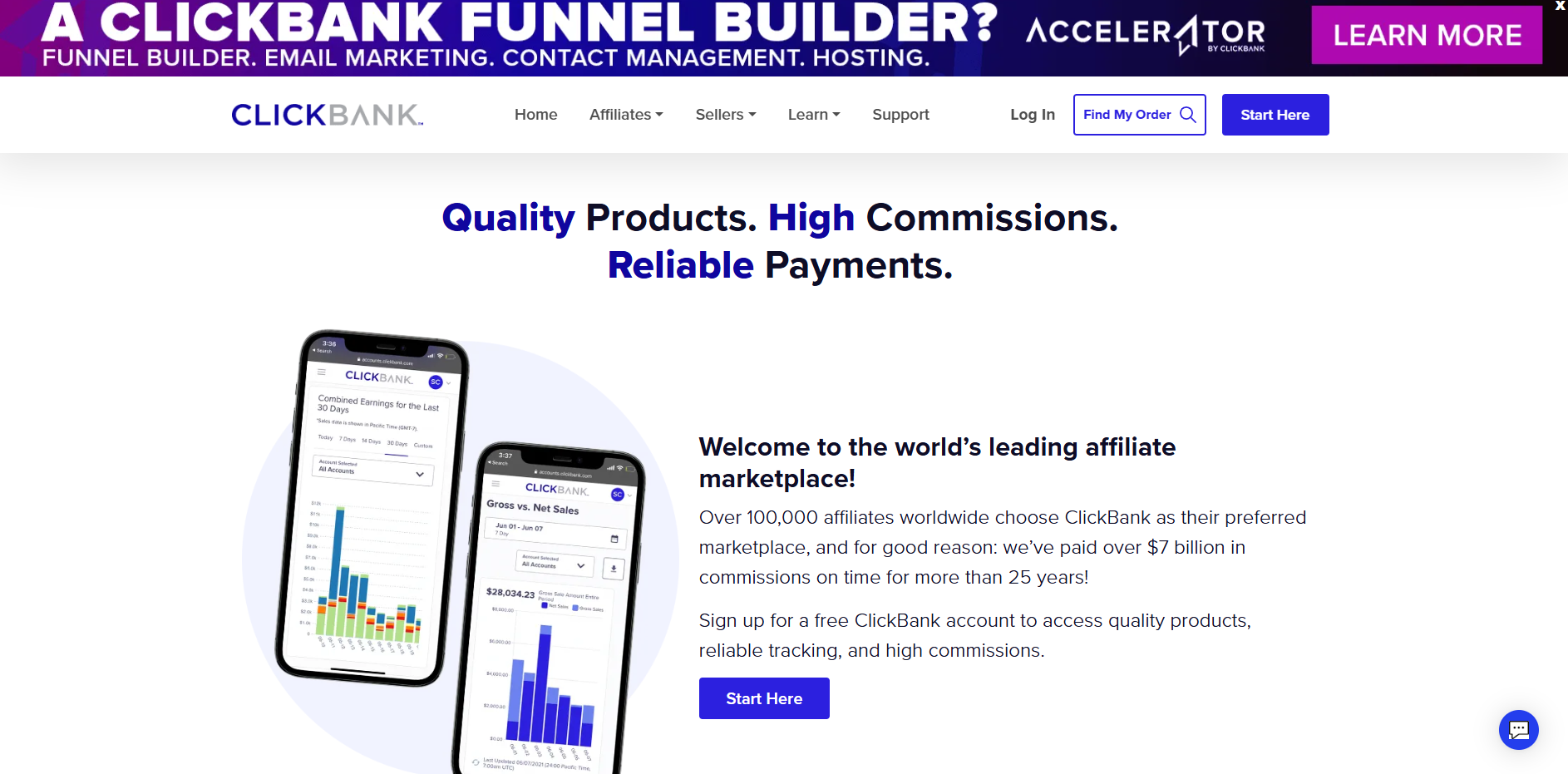
ClickBank is one of the oldest and largest digital product marketplaces, hosting thousands of offers across health, business, marketing, and self-improvement niches. Based on my research into their affiliate terms, ClickBank remains a strong entry point for beginners because signup is instant, and there’s no approval process for most offers; you simply browse the marketplace, generate a HopLink, and start promoting.
Best for: Beginners, review-site bloggers, and email marketers who want fast approval and a wide selection of high-commission niches.
Program Details
- Commission rate: 50–75% on most digital products (some vendors go up to 90%); recurring commissions of 25–50% on subscription rebills
- Cookie duration: Varies by vendor (no platform-wide standard)
- Payout threshold: $10 (direct deposit) / $50 (check)
- Payment frequency: Weekly, bi-weekly, or monthly
Pros
- Instant signup with no approval gatekeeping
- Very high commission ceiling compared to most networks
- Weekly payments are faster than the monthly norm elsewhere
Cons
- Product quality varies significantly by vendor; some offers are low-quality “make money online” products
- Cookie duration isn’t standardized, so you have to check each offer individually
- 5–15% of sales typically get refunded, which eats into real earnings
2. JVZoo
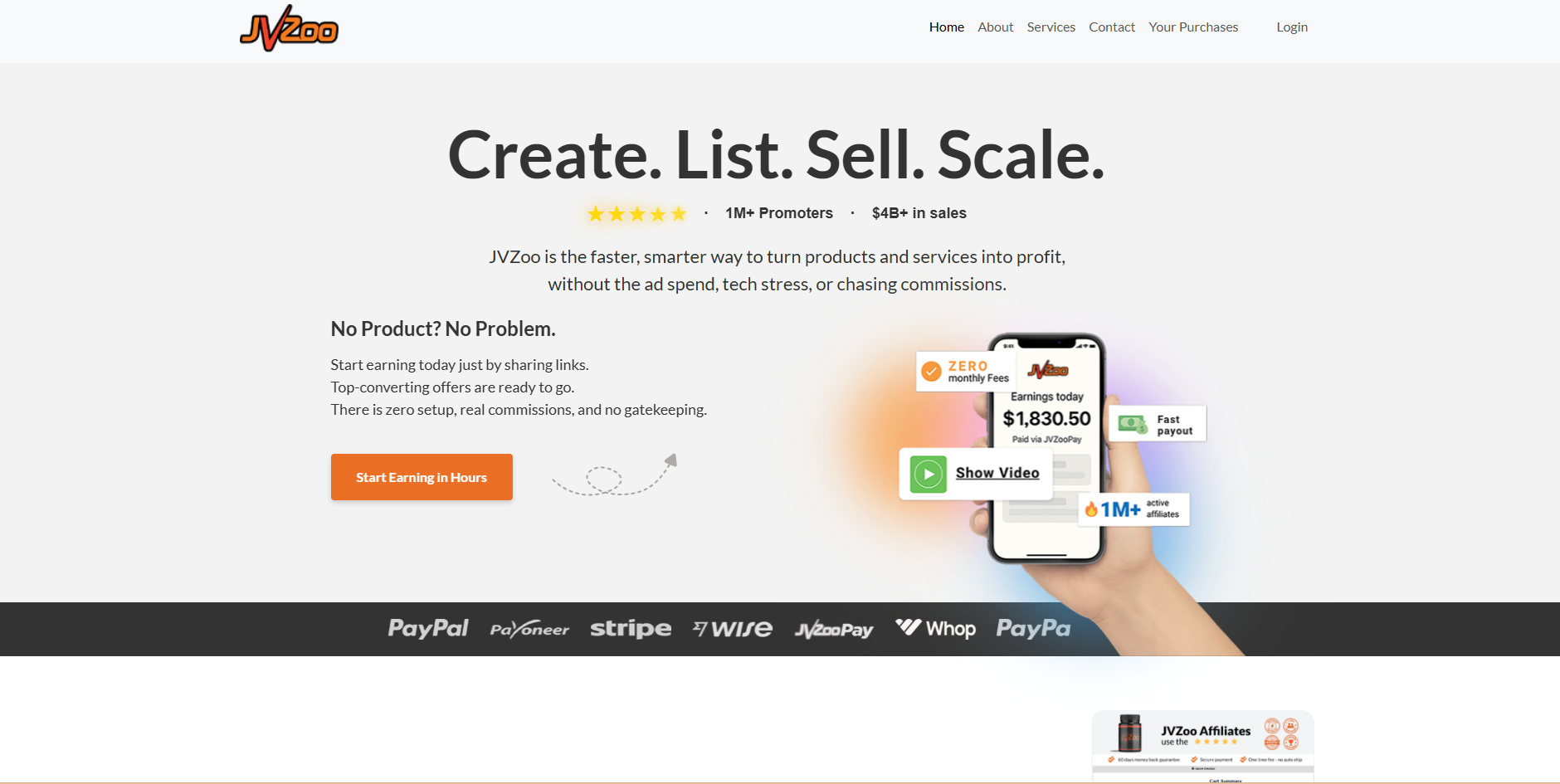
JVZoo specializes in software, courses, and “make money online” tools, with a strong focus on product launches. Community consensus among affiliates is that JVZoo’s launch-based structure creates short bursts of high-converting traffic around new releases, which suits affiliates who build review content quickly. What makes JVZoo interesting is its large number of launch-focused products, which often come with higher commissions and strong conversions. Affiliates appreciate that some vendors even offer instant payouts through PayPal, making the earning process fast and flexible.
Best for: Marketing bloggers, YouTubers reviewing software launches, and affiliates comfortable with the internet-marketing niche.
Program Details
- Commission rate: 50–75% typical on digital products (some offers up to 100%)
- Cookie duration: Not standardized; JVZoo uses cookieless backup tracking to catch sales even if cookies are cleared
- Payout threshold: $50 minimum
- Payment frequency: Every 3–21 days, depending on affiliate tier (Diamond to Bronze)
Pros
- Fast, tiered payout system rewards consistent affiliates with quicker payments
- Frequent new product launches keep content opportunities fresh
- Instant PayPal payouts on many offers
Cons
- Heavily concentrated in the IM/”make money online” niche — hard to promote outside it
- Product quality control is looser than more curated marketplaces
- New accounts face a 25% rolling reserve and a slower 21-day payout cycle
3. WarriorPlus
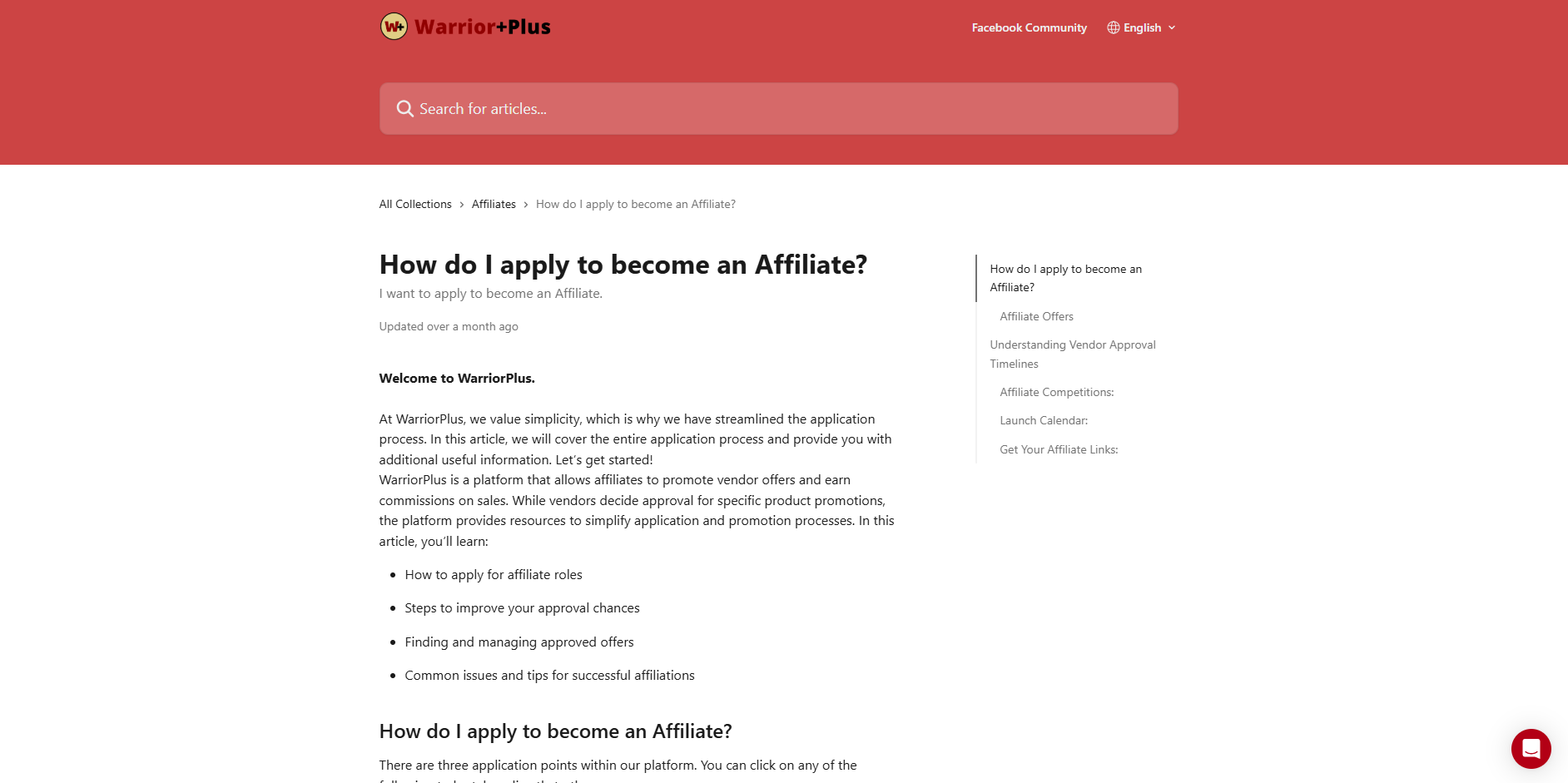
WarriorPlus operates much like JVZoo, a launch-driven marketplace for online business and marketing tools. From my analysis, its standout feature is a “last-click wins” attribution system plus backend tracking that works even without cookies, which reduces lost commissions from cookie blocking. WarriorPlus offers clear stats to help you evaluate products before promoting them. It’s a great option if you enjoy covering new digital tools as they hit the market.
Best for: Affiliates already active in the internet marketing and software review space.
Program Details
- Commission rate: Vendor-set, commonly up to 30%+ (some vendors go much higher during launches)
- Cookie duration: Several months, reinforced by non-cookie backend tracking
- Payout threshold: $15 minimum
- Payment frequency: Commissions held in a Wallet with a delay period of 3–90 days based on account risk score
Pros
- Long effective tracking window thanks to backend attribution
- Upsell and funnel commissions are automatically credited to the referring affiliate
- Low $15 payout threshold
Cons
- Delayed commission release (starts at 30 days, can extend to 90) ties up cash flow
- Niche is narrow, mostly online business and software tools
- Product quality varies by vendor, just as with ClickBank and JVZoo
4. Gumroad
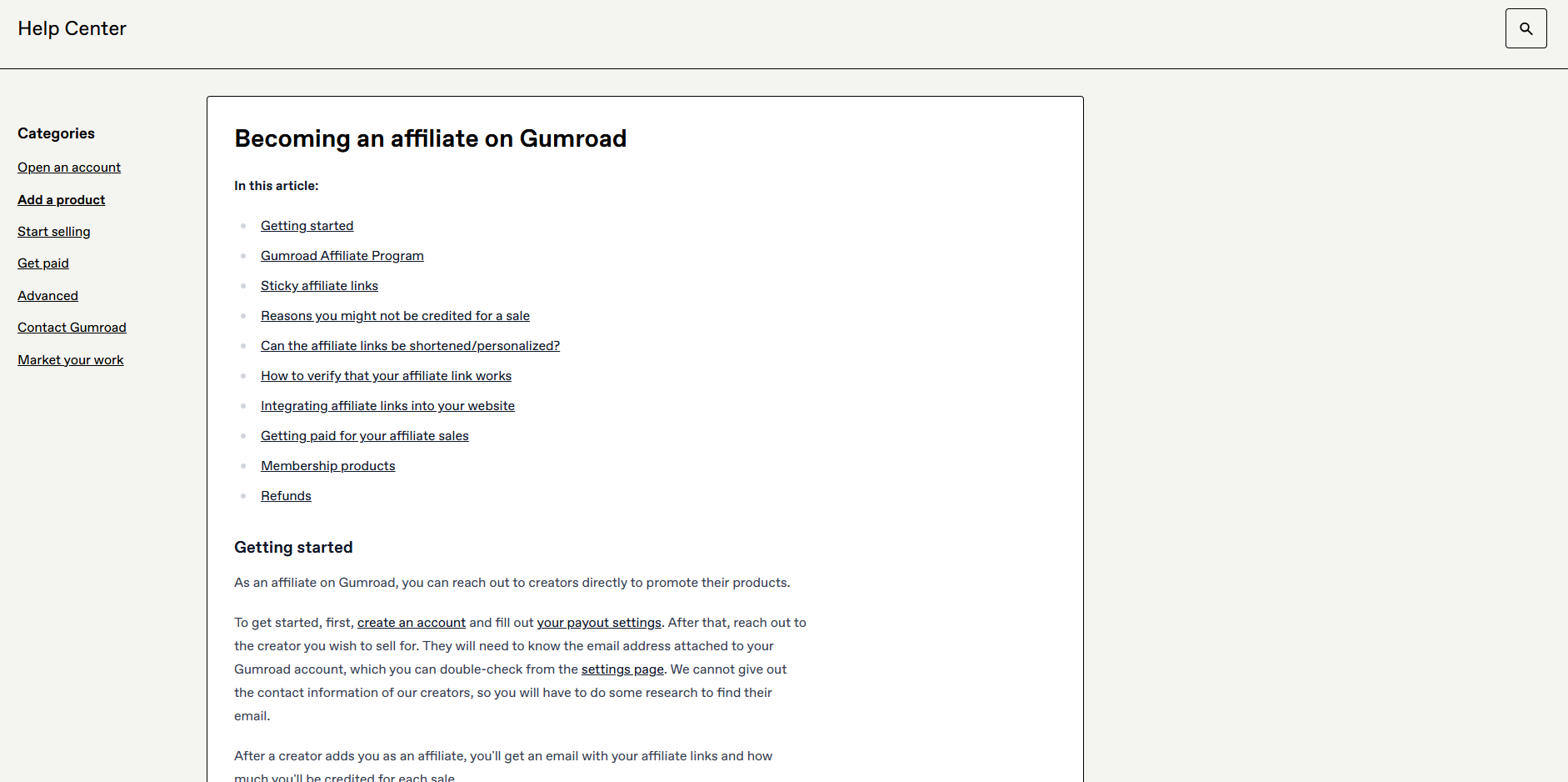
Gumroad is a creator-first marketplace for ebooks, templates, presets, and small digital tools. Unlike marketplace-style programs, each Gumroad affiliate relationship is set individually by the creator, so rates and terms vary product to product. Gumroad is simple to use, and the checkout experience is clean and frictionless. It’s a great way to promote unique digital products that you won’t find in mainstream marketplaces. The flexibility is also appealing creators set the commission rates individually.
Best for: Niche bloggers and social creators promoting specific independent creators’ products rather than a broad catalog.
Program Details
- Commission rate: Creator-set, typically 20–50% (up to 90% in some cases)
- Cookie duration: 30 days (7 days for Gumroad Discover-wide links)
- Payout threshold: $10 minimum
- Payment frequency: Weekly (every Friday)
Pros
- Creators can offer very high commission rates to trusted affiliates
- Fast weekly payouts with a low $10 threshold
- Simple to negotiate directly with product creators for better terms
Cons
- No unified marketplace-wide affiliate program; you apply per creator
- 30-day cookie is shorter than several competitors
- Lower-priced products mean smaller per-sale payouts unless you promote higher-ticket items
5. Envato Market
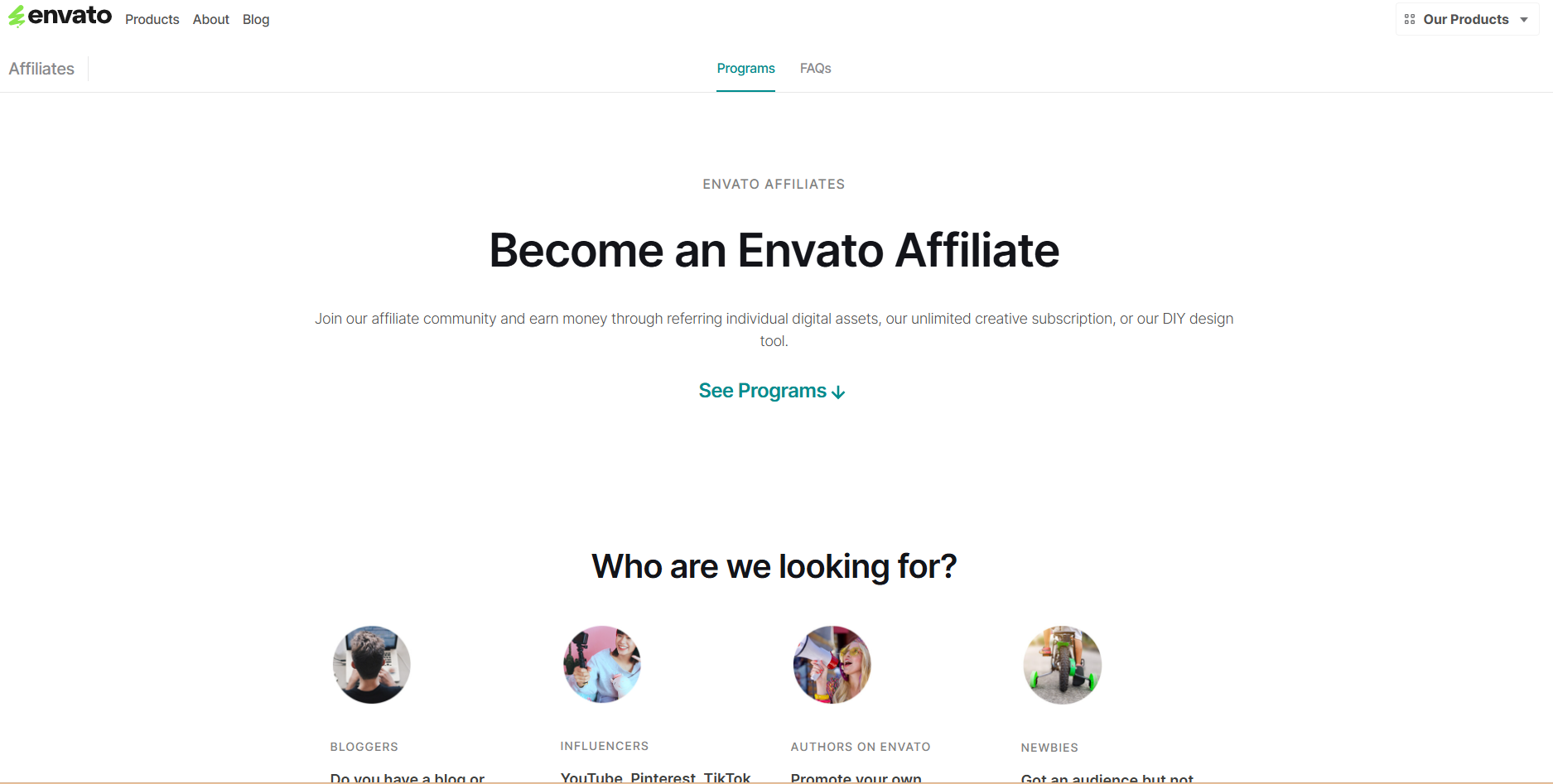
Envato Market (home of ThemeForest and GraphicRiver) is a major destination for website themes, templates, and creative assets. Envato actually runs three separate affiliate programs: Market, Elements, and Placeit, each with different payout structures. It’s especially strong for WordPress, web design, and creative fields where people constantly need fresh content. If your niche involves branding, design, or development, this is one of the most dependable programs to work with.
Best for: Web design, WordPress, and developer-focused content creators.
Program Details
- Commission rate: 30% on first purchase (Envato Market); Envato Elements pays a flat $20–120 per annual subscriber instead
- Cookie duration: 30 days (Market); 60 days (Elements)
- Payout threshold: No minimum
- Payment frequency: Monthly via Impact
Pros
- Strong brand trust in the design and development space
- Envato Elements’ flat per-subscriber fee often outperforms straight percentage models
- No minimum payout threshold
Cons
- Envato Market only pays on the customer’s first purchase, not repeat buys
- 30-day cookie on Market is on the shorter side
- Splitting attention across three sub-programs (Market/Elements/Placeit) adds complexity
6. Creative Market
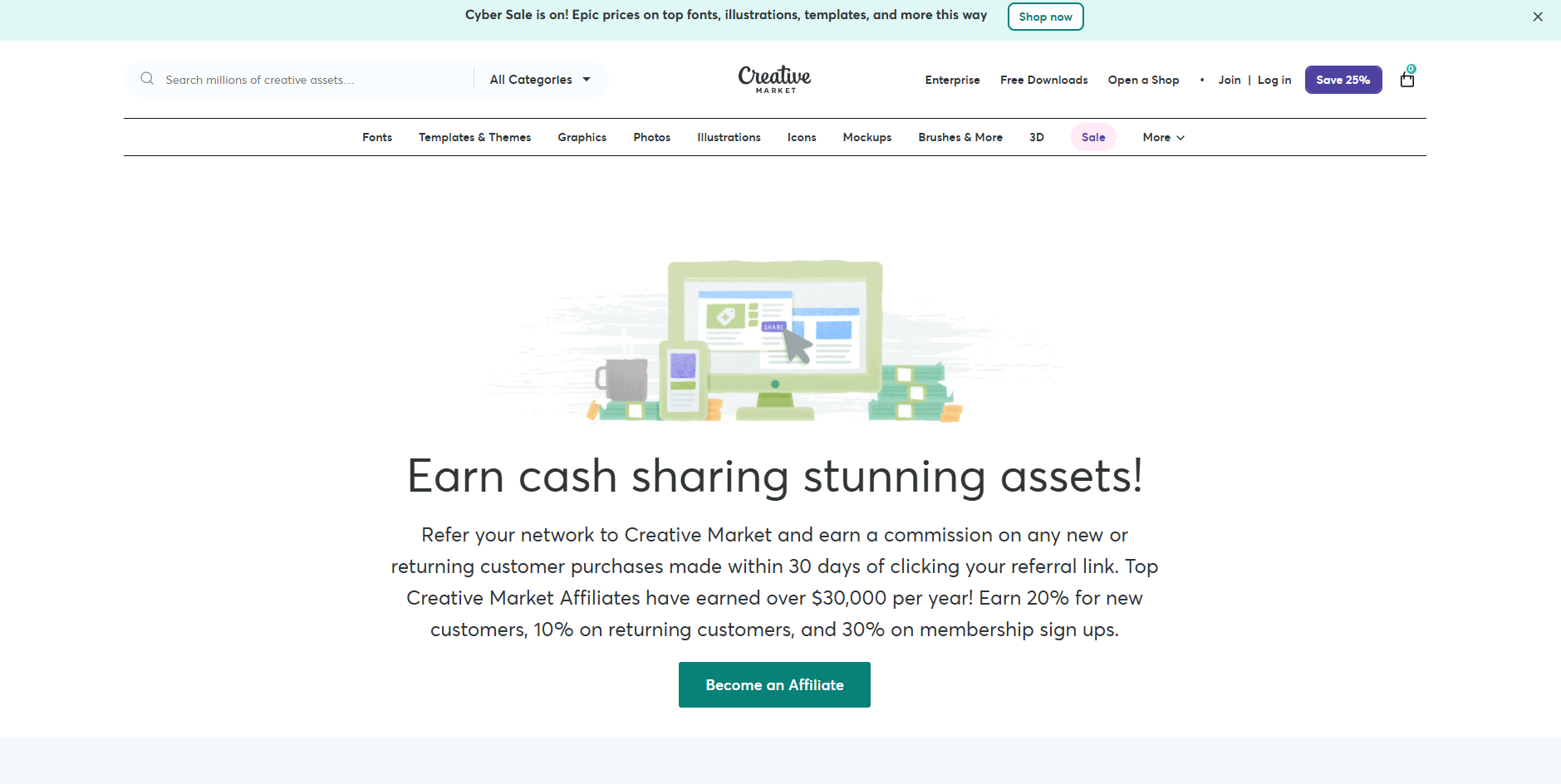
Creative Market is a marketplace for fonts, mockups, templates, and branding assets made by independent designers. Its tiered commission structure rewards new customer acquisition more than repeat purchases. The platform is organized neatly and makes browsing enjoyable. Affiliates also appreciate that new products are released daily, giving you endless content to feature. If your audience cares about branding or aesthetics, this program can convert extremely well.
Best for: Design-focused bloggers and branding content creators.
Program Details
- Commission rate: 20% on new customer purchases, 10% on returning customers, 30% on membership sign-ups
- Cookie duration: 30 days
- Payout threshold: $50 minimum
- Payment frequency: Monthly
Pros
- Fresh product inventory added daily gives ongoing content angles
- Membership commission (30%) is notably higher than typical one-time sale rates
- Trusted brand among design professionals, which helps conversion
Cons
- Returning-customer commission (10%) is low compared to other design marketplaces
- The $50 payout threshold is higher than some competitors
7. Udemy
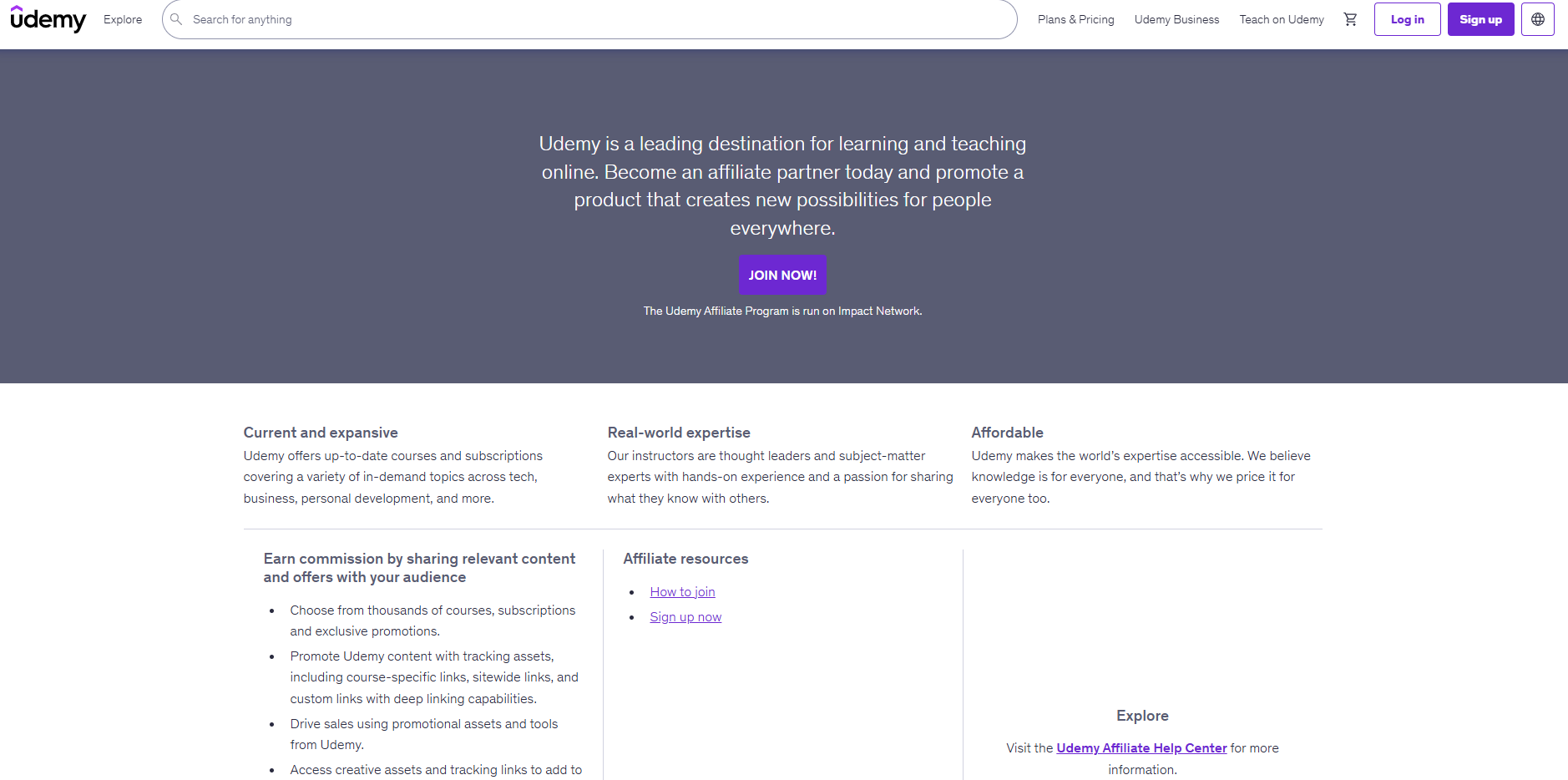
Udemy is the largest general course marketplace, with massive brand recognition and constant discount promotions that help conversions. Upon closer review of Udemy’s own partner documentation, the cookie window is notably short compared to competitors. New courses are added all the time, and many instructors actively update their material. Because of its wide appeal, Udemy works for almost any niche
Best for: Bloggers and YouTubers producing “how to learn X” content across virtually any topic.
Program Details
- Commission rate: Up to 15% per sale (varies by course and promotion)
- Cookie duration: 7 days (confirmed on Udemy’s own partner support pages)
- Payout threshold: No official minimum listed; varies by network (Rakuten, Impact, Awin, FlexOffers)
- Payment frequency: Monthly
Pros
- Enormous course catalog covering nearly every niche imaginable
- Strong brand trust drives high click-to-purchase rates
- Frequent sales create natural urgency that boosts conversions
Cons
- 7-day cookie window is short, one of the shortest on this list
- The commission rate (up to 15%) is lower than most other course platforms
- No sales through the Udemy mobile app are tracked or commissionable
8. Skillshare
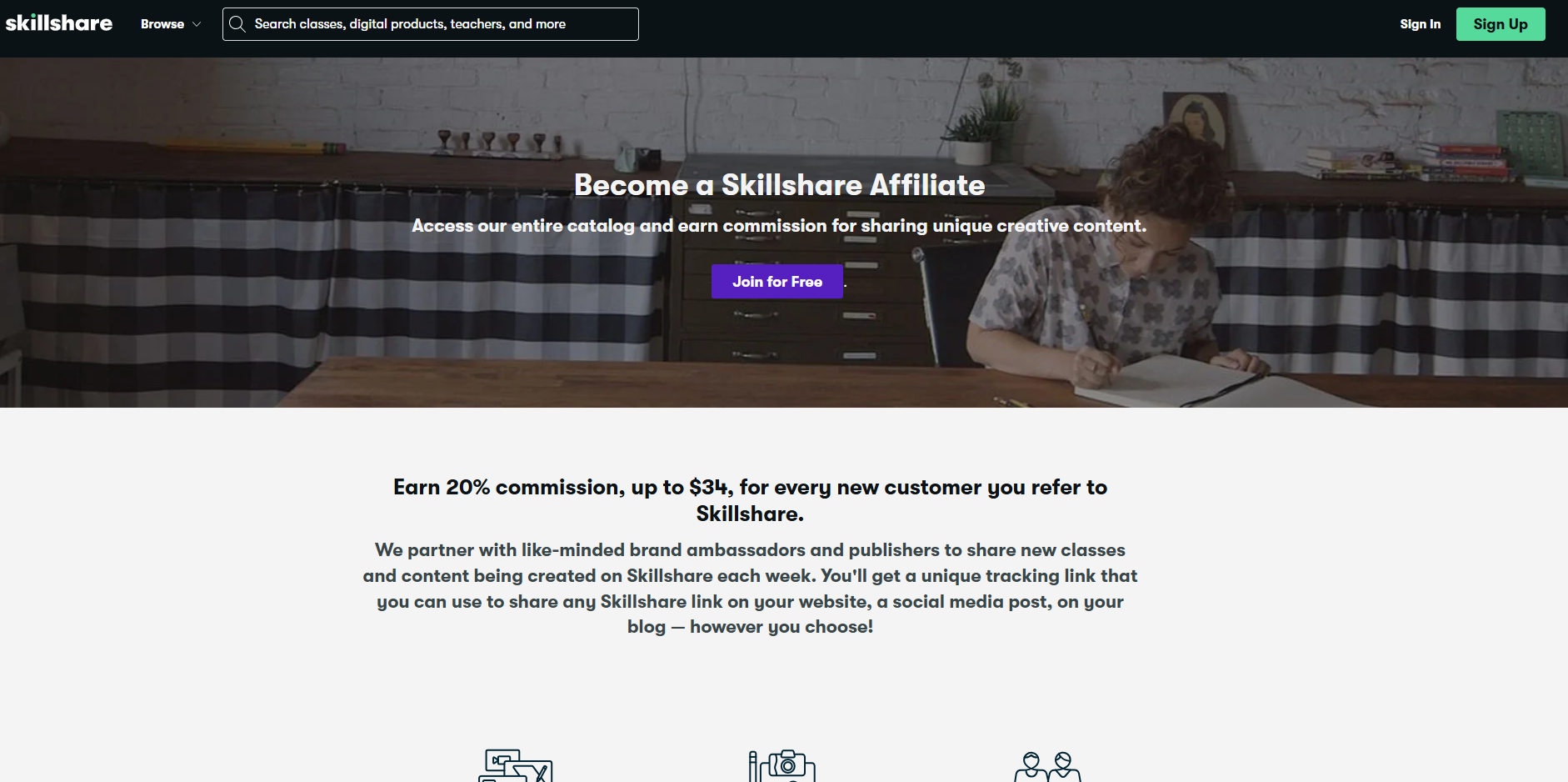
Skillshare runs on a membership model rather than per-course sales, which simplifies the pitch: refer someone to a free trial, and if they convert to paid, you earn a flat bounty plus percentage commission. Skillshare is known for high-quality classes in art, design, writing, photography, productivity, and freelancing. Many creators enjoy promoting it because they can easily tie classes to projects or challenges.
Best for: Creative-niche bloggers, YouTubers, and hobbyist-focused content creators.
Program Details
- Commission rate: Up to 40% commission, capped at around $67 per referral (also a smaller flat bounty for free-trial signups)
- Cookie duration: 30 days
- Payout threshold: $100 minimum
- Payment frequency: Monthly, 30 days after the month the referral converts
Pros
- High percentage commission relative to other course platforms
- Managed through the reliable Impact network with real-time tracking
- Rotating monthly promotions keeps content fresh
Cons
- The $100 payout threshold is one of the higher minimums on this list
- Commission is capped per referral, regardless of subscription length
- The membership model means the free tier doesn’t earn anything until upgrade
9. Teachable
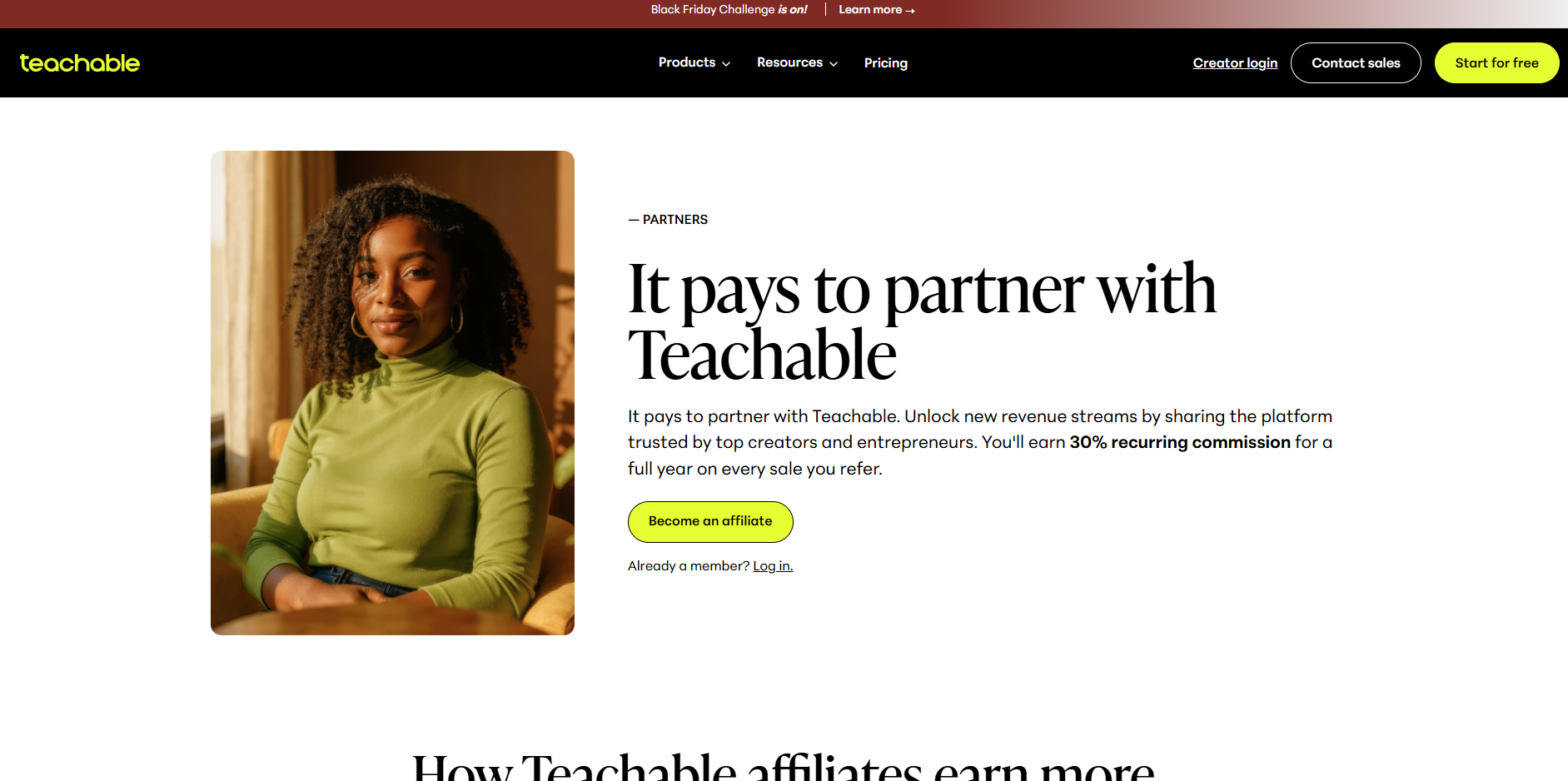
Teachable is a well-established course-hosting platform for creators and coaches. According to Teachable’s own program terms, commissions are recurring but capped at 12 months per customer, worth noting since some competitors offer lifetime recurring. Since online education continues to grow, recommending Teachable can be valuable for both sides. When you introduce someone to the platform, you’re helping them turn their expertise into a real business.
Best for: Coaches, consultants, and creators promoting a platform for building their own course business.
Program Details
- Commission rate: 30% recurring
- Cookie duration: 30 days
- Payout threshold: $50 minimum
- Payment frequency: Monthly via Impact
Pros
- Recurring commission structure builds toward passive income
- Trusted, well-known brand in the course-creation space
- Detailed analytics and campaign performance reporting
Cons
- Commission is capped at 12 months per referral, unlike some competitors offering lifetime recurring commissions
- Applications are reviewed and can be paused platform-wide during updates
- Limited promotional materials compared to competitors like Kajabi
10. Kajabi
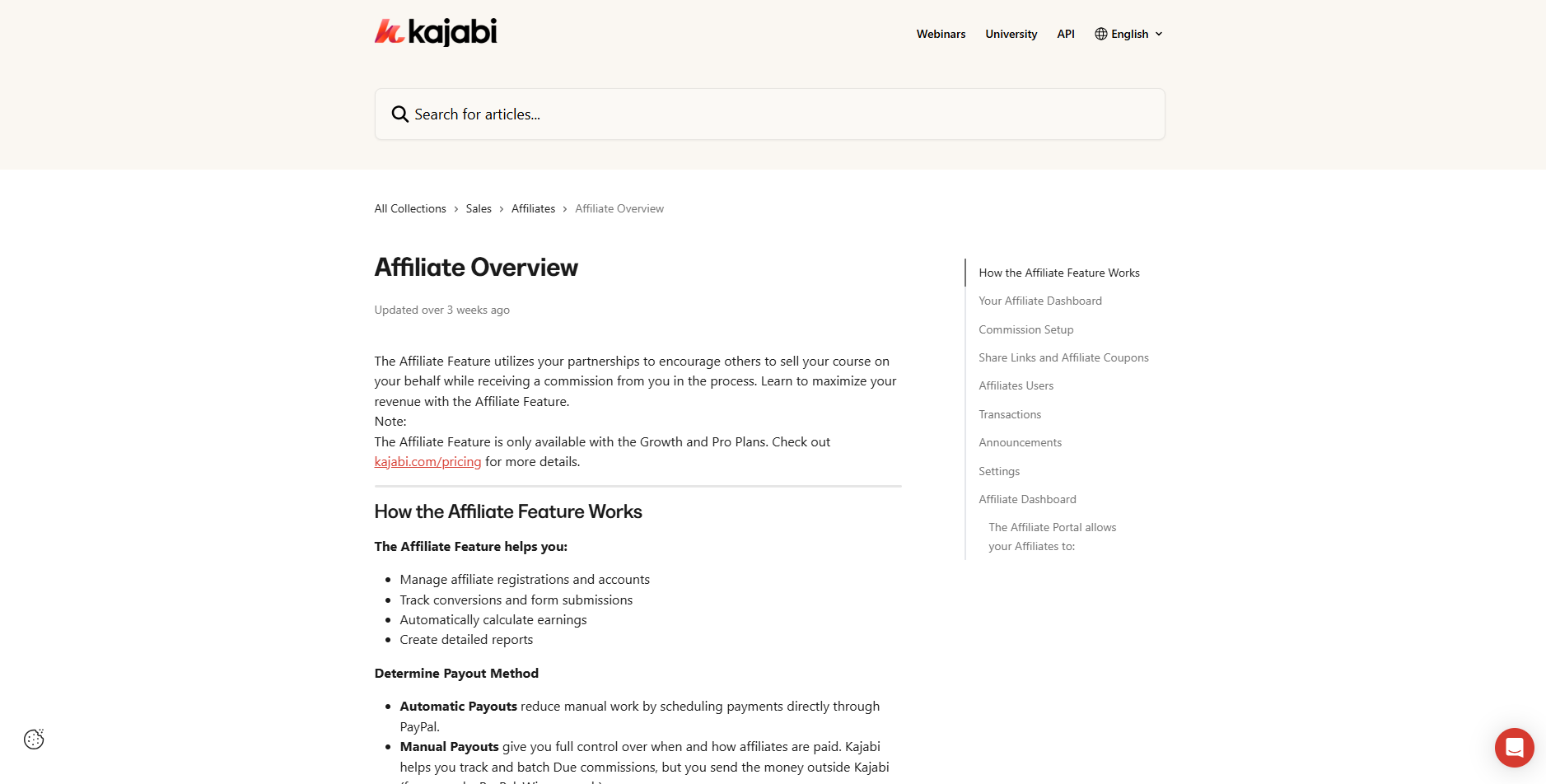
Kajabi is a premium, all-in-one platform for courses, memberships, and coaching businesses. It’s worth noting that Kajabi’s Partner Program generally requires affiliates to be active, paying Kajabi subscribers themselves, a structural difference from most programs on this list. The platform simplifies everything from landing pages to email marketing to course delivery. If your audience wants an all-in-one solution, Kajabi is often the top recommendation.
Best for: Existing Kajabi users and creators who can speak from firsthand product experience.
Program Details
- Commission rate: 30% recurring for the lifetime of the customer (newer tiered structures may vary)
- Cookie duration: 30, 60, or 90 days, depending on program configuration
- Payout threshold: Around $100
- Payment frequency: Monthly via PayPal
Pros
- The lifetime recurring commission model builds genuinely compounding income
- A high-ticket product means each referral is worth more than lower-priced competitors
- Strong retention rates among Kajabi customers mean referrals tend to stick around
Cons
- Requires an active paid Kajabi subscription to participate in most cases
- PayPal is the only payout method
- 30-day cookie is shorter than direct competitors like Thinkific
11. Thinkific

Thinkific is a strong Kajabi and Teachable alternative, and based on the official Thinkific affiliate page, it currently offers one of the longest cookie windows in the course-platform category. The platform is feature-rich without feeling complicated, which makes it appealing to beginners and advanced users alike. If you teach others how to monetize their expertise, Thinkific is an easy recommendation.
Best for: Educational content creators comparing course-building platforms for their audience.
Program Details
- Commission rate: 30% recurring, for the lifetime of the customer
- Cookie duration: 90 days
- Payout threshold: $25 minimum
- Payment frequency: Monthly via PartnerStack, paid on the 13th
Pros
- 90-day cookie window is well above the 30-day industry standard
- Lifetime recurring commissions, not capped at 12 months like some competitors
- Low $25 payout threshold makes cashing out easier for smaller affiliates
Cons
- Program access is managed through PartnerStack, which some affiliates find less flexible
- 30-day commission reconciliation hold before payouts are verified
- Per-referral earnings are modest unless you drive volume
12. ConvertKit

ConvertKit, now rebranded as Kit, is an email marketing platform built specifically for creators. Public discussions among affiliate marketers commonly highlight its recurring-for-24-months structure as one of the most generous in the email marketing category. It’s especially loved for its tagging system, automation features, and clean interface, which makes email marketing less overwhelming.
Best for: Bloggers, YouTubers, and creator-economy content producers who already teach list-building or content monetization.
Program Details
- Commission rate: 30% recurring for up to 24 months
- Cookie duration: 60–90 days
- Payout threshold: $25–50, depending on network
- Payment frequency: Monthly via PayPal
Pros
- 24-month recurring window is unusually generous compared to a typical 12-month cap
- Strong product-market fit for any content creator or blogging audience
- High customer retention means fewer cancelled commissions
Cons
- Doesn’t earn commissions on free-tier sign-ups, only paid upgrades
- Cookie duration is reported inconsistently across sources, so double-check current terms
- Requires ongoing content to build meaningful recurring income
13. ClickFunnels
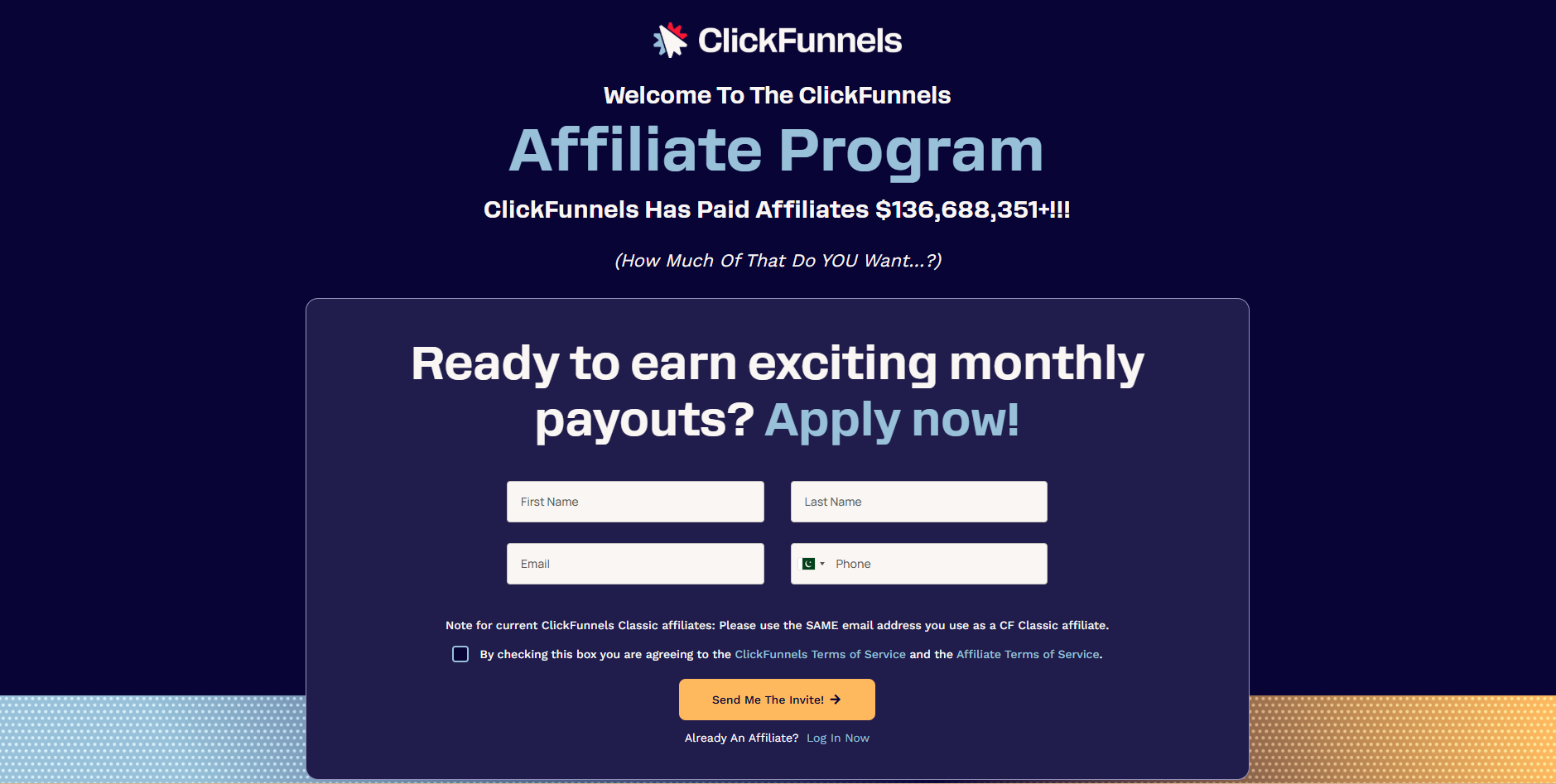
ClickFunnels is a leading sales-funnel and landing-page builder with one of the most talked-about affiliate perks in the industry: the Dream Car bonus for high-performing affiliates. Affiliates appreciate ClickFunnels because it offers strong recurring commissions and has a history of rewarding affiliates with incentives and bonuses. The platform includes many built-in templates and tools, making it accessible even for those without design or coding experience.
Best for: Marketing educators, business coaches, and entrepreneurship-focused content creators.
Program Details
- Commission rate: 30% recurring (up to 40% for top-performing affiliates)
- Cookie duration: 45 days, last-click attribution
- Payout threshold: $100 minimum
- Payment frequency: Twice monthly (1st and 15th), after a 45-day holding period
Pros
- Above-average 45-day cookie window compared to the 30-day norm
- Dream Car bonus and other incentives add real upside for consistent affiliates
- Large, active affiliate community (Affiliate Avengers) for support and strategy sharing
Cons
- $100 payout minimum is higher than most programs on this list
- 45-day holding period before commissions are payable delays cash flow
- Reaching the 40% tier requires high monthly sales volume
14. Canva Pro
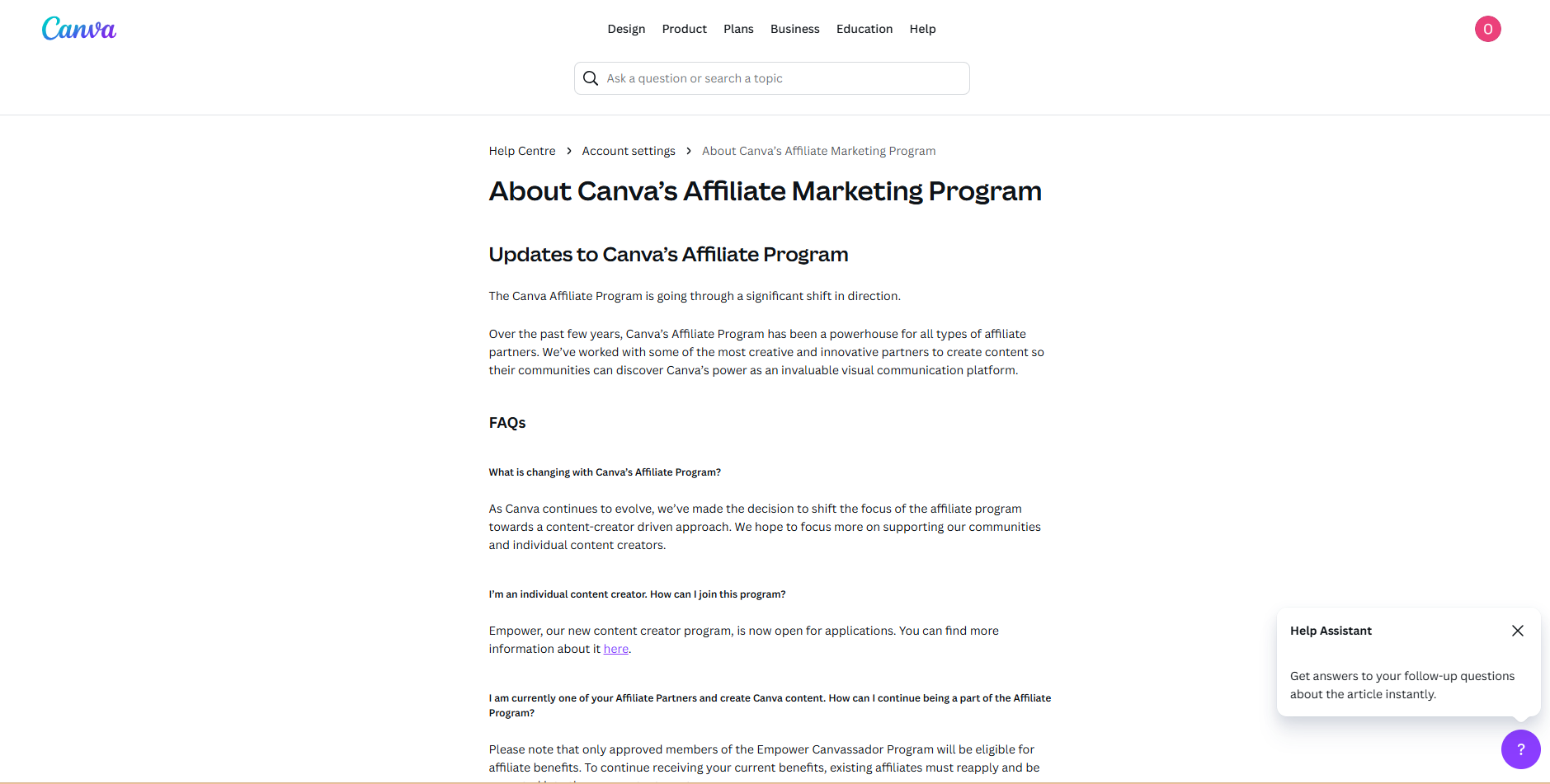
Canva is one of the most recognizable design tools in the world, but it’s worth flagging clearly: Canva’s traditional open affiliate program has shifted to the invite-only Empower Canvassador Program, which prioritizes content creators over general affiliates. Affiliates like recommending Canva Pro because it solves common pain points such as inconsistent branding, time-consuming design work, and the need for premium assets. The platform is constantly updated with new features that add value.
Best for: Design tutorial creators and social media educators, but only those accepted into the newer program structure.
Program Details
- Commission rate: Historically up to $36 per Canva Pro referral (15–80% depending on plan); current Empower Program terms are not publicly fixed and should be confirmed in the dashboard
- Cookie duration: 30 days
- Payout threshold: $10 minimum
- Payment frequency: Monthly
Pros
- Extremely strong brand recognition makes promotion easy to justify to any audience
- Low $10 payout threshold and fast 15-day cash-out after confirmation
- Broad appeal, fits almost any content niche with visual needs
Cons
- The program is no longer fully open; approval into the Empower Canvasser Program is competitive (historically, a low acceptance rate)
- 30-day cookie is short given Canva’s freemium model, where users often stay on the free tier for months before upgrading
- Commission terms are less transparent than before the program restructure
15. Samcart
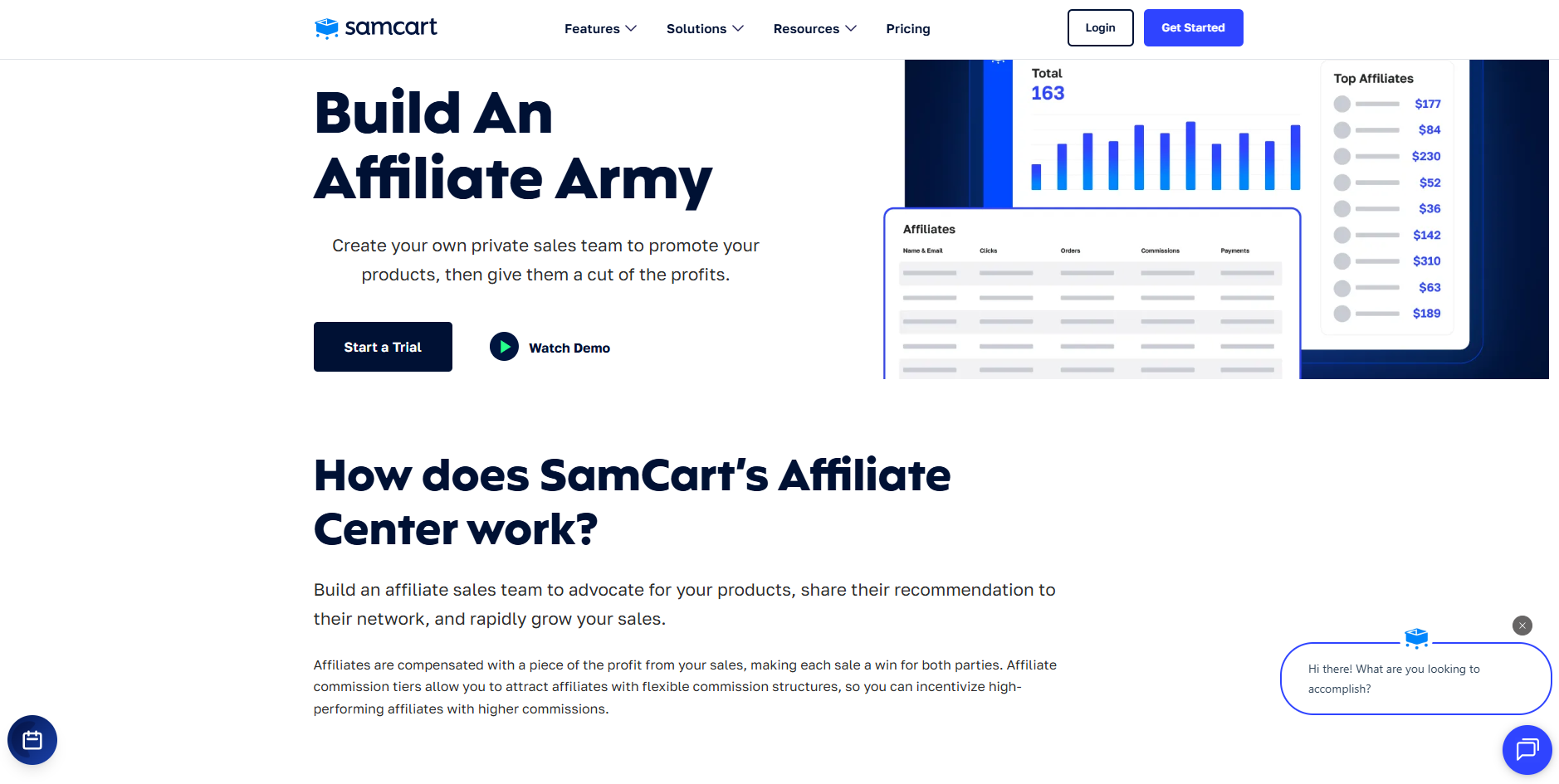
SamCart is a checkout and sales-page platform built specifically for creators selling digital products, courses, and coaching. It’s known for features that help creators increase conversions, such as order bumps, one-click upsells, and professionally designed checkout pages. It’s easy to integrate with common marketing tools, which makes it simple to fit into any workflow.
Best for: Creators and marketers whose audience is building or scaling a digital product business.
Program Details
- Commission rate: 30% recurring standard, up to 40% for high-volume/VIP affiliates
- Cookie duration: 30 days
- Payout threshold: $50 minimum
- Payment frequency: Monthly via PayPal, on a Net 45 schedule
Pros
- Recurring commission on a genuinely useful checkout tool for course/product sellers
- Commissions run for up to 2 years per referred customer
- Well-suited to pair with course-platform content (Teachable, Kajabi, Thinkific) for cross-promotion
Cons
- Net 45 payout schedule is slower than most competitors’ monthly cycles
- SamCart’s higher subscription pricing can be a harder sell to smaller creators
Factors to Consider Before Choosing Digital Product Affiliate Programs
Not every program on this list will fit your target audience; picking the right one matters more than picking the highest-paying one. Based on my research and testing across the programs above, here’s what actually moves the needle:
- Niche relevance: The product has to match what your audience already wants. A design blog promoting Creative Market converts far better than the same blog promoting ClickFunnels, since relevance drives conversion more than commission rate ever will
- Commission structure: Decide whether one-time or recurring payouts fit your content strategy better. Recurring programs (Kajabi, Teachable, Thinkific, ConvertKit) build compounding income over time, while one-time programs (ClickBank, Envato Market, Udemy) pay faster but require constant new traffic to sustain earnings
- Cookie duration: Longer windows mean more forgiveness for readers who don’t buy immediately. From what I found researching each program, windows range from 7 days (Udemy) to 90 days (Thinkific, Teachable), which matters most if your content reaches people early in their research process
- Product quality and reputation: Promote platforms you’d genuinely recommend. Marketplaces like ClickBank and JVZoo host thousands of vendors of varying quality, so vetting individual offers protects your credibility more than the platform’s brand does
- Payout threshold and frequency: Check how much you need to earn before you get paid, and how often payouts run. Thresholds on this list range from $10 (Canva, Gumroad) to $100 (Skillshare, ClickFunnels, Kajabi)
- Ease of approval: Some programs approve instantly (ClickBank), while others require an active paid subscription (Kajabi) or invite-only access (Canva’s Empower Canvassador Program). Factor in how much friction you’re willing to deal with
- Marketing resources and support: Programs that supply banners, email swipe copy, and tracking dashboards make promotion easier, especially early on. Industry feedback suggests this support matters most before you’ve built your own promotional systems
- Audience fit and scalability: The best-performing program solves a real problem for your specific readers, not the one with the flashiest headline commission, and should be able to scale as your traffic grows without forcing you to switch platforms later
Conclusion
As digital products continue to dominate online spending in 2026, affiliates who focus on relevance and product quality over headline commission numbers will consistently outearn those chasing the highest percentage alone. Start with programs that match your niche, track which one actually converts with your audience, and expand from there rather than spreading thin across all fifteen at once.
The best digital product affiliate programs share three traits: solid commission rates, products your audience actually wants, and payout terms that reward consistent effort rather than one-off luck. Based on the research in this guide, recurring programs like Kajabi, Teachable, Thinkific, and ConvertKit offer the strongest long-term earning potential thanks to their compounding commission structures, while marketplaces like ClickBank and Gumroad remain solid choices for affiliates who want faster, one-time payouts across a wider range of niches.
Frequently Asked Questions (FAQS)
What is a digital product affiliate program?
A digital product affiliate program lets you earn a commission by promoting online products such as courses, software, templates, or tools. When someone buys through your referral link, the sale is tracked automatically, and you earn a percentage of the revenue, no inventory, shipping, or product creation required.
How do I choose the best affiliate programs for digital products?
Match the product to your niche, check the commission structure (one-time vs. recurring), and compare cookie duration and payout threshold before committing. From my research, programs with 30-day+ cookies and recurring commissions tend to reward consistent content creators better than one-time, short-cookie programs.
Can beginners succeed with digital product affiliate programs?
Yes. Most programs on this list, ClickBank, Gumroad, and Udemy in particular, approve affiliates instantly or within a few days, require no product creation, and provide tracking links and marketing materials to get started right away.
Do digital product affiliate programs offer recurring commissions?
Several do. SaaS and subscription-based platforms like Kajabi, Teachable, Thinkific, ConvertKit, and ClickFunnels pay recurring commissions for as long as the referred customer stays subscribed, which builds toward passive income over time.
Which digital products convert best for affiliates?
Products that solve a specific, immediate problem for your audience, email marketing tools, course platforms, design software, and business templates, typically convert better than generic ebooks or one-off downloads, since the buyer already knows why they need it.
How much can I earn promoting digital products?
Earnings depend on your traffic, audience size, and the program’s commission structure. One-time commission programs pay faster per sale, while recurring programs like Kajabi (30% lifetime) or ConvertKit (30% for 24 months) compound over time as referrals stay subscribed.
Do I need a website to promote digital product affiliate programs?
A website helps with credibility and long-term SEO traffic, but it isn’t required. You can promote through YouTube, email newsletters, or social media, several programs on this list, including Skillshare and Udemy, that convert well through video and social content alone.
Are digital product affiliate programs worth it in 2026?
Yes. Digital products continue to grow as more buyers move education, software, and creative tools online, and the commission rates in this space (often 20–75%) remain significantly higher than the 1–10% typical of physical product affiliate programs.
