
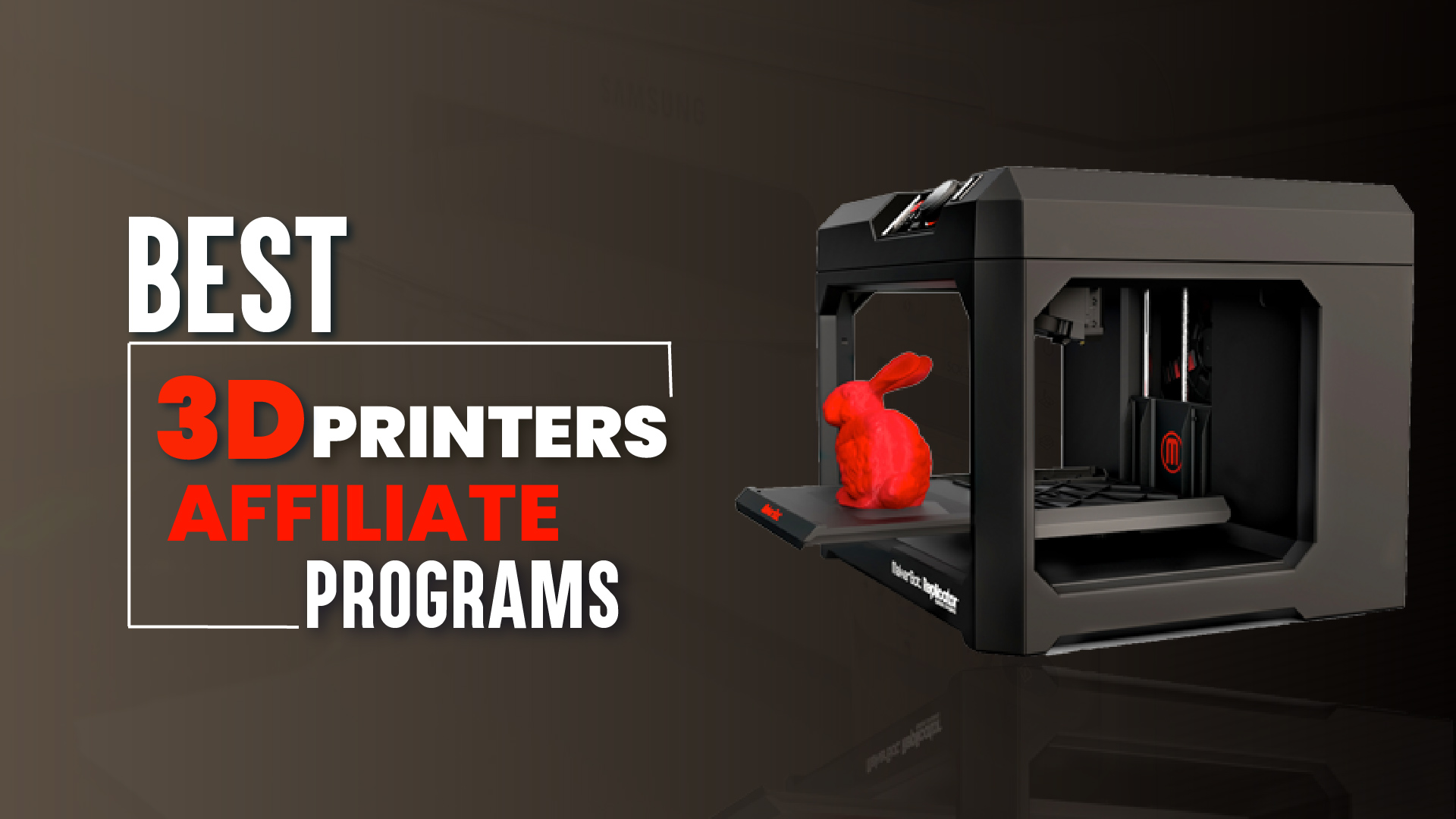
3D printer affiliate programs pay you a cut of the sale whenever someone buys a printer, filament, or related software after clicking your link. It’s a simple setup, but the niche behind it has gotten a lot bigger: schools buy machines for STEM programs, small manufacturers use them for prototyping, and healthcare providers use them for custom medical models. That spread across buyer types is what makes this niche interesting; you’re not limited to one audience or price point.
A reader might spend $20 on filament or $1,800 on a first serious printer, and either purchase can run through an affiliate link. Printers, materials, and design software all support natural review, comparison, and tutorial content, so the niche doesn’t get stale fast. This guide covers the 10 best 3D printer affiliate programs to consider in 2026. Upon closer review of each program’s commission structure, network terms, and audience fit, we’ve highlighted what each one actually pays and what to check before building content around them.
What are 3D Printer Affiliate Programs?
A 3D printer affiliate program lets you earn a commission by referring buyers to a 3D printer brand, retailer, or related software company, using a unique tracking link the company gives you. When someone clicks your link and buys within the affiliate program’s cookie window, you get paid a percentage of that sale.
These affiliate programs cover more than just printers themselves, such as filament, resin, scanners, CAD software, and accessories, which are all commonly included, which gives affiliates a lot of room to build content around different budgets and use cases, from $20 spools of filament to $1,800+ industrial machines.
How 3D Printer Affiliate Programs Work
3D printer affiliate programs allow marketers to earn commissions by promoting 3D printers, accessories, and related services. Here’s how they typically operate:
- Sign up: Apply directly through the brand’s site or through an affiliate network like ShareASale, Awin, CJ Affiliate, or UpPromote. Joining is almost always free.
- Get your tracking link: Once approved, you’ll receive a personalized affiliate link to use in your content.
- Promote it: Share your link through blog reviews, YouTube videos, comparison guides, social posts, or email newsletters.
- Use the provided assets: Most affiliate programs supply banners, product images, and sometimes ready-made copy to help you convert.
- Earn on qualifying sales: You get paid a percentage of each sale made through your link within the cookie window.
- Track your numbers: Your affiliate dashboard shows clicks, conversions, and pending earnings.
- Get paid: Payout schedules vary, monthly is most common, and most networks require a minimum balance (often $25–$50) before they’ll release funds.
Best 3D Printer Affiliate Programs In 2026
Here is the list of the top 10 best 3D printer affiliate programs in 2026:
- Sovol SV06
- 3D Jak
- Oz Robotics
- Autodesk
- MakerBot
- 3D Printer Universe
- Anet Technology
- MatterHackers
- Dynamism
- 3D Printers Online
1. Sovol SV06
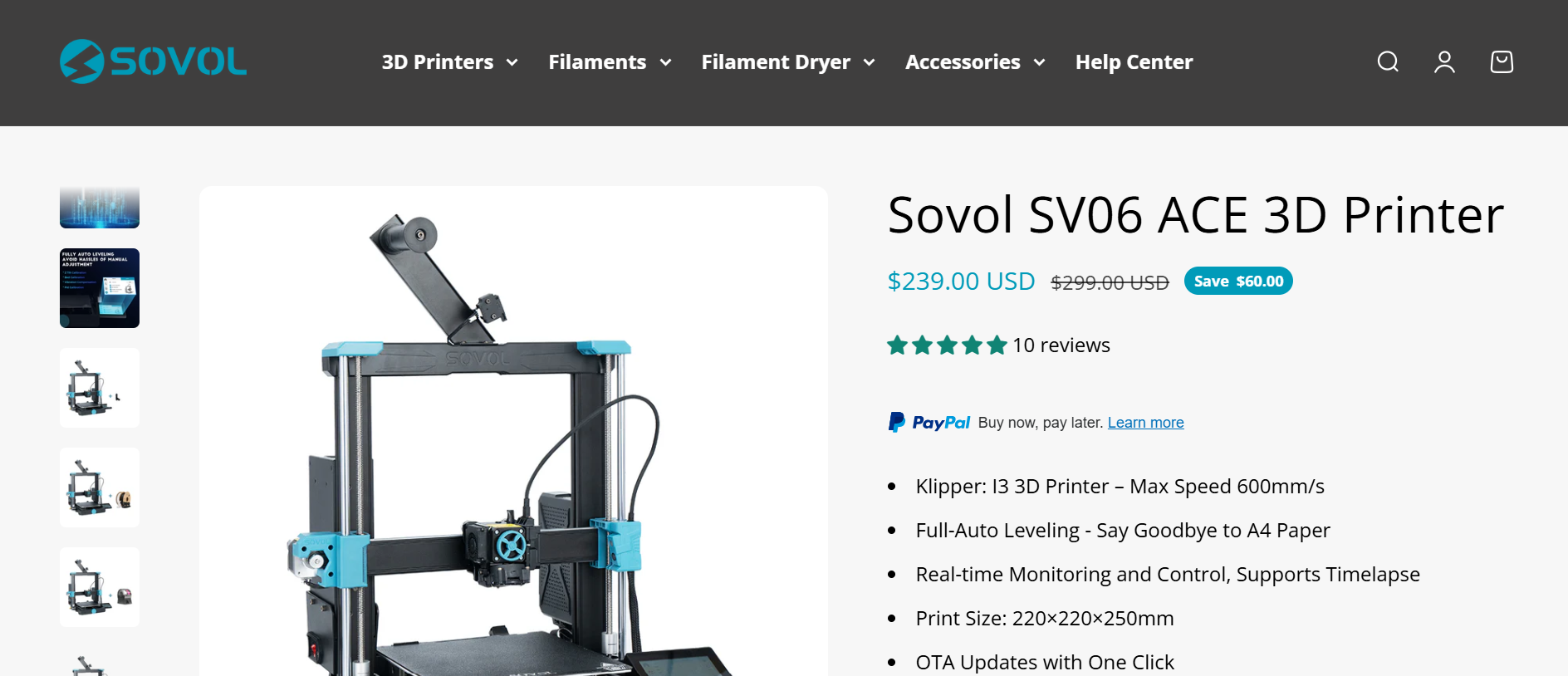 Sovol is known for affordable, capable printers like the SV06, SV06 Plus, SV08, and T500, with entry prices around $239. Founded in 2018, the brand built its reputation by manufacturing through supply chains similar to bigger names in the space, which lets it offer comparable build quality at a noticeably lower price. It’s a popular pick for affiliates because the brand ships globally. Community consensus across 3D printing forums and maker communities consistently points to Sovol as a strong entry point for both first-time buyers and more advanced makers looking to upgrade without a huge budget jump.
Features
- Commission: Roughly 5–15%, depending on the network and content type (content sites generally earn more than coupon sites)
- Cookie Duration: Varies by network, commonly cited as 30–90 days
- Networks: Available via ShareASale and UpPromote
- Payment Term: Monthly payouts
Why Promote Sovol
- Low entry price point makes it an easy first purchase to recommend to beginners.
- Frequent promotions and seasonal discounts (notably around Black Friday and December) give you timely content angles.
- Wide product range; printers, filament, and accessories mean more than one way to earn from the same reader.
2. 3D Jake
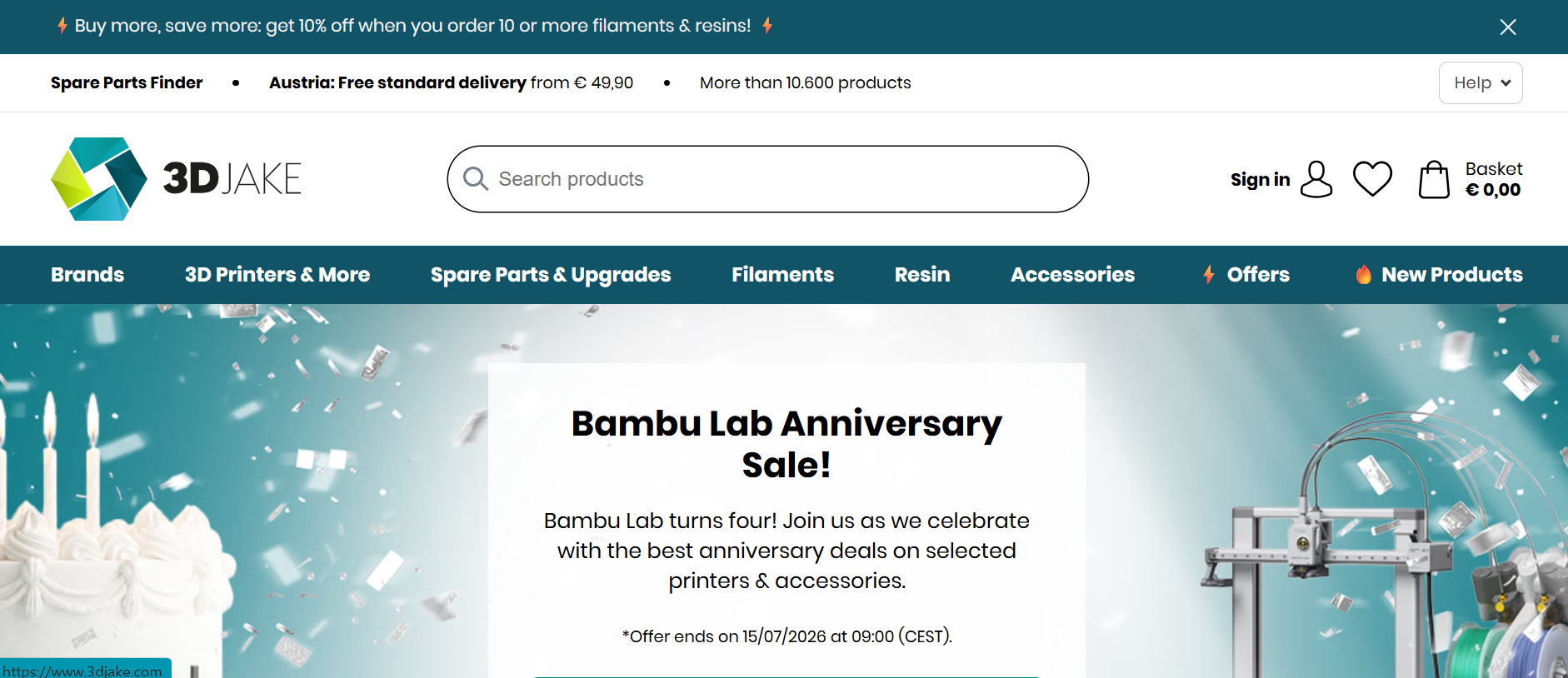 3D Jake is a European retailer carrying more than 50 3D printing brands, including printers, resins, and filaments, with starting prices around $245 for compact models and ranging up to several thousand dollars for industrial-grade machines. Rather than manufacturing its own hardware, the company positions itself as a one-stop marketplace, letting customers shop by printing technology, FDM, resin, or SLA, instead of hunting across individual brand sites. Its scale and breadth make it a strong fit for comparison-style content, since you can recommend multiple brands and price tiers through a single affiliate relationship.
Features
- Commission: Roughly 8–12% on sales
- Cookie Duration: Around 60 days
- Network: Managed via Awin
- Payment Term: Monthly payouts
Why Promote 3D Jake
- A multi-brand catalog means one affiliate link can support an entire “best printers under $500” type roundup.
- Strong European market presence, useful if your audience skews EU.
- Regular promotions give you fresh reasons to re-engage your audience throughout the year.
3. Oz Robotics
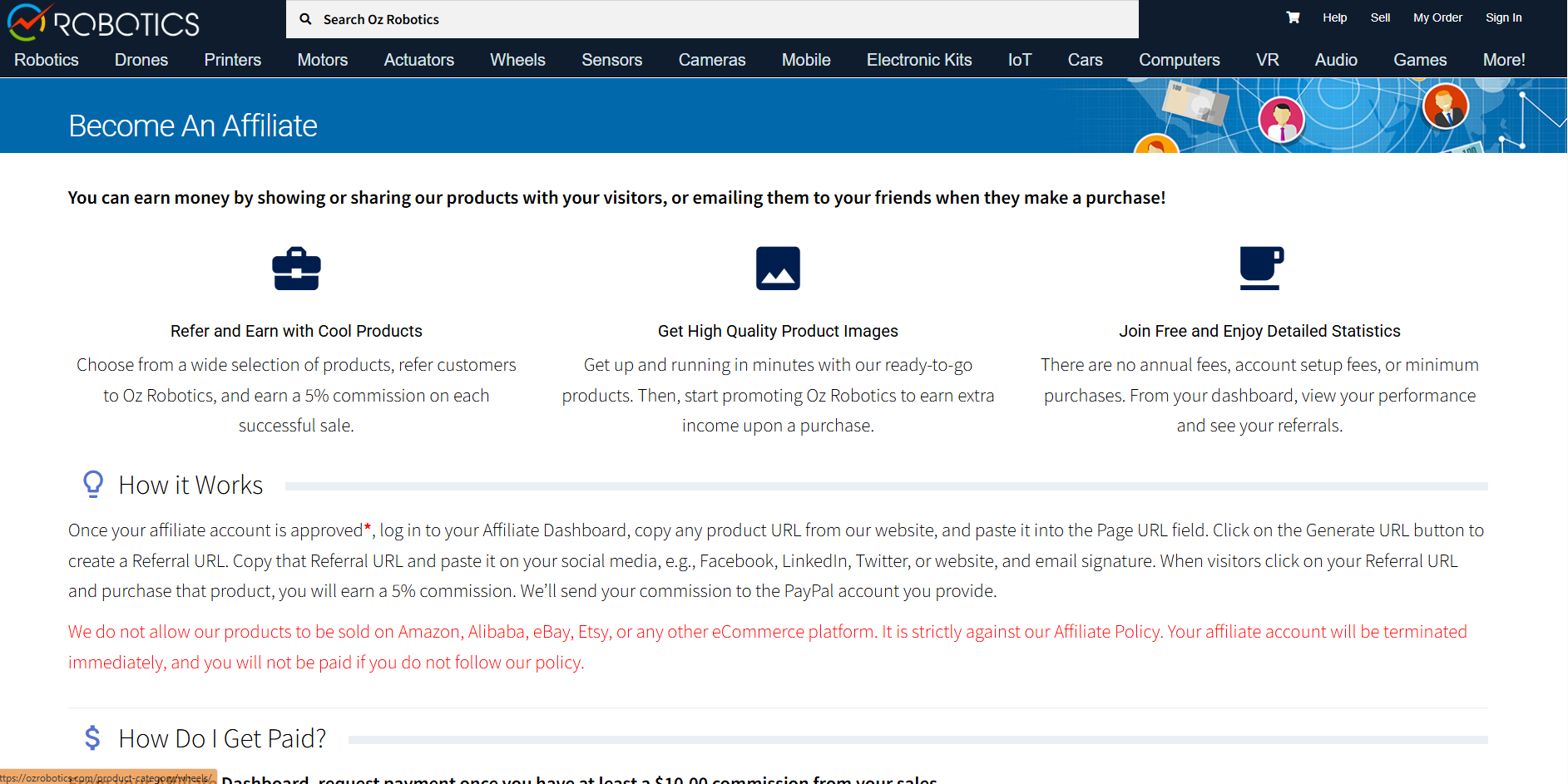 Oz Robotics sells robotics, AI, and 3D printing hardware, including machines like the Snapmaker 2.0 and Anycubic Photon Mono X, starting around $449. The company positions itself at the intersection of robotics and additive manufacturing rather than as a pure 3D-printer retailer, carrying items like robotic arms and STEM education kits alongside its printer lineup. That broader catalog makes it a good fit if your content already touches robotics, AI, or STEM education alongside 3D printing, since you’re not limited to promoting printers in isolation.
Features
- Commission: Roughly 5–10% on sales
- Cookie Duration: Commonly cited as around 90 days
- Payment Term: Monthly payouts via PayPal or direct deposit
Why Promote Oz Robotics
- Crossover audience; robotics, AI, and STEM content creators can promote this without forcing the fit.
- A mixed price range gives you both budget and premium products to recommend.
- Useful for educational content aimed at schools, makerspaces, or hobbyist robotics communities.
4. Autodesk
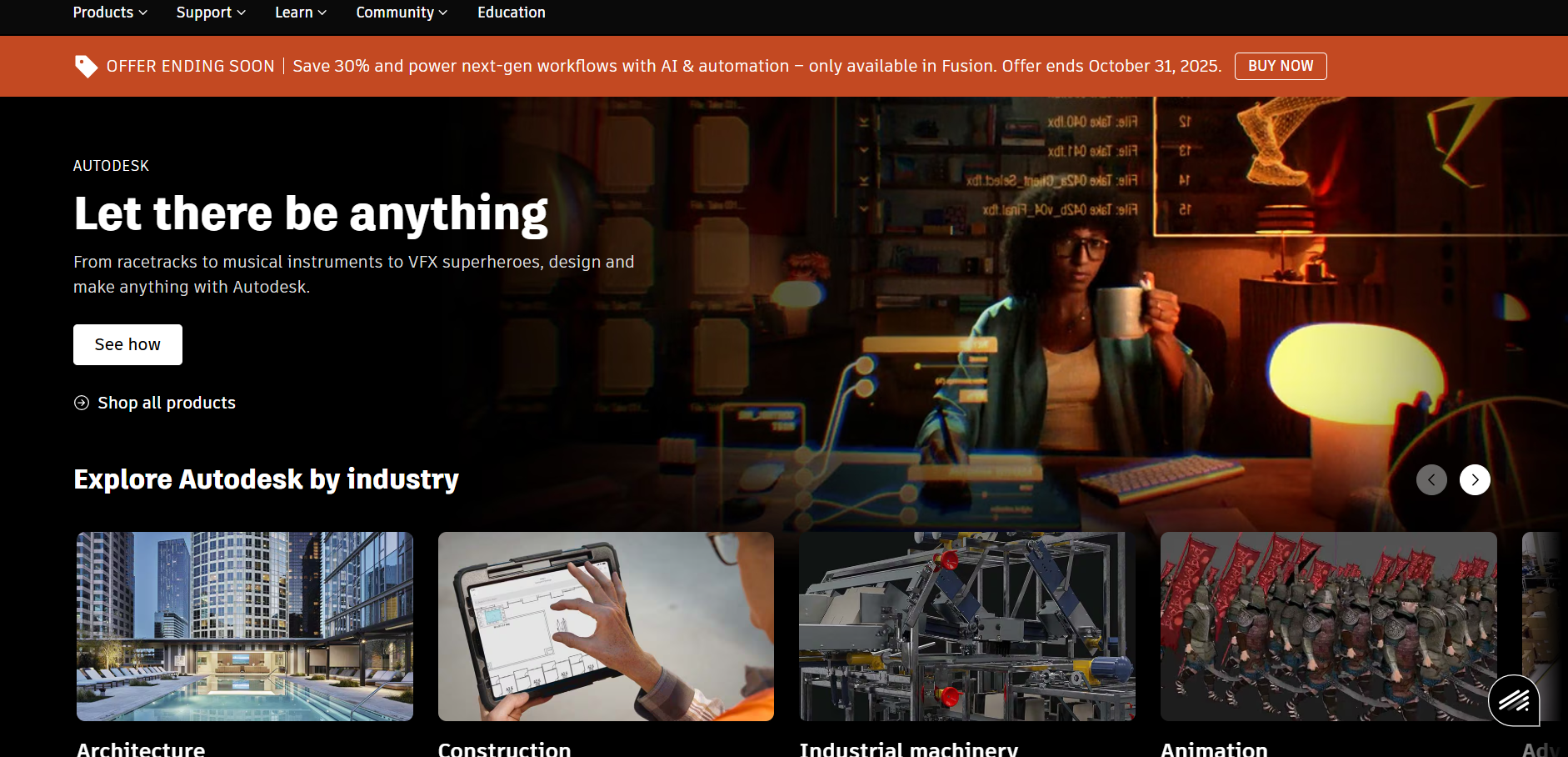
Autodesk is the company behind AutoCAD, Fusion 360, Revit, Maya, and 3ds Max software, which many 3D printing workflows rely on for modeling before a single layer gets printed. Plans start around $60/month. Unlike the hardware brands on this list, Autodesk sells a subscription rather than a one-time purchase, and its tools span far beyond 3D printing into architecture, engineering, and entertainment, which means the affiliate audience here looks more like designers and CAD users than printer hobbyists. For content that covers the design side of 3D printing (modeling, prototyping, STL preparation), it’s a natural complement to a hardware recommendation.
Features
- Commission: Around 7–9% on new subscriptions (renewals aren’t commissionable)
- Cookie Duration: 60 days
- Network: Managed via CJ Affiliate
- Payment Term: Monthly payouts, $50 minimum threshold
Why Promote Autodesk
- High price point per subscription means strong commissions even at a modest conversion rate.
- Natural tie-in for any content about designing models for 3D printing, not just printing itself.
- Long-standing, globally recognized brand, which tends to help conversion and trust.
5. MakerBot
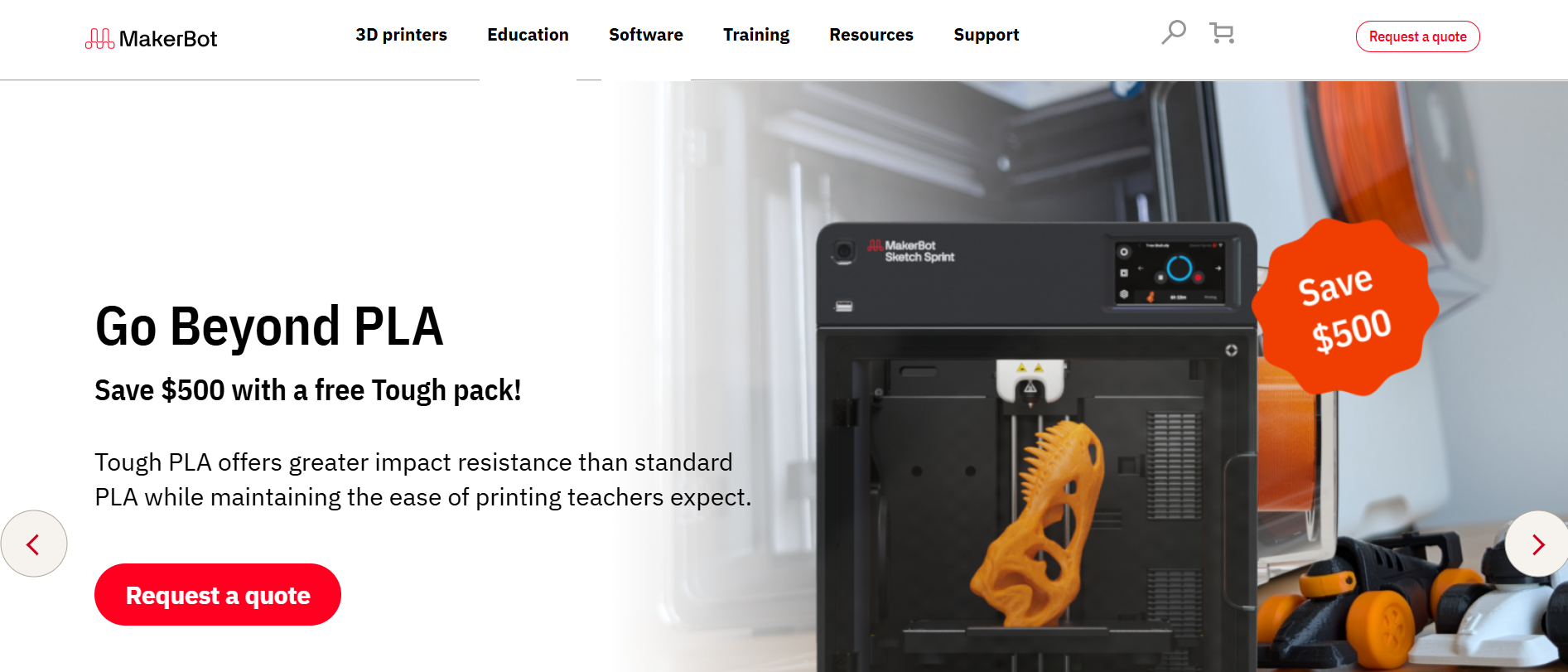 MakerBot helped popularize desktop 3D printing and remains a recognizable name in education and small-business settings. Its lineup, including the Replicator+, METHOD, and METHOD X, starts around $1,799. The brand has long leaned into classrooms and design labs as a core market, building out curriculum resources and community tools alongside its hardware, which is part of why it still carries strong name recognition even as cheaper competitors have entered the market. For affiliates, that brand familiarity can make MakerBot an easier sell to readers who already associate the name with reliability.
Features
- Commission: Up to roughly 7% per sale
- Cookie Duration: Around 30 days
- Network: Administered via FlexOffers
- Payment Term: Monthly payouts
Why Promote MakerBot
- A high average order value means commissions can add up even at a lower percentage.
- Strong brand recognition with schools and institutions, useful for education-focused content.
- One of the largest installed user bases in desktop 3D printing, which supports a large existing community for tutorials and add-on content.
6. 3D Printer Universe
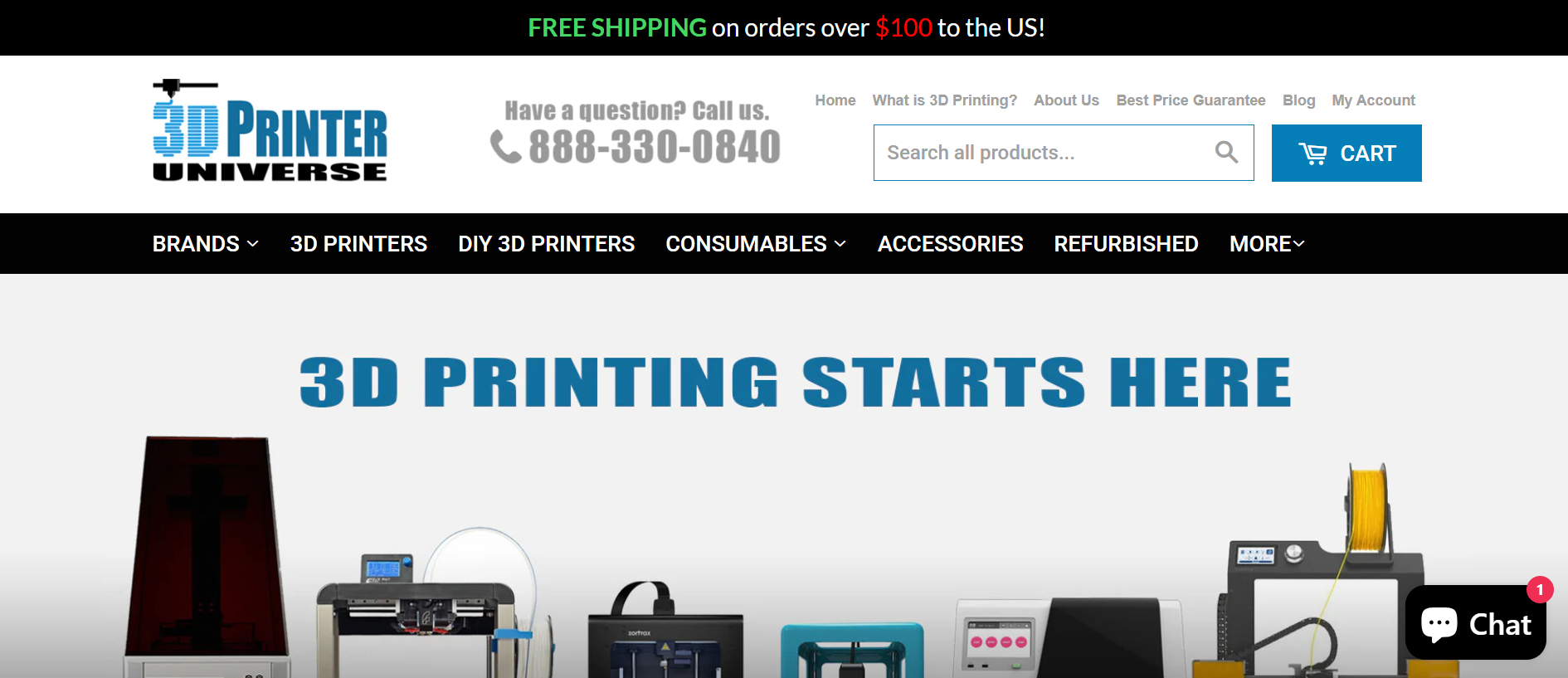 3D Printer Universe carries a wide catalog spanning entry-level to advanced machines, including the Creality Ender 3 V2, Anycubic Photon Mono X, and Prusa i3 MK3S+, with prices starting around $279. Rather than focusing on one manufacturer, the retailer curates across multiple established brands, which means it tends to stock whatever’s currently popular rather than pushing a single house brand. That multi-brand model is useful for affiliates because it lets you point readers toward well-known, frequently searched models without being tied to promoting just one company’s lineup.
Features
- Commission: Up to roughly 8% per sale
- Cookie Duration: Around 60 days
- Payment Term: Monthly payouts
Why Promote 3D Printer Universe
- Broad catalog covers nearly every skill level, so one partnership supports multiple content angles.
- Recognizable, popular models (Ender 3, Prusa) are already in high search demand, which can help SEO performance.
- Useful as a secondary/comparison link alongside more niche brand-specific reviews.
7. Anet Technology
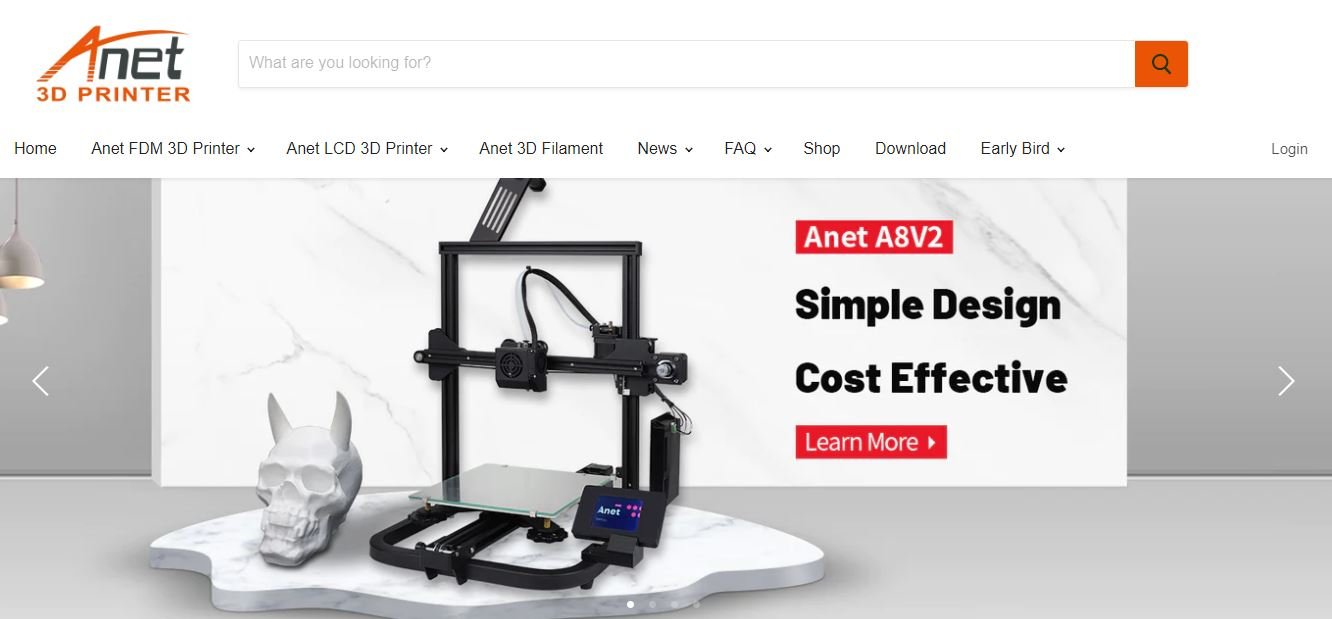
Anet builds budget-friendly printers like the A8 Plus, ET5X, and A8V2, exported to more than 70 countries, with prices starting around $219. The company has invested in regional warehouses across markets like the US, Germany, the Czech Republic, and Brazil, which helps it offer more realistic shipping times than some budget competitors that ship everything from a single overseas warehouse. For affiliates working with a price-sensitive or international audience, that logistics setup is worth mentioning alongside the low entry price.
Features
- Commission: Around 10% for content sites, 5% for coupon sites
- Cookie Duration: 90 days
- Network: Managed via ShareASale
- Payment Term: Monthly payouts via PayPal or bank transfer
Why Promote Anet Technology
- One of the longer cookie windows on this list, useful if your audience tends to research before buying.
- Very low entry price makes it an easy “first 3D printer” recommendation.
- Genuinely global shipping footprint, which matters if you’re writing for an international audience.
8. MatterHackers
MatterHackers is a US-based retailer specializing in materials, machines, and accessories for makers, educators, and small businesses, including a large filament and resin catalog alongside printers like the LDO Voron kits. The company puts a noticeable emphasis on testing and curating what it sells, often highlighting in-house evaluation of materials before they’re listed, which sets it apart from retailers that simply resell whatever’s available. That focus makes it a particularly good fit for affiliates writing materials and supplies content rather than pure hardware reviews.
Features
- Commission: Around 5% per sale
- Cookie Duration: Reported figures vary by source, generally in the 15–30 day range
- Network: Managed via ShareASale
- Payment Term: Monthly payouts, $300 minimum threshold
Why Promote MatterHackers
- Strong fit for filament/materials content, specifically not just printer reviews.
- In-house testing and curation of products can add credibility when you’re writing buying guides.
- Good complement to a higher-ticket printer recommendation, since consumables are a repeat purchase.
9. Dynamism
Dynamism is a US retailer specializing in imported and premium 3D printers and related gadgets, with a sister storefront (Gizmine) that affiliates can also earn from under the same program. The retailer’s niche is bringing in hardware that isn’t always easy to find through mainstream US channels, often higher-end or imported machines aimed at serious hobbyists and small studios, rather than first-time buyers. That positioning makes it a useful complement to budget-focused affiliate programs like Sovol or Anet if your content also covers more advanced or specialty equipment.
Features
- Commission and Cookie Duration: Not publicly disclosed, you’ll need to apply to see the exact terms
- Payment Term: Confirm directly with the affiliate program after approval
Why Promote Dynamism
- Access to premium and imported machines that aren’t widely available through other US affiliate programs.
- Two storefronts under one affiliate relationship (Dynamism + Gizmine) means more potential products to link.
- Good niche fit if your audience is looking for higher-end or harder-to-find hardware rather than entry-level printers.
10. 3D Printers Online
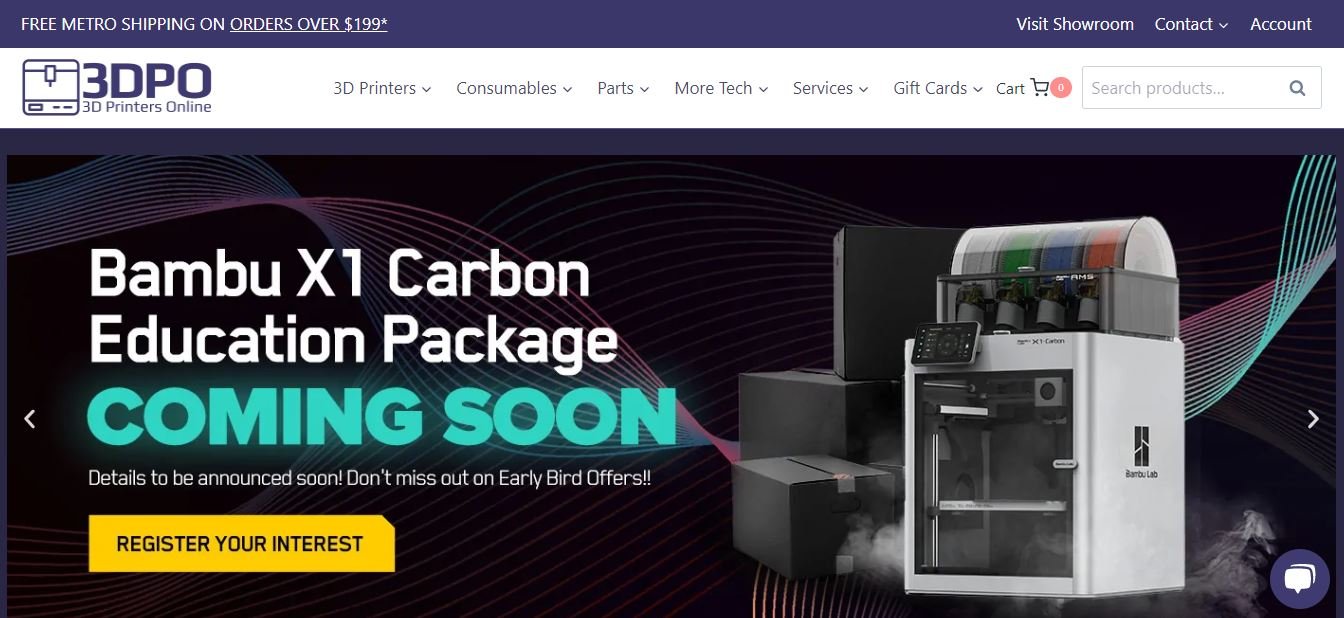
3D Printers Online is a top source for high-quality printers and accessories. Known for cutting-edge technology and excellent support, it serves both new and experienced users. Affiliates can partner with a trusted brand recognized for innovation and reliability. Starting from $399, 3D Printers Online’s bestselling products, including the Pro Series, Basic Series, Resin Series, Industrial Series, and various filaments and accessories, deliver exceptional performance and versatility for an enhanced 3D printing experience.
Features
- Commission: Roughly 5–12% per sale
- Cookie Duration: Reported figures vary by source; some networks list it as short as 24 hours, so confirm before relying on it
- Payment Term: Monthly payouts via bank transfer or PayPal, $300 minimum threshold
Why Promote 3D Printers Online
- Price-matching policy gives you a concrete selling point for price-sensitive readers.
- Wide series lineup (Basic to Industrial) covers hobbyists through small manufacturers.
- Useful for “where to buy” or deal-comparison style content.
How to Maximize Earnings in the 3D Printing Sector
Picking an affiliate program with decent commissions is only step one. The bigger lever is the target audience, and affiliate performance data widely shows that readers already close to a buying decision convert significantly better than broad, unqualified traffic.
A few things that tend to move the needle:
- Go specific with keywords: Broad terms like “3D printer” are hard to rank for and attract low-intent traffic. Long-tail terms like “best filament for cosplay props” or “entry-level resin printer under $300” bring in readers who are much closer to buying.
- Compare, don’t just list: Side-by-side comparisons (price, materials supported, build volume, noise level) tend to outperform single-product reviews because they answer the reader’s actual decision-making question.
- Disclose your affiliate relationships clearly: This builds trust and is required in most jurisdictions, and content with visible, honest disclosure tends to perform just as well, if not better, than content that tries to hide it.
- Keep program details current: Commission rates and cookie durations can change without much notice. Revisit and update your numbers periodically rather than letting a post go stale.
Conclusion
3D printing affiliate marketing rewards depth over breadth. The niche covers everything from $20 filament spools to $1,800+ professional machines and design software subscriptions, and the affiliates who do well here are usually the ones writing for a specific buyer: a teacher outfitting a classroom, a cosplayer who needs the right filament, an engineer choosing between CAD tools rather than chasing the broadest possible “best 3D printer” keyword.
No single affiliate program on this list covers that whole journey by itself. Upon reviewing how top-performing affiliates in this niche structure their content, a clear pattern emerges: pairing a hardware program with a software or materials program lets you monetize a reader from their first “which printer should I buy” search all the way through to what they print with it later. Before you commit to any affiliate program, compare its commission rate and cookie window with other affiliate programs.
Frequently Asked Questions (FAQS)
What are the best 3D printer affiliate programs to promote in 2026?
Sovol, 3D Jake, MakerBot, Autodesk, Anet Technology, MatterHackers, Dynamism, 3D Printers Online, 3D Printer Universe, and Oz Robotics are among the strongest options, offering commissions in the 5–15% range depending on the affiliate program.
Do 3D printer affiliate programs offer recurring commissions?
Most hardware-focused affiliate programs (printers, filament, accessories) pay a one-time commission per sale. Software affiliate programs like Autodesk are subscription-based but typically only pay on the initial sale, not on renewals, so “recurring commission” claims are worth double-checking before you promote a program on that basis.
Are there any high-paying 3D printer affiliate programs for beginners?
Yes. Sovol and Anet Technology are both beginner-friendly to apply to and pair low-cost entry products with relatively competitive commission percentages, which can make them easier first programs to start with.
What is the typical commission structure for 3D printer affiliate programs?
Most affiliate programs pay a flat percentage per sale, commonly somewhere between 5% and 15%, with some offering a higher tier for top-performing affiliates. A handful of programs (like Dynamism) don’t publish their rate publicly, so you’ll need to apply to find out.
Can I promote 3D printer affiliate programs through social media?
Generally, yes, most affiliate programs allow promotion across blogs, YouTube, and social platforms. Always check the specific program’s terms, since some restrict certain ad types (like paid search bidding on brand names) or require disclosure language.
Do 3D printer affiliate programs support international audiences?
Many do, but shipping coverage, pricing, and even commission eligibility can vary by region. For example, some affiliate programs list different commission rates for different countries. Check a program’s accepted-countries list before creating content for a specific region.
What type of content works best for promoting 3D printer affiliate products?
Comparison guides, “best for [use case]” roundups, and hands-on review content tend to outperform generic listicles because they help readers make an actual decision rather than just present options.
