

Ecommerce affiliate networks allow marketers to earn commissions by promoting products from trusted online retailers and brands, without having to build and manage individual partnerships with each one. These platforms connect affiliates with thousands of merchants across categories like fashion, electronics, beauty, software, and lifestyle products, handling the tracking, payments, and vetting that would otherwise make managing dozens of separate brand relationships impractical.
This guide covers the 15 best ecommerce affiliate networks in 2027, selected based on merchant quality, product variety, commission opportunities, tracking technology, payment reliability, and affiliate support. Beyond just listing them, it breaks down what actually differentiates each one, since picking the right affiliate network has a real impact on how much of that opportunity translates into earnings.
What Are Ecommerce Affiliate Networks?
Ecommerce affiliate networks are intermediary platforms that connect online retailers with affiliates who promote their products for a commission on resulting sales. Instead of negotiating separately with each brand, an affiliate joins one network and gains access to hundreds or thousands of merchants through a single account, which handles tracking, payouts, and vetting on both sides.
In practice, this means an approved affiliate can find merchants, generate tracking links, monitor performance, and get paid all in one place instead of managing it separately for every brand. Networks take a small cut of the commission in exchange, but for affiliates working with multiple brands, that tradeoff is usually worth the convenience.
What Are the Benefits of Joining an Ecommerce Affiliate Network?
Joining a network shifts most of the operational overhead of affiliate marketing off the affiliate’s plate, letting you focus on content and audience growth instead of managing logistics. Here’s what that actually translates into:
- Access to multiple brands. Promote products from dozens or hundreds of merchants under one account instead of negotiating and managing separate partnerships with each brand individually.
- Reliable tracking. Advanced tracking systems monitor clicks, sales, and commissions automatically, so you get accurate credit for referrals without relying on merchants to self-report.
- Multiple product categories. Choose products that genuinely match your audience and niche, rather than being limited to whatever a single brand happens to sell.
- Trusted payment systems. Commissions are collected and paid out through the network’s own secure, established payment infrastructure, reducing the risk of chasing down payment from individual merchants.
- Scalable income opportunities. Because one account can support content, SEO, social media, and email marketing simultaneously, income can grow with your traffic and audience rather than being capped by a single partnership.
How Ecommerce Affiliate Networks Work
The core mechanics are nearly identical across all 15 networks. The differences that actually matter show up in the details below each step.
- Apply to the network, then often to individual merchants. Network approval is usually fast. Merchant approval is where most affiliates get rejected: thin or new sites are the top reason.
- Get approved and access tracking tools. Approval isn’t permanent. Networks can revoke access for compliance issues like missing FTC disclosures.
- Generate unique tracking links. Most require manual link creation. Skimlinks and Sovrn Commerce auto-convert existing product mentions instead.
- Share links through your content or channels. Placement, context, and channel affect performance more than the network itself. This is where your strategy matters most.
- Earn a commission on qualifying purchases within the cookie window. Cookie length ranges from 24 hours (Amazon) to 90 days (Awin, ClickBank). Some networks pay only on the last click, which can override your referral.
Top 15 Best Ecommerce Affiliate Networks in 2027
Here is the list of the top 15 best Ecommerce Affiliate Networks in 2027:
- Amazon Associates
- CJ Affiliate (Commission Junction)
- Awin
- Impact.com
- Rakuten Advertising
- ShareASale
- eBay Partner Network
- ClickBank
- FlexOffers
- AvantLink
- Admitad
- Skimlinks
- PartnerStack
- Pepperjam
- Sovrn Commerce (formerly VigLink)
1. Amazon Associates
 Amazon Associates is one of the largest and most recognized ecommerce affiliate programs worldwide, launched in 1996. It allows affiliates to earn commissions by promoting millions of products across categories like electronics, fashion, beauty, home goods, and lifestyle products.
Its strong brand reputation, huge product selection, and easy-to-use affiliate tools make it a popular choice for bloggers, content creators, and ecommerce marketers.
Commission Rates
Amazon Associates offers category-based commissions that vary depending on the type of product sold.
- Luxury Beauty: 10%
- Clothing & Accessories: 7%
- Home Improvement: 5%
- Toys: 3%
- Grocery: 1%
Payment Details
- Payment Methods: Direct Deposit, Amazon Gift Card, and Check.
- Payment Frequency: Monthly payments (approximately 60 days after commissions are earned).
Pros
- Massive brand trust drives higher conversion rates than lesser-known platforms
- Commission applies to the entire cart, not just the linked product
- Fast, simple approval process makes it ideal for beginners
Cons
- 24-hour cookie window means next-day purchases earn you nothing
- Commission rates are among the lowest of any network on this list
- Account can be closed if you don’t get 3 sales within 180 days
2. CJ Affiliate (Commission Junction)
 CJ Affiliate is one of the largest and most established ecommerce affiliate networks, connecting affiliates with thousands of trusted brands worldwide. Founded in 1998, it provides access to premium advertisers across categories like retail, fashion, travel, technology, finance, and lifestyle.
Its biggest advantage is the quality of merchants and advanced tracking technology. CJ Affiliate is widely used by professional publishers because of its reliable reporting tools, global brand partnerships, and flexible commission structures.
Commission Rates
CJ Affiliate uses advertiser-based commission structures, so rates vary by merchant and product category.
- Retail & Ecommerce Products: 3%–10%
- Fashion & Lifestyle Brands: 5%–15%
- Travel & Services: 2%–8%
- Special Campaigns: Can offer higher commissions depending on advertiser terms
Payment Details
- Payment Methods: Direct Deposit and Check.
- Payment Frequency: Monthly payments.
Pros
- Offers high commission rates, especially when paired with major established brands
- Advanced tracking and reporting tools built for large-scale affiliate programs
- Long-established publisher network with decades of advertiser relationships
Cons
- Weak tools for managing influencer and creator-led partnerships
- Percentage-of-commission pricing gets expensive for advertisers at scale
- Dashboard and interface feel dated next to newer competitors
3. Awin
 Awin is one of the world’s leading ecommerce affiliate networks, connecting affiliates with thousands of advertisers across retail, fashion, travel, finance, technology, and lifestyle industries. With a strong presence in Europe and global markets, Awin is a popular choice for publishers looking to promote established brands and online stores.
The platform provides advanced tracking tools, advertiser insights, and a large marketplace of merchants, making it suitable for bloggers, content creators, and performance marketers who want access to diverse ecommerce offers.
Commission Rates
Awin uses advertiser-based commission structures, so rates vary depending on the merchant and product category.
- Fashion & Retail: 5%–15%
- Beauty & Lifestyle: 5%–10%
- Travel & Services: 2%–8%
- Technology Products: 1%–10%
Payment Details
- Payment Methods: Bank Transfer, ACH, and other regional payment options.
- Payment Frequency: Monthly payments.
Pros
- Largest international publisher base, especially strong across European markets
- Heavy AI investment has recovered hundreds of millions in fraud-related revenue
- Interface and analytics are consistently praised for ease of use
Cons
- Charges advertisers a setup or deposit fee to join
- Network fees of 20 to 30 percent add up fast at scale
- Merchant approval process can be slower than simpler platforms
4. Impact.com
 Impact.com is a leading partnership management platform that helps brands, creators, and affiliates build performance-based partnerships. It works with many well-known companies across ecommerce, technology, fashion, and lifestyle industries, making it a strong choice for affiliates looking to promote trusted brands.
The platform stands out because of its advanced automation, real-time tracking, and partnership management tools. Impact.com is widely used by professional marketers, influencers, and businesses to manage affiliate, creator, and referral partnerships from one place.
Commission Rates
Impact.com uses merchant-based commission structures, meaning rates depend on individual brands and campaigns.
- Fashion & Retail Brands: 5%–15%
- Beauty & Lifestyle Products: 5%–20%
- Technology & Software Products: 10%–30%
- Subscription-Based Products: Can offer recurring commissions depending on the advertiser
Payment Details
- Payment Methods: Bank Transfer, PayPal, and other supported payment options.
- Payment Frequency: Monthly payments.
Pros
- Supports referral, influencer, and traditional affiliate partnerships in one platform
- Strong automation and real-time tracking across multiple partnership types
- Works with many major, recognizable ecommerce and tech brands
Cons
- Built around enterprise budgets, making it costly for smaller affiliates
- Broader feature set means a steeper learning curve to start
- Individual brand programs can be selective about who they approve
5. Rakuten Advertising
 Rakuten Advertising is one of the most established ecommerce affiliate networks, connecting affiliates with thousands of well-known brands across retail, fashion, beauty, electronics, travel, and lifestyle categories. Its strong advertiser relationships and global presence make it a reliable platform for affiliates looking to promote trusted products.
The network provides advanced tracking technology, detailed performance reports, and access to premium merchants. Rakuten is especially popular among professional publishers and content creators who focus on product reviews, shopping guides, and comparison content.
Commission Rates
Rakuten Advertising offers merchant-specific commission rates that vary depending on the brand and product category.
- Fashion & Apparel: 5%–15%
- Beauty Products: 5%–10%
- Electronics: 1%–5%
- Home & Lifestyle Products: 3%–10%
Payment Details
- Payment Methods: Direct Deposit, Check, and PayPal (availability depends on location).
- Payment Frequency: Monthly payments.
Pros
- Strong reputation for enterprise-level brand safety and compliance standards
- Long-standing relationships with premium, well-known retail brands
- Detailed reporting well-suited for review and comparison for content creators
Cons
- Smaller merchant marketplace compared to Awin or CJ Affiliate
- Interface feels less modern than newer affiliate platforms
- Available payment methods vary significantly depending on your location
6. ShareASale
 ShareASale is one of the most popular ecommerce affiliate networks, connecting affiliates with thousands of merchants across categories such as fashion, home products, beauty, technology, and lifestyle. Established in 2000, it has become a trusted platform for both beginners and experienced affiliates.
The platform is known for its wide range of independent brands, easy-to-use dashboard, reliable tracking system, and flexible merchant partnerships. ShareASale is especially useful for affiliates who want to promote niche products and growing ecommerce businesses.
Commission Rates
ShareASale commission rates depend on individual merchants and product categories.
- Fashion & Lifestyle Products: 5%–20%
- Beauty & Health Products: 5%–15%
- Home & Garden Products: 5%–10%
- Digital & Subscription Products: 10%–30%
Payment Details
- Payment Methods: Direct Deposit and Check.
- Payment Frequency: Monthly payments.
Pros
- Connects affiliates to over 16,000 merchants across many product categories
- Long-standing reputation for transparency and paying affiliates on time
- Most accessible option for traditional, publisher-focused affiliate programs
Cons
- 20% network fee makes it costly for high-volume programs
- Dashboard can be confusing and hard to navigate for beginners
- Recent Awin ownership has led to ongoing platform changes
7. eBay Partner Network
 eBay Partner Network is the official affiliate program of eBay, allowing affiliates to earn commissions by promoting millions of products listed on one of the world’s largest online marketplaces. With products available across categories like electronics, fashion, collectibles, automotive, and home goods, it provides a wide range of opportunities for ecommerce marketers.
The network benefits from eBay’s global marketplace, trusted shopping experience, and extensive product inventory. It is a strong option for affiliates who create product reviews, deal websites, comparison content, and shopping guides.
Commission Rates
eBay Partner Network uses category-based commission structures that vary depending on the product type and transaction value.
- Electronics: Up to 1%–4%
- Fashion & Lifestyle: Up to 4%
- Collectibles: Higher commission opportunities depending on category
- New Buyer Referrals: Additional bonuses may be available for qualifying users
Payment Details
- Payment Methods: PayPal and Direct Deposit.
- Payment Frequency: Monthly payments.
Pros
- Access to a massive global marketplace with unique and collectible listings
- Well-suited for deal-hunting, comparison, and collectibles-focused content
- Straightforward, well-documented application and link-generation process
Cons
- Commission rates are notably lower than most other networks
- Cookie duration is short, sometimes as little as 24 hours
- Category commissions can fluctuate due to live auction dynamics
8. ClickBank
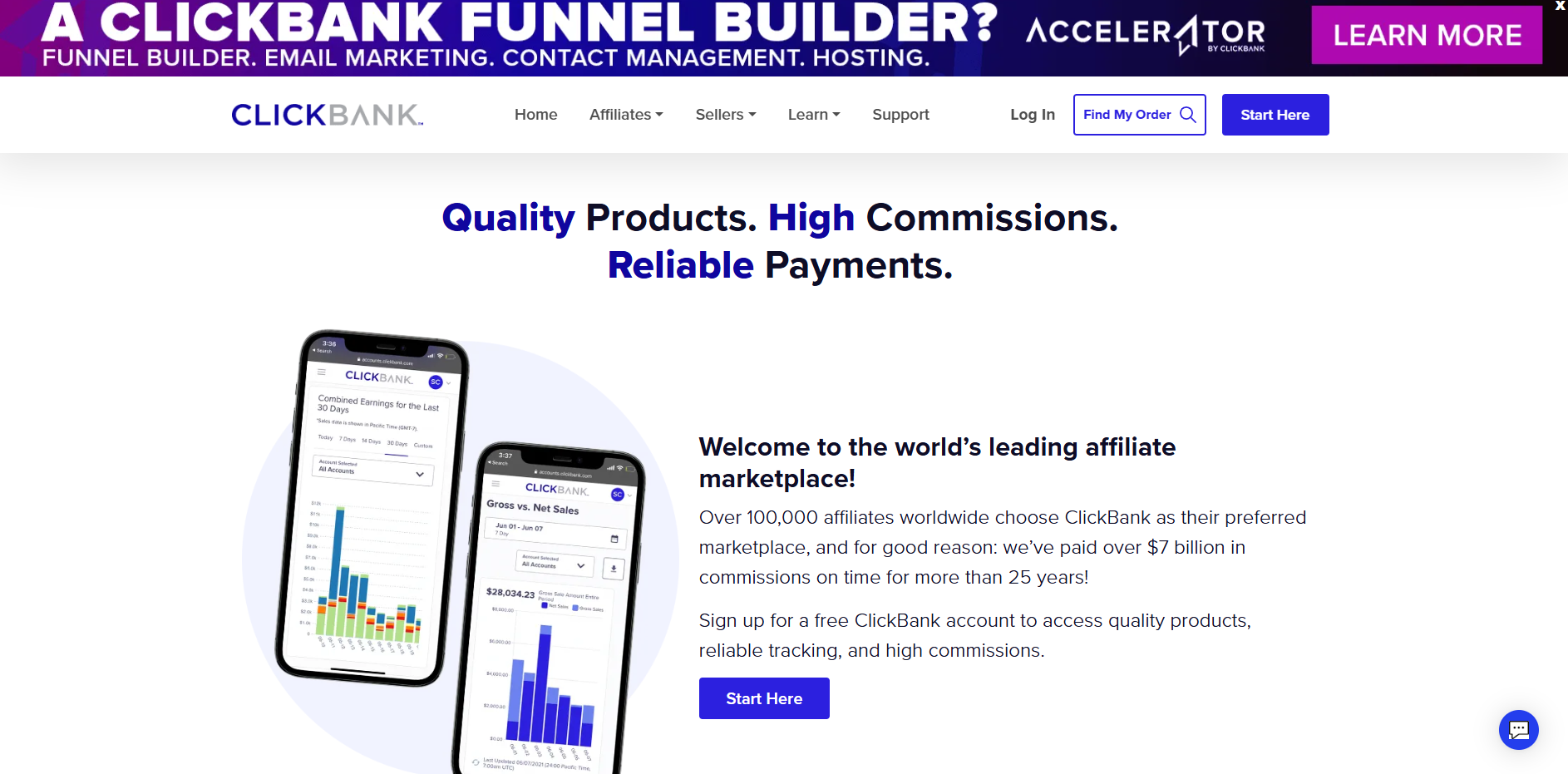 ClickBank is a well-known ecommerce affiliate marketplace that specializes in digital products, online courses, software, health products, and physical goods. Founded in 1998, it has become a popular platform for affiliates because of its high commission opportunities and wide range of products.
Unlike traditional ecommerce networks that mainly focus on retail products, ClickBank is especially strong in digital and information-based products. It allows affiliates to promote products from different niches, including health, fitness, business, personal development, and lifestyle.
Commission Rates
ClickBank is known for offering some of the highest commission rates in the affiliate industry, depending on the vendor and product.
- Digital Products: 20%–75%
- Health & Wellness Products: 30%–60%
- Online Courses & Training: 40%–75%
- Physical Products: 5%–20%
Payment Details
- Payment Methods: Direct Deposit, Wire Transfer, Check, and Payoneer (availability depends on location).
- Payment Frequency: Weekly or bi-weekly payments.
Pros
- Offers some of the highest commission rates in the entire industry
- Faster payout schedule, with weekly or bi-weekly payments available
- Huge marketplace of digital products spanning many popular niches
Cons
- Product quality control is looser than more curated networks
- Some digital products carry high refund rates that claw back earnings
- Reputation can suffer due to association with lower-quality products
9. FlexOffers
 FlexOffers is a popular ecommerce affiliate network that connects affiliates with thousands of advertisers across retail, fashion, travel, finance, technology, and lifestyle categories. The platform is known for its large merchant marketplace and provides access to both major brands and niche ecommerce businesses.
Its biggest advantage is the variety of available offers, allowing affiliates to find products that match different audiences and content strategies. FlexOffers also provides advanced tracking tools, reporting features, and dedicated support to help affiliates optimize their campaigns.
Commission Rates
FlexOffers uses advertiser-based commission structures, so rates vary depending on the merchant and product category.
- Retail & Ecommerce Products: 3%–15%
- Fashion & Beauty Products: 5%–20%
- Technology Products: 2%–10%
- Subscription Services: 10%–30%
Payment Details
- Payment Methods: PayPal, Check, and Bank Transfer.
- Payment Frequency: Monthly payments.
Pros
- Wide variety of both major brands and smaller niche advertisers
- Dedicated affiliate support helps optimize underperforming campaigns
- Multiple flexible payment options, including PayPal and bank transfer
Cons
- Commission rates vary widely, making earnings harder to predict
- Less brand recognition than networks like Awin or CJ Affiliate
- Reporting tools are less advanced than platforms like Impact.com
10. AvantLink
 AvantLink is a performance-based ecommerce affiliate network focused on connecting affiliates with high-quality niche merchants. It is especially popular among brands in categories like outdoor gear, sports, fitness, home, and lifestyle products.
The platform is known for its strong merchant relationships, advanced affiliate tools, and focus on quality partnerships. AvantLink provides features such as custom tracking tools, product data feeds, and reporting solutions that help affiliates create better product-focused content.
Commission Rates
AvantLink commission rates depend on individual merchants and product categories.
- Outdoor & Sports Products: 5%–15%
- Lifestyle & Apparel: 5%–12%
- Home & Garden Products: 5%–10%
- Specialized Niche Products: Varies by merchant
Payment Details
- Payment Methods: Direct Deposit, Check, and PayPal (availability depends on region).
- Payment Frequency: Monthly payments.
Pros
- Strong, trusted reputation specifically within outdoor and lifestyle niches
- Advanced product data feeds support content-heavy affiliate websites
- Prioritizes quality merchant relationships over sheer marketplace volume
Cons
- Much smaller merchant base than general-purpose affiliate networks
- Less useful for affiliates outside its core supported niches
- Smaller community means fewer third-party guides and resources
11. Admitad
 Admitad is a global affiliate network that connects affiliates with thousands of advertisers across ecommerce, retail, finance, travel, gaming, and digital services. Founded in 2009, it has grown into a popular platform for affiliates looking to access international brands and diverse product categories.
The platform is especially useful for affiliates targeting multiple GEOs because it provides access to campaigns from different regions. Admitad offers a user-friendly dashboard, detailed analytics, and a wide range of promotional tools to help affiliates manage their campaigns effectively.
Commission Rates
Admitad commission rates vary depending on the advertiser, product category, and campaign type.
- Fashion & Retail Products: 3%–15%
- Electronics: 1%–8%
- Travel & Services: 2%–10%
- Digital Products & Subscriptions: 10%–30%
Payment Details
- Payment Methods: Bank Transfer, PayPal, and other supported payment options.
- Payment Frequency: Monthly payments.
Pros
- Well suited for affiliates running campaigns across multiple countries
- User-friendly dashboard paired with detailed performance analytics
- Covers gaming and digital services alongside typical retail categories
Cons
- Less brand recognition among US-based affiliates and advertisers
- Advertiser quality can vary noticeably depending on the region
- Support resources favor international markets over US affiliates
12. Skimlinks
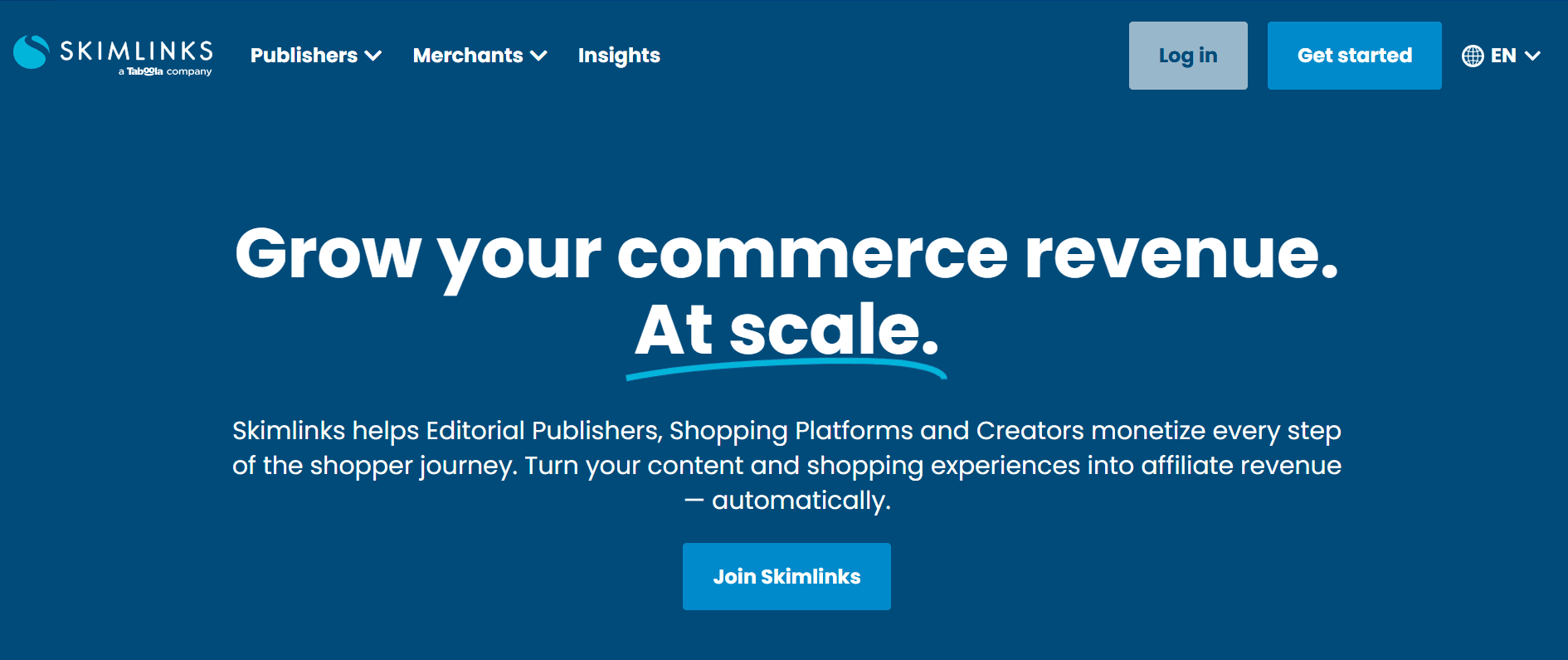 Skimlinks is a popular ecommerce monetization platform that helps publishers automatically turn product links into affiliate links. It connects content creators, bloggers, and publishers with thousands of ecommerce merchants across categories such as fashion, beauty, technology, travel, and lifestyle.
The platform is especially useful for content-based websites because it simplifies affiliate marketing by automatically creating monetized links. Skimlinks is widely used by publishers who create product reviews, buying guides, and comparison articles.
Commission Rates
Skimlinks commission rates depend on individual merchants and product categories.
- Fashion & Beauty Products: 5%–15%
- Technology Products: 1%–8%
- Home & Lifestyle Products: 3%–10%
- Premium Brand Partnerships: Varies depending on advertiser
Payment Details
- Payment Methods: PayPal and Bank Transfer.
- Payment Frequency: Monthly payments.
Pros
- Automatically converts existing content links into monetized affiliate links
- Ideal for publishers with large back-catalogs of older content
- Single integration provides access to thousands of merchants
Cons
- Takes an additional cut of commissions on top of merchant payouts
- Less manual control over which specific links get monetized
- Reporting can feel less transparent than manually built affiliate links
13. PartnerStack
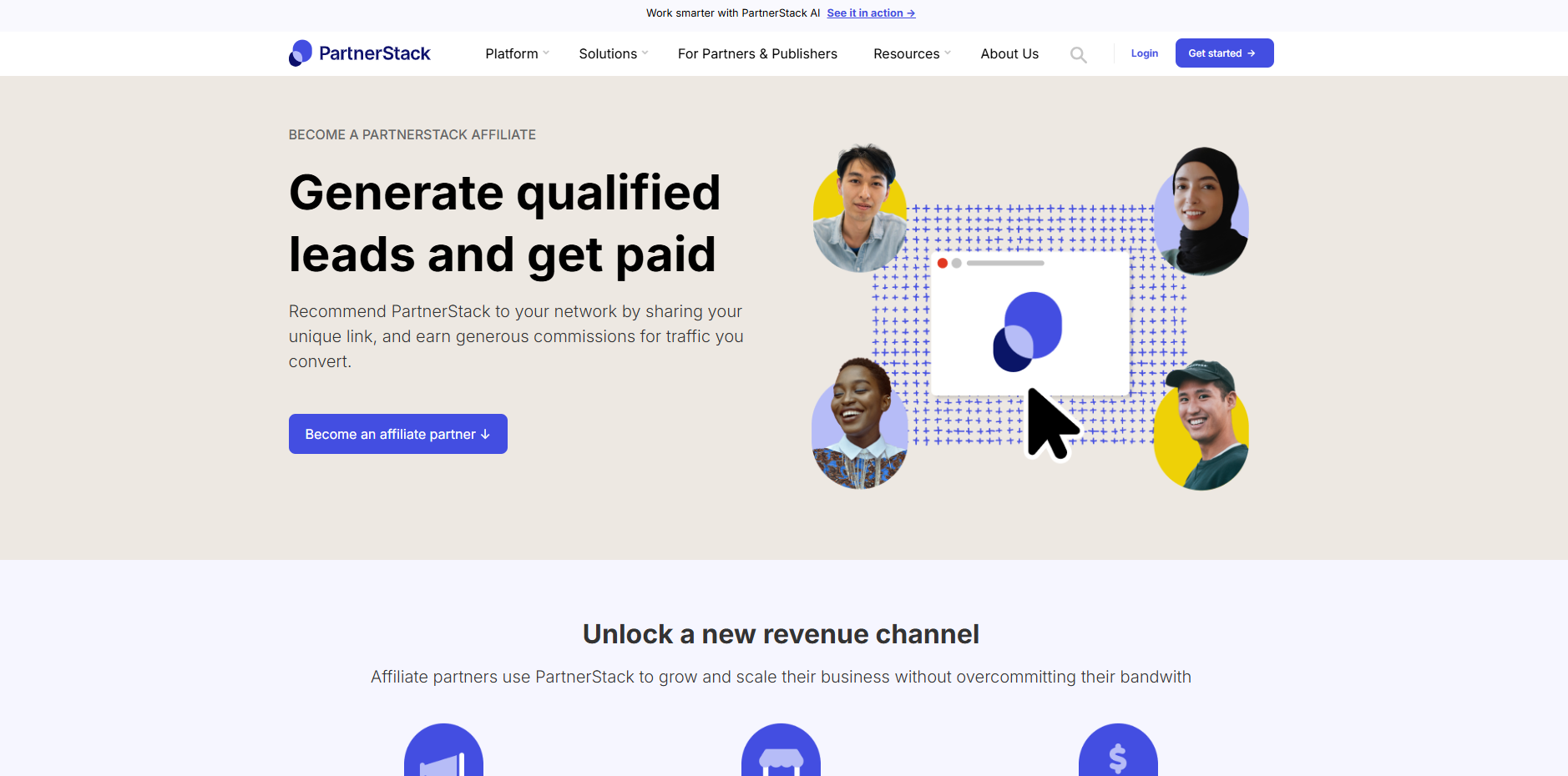 PartnerStack is a leading partnership platform that helps businesses manage affiliate, referral, and reseller programs. While it is mainly known for B2B SaaS partnerships, it also provides opportunities for affiliates promoting software, ecommerce tools, and digital solutions.
The platform is popular among professional marketers because of its automation features, trusted brand partnerships, and recurring commission opportunities. PartnerStack is a strong choice for affiliates who focus on business audiences, technology products, and subscription-based services.
Commission Rates
PartnerStack commission rates vary depending on the company and partnership program.
- SaaS Products: 20%–50% recurring commissions
- Software Subscriptions: 10%–40%
- Business Tools & Services: Varies by partner program
- Referral-Based Programs: Depends on individual company terms
Payment Details
- Payment Methods: PayPal, Bank Transfer, and other supported options.
- Payment Frequency: Monthly payments.
Pros
- Offers recurring commissions, sometimes lasting the customer’s full lifetime
- Strong fit for affiliates with business, SaaS, or tech-focused audiences
- Modern automation tools built specifically for partnership management
Cons
- Far fewer available programs compared to general ecommerce networks
- Not a good fit for lifestyle, fashion, or general consumer content
- Approval often requires demonstrating strong audience relevance to SaaS
14. Pepperjam
 Pepperjam is an e-commerce affiliate network that focuses on connecting affiliates with direct-to-consumer (DTC) brands across categories such as fashion, beauty, lifestyle, food, and retail. It is known for helping brands build strong affiliate partnerships through reliable tracking technology and performance-based marketing solutions.
The platform provides access to quality merchants and offers tools that help affiliates manage campaigns, track conversions, and optimize their promotional strategies. Pepperjam is a suitable option for affiliates who prefer working with growing ecommerce brands rather than large marketplaces.
Commission Rates
Pepperjam commission rates vary depending on the advertiser and product category.
- Fashion & Apparel: 5%–15%
- Beauty & Lifestyle: 5%–20%
- Home & Retail Products: 3%–10%
- Special Brand Campaigns: Rates depend on individual merchant terms
Payment Details
- Payment Methods: Direct Deposit, Check, and other supported payment options.
- Payment Frequency: Monthly payments.
Pros
- Access to trending direct-to-consumer brands across multiple categories
- Reliable performance tracking built for growing ecommerce brands
- Good option for affiliates who prefer emerging brands over big retailers
Cons
- Smaller overall merchant network than major competing platforms
- Less brand recognition means fewer community resources and guides
- Commission rates and terms vary significantly across individual merchants
15. Sovrn Commerce (formerly VigLink)
 Sovrn Commerce is an e-commerce monetization platform designed for publishers, bloggers, and content creators who want to earn revenue from product links. Previously known as VigLink, the platform helps publishers monetize existing content by automatically converting product mentions into affiliate links.
It is especially useful for websites with high-quality content, product reviews, and shopping-related articles. Sovrn Commerce provides access to thousands of merchant partnerships and simplifies affiliate monetization without requiring publishers to manually create individual affiliate links.
Commission Rates
Sovrn Commerce commission rates depend on merchant programs and product categories.
- Fashion & Lifestyle Products: 3%–15%
- Electronics: 1%–8%
- Home & Consumer Products: 3%–10%
- Premium Merchant Offers: Varies depending on advertiser terms
Payment Details
- Payment Methods: PayPal, Check, and Bank Transfer.
- Payment Frequency: Monthly payments.
Pros
- Automatically monetizes existing content without manual link-building work
- Well suited for large, established publishers with extensive back-catalogs
- Single integration provides access to a wide range of merchants
Cons
- Takes an additional cut of commissions on top of merchant payouts
- Less control over how and where links get presented
- Better suited to established publishers than affiliates starting from scratch
How to Choose the Best Ecommerce Affiliate Network
Choosing the right ecommerce affiliate network is essential for building a successful affiliate marketing strategy. A good network should offer trusted merchants, quality products, reliable tracking, and fair earning opportunities. Before joining any network, consider these important factors:
- Merchant Reputation: Choose networks that work with trusted brands and provide quality products to maintain audience trust.
- Commission Structure: Compare commission rates and earning models to find programs that offer good revenue potential.
- Cookie Duration: Longer cookie periods increase the chances of earning commissions from customer purchases.
- Payment Reliability: Check payment methods, payout schedules, and the network’s reputation for timely payments.
- Product Selection: Select networks that offer products relevant to your niche and audience.
- Tracking & Support: Look for networks with accurate reporting tools and helpful affiliate support to optimize your campaigns.
Selecting the right network helps affiliates promote valuable products, build credibility, and create long-term earning opportunities.
Ecommerce Affiliate Marketing Trends in 2027
Ecommerce affiliate marketing is continuously evolving with new technologies, changing consumer behavior, and smarter automation tools. In 2027, successful affiliates are focusing on personalized content, AI-powered recommendations, and multi-channel promotion strategies.
- AI-Powered Product Recommendations: Artificial intelligence is helping affiliates create personalized product suggestions based on user interests, search behavior, and buying patterns. AI tools are improving product research, content creation, and conversion optimization.
- Growth of Influencer & Creator Partnerships: Brands are increasingly collaborating with influencers and content creators to promote products through authentic reviews, social media content, and community-driven recommendations.
- Mobile Commerce Growth: With more users shopping through smartphones, affiliates are focusing on mobile-friendly websites, short-form content, and platforms like Instagram, TikTok, and YouTube to drive e-commerce sales.
- First-Party Data & Personalization: Affiliates are using email marketing, newsletters, and customer insights to deliver personalized product recommendations and improve long-term customer engagement.
- Subscription-Based Ecommerce Models: Subscription products and recurring revenue programs are becoming more popular because they provide affiliates with continuous earning opportunities.
Conclusion
Ecommerce affiliate marketing continues to be a profitable opportunity in 2027, with thousands of brands offering partnership opportunities through trusted affiliate networks. The right network depends on your niche, audience, and business goals.
Platforms like Amazon Associates, CJ Affiliate, Awin, Impact.com, and Rakuten Advertising provide strong foundations for beginners and experienced marketers by offering reliable tracking, trusted merchants, and diverse product categories.
To achieve long-term success, affiliates should focus on creating valuable content, understanding their audience, choosing relevant products, and building trust through authentic recommendations. With the right strategy, ecommerce affiliate networks can become a sustainable source of online revenue.
Frequently Asked Questions (FAQs)
What are ecommerce affiliate networks?
Ecommerce affiliate networks are platforms that connect online stores and brands with affiliates who promote their products. Affiliates earn commissions when customers purchase products through their unique referral links.
Which ecommerce affiliate network is best in 2027?
The best network depends on your niche, audience, and marketing goals. Amazon Associates, CJ Affiliate, Awin, and Impact.com are among the most popular because they offer trusted brands, reliable tracking, and diverse product options.
Which ecommerce affiliate programs offer the highest commissions?
Commission rates vary by product and advertiser. ClickBank, PartnerStack, and other specialized programs often provide higher payouts, especially for digital products, software, and subscription-based services.
What factors should I consider before choosing an ecommerce affiliate network?
Key factors include merchant reputation, commission rates, cookie duration, payment reliability, product variety, tracking tools, and affiliate support. Choosing a network that matches your niche improves your chances of converting.
Can you join multiple ecommerce affiliate networks at once?
Yes, and most successful affiliates do. There’s no exclusivity requirement across networks like Amazon Associates, CJ Affiliate, or ShareASale, so diversifying across a few networks is common. It protects income if one program changes terms and lets you match different products to different audiences.
What’s the difference between an affiliate network and an individual affiliate program?
A network like Awin or CJ Affiliate hosts hundreds of merchants under one login, one dashboard, and one payment system. An individual program, such as signing up directly through a brand’s own affiliate page, usually means separate tracking and separate payout thresholds with no unified reporting.
How much can you earn from ecommerce affiliate marketing?
Earnings depend on traffic, product category, commission rates, and conversion rates. Beginners may earn a few hundred dollars monthly, while experienced affiliates with strong audiences can generate thousands through SEO, content marketing, and multiple promotion channels.
Do ecommerce affiliate networks require a website?
Not always. Many networks allow promotion through social media, YouTube, email newsletters, and other platforms, though a website or blog helps build authority and attract consistent organic traffic.
Are ecommerce affiliate networks free to join?
Most are free. Affiliates typically create an account, provide basic information, and get approved before promoting available products or brands.
Is ecommerce affiliate marketing still profitable in 2027?
Yes. Continued online shopping growth, new ecommerce brands, and rising demand for product recommendations keep it profitable. Success still depends on choosing the right niche, creating valuable content, and building audience trust.
