

Looking for the Best PPI Networks in 2027 to monetize your software or download? Finding a reliable, high-paying PPI network can be tricky; this category has more reputation risk than most affiliate models. This guide breaks down the 15 best PPI (Pay Per Install) networks for 2027, each reviewed for real payout transparency and content policy standards, not just advertised per-install rates.
PPI (Pay Per Install) networks are performance marketing platforms that pay affiliates a commission for every successful software installation they generate. The best ones offer transparent payout terms, clear content policies, and reliable, timely payments.
The best PPI (Pay Per Install) networks in 2027 are Install Capital, CInstaller, AdWork Media, CPA Lead, Install Monetizer, Solimba, OpenCandy, Somoto, Pay Per Install, and OneInstaller, each paying affiliates a commission for every successful software installation they generate.
Based on our research into each network’s publicly available terms and payment documentation, this guide has been updated for 2027 to reflect current payout structures and payment methods.
What is a Pay Per Install (PPI) Network?
A Pay Per Install (PPI) network is a performance marketing platform where affiliates earn a commission for every successful software installation they generate, typically by bundling a sponsored program with a download or promoting a standalone installer. Software developers use PPI networks to gain distribution, while publishers monetize traffic by directing users toward these installations rather than relying solely on clicks or sales, similar in structure to how a CPA network pays for a completed action.
How Do PPI Networks Work?
The mechanics are consistent across most networks in this guide: a publisher signs up, receives a customized installer, banner, or direct-download link, and places it on a website, download page, or software bundle. When a user completes the installation, the network credits the publisher’s account and then charges the software developer or advertiser for that install.
According to publicly available network documentation, rates typically vary by the installer’s country of origin, device type, and the number of bundled offers a user accepts during setup.
How Do PPI Networks Compare to CPA Networks?
Both PPI and CPA networks pay for a completed user action rather than a click or impression, so many publishers run them side by side. The distinction is in what “completed” means: a CPA network pays for a defined action like a sign-up, form fill, or purchase, while a PPI network pays specifically for a software installation.
CPA offers generally pay more per action since they often require deeper user intent, but PPI installs tend to convert faster since the barrier to completion is lower. Pairing the two alongside CPL-based lead generation is a common way publishers diversify install-based and action-based revenue on the same traffic.
How Can CPA Networks Boost Your Earnings?
In addition to PPI networks, Cost Per Acquisition (CPA) networks can also be a profitable revenue stream. CPA marketing allows affiliates to earn commissions by promoting products or services that require users to take a specific action, such as signing up, filling out a form, or making a purchase.
CPA networks typically pay higher commissions compared to PPI, depending on the action taken. The more valuable the action (e.g., purchases vs. sign-ups), the higher the payout. As you gain more experience and establish a reputation, you can negotiate better rates with CPA networks and further increase your earnings.
Top 15 Best PPI Networks In 2027:
Here’s the full lineup of the 15 best PPI (Pay Per Install) networks in 2027, based on payout transparency, content policy standards, and publisher-reported reliability.
- Cinstaller
- AdWork Media
- CPA Lead
- Adscend Media
- OGads
- Mylead
- CPAgrip
- Mobidea
- Zeydoo
- Perform[cb]
- Adsterra CPA
- Algo-Affiliates
- Monetizer
- Torox
-
Somoto
1. CInstaller
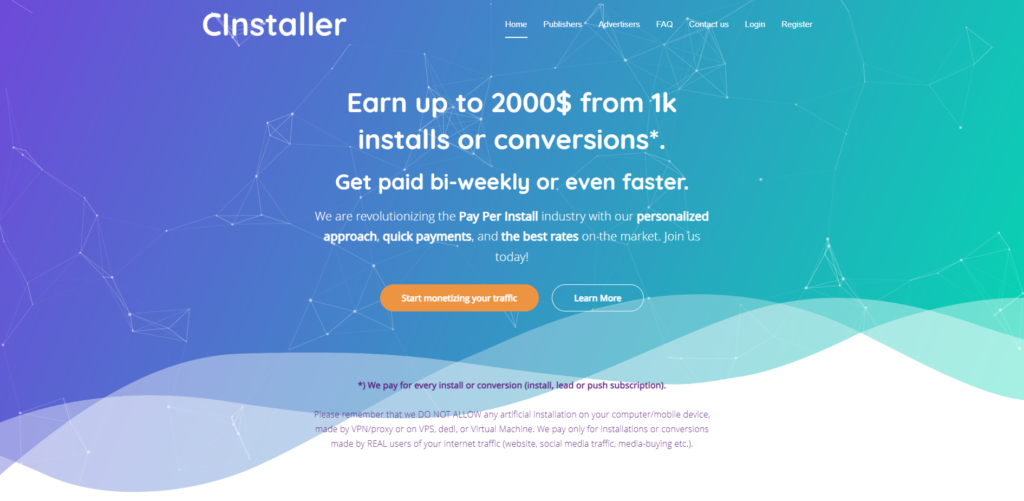
CInstaller pays affiliates for installs generated through website or software traffic, with customizable installers that monetize both free software and freeware databases. The network runs a biweekly automatic payment cycle: earnings from the 1st–15th are paid on the 16th, and earnings from the 16th–31st are paid on the 1st of the following month, shifting to the next business day if the date falls on a weekend or holiday.
Payment Details:
- Minimum payout: $1 for most methods; $100 for wire transfer and Western Union
- Payment methods: Bank Transfer, PayPal, Western Union, Bitcoin
- Payment frequency: Automatic biweekly
Pros:
- Extremely low $1 minimum payout for most payment methods.
- Reliable, automatic biweekly payment cycle with clearly defined dates.
- Manual payout option for publishers who want faster access to earnings.
Cons:
- Wire transfer and Western Union require a much higher $100 minimum.
- Customizable installer model requires more setup than a simple banner or link.
- Default USD-only currency may add conversion friction for some international publishers.
Best For: Publishers who want the lowest payout threshold in this guide and a predictable, automated biweekly payment schedule.
2. Adwork Media

AdWork Media, founded in 2010 and headquartered in Gainesville, Florida, is a global performance marketing network best known for its Content Locking technology, which lets publishers gate downloads or premium content behind a simple offer or survey.
According to AdWork Media’s own publisher documentation and independently verified reviews, the network offers a custom publisher dashboard along with tools like Gateway Manager, Link Locker Manager, Product Locker Manager, Smart Link Manager, and Banner Rotator Manager, plus a WordPress plugin for tracking earnings.
Payment Details:
- Minimum payout: $35
- Payment methods: PayPal, Payza, Check, Western Union, Bank Wire, ACH Direct Deposit, Payoneer
- Payment frequency: Net-30 standard; Net-15 available for publishers earning $500+/month; Net-7 available for publishers earning $3,000+/week.
Pros:
- Established since 2010 with a documented, verifiable payment structure.
- Tiered payment speed (Net-30 to Net-7) rewards higher-earning publishers with faster cash flow.
- Broad toolset (content lockers, product lockers, offer walls) suits multiple content types.
Cons:
- $35 minimum is higher than some competitors like CInstaller.
- Faster Net-7/Net-15 payment tiers require meaningful monthly volume to unlock.
- Strict content policies (no piracy, adult, or malware-adjacent sites) limit eligible traffic sources.
Best For: Publishers who want a long-established, well-documented network with flexible payment speed as their earnings scale.
3. CPA Lead
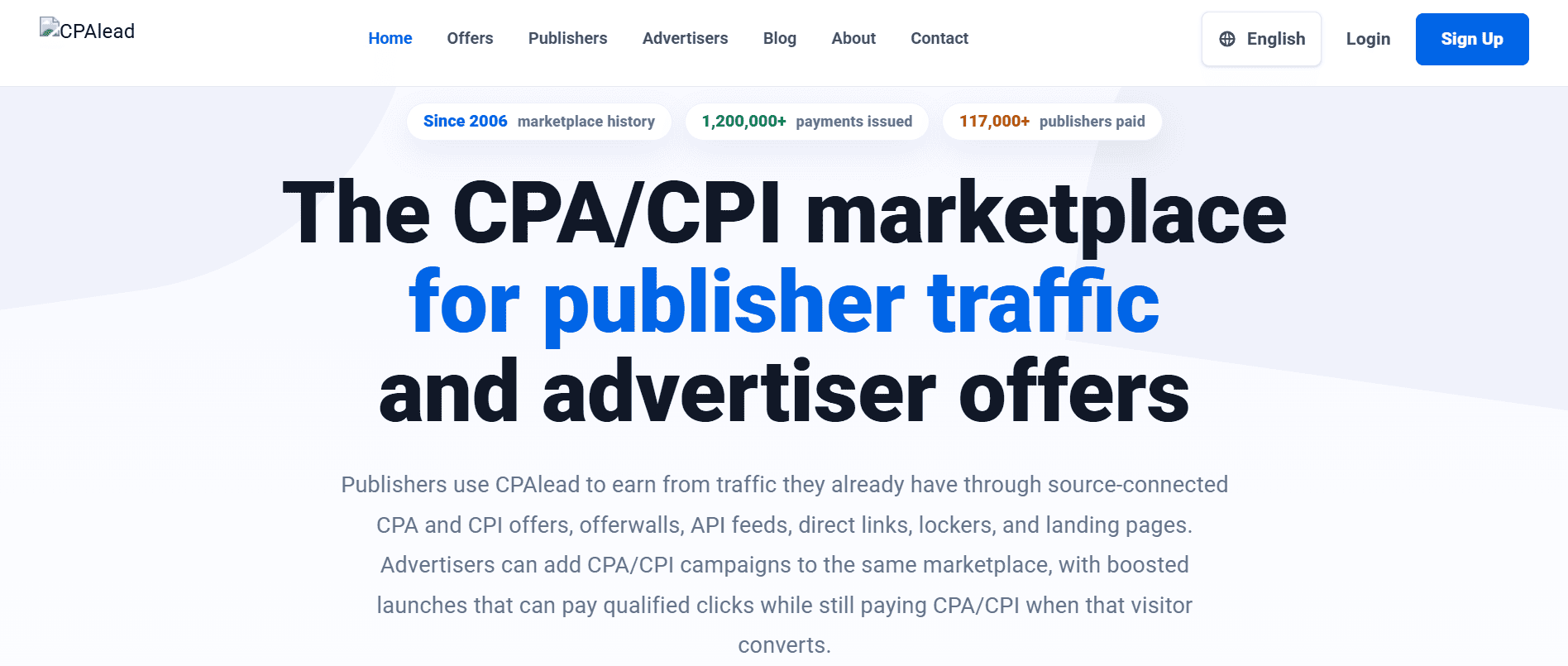
CPA Lead offers a content-protection alternative to typical PPI installers: publishers gate content behind offers like surveys or email submissions rather than software installs specifically. Each completed offer pays at least $1, and the network adds new offers regularly to help convert both returning and international visitors.
Payment Details:
- Minimum payout: $100
- Payment methods: PayPal, Check
- Payment frequency: Not publicly disclosed
Pros:
- At least $1 guaranteed per completed offer, competitive versus similar gateway networks.
- Frequently refreshed offer inventory supports converting varied traffic types.
- Straightforward content-gating model works well alongside a CPL lead-generation strategy.
Cons:
- $100 minimum payout is one of the higher thresholds in this guide.
- Registered domain requirement makes it inaccessible for newer or domain-less publishers.
- Referral earnings window was shortened to 6 months, reducing its long-term value versus competitors.
Best For: Publishers with an established domain who want to monetize content-gating (surveys, email submissions) rather than software installs specifically.
5. OGAds
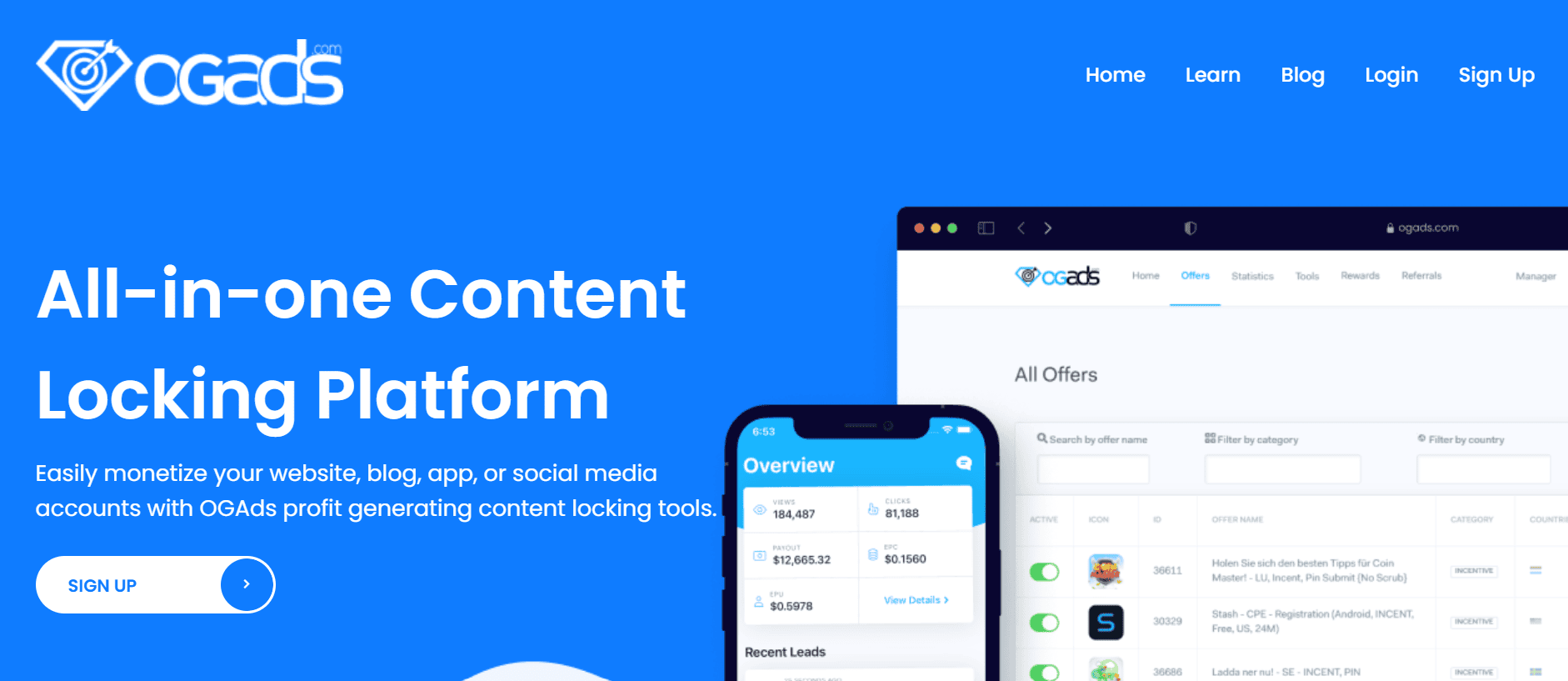
OGAds is widely considered a top network for mobile content locking and app installs, with a content locker tool that’s become something of an industry standard for iOS and Android offers. Per its own site, it pays net-7 (weekly) to more than 25,000 current publishers, a notably faster default than most desktop-focused PPI networks on this list.
Their “Content Locker” tool is the industry standard, automatically serving the highest-converting app install offers for both iOS and Android. It is perfect for publishers with mobile-heavy traffic.
Payment Details:
- Payment Methods: PayPal, Payoneer, Wire Transfer, Check, ACH, Crypto (Bitcoin/Ethereum)
- Payment Frequency: Net-7 (weekly) per official site; some third-party sources cite Net-30 as the base tier
- Minimum Payout: $50 ($500 for wire transfer)
Pros:
- Weekly (Net-7) payouts to established publishers, faster than most competitors here.
- Industry-standard content locker automatically serves top-converting offers.
- High-payout CPI offers often $1.00–$3.00 per app install.
Cons:
- $500 minimum for wire transfer is steep relative to the $50 digital-method threshold.
- Strict approval process; not all applicants get accepted.
- Primarily mobile-focused, less suited to desktop-heavy traffic.
Best For: Publishers with mobile-heavy traffic who want the industry’s most established content-locker tool.
6. MyLead
MyLead runs a dedicated PPI and “Downloader” category alongside its broader CPA catalog, with ready-made content and captcha lockers built specifically for file-download monetization. Based on our research into its payment documentation, its $20 minimum and roughly 48-hour typical payout speed make it one of the more beginner-friendly entries in this guide.
MyLead is famous for its transparency and extensive training resources, making it the best choice for beginners who want to learn how to monetize software or file directories without getting banned.
MyLead runs a dedicated PPI and “Downloader” category alongside its broader CPA catalog, with ready-made content and captcha lockers built specifically for file-download monetization. Based on our research into its payment documentation, its $20 minimum and roughly 48-hour typical payout speed make it one of the more beginner-friendly entries in this guide.
Payment Details:
- Payment Methods: PayPal, Skrill, Bitcoin, WebMoney, Revolut, Bank Transfer
- Payment Frequency: NET-14, though most affiliates report payout within 48 hours
- Minimum Payout: $20
Pros:
- Low $20 minimum with typically fast, sub-48-hour processing.
- Extensive training resources make it genuinely approachable for beginners.
- Smartlink technology auto-routes traffic to the best PPI offer by country.
Cons:
- Full NET-14 terms can apply to first-time or unverified affiliates.
- Higher competition for top offers given MyLead’s large affiliate base.
- Some offers are geo- or traffic-type restricted.
Best For: Beginners who want to learn file and software monetization without navigating a steep approval process.
7. CPAGrip
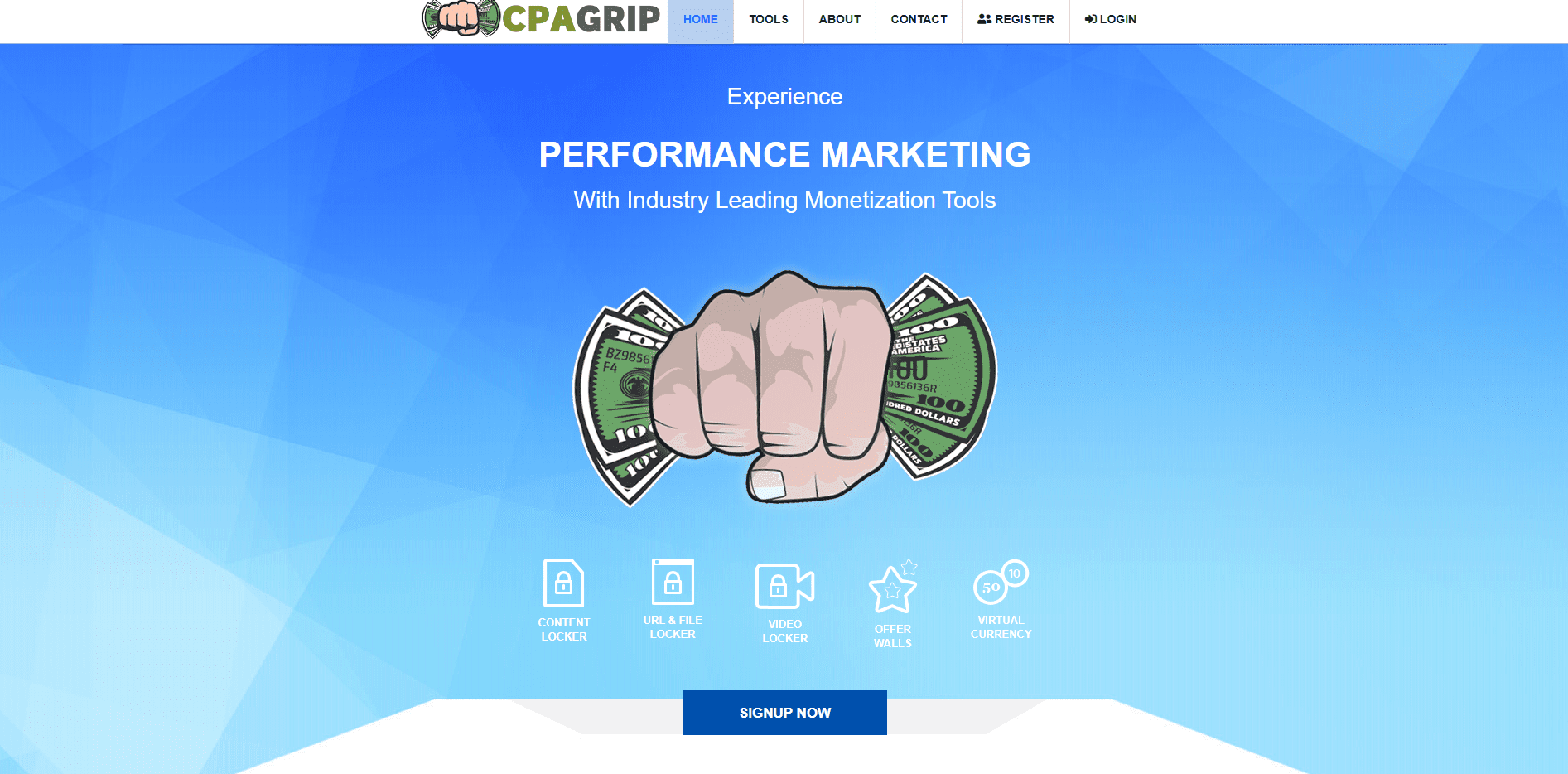
CPAGrip built its reputation on URL Lockers, Video Lockers, and Offer Walls that gate file downloads behind an app install or survey. It’s been operating since 2013 with a consistent reputation for reliability, and per multiple independent sources starts affiliates on Net-30 before offering Net-15, then Net-7 or weekly terms as traffic proves consistent.
Once the user completes an install, you get paid, and the file unlocks. They are known for stability and never missing a payment.
Payment Details:
- Payment Methods: ACH, Check, PayPal, Wire Transfer (Payoneer and Bitcoin also cited by some sources)
- Payment Frequency: Starts Net-30; improves to Net-15, Net-7, or weekly with consistent volume
- Minimum Payout: $50
Pros:
- Long, stable track record with consistently positive payout reliability reports.
- Best-in-class URL Locker customization suited to file-sharing sites.
- Clear path from Net-30 to weekly payments as traffic proves consistent.
Cons:
- Net-30 starting terms are slower than several competitors until upgraded.
- $50 minimum is a real barrier for very small or brand-new publishers.
- Offer quality and payout can vary significantly by vertical.
Best For: File-sharing site owners who want a proven, stable network with a clear path to faster payments.
8. Mobidea

Mobidea is a Cyprus-based network specializing in mobile app installs (CPI) and mobile content, running both auto-optimized Smartlink offers and manually selected single offers. Its own program terms confirm one of the fastest payout options in this guide: daily payments via Paxum or PayPal, alongside a weekly alternative, with a €50 minimum.
Their Smartlink is excellent for general mobile traffic, automatically rotating between Games, Utilities, and Antivirus install offers to maximize your Revenue Per 1000 Clicks.
Payment Details:
- Payment Methods: Paxum, PayPal
- Payment Frequency: Daily (via Paxum/PayPal) or Weekly
- Minimum Payout: €50
Pros:
- Genuine daily payout option among the fastest cycles in this entire guide.
- Smartlink automatically rotates between Games, Utilities, and Antivirus offers.
- Strong push-traffic monetization alongside high-converting utility apps.
Cons:
- €50 minimum still requires meaningful volume for daily cash-out.
- Primarily mobile-focused offering less for desktop-heavy publishers.
- Smartlink automation means less manual control over specific offer selection.
Best For: Mobile-traffic publishers who want genuinely daily payouts and hands-off Smartlink optimization.
9. Zeydoo

Zeydoo was built by the team behind PropellerAds and focuses on mobile utilities, surveys, and software installs, with exclusive pre-landers for antivirus and cleaner apps that convert particularly well on pop-under traffic. Multiple sources confirm a consistent $100 minimum paid bi-weekly a real threshold to hit, but one that comes with a genuinely stable, twice-monthly cycle.
Payment Details:
- Payment Methods: Payoneer, PayPal, Wire, WebMoney, Skrill
- Payment Frequency: Bi-weekly (Net-14)
- Minimum Payout: $100 (some sources cite $1,000 for wire transfer)
Pros:
- Exclusive “Smart Survey” and pre-lander offers convert well on pop-under traffic.
- Reliable bi-weekly payment cycle with consistent publisher-reported reliability.
- Backed by PropellerAds’ infrastructure and traffic relationships.
Cons:
- $100 minimum is higher than several beginner-friendly alternatives here.
- Less oriented toward complete beginners than networks like MyLead or CPAGrip.
- Wire transfer’s minimum climbs considerably higher than digital methods.
Best For: Affiliates with established pop-under or push traffic who want exclusive utility-app offers.
10. Perform[cb]
![Perform[cb] Affiliate Network](https://adcompares.com/wp-content/uploads/2026/01/Performcb-Affiliate-Network.png)
Perform[cb], formerly Clickbooth, is widely recognized as a top-tier CPA network, and for PPI specifically it offers an elite tier of Cost-Per-Install campaigns from major brands rather than obscure software. Approval requires a genuine interview and proof of traffic, but qualifying affiliates unlock weekly payments a real upgrade over the network’s Net-30 default.
Payment Details:
- Payment Methods: ACH, PayPal, checks, wire transfers
- Payment Frequency: Net-30 by default; weekly for qualified affiliates
- Minimum Payout: $50
Pros:
- Access to premium, brand-name install campaigns rather than obscure software.
- Weekly payments available once affiliate status is established.
- :Strict compliance standards mean genuinely “white hat” campaign quality.
Cons:
- Interview-based approval process is a real barrier to entry.
- Best suited to affiliates who already have proof of legitimate traffic.
- Net-30 default applies until weekly status is earned.
Best For: Affiliates with legitimate, provable traffic who want access to premium brand-name install campaigns.
11. Adsterra
Adsterra’s CPA arm runs a large catalog of VPN, cleaner, and browser-extension offers that pay on a CPI basis, layered on top of its better-known ad network. Its SmartLink automatically routes social and pop traffic toward the highest-eCPM software offer available, and its $5 minimum confirmed directly on Adsterra’s own payment page is among the most accessible thresholds in this entire guide.
Payment Details:
- Payment Methods: Paxum, PayPal, WebMoney, wire transfer, local bank transfers (40+ countries)
- Payment Frequency: Bi-weekly (Net-15)
- Minimum Payout: $5 (Paxum), $25 (PayPal), $1,000 (wire transfer)
Pros:
- $5 minimum for Paxum one of the lowest thresholds across every network here.
- SmartLink automatically finds the highest-eCPM software offer for the traffic.
- Wide format variety (Social Bar, native, push) drives strong install rates.
Cons:
- Wire transfer’s $1,000 minimum is dramatically higher than the digital thresholds.
- High competition in trending VPN and cleaner-app niches.
- Bi-weekly cycle is slower than the true daily/weekly options elsewhere on this list.
Best For: Publishers with social or pop traffic who want the lowest possible entry-level payout minimum.
12. Algo-Affiliates
Algo-Affiliates runs AI-driven Smartlink technology across software and app install offers, with particular strength in the finance and trading software niche alongside mainstream dating and lifestyle apps. According to its official affiliate program listing, it pays weekly with a $250 minimum a genuinely high bar, but one that comes with some of the highest per-install rates in this guide.
Payment Details:
- Payment Methods: PayPal, Wire, Crypto, Skrill
- Payment Frequency: Weekly (Net-30 also available)
- Minimum Payout: $250
Pros:
- AI-driven Smartlinks aim to prevent wasted traffic on underperforming offers.
- Strong, high-paying niche in finance and trading software installs.
- Weekly payment option available faster than the network’s Net-30 alternative.
Cons:
- $250 minimum is one of the highest thresholds in this entire guide.
- Newer network (founded 2019) with a shorter track record than category veterans.
- Best rates concentrate in finance/trading less impressive in general verticals.
Best For: Established affiliates targeting finance, trading, or dating software installs who can clear the $250 threshold.
13. Monetizer
Monetizer is a pure Smartlink platform send traffic to a single link, and its algorithm detects device and carrier to serve the best-converting app install or subscription offer automatically. Per independent network reviews, its standard Net-14 payment term shortens to Net-7 at $5,000 in earnings and Net-0 (no hold) at $10,000, rewarding scale with genuinely faster cash flow.
Payment Details:
- Payment Methods: Wire Transfer, PayPal, Paxum, Litecoin (Bitcoin available at a $250 minimum)
- Payment Frequency: Net-14 by default (Net-7 at $5,000 earned, Net-0 at $10,000 earned)
- Minimum Payout: $50
Pros:
- Fully automated Smartlink monetizes essentially 100% of incoming traffic.
- Payment terms genuinely improve with scale down to same-day at $10,000 earned.
- Publishers can set a custom minimum payout to help manage transfer fees.
Cons:
- Net-14 starting terms are slower than some competitors until volume scales.
- Less control over individual offer selection compared to manual campaigns.
- Bitcoin’s $250 minimum is notably higher than the other payment methods.
Best For: Media buyers running cheap pop or push traffic who want one link that monetizes globally without manual offer selection.
14. Torox (Offerwall)
Torox formerly known as OfferToro is an offerwall provider built around “Rewarded Installs,” letting GPT sites, gaming apps, and reward platforms show users a wall of install offers in exchange for virtual currency. Its official terms page confirms straightforward numbers: a $200 minimum, paid monthly on Net-30, via PayPal or bank transfer.
Payment Details:
- Payment Methods: PayPal, Bank Transfer
- Payment Frequency: Monthly (Net-30)
- Minimum Payout: $200
Pros:
- Rewarded-install model drives genuinely high user engagement and completion rates.
- Straightforward API/SDK integration for both websites and apps.
- Confirmed, published payment terms directly from Torox’s own terms page.
Cons:
- $200 minimum is high relative to daily/weekly-pay alternatives on this list.
- Monthly-only Net-30 cycle is among the slower payment schedules here.
- Best suited to community or GPT-style platforms rather than general blogs.
Best For: GPT sites, gaming apps, and rewards platforms that want a wall of install offers rather than a single embedded installer.
15. Somoto

Somoto is a veteran Israeli PPI company, rooted in the old Conduit toolbar ecosystem, that lets freeware developers bundle third-party offers into installers and shares advertiser revenue with publishers on acceptance. It remains one of the larger surviving players in this niche as of 2026, though worth noting that specific payment terms aren’t published anywhere we could verify, and the network carries a more serious reputational flag than others on this list, including a documented publisher dispute over unpaid install revenue.
Payment Details:
- Payment Methods: Not publicly disclosed
- Payment Frequency: Not publicly disclosed
- Minimum Payout: Somoto runs a revenue-share model paying a percentage of advertiser revenue per accepted install
Pros:
- Long operating history in a niche that’s seen many networks shut down entirely.
- Deep INNO/NSIS and website-scraper integration options for developers.
- Works directly with Tier 1 advertisers rather than resold inventory.
Cons:
- Payment terms are not publicly documented minimum payout, frequency, and methods all require direct confirmation.
- Carries a more serious reputational flag than other networks here, including a publicly documented unpaid-revenue dispute.
- Rooted in older adware-adjacent bundling practices that draw more scrutiny today.
Best For: Established software distributors already familiar with the bundling model not a starting point for newer publishers, given the transparency gap.
Why Should You Choose a PPI Network Carefully?
In addition to PPI networks, Cost Per Acquisition (CPA) networks can also be a profitable revenue stream. CPA marketing allows affiliates to earn commissions by promoting products or services that require users to take a specific action, such as signing up, filling out a form, or making a purchase.
CPA networks typically pay higher commissions compared to PPI, depending on the action taken. The more valuable the action (e.g., purchases vs. sign-ups), the higher the payout. As you gain more experience and establish a reputation, you can negotiate better rates with CPA networks and further increase your earnings.
Conclusion
Both PPI and CPA networks offer real opportunities to earn steady income from software and download traffic, and understanding how a PPI network works is genuinely simple: you earn a commission every time a user successfully installs an application through your link. The part that takes more care is picking a network that actually prioritizes user safety and clean software because, as this list shows, payout speed and offer quality both vary a lot more than a first glance at any network’s homepage suggests.
Combining high-quality PPI offers with CPA campaigns remains one of the more reliable ways to diversify install-based income, provided the networks behind that traffic are ones you’d trust with your own audience.
Frequently Asked Questions (FAQs)
What is Pay Per Install (PPI)?
Pay Per Install (PPI) is a model where affiliates earn commissions for every successful installation of software through their promotional efforts.
How do PPI networks make money?
PPI networks make money by charging software developers a fee for each installation. A portion of this fee is then shared with affiliates as commissions.
Are PPI networks safe?
While many legitimate PPI networks exist, some may distribute harmful software. Always research the reputation of a PPI network before promoting their software.
What’s the difference between PPI and CPA?
PPI pays affiliates based on software installations, while CPA (Cost Per Acquisition) pays based on specific user actions like purchases or sign-ups.
Can I use both PPI and CPA networks?
Yes! Using both PPI and CPA networks can help you diversify your revenue streams and increase your overall income potential.
