


Micro-blogs have quickly become powerful platforms for niche audiences, personal branding, and specialized content. Whether you run a travel diary, a fashion blog, or a technology tips site, monetization is one of the biggest challenges. That’s why finding thebest ad networks for micro-blogs in 2026 is essential. Unlike large publishers with millions of visitors, micro-blogs often rely on smaller but highly engaged audiences, which makes choosing the right ad network critical for sustainable growth.
In 2026, ad networks will remain one of the most effective solutions for blog monetization. These platforms bridge the gap between advertisers and microbloggers, offering access to campaigns and revenue streams that would otherwise be difficult to secure. Selecting the right ad network can mean the difference between barely covering hosting costs and building a steady online.
What Are Micro-Blogs for Ad Network
Micro-blogs are shorter, more focused blogging platforms that emphasize regular, bite-sized content rather than long-form articles. They often center on a specific niche, such as travel tips, tech updates, or daily reflections, and build an engaged audience through consistency and depth within that niche. For ad network purposes, microblogs offer unique advantages: they typically have higher user retention rates, strong community engagement, and content that is closely aligned with audience interests. These characteristics make them attractive to ad networks, as ads can match niche content more closely, improving relevance and earnings potential.
Why Ad Networks Matter for Micro-Blogs
For microbloggers, every visitor counts. Big websites can afford to experiment with multiple ad deals and sponsorships, but smaller blogs need simple yet effective ways to generate revenue. Ad networks provide exactly that. They collect ad inventory from thousands of advertisers and automatically display relevant ads on your blog.
The advantage is clear: you don’t have to worry about finding advertisers, negotiating contracts, or chasing payments. Instead, you can focus on your content while the network handles monetization. Many blog monetization platforms also use advanced targeting, ensuring that your readers see ads related to your niche. This improves engagement while helping you earn more per impression or click.
Choosing the Right Ad Network for Micro Bloggers in 2026
For microbloggers and small publishers, picking the right ad network is essential to generate revenue while keeping a positive user experience. Factors such as niche, audience size, content type, and location influence which network performs best for your blog.
- Native and Contextual Ads: Choose networks that blend ads naturally with your blog content, increasing CTR without disrupting the reader experience. Ideal for lifestyle, parenting, tech, and finance blogs.
- Low Minimum Payout Thresholds: Small publishers benefit from networks with low payout requirements (e.g., $10–$50), ensuring regular cash flow even with limited traffic.
- Real-Time Analytics: Platforms that provide dashboards with CTR, RPM, impressions, and conversion data enable bloggers to efficiently monitor and optimize ad performance.
- Audience Targeting Options: Networks with GEO, device, browser, and interest-based targeting help ensure ads reach the most relevant readers, improving engagement and revenue.
- Dedicated Support and Resources: Access to account managers, tutorials, and optimization guides simplifies monetization for beginners and small publishers.
- Flexible Ad Formats: Support for multiple formats, banner ads, video ads, push notifications, and in-content placements lets you choose the best format for your blog layout and audience preferences.
Top 10 Best Ad Networks for Micro-Blogs in 2026
Here are the Best Micro Blogs Ad Networks in 2026
- Google AdSense
- Mediavine
- Raptive (formerly AdThrive)
- Ezoic
- Sovrn
- Amazon Publisher Services (APS)
- Monumetric
- PropellerAds
- Infolinks
- Revcontent
1. Google AdSense
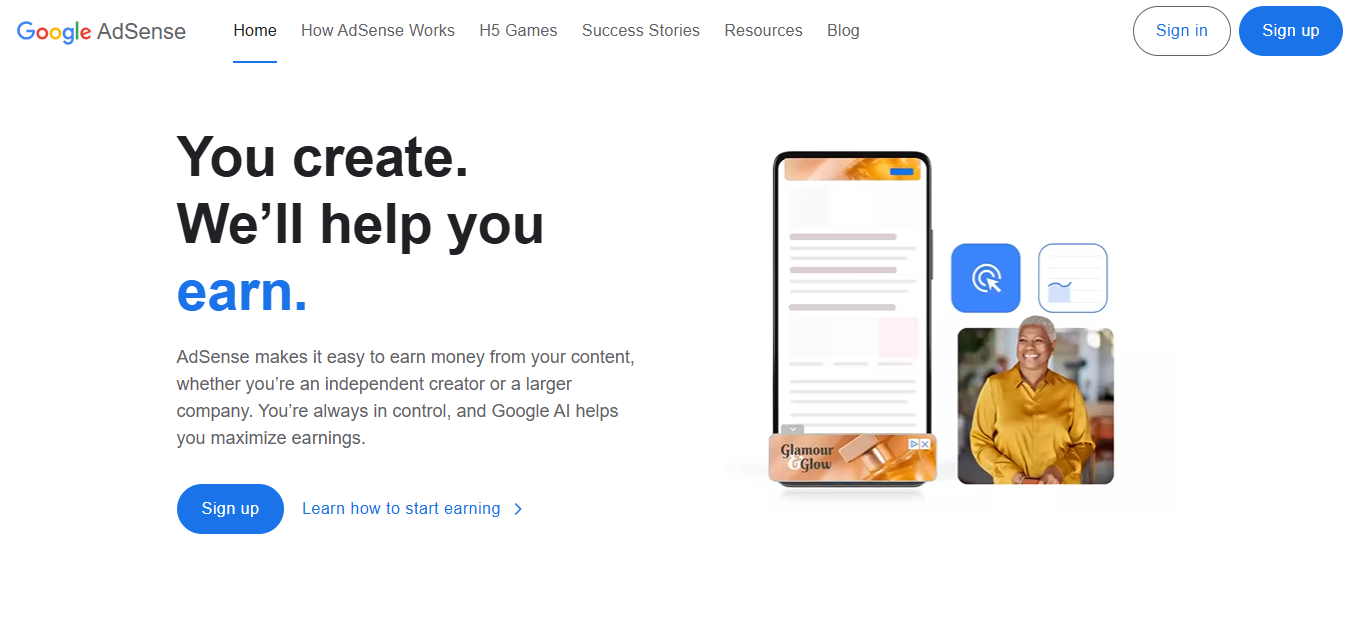
Google AdSense is the world’s most widely used ad network, trusted by millions of publishers. It automatically delivers ads that match your site’s content and audience through contextual targeting. The platform offers flexible ad formats and robust performance tracking to support effective optimization. For micro and large publishers alike, it provides reliable, consistent revenue opportunities.
Key Features
- Contextual Targeting: Google’s algorithms match ads directly to your blog’s niche, ensuring maximum relevance.
- Diverse Ad Formats: From display and responsive ads to in-article placements, it supports multiple layouts.
- Strong Analytics: The dashboard provides detailed reports on clicks, impressions, CPC, and RPM for data-driven growth.
- Large Advertiser Pool: With access to millions of advertisers worldwide, it maximizes competitive bidding.
- Reliable Payouts: AdSense maintains transparency in revenue and provides punctual monthly payments.
2. Mediavine
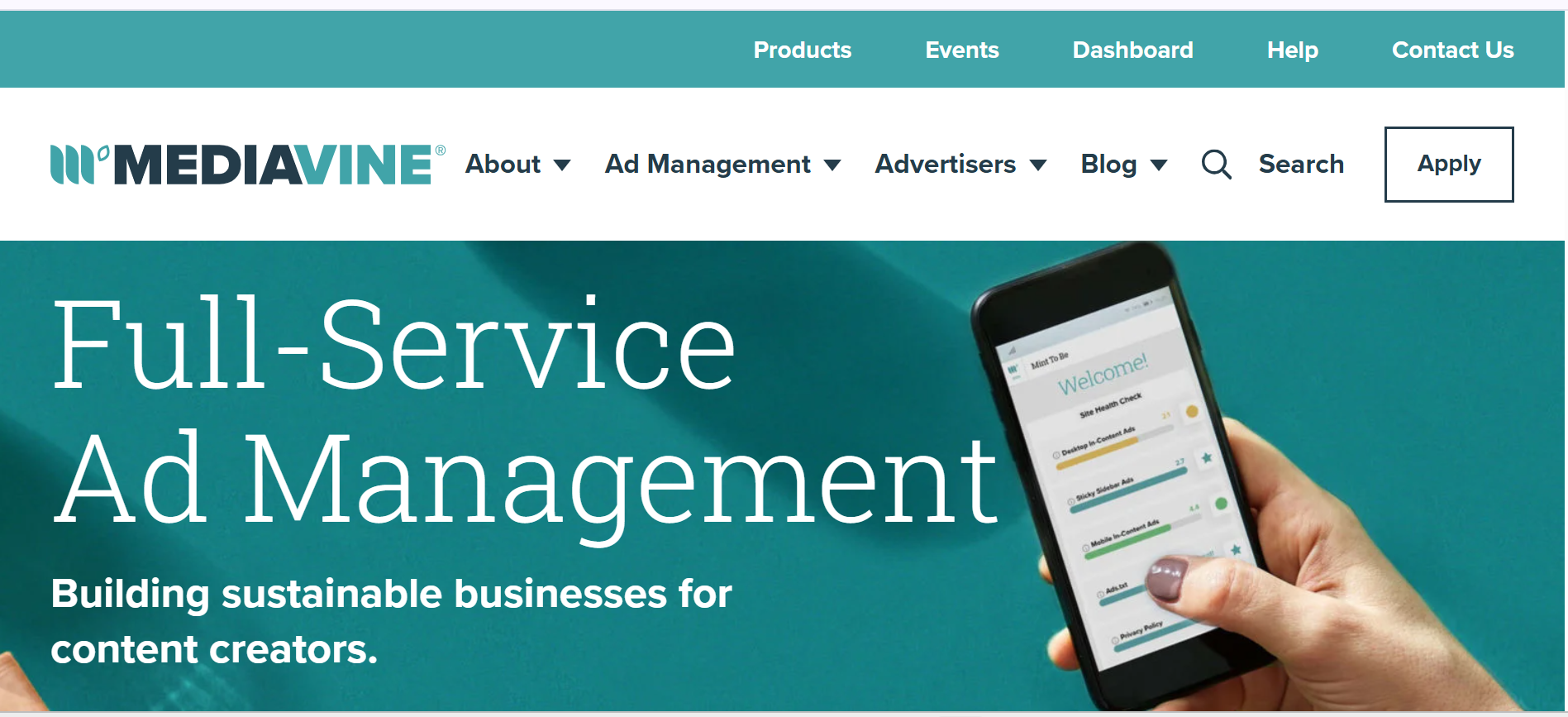
Mediavine is a full-service ad management network designed for high-quality content creators. It emphasizes optimizing ad placements while maintaining strong site speed and user experience. With a 50,000 monthly sessions requirement, it targets mid to large publishers. Its reputation for transparency and support makes it one of the most publisher-friendly networks.
Key Features
- Optimized Ad Placement: Mediavine uses AI and testing to maximize earnings without harming site design.
- Publisher Partnership: The platform shares revenue to prioritize long-term blogger growth.
- Site Speed Tools: Ads are optimized to load quickly and preserve a smooth browsing experience.
- Video Monetization: It supports native video ads, helping bloggers diversify income.
- Dedicated Support: Publishers receive continuous guidance to improve performance and revenue.
3. Raptive (formerly AdThrive)
Raptive, formerly AdThrive, is a premium ad network specializing in lifestyle, food, parenting, and entertainment. It requires a minimum of 100,000 monthly pageviews, making it exclusive to high-traffic publishers. Raptive works closely with advertisers to deliver tailored campaigns that benefit both brands and publishers. It is known for maximizing CPM rates and providing stability in income.
Key Features
- Premium Advertiser Relationships: Raptive partners directly with brands to secure high-paying ad deals.
- Tailored Ad Campaigns: Ads are carefully matched to publisher niches to drive better engagement.
- High CPM Rates: Publishers often earn higher RPMs than general ad networks.
- Dedicated Publisher Support: Each publisher gets personalized optimization assistance.
- Transparency in Reporting: Clear dashboards provide publishers with full visibility into revenue sources.
4. Ezoic
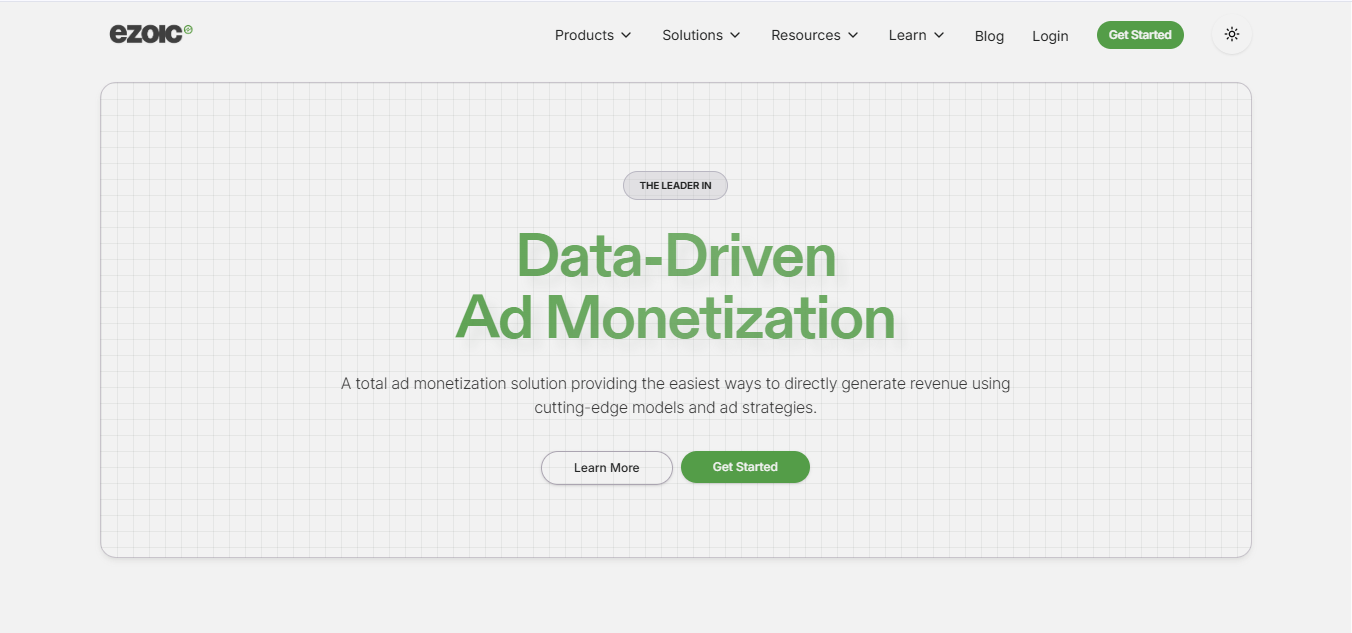
Ezoic is an AI-powered platform that optimizes ad layouts, placements, and combinations for publishers. It balances user experience with revenue generation by continuously testing what works best. Ezoic accepts blogs with lower traffic, making it accessible to beginners while scaling with growth. Its automation saves time and increases earnings efficiently.
Key Features
- AI-Powered Testing: The system experiments with layouts to discover the highest-earning ad placements.
- Revenue and UX Balance: Ads are served to maximize revenue without disrupting visitors.
- Detailed Analytics: Advanced reporting provides deep insights into traffic, revenue, and user engagement.
- Flexible Monetization: Supports multiple ad networks, increasing competition for better payouts.
- Growth-Friendly Platform: Works for new blogs with low traffic and scales with publishers as they expand.
5. Sovrn
Sovrn is an ad network and monetization platform that helps publishers maximize ad revenue through a suite of tools. It provides display ads, affiliate linking, and commerce-based monetization opportunities. Its flexible approach allows publishers to diversify their income streams beyond just ads. Sovrn’s simple integration makes it ideal for small and growing blogs.
Key Features
- Diverse Monetization: Offers display, affiliate, and commerce tools to expand revenue sources.
- Automated Affiliate Linking: Product mentions automatically become affiliate links for passive income.
- Real-Time Data: Provides instant insights into performance metrics to quickly optimize strategies.
- Easy Integration: Simple setup allows publishers to start monetizing without technical complexity.
- Global Reach: Access to advertisers worldwide expands campaign opportunities.
6. Amazon Publisher Services (APS)
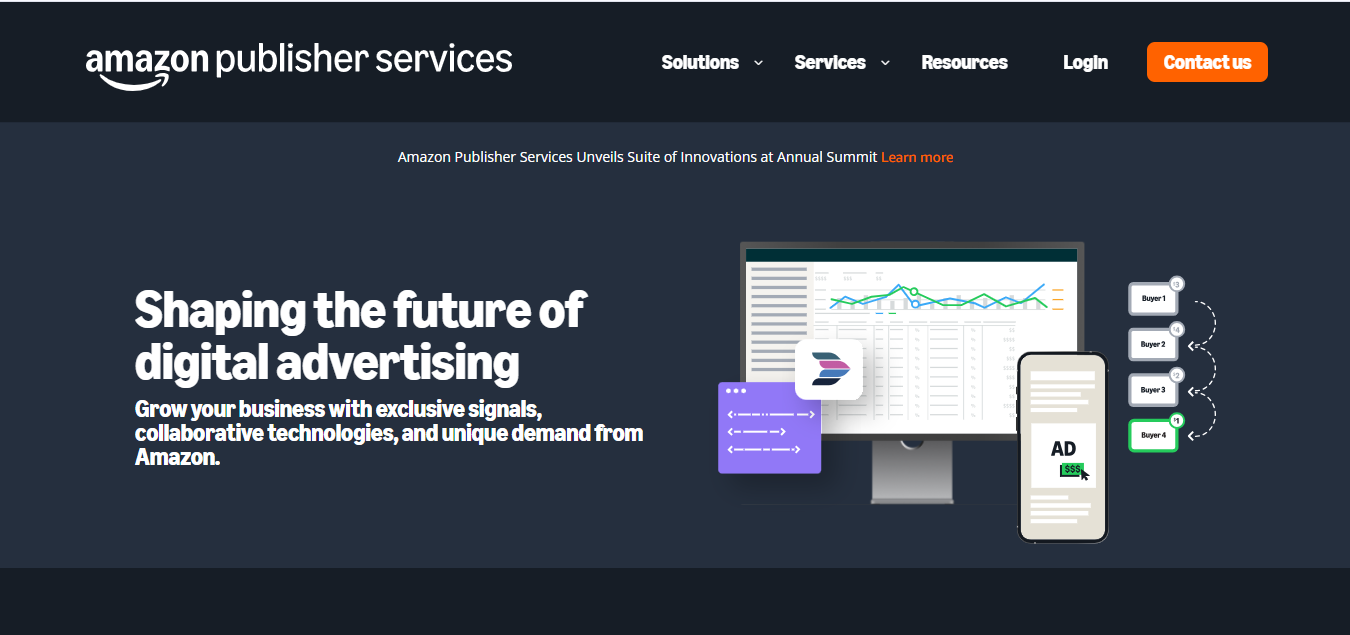
Amazon Publisher Services (APS) provides publishers with direct access to Amazon’s vast programmatic advertising demand. It connects advertisers with publishers in real time through header bidding technology. APS is designed to improve transparency, reduce fees, and increase earnings. For microblogs, it provides access to high-quality ads and strong competition among bidders.
Key Features
- Header Bidding Technology: Drives higher revenue by allowing multiple advertisers to bid for the same space.
- Direct Amazon Demand: Provides access to Amazon’s vast advertiser base for premium campaigns.
- Transparent Reporting: Publishers get full visibility into earnings and auction details.
- Server-to-Server Integration: Reduces latency and improves site performance.
- Reliable Support: Backed by Amazon’s infrastructure and reputation for professionalism.
7. Monumetric

Monumetric is a publisher-focused ad network that prioritizes personalized support and strong relationships. It requires a minimum of 10,000 monthly pageviews, making it accessible for small but growing blogs. The platform runs tailored ad campaigns that integrate with the site design and enhance the user experience. Monumetric is known for balancing profitability with aesthetics.
Key Features
- Low Entry Threshold: Accepts publishers with as few as 10,000 monthly pageviews.
- Personalized Support: Provides hands-on assistance to optimize placements and increase revenue.
- Custom Ad Campaigns: Match ads to content style to ensure they don’t disrupt the site design.
- Variety of Formats: Includes display, video, and native ads for diverse monetization.
- User-Friendly Approach: Focuses on publisher satisfaction and transparent revenue sharing.
8. PropellerAds
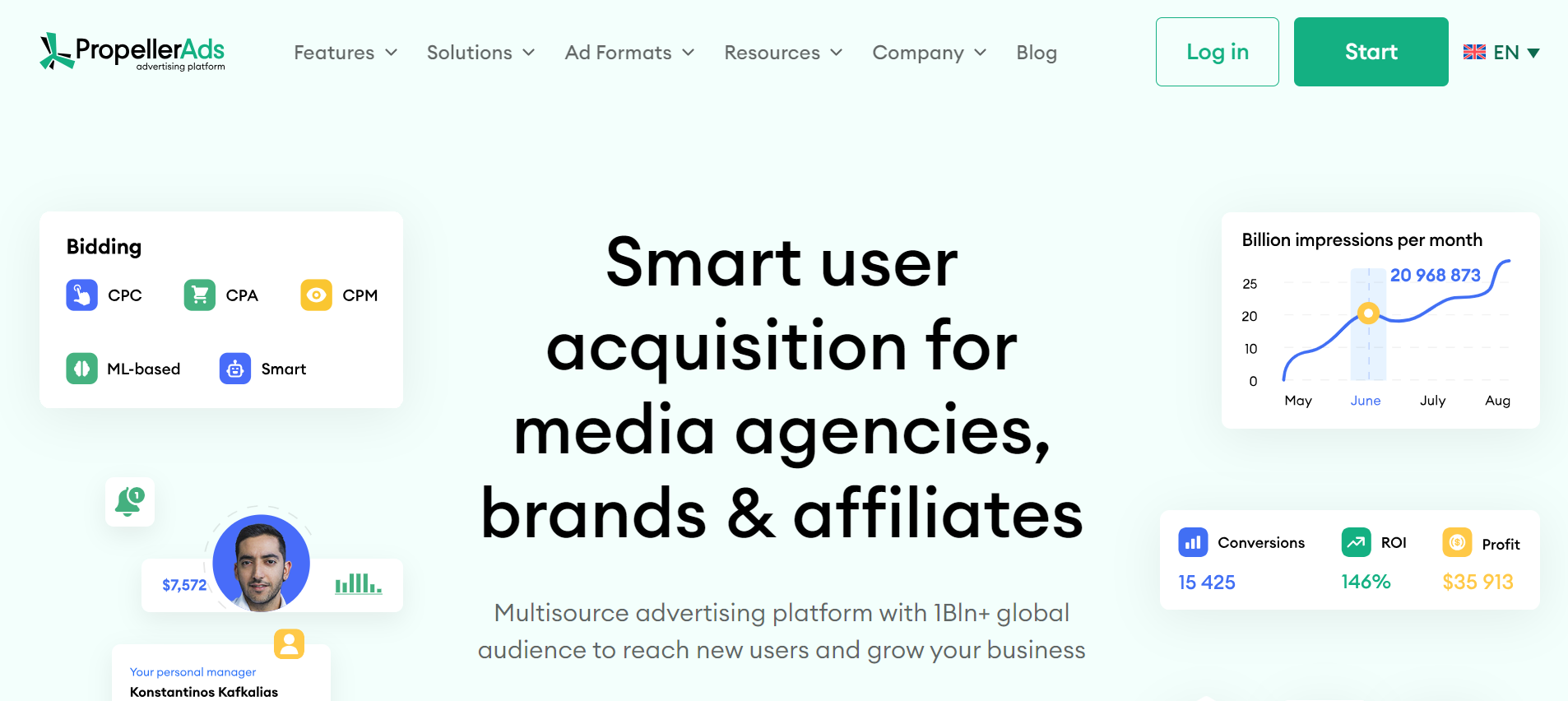
PropellerAds is a global advertising network known for its performance-driven campaigns. It offers multiple ad formats, including push notifications, pop-unders, and native banners. The platform is easy to join with no strict traffic requirements, making it beginner-friendly. Automated optimization, it helps publishers maximize revenue from international audiences.
Key Features
- No Minimum Traffic: Publishers of all sizes can monetize their blogs right away.
- Multiple Ad Formats: Includes push ads, interstitials, and native banners for flexibility.
- Automated Optimization: AI-driven tools improve targeting and revenue automatically.
- Worldwide Reach: Access to advertisers and campaigns across global markets.
- Quick Approvals: Easy sign-up process allows publishers to start earning almost instantly.
9. Infolinks

Infolinks specializes in in-text and non-intrusive ad formats that integrate seamlessly with written content. It offers unique ad styles, including in-text, in-fold, and in-frame. The platform does not require high traffic, making it ideal for microblogs. Its approach allows publishers to monetize without cluttering their sites with traditional banner ads.
Key Features
- In-Text Ads: Keywords within content are converted into clickable, revenue-generating links.
- Flexible Formats: Offers in-fold, in-tag, and in-frame ads that blend smoothly with articles.
- Easy Approval: No strict traffic requirements make it accessible to small publishers.
- Fast Setup: Integration is quick and requires minimal technical knowledge.
- Seamless Design Integration: Ads are non-intrusive and do not disrupt the reader’s experience.
10. Revcontent
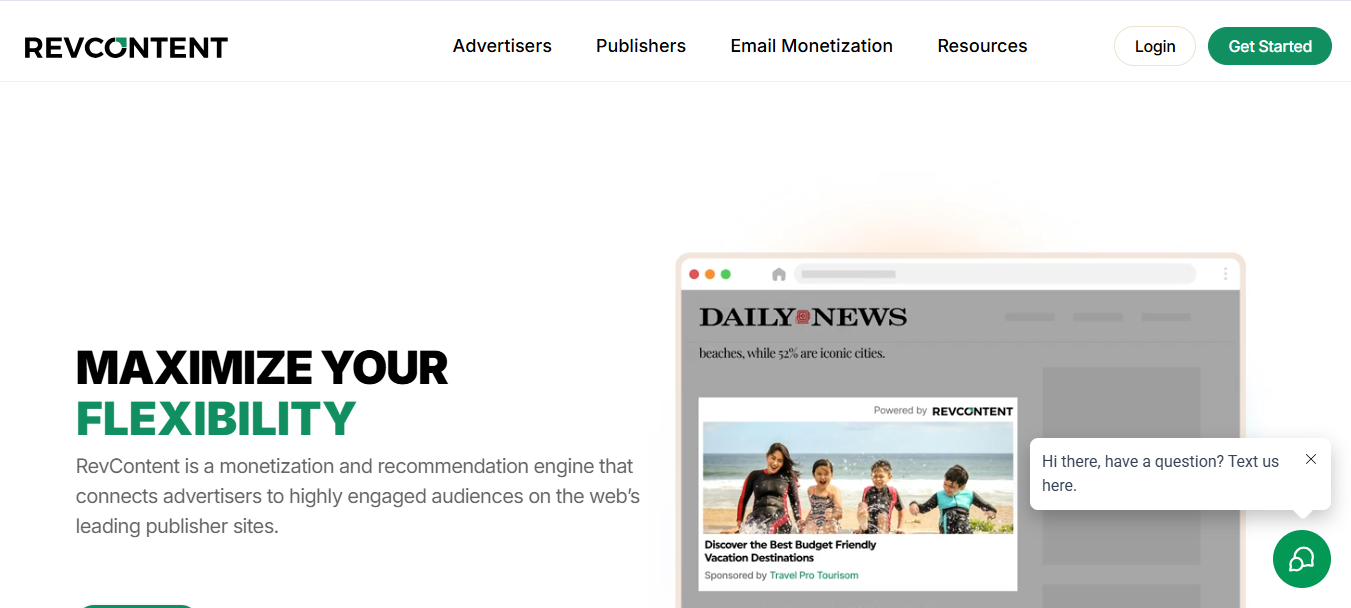
Revcontent is a native advertising platform known for high-quality, engaging content recommendations. It emphasizes user experience by showing ads that blend naturally with site design. Revcontent works best for publishers with substantial traffic and provides strong CPM rates. It is recognized for offering control and customization in ad placements.
Key Features
- Native Ad Integration: Ads blend with site content, increasing reader engagement.
- High CPM Rates: Known for competitive payouts compared to many networks.
- Traffic Requirements: Requires significant traffic, making it suitable for larger publishers.
- Customizable Widgets: Publishers can adjust the design and placement to improve the user experience.
- Global Reach: Access to campaigns from leading brands worldwide.
How to Monetize Your Micro-Blog Effectively
for monetizing micro blog is about balancing revenue with reader experience. For microblogs, even small changes can make a big difference.
- Evaluate RPM: Test networks to see how much you earn per 1,000 impressions, as performance varies by niche and audience.
- Consider Your Niche: Some networks work better with specific content—Media.net for tech/finance, Sovrn for product blogs.
- Prioritize UX: Avoid intrusive ads; choose native or contextual ads that blend with your blog layout.
- Check Payment Terms: Look for low thresholds and flexible methods like PayPal, Payoneer, or bank transfers.
- Test Multiple Networks: A/B testing or platforms like Ezoic can help find the best revenue performer.
- Avoid Ad Overload: Use strategic placements without slowing page speed or harming readability.
- Monitor Analytics: Track CTR, RPM, and viewability to optimize performance.
- Think Long-Term: Choose networks that scale with your traffic, such as Ezoic or Amazon Publisher Services.
Conclusion
Micro-blogs may not always generate massive traffic, but with the right ad network, they can achieve reliable monetization. Each network we’ve covered, Google AdSense, Media.net, Sovrn, Ezoic, Amazon Publisher Services, and PropellerAds, offers unique benefits for small publishers. The choice depends on your niche, audiencelocation, and content style. Ultimately, the best approach is to test multiple platforms and analyze which one brings consistent revenue without compromising user experience. By doing so, even the smallest blog can become a sustainable source of income in 2026.
Frequently Asked Questions(FAQ’s)
Are ad networks good for beginners with very low traffic?
Yes, some ad networks like Google AdSense and PropellerAds are ideal for beginners. They don’t require large traffic numbers to get started, making them accessible for microbloggers who are just beginning their journey.
Which ad network pays the highest revenue for bloggers?
The highest-paying network depends on the niche and audience. For example, Ezoic often increases earnings through optimization, while Amazon Publisher Services performs well on product-focused blogs. There isn’t a single best-paying network; it’s about matching the right one to your blog.
Do native ads perform better than display ads for micro-blogs?
In many cases, yes. Native ads blend naturally with your content and are less disruptive, leading to higher engagement rates. However, display ads are still effective for certain niches, especially when traffic volume is higher.
How do I know if my blog is ready for an ad network?
If your blog has consistent traffic, even if it’s small, and your content is original and well-structured, it’s ready for an ad network. Networks look for quality and compliance with their policies more than sheer visitor numbers.
Can I use multiple ad networks on my microblog?
Yes, many bloggers test multiple networks to maximize earnings. However, it’s important not to overload your site with ads, as this can hurt user experience and SEO. Balance is key.
Are ad networks safe for SEO?
Most reputable ad networks like AdSense, Media.net, and Ezoic are completely safe for SEO. Problems only arise when blogs use spammy ad providers that display irrelevant or malicious ads. Choosing a trusted network ensures SEO remains intact.
Which ad network is best for global audiences?
PropellerAds is often the best choice for global audiences, especially in regions where traditional networks like AdSense have limited advertiser coverage. Its flexibility and international reach make it effective for multilingual blogs.
Do ad networks affect site speed?
Yes, but modern networks have optimized their scripts to reduce the impact. Platforms like Ezoic even provide caching solutions to improve site performance while running ads. Monitoring and testing speed regularly is essential.
