
Did you know that your free online tool could generate revenue every time someone uses it?
In 2026, even a simple calculator, file converter, or note-taking app can become a steady income source when connected to the Best Free Monetizing Tools in Ad Networks. These networks place targeted ads directly within user interactions, turning high-traffic utilities into reliable revenue generators.
Ad networks act as bridges between publishers and advertisers, distributing ad demand across websites, mobile applications, and digital platforms. For developers, they are more than just an add-on; they are the core monetization engine that transforms free-to-use platforms into sustainable businesses. By integrating optimized ad networks, tool creators unlock consistent revenue streams and ensure long-term growth using the Best Free Monetizing Tools in Ad Networks.
How Ad Networks Monetize Free Tools?
To monetize online tools,ad networksplace targeted creatives within user flows. Display banners, native placements, and video ads appear at high-traffic interactions. Networks use programmatic bidding to allocate impressions at market value. Audience data drives personalization, increasing click-through rates. Monetization effectiveness depends on ad fill rates, CPM values, eCPM averages, and demand diversity.
Clear revenue comes from cost-per-click (CPC), cost-per-thousand impressions (CPM), and cost-per-action (CPA). Developers select networks that match traffic geographies, vertical categories, and content quality. Monetization strength depends on the scale of demand, payment cycles, and transparency of compliance.
How Free Tools Can Generate Passive Income
Each time a user engages with your tool, there’s a chance to serve an ad. This creates a passive income stream: once ads are integrated, revenue accumulates automatically as people use the tool. Unliketraditional products or services, free tools can scale globally without extra costs per user. Even low-traffic tools can earn if the ads are targeted correctly and theCPM (cost per thousand impressions) is optimized for the audience’s region and niche.
Key Evaluation Metrics in 2026
To compare ad networks in 2026, publishers measure multiple performance attributes.
- Ensurefill rate accuracy. High fill rate maintains consistent earnings.
- ClearCPM and eCPM values. Competitive rates drive sustainability.
- Spendpayout time verification. Fast cycles maintain liquidity.
- Absorbtargeting depth. Better segmentation increases conversions.
- Ensuread format availability: native, display, interstitial, and video matter.
- Clearglobal demand scale. Networks must monetize traffic across regions.
- Followfraud prevention systems. Reliable monitoring protects revenue.
Tips to Balance Monetization and User Experience
Finding the right balance between monetization and user experience is about earning revenue without disrupting how people interact with your product. The goal is to make ads feel natural and helpful rather than frustrating or intrusive. When users enjoy their experience, they’re more likely to stay longer, and that benefits both engagement and revenue.
Here are some tips to help you achieve that balance:
- Use contextual relevance: Show ads that match user intent or content to make them feel useful instead of random.
- Prioritize load speed: Optimize ad scripts so they don’t slow down the page or app performance.
- Choose smart placement: Insert ads where users naturally pause or finish a task rather than interrupting them mid-action.
- Limit intrusive formats: Avoid autoplay videos, pop-ups, or full-screen takeovers that block key content.
- Leverage frequency capping: Set limits so users don’t see the same ad too often.
- Run A/B tests regularly: Test different layouts, formats, and ad densities to see what performs best without hurting engagement.
- Respect user control: Offer clear ways to dismiss or skip ads, and consider ad-free options for premium users.
Top Ad Networks To Monetize Free Tools
Here is the list of top ad networks To Monetize free tools, which includes Monitize below
- Google Adsense
- Media.net
- Propeller Ads
- Ezoic
- AdThrive
- Sovrn
- Criteo
- Taboola
- Outbrain
- Infolinks
- RevContent
- Amazon Publisher Services
- MGID
- AdSterra
1. Google AdSense
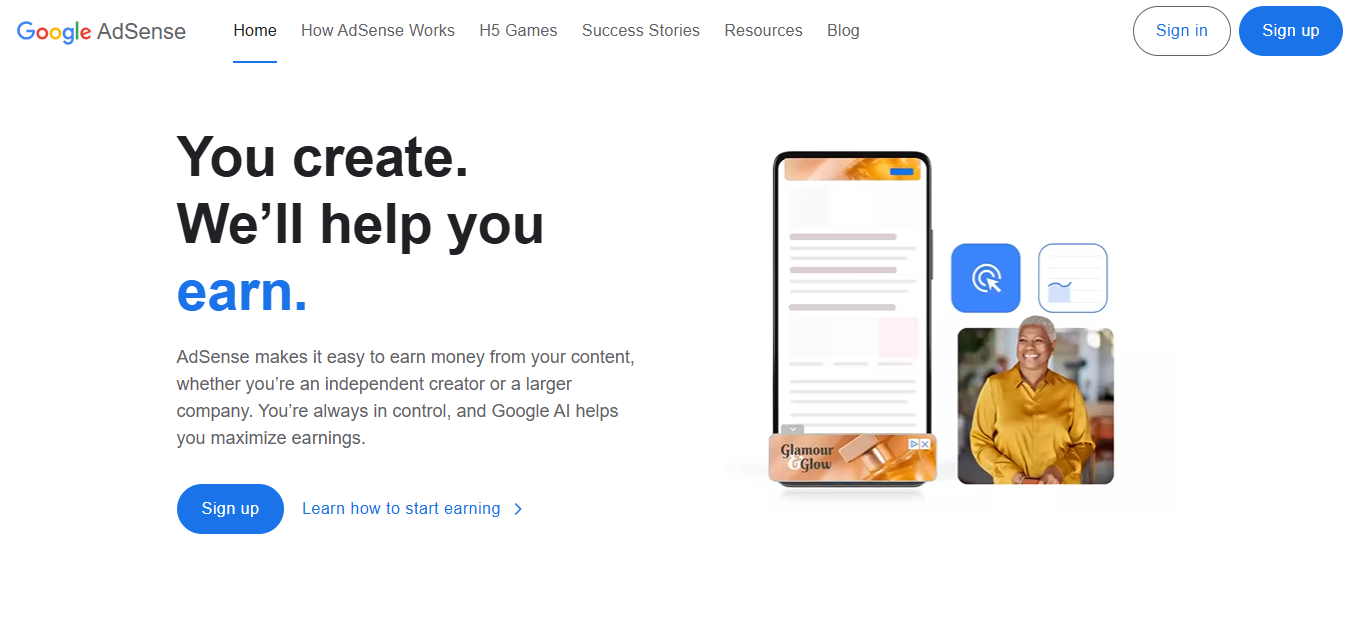
Google AdSense continues to be one of the most trusted platforms for monetizing free online tools. It automatically matches ads to your website or app content using contextual targeting and machine learning, ensuring that users see relevant ads. With coverage in over 200 countries, it offers strong global fill rates, making it suitable for tools with international audiences. Payments are processed monthly, with a $100 minimum payout, and it supports a variety of ad formats such as responsive display ads, native in-feed units, matched content, and auto ads.
Niches like finance, technology, and software often earn higher CPMs due to premium advertiser demand. While AdSense provides reliability and a wide network of advertisers, its strict compliance policies and AI-driven fraud detection require developers to follow guidelines carefully to avoid account suspension. For developers of calculators, SaaS platforms, and other free productivity tools, it remains the most recognized entry point for sustainable ad revenue.
Pros
- High global fill rates – Ensures your ads are served consistently across all regions, maximizing revenue potential for international traffic.
- Multiple ad formats – Includes responsive, native, matched content, and auto ads, allowing you to blend ads naturally within your tool’s interface.
- Reliable monthly payments – Payments are backed by Google, ensuring trust and stability for publishers.
- Strong fraud detection and compliance systems – Protects your revenue and prevents invalid activity from affecting earnings.
- Easy integration with Google Analytics and Google Ad Manager – Helps you track performance, optimize ad placements, and manage campaigns efficiently.
Cons of Google AdSense
- High payout threshold – The $100 minimum may be challenging for smaller tools with lower traffic or emerging markets.
- Strict policy enforcement – Accounts can be suspended suddenly if guidelines are violated, requiring careful adherence.
- Lower CPMs in Tier 2 and Tier 3 regions – Earnings may be less competitive compared to networks focused on these markets.
- Limited flexibility – Advanced optimization options are more restricted compared to platforms like Ezoic or AdThrive.
- Limited control over advertiser categories – Some niches may not have the ability to block certain types of ads, potentially affecting brand alignment.
Best For:Developers of calculators, SaaS platforms, productivity tools, blogs, and websites targeting global or Tier 1 audiences.
2. Media.net
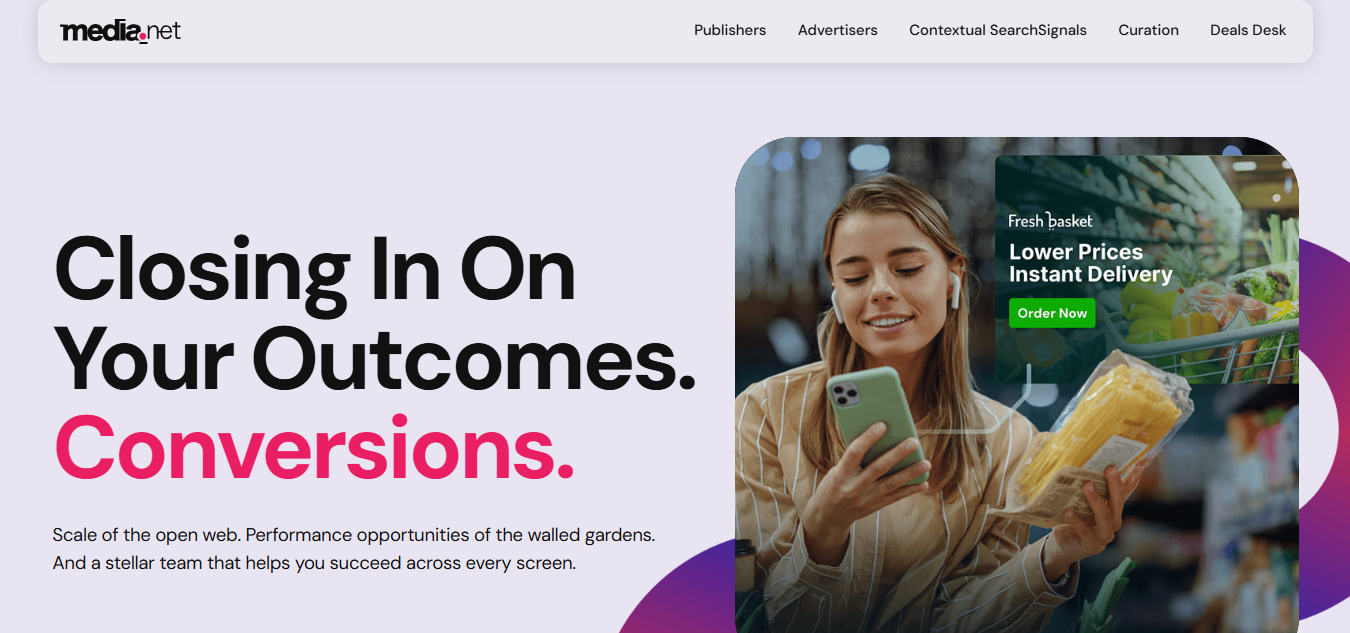
Media.net is a contextual advertising network developed by Yahoo and Bing, widely used as an alternative to Google AdSense. It delivers ads that match your website or tool content, making it effective for free online tools, calculators, and content-driven platforms. Media.net performs best in English-speaking markets such as the United States, the United Kingdom, and Canada, where it can generate higher CPMs.
The network supports multiple ad formats including contextual text ads, display banners, and native units, offering flexibility for developers to integrate ads without disrupting user experience. Media.net uses real-time optimization to improve click-through rates and align ads with user intent. Payments are processed monthly with a $100 minimum payout.
Niches such as finance, insurance, and technology tend to earn more due to strong advertiser demand. While Media.net provides high-quality contextual monetization, its performance may be limited in Tier 2 and Tier 3 regions, and approval processes are stricter compared to some competitors.
Pros
- Strong contextual targeting – Uses Yahoo and Bing algorithms to serve ads that match user intent.
- High RPMs for premium niches – Particularly effective in finance, technology, and insurance.
- Multiple ad formats – Contextual text ads, display banners, and native units for seamless integration.
- Reliable monthly payouts – Payments are guaranteed with a $100 minimum threshold.
- Better earnings for Tier 1 traffic – Performs well with audiences from the US, UK, and Canada.
Cons
- Limited performance in Tier 2/3 regions – Lower CPMs compared to global networks like AdSense or PropellerAds.
- Stricter approval process – Smaller developers may find onboarding more difficult.
- Fewer ad format options – Compared to platforms like AdSense or Ezoic.
- Dependence on Yahoo/Bing ecosystem – Limits demand scale and flexibility.
- Slower adaptation to emerging ad tech – May lag behind more advanced AI-driven networks.
Best For: Free tool developers, content platforms, blogs, calculators, and websites with traffic from English-speaking Tier 1 countries.
3. PropellerAds
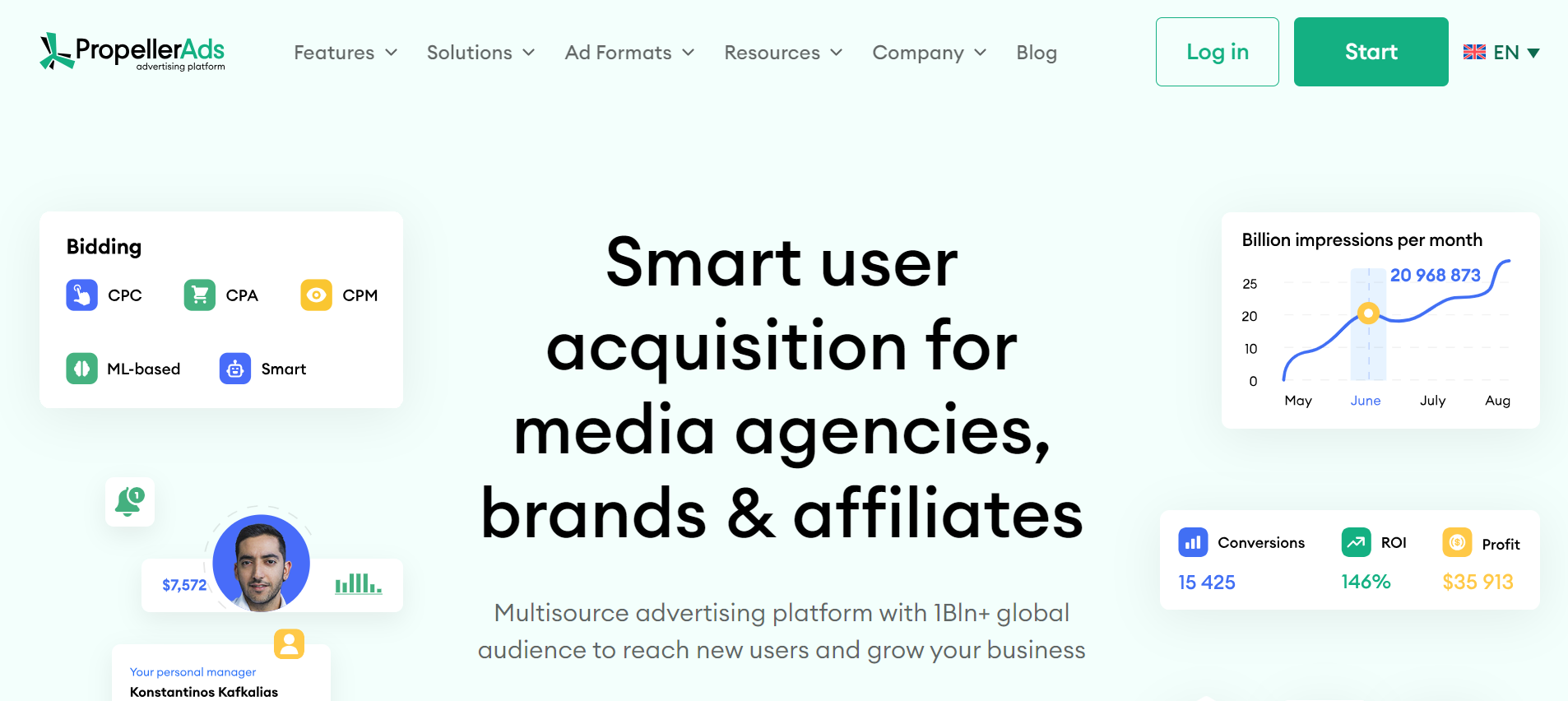
PropellerAds is a global advertising network widely used by developers of free tools, mobile apps, and entertainment platforms. It specializes in high-volume ad formats such as push notifications, pop-unders, interstitials, and native ads, making it ideal for monetizing tools with Tier 2 and Tier 3 audiences. The network operates in over 195 countries, providing broad global coverage and strong performance in emerging markets where other networks like AdSense may underperform.
PropellerAds offers a self-serve platform with AI-driven optimization, fast approvals, automated ad placement, and flexible payout options. Payments are processed weekly, with a low $5 minimum threshold, making it attractive for smaller developers and new publishers. Its performance-driven formats capture both desktop and mobile users, allowing for scalable monetization.
While PropellerAds provides access to large traffic volumes and low barriers to entry, some ad formats (like pop-unders and interstitials) may disrupt user experience, and CPMs in Tier 1 markets are generally lower than premium networks like AdSense or Ezoic.
Pros
- Global coverage in 195+ countries – Strong performance in Tier 2 and Tier 3 regions.
- Multiple ad formats – Push, pop-under, interstitial, and native ads for flexible monetization.
- Low payout threshold – Just $5, with flexible payment methods.
- Fast approval process – Easier onboarding for small publishers.
- AI-driven optimization – Improves CTR and conversions automatically.
Cons
- Lower CPMs in Tier 1 markets – Less competitive for premium audiences.
- Potential disruption to user experience – Pop-unders and interstitials can be intrusive.
- Limited performance in premium niches – Finance, SaaS, or B2B tools may earn less.
- Advertiser quality varies – Depending on geography, some campaigns may be lower quality.
- Reporting depth is limited – Compared to enterprise-level platforms.
Best For: Small developers, mobile app creators, and free tool publishers targeting Tier 2 and Tier 3 markets or emerging geographies.
4. Ezoic
Ezoic is an AI-driven ad optimization platform that helps developers and publishers maximize revenue from free tools, websites, and content platforms. It works by automatically testing different ad placements, sizes, and formats to identify the optimal setup for higher revenue. Ezoic connects to Google Ad Exchange and other premium networks, providing access to strong demand and competitive CPMs.
The platform also offers site speed optimization, analytics, and SEO tools, making it suitable for both small and large publishers who want to improve user experience while monetizing effectively. Payments are processed monthly, with a low $20 minimum threshold, allowing smaller developers to join easily.
While Ezoic provides advanced AI-driven monetization and flexible tools, it requires a learning curve to fully leverage its features, and some site layouts may need adjustments to optimize ad performance.
Pros
- AI-driven testing – Automatically finds the best ad placements and formats for higher revenue.
- Access to premium demand – Connects to Google Ad Exchange and other high-paying networks.
- Low payout threshold – Only $20, making it accessible to small publishers.
- Extra optimization tools – Includes site speed improvements, analytics, and SEO features.
- Scalable for all publishers – Works well for both small and large sites with varying traffic levels.
Cons
- Setup takes time – More complex than AdSense or PropellerAds.
- Requires minimum traffic for approval – Small new sites may need to grow first.
- Learning curve – Advanced features need some technical understanding.
- Site layout adjustments may be needed – Certain designs may need changes to optimize ads.
- Slight delays in approval – Not as instant as networks like PropellerAds.
Best For: Developers of free tools, content platforms, blogs, and websites seeking AI-driven ad optimization and higher revenue potential with access to premium networks.
5. Raptive
Raptive, formerly known as AdThrive, is a premium ad network designed for high-traffic websites and free tools with established audiences. It focuses on delivering high-paying display, video, and native ads, particularly in niches like lifestyle, finance, parenting, food, and technology.
Raptive provides dedicated account managers to help publishers optimize revenue and improve site performance. The platform requires a minimum of 100,000 monthly pageviews, making it suitable for well-established publishers with strong traffic. Its advanced optimization ensures high CPMs and better engagement, especially with U.S. audiences.
While Raptive offers premium monetization, it is not suitable for smaller publishers due to its high traffic requirement, strict approval process, and focus on Tier 1 markets.
Pros
- High CPM rates in premium niches – Maximizes revenue for lifestyle, finance, tech, and parenting sites.
- Dedicated account managers – Personalized support for revenue optimization.
- Strong focus on U.S. traffic – Ideal for Tier 1 audiences with high advertiser demand.
- Video and native ads – Increase engagement and user interaction.
- Reliable monthly payments – Provides stability for publishers.
Cons
- Requires 100K monthly pageviews – Not accessible to small or new publishers.
- Mostly U.S.-focused traffic requirement – Limited benefit for global or Tier 2/3 audiences.
- Strict approval process – High standards can delay onboarding.
- Limited flexibility – Less self-serve control compared to networks like PropellerAds or Ezoic.
- Not suitable for small publishers – Only works for established websites with premium traffic.
Best For: High-traffic websites, established free tool publishers, and developers targeting Tier 1 audiences, especially in the U.S., in niches like lifestyle, finance, technology, and parenting.
6. Sovrn
Sovrn is a programmatic ad network that helps publishers monetize free tools, blogs, and content platforms. It connects websites to premium demand partners and supports display, video, and native ads, along with extra products like affiliate marketing and commerce tools. Sovrn is popular with mid-size publishers due to its flexible solutions, low entry requirements, and reliable payouts.
The platform offers easy setup, access to quality advertisers, and multiple ad formats, making it a practical choice for publishers looking to diversify revenue streams. Payments start at a $25 minimum threshold and are processed monthly, providing stability for small to mid-sized publishers.
While Sovrn provides a solid foundation for monetization, CPMs are generally lower compared to premium-only networks, reporting tools are less detailed, and it works best with U.S. or Tier 1 traffic.
Pros
- Multiple ad formats – Supports display, video, and native ads for flexible monetization.
- Extra revenue tools – Offers affiliate and commerce options to supplement ad income.
- Low payout threshold – Only $25, making it accessible for mid-size publishers.
- Access to premium advertisers – Ensures consistent ad demand.
- Easy setup – Quick onboarding for mid-size websites.
Cons
- Lower CPMs compared to premium networks – May earn less in high-value niches.
- Limited support for very small publishers – Works best for mid-size sites.
- Tier 2/3 traffic less effective – Optimized mainly for U.S. and Tier 1 regions.
- Less advanced interface – Not as feature-rich as enterprise-level platforms.
- Reporting depth limited – Fewer detailed analytics compared to Google Ad Manager.
Best For: Mid-size publishers, bloggers, and free tool developers targeting Tier 1 or U.S. audiences looking for flexible ad monetization with low entry requirements.
7. Criteo
Criteo is a global ad network best known for retargeting ads. It allows publishers to show personalized ads to users who have previously visited their site or used their free tools, making ad placements more relevant and improving conversions. Criteo works with thousands of advertisers worldwide and supports display, video, and native ads across desktop and mobile platforms.
The platform is widely used in e-commerce, travel, and technology niches, connecting publishers to high-quality demand while providing advanced retargeting technology. Payments are processed monthly, with customizable thresholds depending on the publisher agreement.
While Criteo excels at retargeting and high-value conversions, it requires consistent traffic volume and technical integration, making it less beginner-friendly compared to networks like AdSense or PropellerAds.
Pros
- Strong retargeting technology – Shows personalized ads to users, increasing conversions.
- Access to premium advertisers worldwide – Ensures consistent high-quality ad demand.
- Supports multiple formats – Display, video, and native ads enhance engagement.
- Reliable payments – Provides stable monthly revenue.
- Good performance in e-commerce and tech niches – Ideal for commercial-focused platforms.
Cons
- Better suited for e-commerce – May not perform as well for general free tools or blogs.
- Technical integration required – Setup can be complex for beginners.
- Not beginner-friendly – Less intuitive than AdSense or PropellerAds.
- CPMs vary by geography – Earnings may fluctuate depending on audience location.
- Needs consistent traffic volume – Smaller sites may struggle to monetize effectively.
Best For: Publishers, free tool developers, and websites in e-commerce, technology, or travel niches with consistent traffic seeking retargeting-focused monetization.
8. Taboola
Taboola is a leading native advertising network that shows content recommendations on websites, including sponsored articles, videos, and product promotions. Ads blend naturally within “recommended for you” sections, making it a non-intrusive monetization solution for blogs, free tools, and content-heavy platforms.
Taboola performs particularly well in Tier 1 countries and supports niches such as lifestyle, news, finance, and technology. Payments are processed monthly, with a $50 minimum payout threshold, providing stability for publishers while maintaining high engagement rates through native ad placements.
While Taboola works best for larger traffic websites, smaller sites or those with low engagement may see limited RPMs, especially in Tier 2 and Tier 3 regions.
Pros
- Strong native ad formats – Blends sponsored content seamlessly with site content.
- Access to top global advertisers – Ensures consistent demand and revenue.
- Good performance in Tier 1 countries – Ideal for U.S., Europe, and other premium markets.
- Higher CTR than traditional banner ads – Increases revenue potential through engagement.
- Reliable monthly payments – Provides predictable cash flow.
Cons
- Requires significant traffic for approval – Not suitable for small or new sites.
- Content-heavy focus – Works best for blogs and platforms with rich content.
- Lower RPMs in Tier 2 and Tier 3 regions – Earnings may be less competitive for global traffic.
- Ads may appear clickbait-style – Could affect user experience if not monitored.
- Limited options for small publishers – Less flexibility for emerging websites.
Best For: Content-heavy websites, blogs, and free tool platforms targeting Tier 1 audiences in niches like lifestyle, finance, news, and technology.
9. Outbrain
Outbrain is a popular native advertising network that displays sponsored content, product recommendations, and videos within content feeds and “you may also like” sections. It allows publishers to monetize traffic in a non-intrusive way, blending ads naturally with site content.
Outbrain performs best in Tier 1 markets such as the U.S., Europe, and other premium regions. It is particularly effective for niches like news, lifestyle, technology, and finance, providing a higher click-through rate than traditional display ads. Payments are processed monthly, with a $50 minimum payout threshold.
While Outbrain offers strong monetization for larger websites, smaller publishers or those with limited traffic may face approval challenges, and RPMs can be lower in Tier 2 and Tier 3 regions.
Pros
- Premium partnerships with global advertisers: Ensures high-quality ad demand
- High CTR from native ad placements: Blends seamlessly with content for better engagement
- Reliable monthly payments: Provides consistent revenue for publishers
- Strong presence in Tier 1 markets: Ideal for U.S. and European audiences
- Better user experience than pop-ups or pop-unders: Non-intrusive monetization
Cons
- Requires large traffic volumes for approval: Not suitable for small or new sites
- Limited support for small publishers: Entry barriers are higher for emerging platforms
- Lower RPMs in Tier 2 and Tier 3 geographies: Earnings may be less competitive globally
- Ads may appear clickbait-style: Needs monitoring to maintain user trust
- Best suited for content-heavy websites: Less effective for small tools or minimal-content sites
Best For: Content-heavy websites, blogs, and free tool platforms targeting Tier 1 audiences in niches like news, lifestyle, technology, and finance
10. Infolinks

Infolinks is an ad network known for in-text and in-fold ads. It places ads within keywords, highlighted text, and unused spaces on a website, offering a unique monetization method compared to standard display ads. This approach makes it ideal for free tools, blogs, and content-driven sites that want additional revenue without cluttering their layouts.
Infolinks works in over 128 countries and supports multiple formats, including in-text, in-tag, in-frame, and in-screen ads. Payments are processed monthly, with a $50 minimum payout, usually via PayPal or bank transfer.
While Infolinks is non-intrusive and easy to integrate, CPM rates may be lower than traditional display networks, and it works best on text-heavy sites.
Pros
- Unique ad formats: In-text and in-fold ads provide additional monetization opportunities
- Global coverage: Works in 128+ countries, allowing international traffic monetization
- Easy integration: Can be added to any website without major layout changes
- Non-intrusive: Ads do not disrupt user experience like pop-ups or interstitials
- Reliable monthly payments: Provides stable revenue for publishers
Cons
- Lower CPM rates compared to display networks: May reduce revenue potential
- Best for text-heavy content: Less effective for sites with minimal written content
- Limited control over ad design: Fewer customization options than other networks
- Not ideal for high-traffic enterprise publishers: Better suited for small to mid-sized sites
- RPMs depend heavily on niche and geography: Earnings fluctuate by audience type and location
Best For: Text-heavy websites, blogs, and free online tools looking for non-intrusive monetization with moderate traffic.
11. RevContent
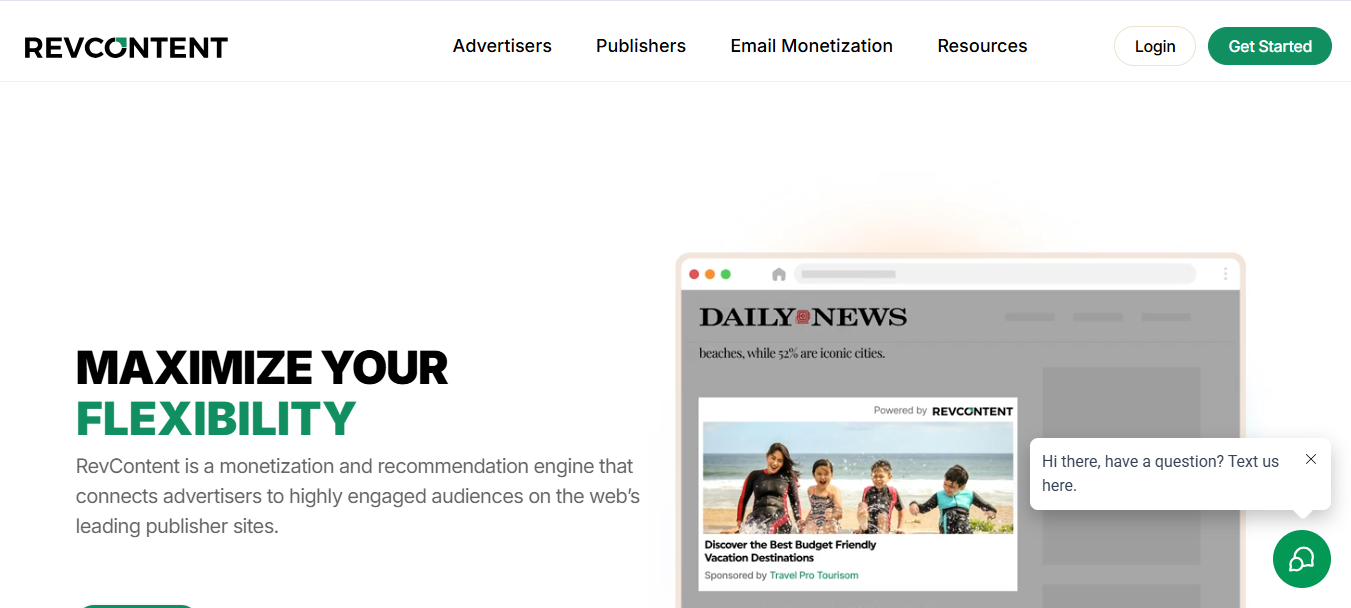
RevContent is a native advertising network that helps publishers monetize through content recommendation widgets, sponsored articles, and videos. Its ads blend naturally with site content, resulting in high engagement rates and better user experience.
RevContent performs best in Tier 1 markets such as the U.S., Canada, and the U.K., providing higher RPMs compared to many native ad competitors. Payments are processed monthly, with a $50 minimum payout, making it suitable for medium to large publishers with quality traffic.
While RevContent delivers strong engagement and revenue potential, smaller publishers or sites with lower traffic may face approval challenges, and RPMs can be lower in Tier 2 and Tier 3 regions.
Pros
- High RPMs in Tier 1 geographies: Maximizes revenue for premium traffic
- Strong targeting with native ad formats: Ads integrate seamlessly into content
- Engaging ads: Increases user interaction and click-through rates
- Reliable monthly payments: Provides predictable revenue for publishers
- Good performance in lifestyle and news niches: Optimized for content-heavy platforms
Cons
- Requires quality traffic for approval: Not ideal for small or new sites
- Strict approval process compared to Infolinks: Entry barriers are higher
- Limited support for smaller publishers: Best suited for medium to large websites
- Lower performance in Tier 2 and Tier 3 markets: Earnings less competitive globally
- Some ads may resemble clickbait content: Needs monitoring to maintain credibility
Best For: Medium to large content-heavy websites, blogs, and free tools targeting Tier 1 audiences in niches like lifestyle, news, and finance.
12. Amazon Publisher Services
Amazon Publisher Services (APS) is a premium programmatic ad solution designed for medium to large publishers. It connects websites and free online tools directly with Amazon’s demand partners, giving access to high-quality ads from global brands. APS uses header bidding technology to allow multiple advertisers to compete for the same impression, often resulting in higher CPMs.
The platform performs best in Tier 1 markets, especially the U.S., where Amazon has a strong advertiser base. APS supports display, video, and native formats, providing real-time reporting and insights to optimize revenue. Payments are processed monthly, with competitive CPMs.
While APS is powerful for established publishers, smaller sites or those with limited traffic may not benefit fully, as the setup is more technical and there is no small-publisher entry program.
Pros
- Access to premium Amazon advertisers: High-quality ad demand for better revenue
- Header bidding technology: Increases competition and boosts CPMs
- Supports display, video, and native formats: Flexibility in ad types and placements
- Reliable monthly payments: Consistent revenue for publishers
- Strong performance in U.S. and Tier 1 traffic: Ideal for premium audiences
Cons
- Best suited for medium to large publishers: Not ideal for small or new sites
- Requires technical setup for header bidding: More complex to implement
- Limited benefits for Tier 2 and Tier 3 traffic: Earnings may be lower globally
- No small-publisher entry program: Access restricted to established platforms
- Approval process can be strict: Needs compliance with Amazon’s guidelines
Best For: Medium to large websites, SaaS platforms, and content-heavy tools targeting Tier 1 audiences, particularly in the U.S.
13. MGID
MGID is a global native advertising network that helps publishers monetize free tools, blogs, and content websites. It specializes in content recommendation widgets, native banners, and video ads that blend naturally into site layouts. MGID has strong coverage in both Tier 1 and Tier 2 countries, making it suitable for publishers with global traffic.
The network is known for flexible ad formats, competitive CPMs, and real-time optimization. Payments are processed monthly with a $100 minimum payout threshold. MGID also offers publishers control over ad categories to maintain content quality and user experience.
While MGID provides strong monetization potential, lower RPMs compared to premium-only networks and the $100 payout threshold may be challenging for smaller sites. Approval processes can also take time.
Pros
- Wide coverage in Tier 1 and Tier 2 markets: Monetize global audiences effectively
- Multiple ad formats, including native and video: Flexible placements for better engagement
- Strong optimization for engagement: Real-time adjustments improve performance
- Control over ad categories: Maintain brand safety and content quality
- Monthly payments with reliable tracking: Consistent revenue and reporting
Cons
- Lower RPMs compared to premium-only networks: May reduce earnings for high-traffic sites
- $100 payout threshold may be high for small sites: Slower access to revenue for low-traffic platforms
- Approval process takes time: Not ideal for immediate monetization
- Works best with lifestyle, news, and entertainment niches: Less suitable for other verticals
- Some ads may appear clickbait-style: Requires monitoring to protect user trust
Best For: Blogs, content-heavy websites, and free online tools targeting Tier 1 and Tier 2 audiences, particularly in lifestyle, news, and entertainment niches.
14. AdSterra
AdSterra is a global ad network that works well for both websites and free online tools. It offers a wide variety of ad formats, including display banners, pop-unders, native ads, push notifications, and social bar ads, providing flexibility for monetising traffic from multiple sources.
The platform is known for quick approval, low payout thresholds (as low as $5), and a large advertiser base. AdSterra supports various payment options, including PayPal, WebMoney, Paxum, and Bitcoin, making it accessible for publishers worldwide.
While AdSterra offers flexibility and fast payouts, some ad formats, such as pop-unders and push notifications, can be intrusive, and CPMs are lower than those of premium networks. It is better suited for mixed or entertainment-focused traffic.
Pros
- Wide variety of ad formats: Pop, push, native, and display ads provide multiple monetization options
- Quick approval process: Ideal for small or new publishers
- Low payout threshold: Minimum as low as $5, allowing fast access to earnings
- Multiple payment options: Supports PayPal, WebMoney, Paxum, and Bitcoin
- Works globally: Monetizes traffic from Tier 1, Tier 2, and Tier 3 regions
Cons
- Pop-under and push ads can hurt user experience: Some formats may be intrusive
- Lower CPMs compared to premium networks: Earnings may be limited for high-traffic sites
- Some ad formats may look intrusive: Careful placement needed to avoid disruption
- Not ideal for premium-focused or brand-safe websites: Better for entertainment or casual traffic
- Works best with mixed or entertainment traffic: Less suitable for professional or niche sites
Best For: Small to medium websites, free online tools, and entertainment-focused platforms looking for quick approval and flexible monetization across global traffic.
Comparison Table Between Top Ad Networks in 2026
| Network | Formats | Fill Rate | Payout Threshold | Cycle | Regions Strong |
| Google AdSense | Display, Native, Auto | High | $100 | Net30 | Global |
| Media.net | Contextual, Native | High | $100 | Net30 | US, UK, CAN |
| PropellerAds | Push, Interstitial | High | $5 | Weekly | Global |
| Ezoic | Display, Native, AI | High | $20 | Net30 | Premium |
| AdThrive | Display, Video, Native | High | $100 | Net45 | US, EU |
| Sovrn | Display, Commerce | Mid-High | $25 | Net30 | NA, EU |
| Criteo | Display, Retargeting | High | Custom | Net30 | Global |
| Taboola | Native, Discovery | High | $50 | Net30 | Global |
| Outbrain | Native, Discovery | High | $50 | Net30 | Global |
| Infolinks | In-text, In-frame | Mid-High | $50 | Net45 | Tier 1 |
| RevContent | Native, Display | High | $50 | Net30 | US, EU |
| Amazon Publisher | Display, UAM | High | Custom | Net30 | Global |
| MGID | Native, Display | High | $100 | Net30 | Global |
| AdSterra | Pop, Native, Video | High | $5 | Weekly | Global |
Why Choose Free Tools To Generate Your Income
Free tools can be a smart starting point for building online income because they lower the barrier to entry. By using the Best Free Monetizing Tools in Ad Networks, you can test ideas, create content, and monetize without spending money up front. Many free platforms also provide built-in analytics, integrations, and automation that help you understand what’s working and scale your efforts efficiently.
Here are a few reasons to use the Best Free Monetizing Tools in Ad Networks:
- Low risk: You can experiment without financial pressure or commitment.
- Easy access: Most free tools are user-friendly and don’t require technical skills to get started.
- Scalability: Once you see results, you can upgrade to paid versions for more advanced features.
- Wide variety: From website builders to social media schedulers, the Best Free Monetizing Tools in Ad Networks cover nearly every task.
- Learning opportunity: Using free tools helps you gain experience and understand what tools you truly need before investing.
- Resource efficiency: You can focus your money and time on content and strategy instead of software costs, maximizing the benefits of the Best Free Monetizing Tools in Ad Networks.
How to Maximize Earnings with the Best Free Monetizing Tools in Ad Networks
Maximizing revenue from free online tools requires strategic use of the Best Free Monetizing Tools in Ad Networks. First, choose tools that align with your audience and content niche, as relevance increases click-through rates and overall revenue. The Best Free Monetizing Tools in Ad Networks often provide multiple ad formats, such as display banners, native ads, and video placements, giving developers flexibility to optimize placement without disrupting user experience.
Next, track performance using built-in analytics offered by the Best Free Monetizing Tools in Ad Networks. Monitoring fill rates, CPMs, and engagement metrics ensures you can adjust placements, formats, and networks to maximize earnings. Using A/B testing across different tools and ad setups with the Best Free Monetizing Tools in Ad Networks can significantly boost revenue by identifying what resonates most with users.
Finally, consider combining multiple networks or leveraging mediation platforms to increase ad diversity. The Best Free Monetizing Tools in Ad Networks allow developers to scale globally, optimize for Tier 1, Tier 2, and Tier 3 regions, and maintain consistent passive income streams. By carefully selecting and managing the Best Free Monetizing Tools in Ad Networks, free utilities can become highly profitable while retaining a positive user experience.
Conclusion
In 2026, the Best Free Monetizing Tools in Ad Networks offer developers robust opportunities to generate revenue from calculators, SaaS platforms, and productivity tools. Platforms like Google AdSense, Media.net, and Ezoic provide reliable contextual and AI-driven ad optimization, while PropellerAds, AdSterra, and MGID support Tier 2 and Tier 3 traffic with flexible ad formats. Premium networks such as AdThrive, Amazon Publisher Services, and Criteo deliver higher CPMs for established publishers with quality traffic.
Success depends on evaluating fill rates, payout thresholds, ad formats, targeting depth, and geographic coverage. By balancing monetization with user experience, developers can ensure engagement while maximizing earnings. Leveraging multiple networks and optimizing placements allows Best Free Monetizing Tools in Ad Networks to transform into sustainable revenue-generating platforms accessible to a global audience.
Frequently Asked Questions (FAQS)
What are the Best Free Monetizing Tools in Ad Networks?
The Best Free Monetizing Tools in Ad Networks include calculators, note-taking apps, SaaS platforms, and productivity tools. These tools can generate passive income when integrated with networks like Google AdSense, Ezoic, or PropellerAds.
How do ad networks pay for free tools?
Ad networks pay through CPC (cost-per-click), CPM (cost per thousand impressions), or CPA (cost per action). Payments are typically processed monthly, and thresholds range from $5 to $100 depending on the network.
Which networks are ideal for small free tools?
For smaller tools, networks like PropellerAds, AdSterra, and Ezoic are preferred. They offer fast approval, low payout thresholds, and flexible ad formats, making them ideal for emerging free tools.
Can multiple ad networks be used for free tools?
Yes, combining networks via mediation platforms or header bidding increases fill rates, boosts eCPM averages, and diversifies demand. This strategy maximizes earnings for the Best Free Monetizing Tools in Ad Networks.
Are native ad networks effective for free tools?
Yes, networks like Taboola, Outbrain, MGID, and RevContent provide non-intrusive native ad placements. They are excellent for content-heavy free tools, blogs, and productivity platforms.
Which networks work best in Tier 2 and Tier 3 regions?
Networks such as PropellerAds, AdSterra, and MGID perform well in Tier 2 and Tier 3 regions. They provide competitive CPMs, multiple ad formats, and broad reach where premium networks may underperform.
What ad formats are best for monetizing free tools?
Effective formats include native ads, display banners, push notifications, interstitials, and video ads. Choosing the right format depends on the tool type, audience behavior, and revenue goals.
What payment methods do ad networks support for free tools?
Most networks support PayPal, bank transfers, Payoneer, WebMoney, Paxum, and some accept cryptocurrency. Publishers should select networks offering secure and timely payments for their free tools.

No Comments
I was suggested this blog via my cousin. I am not positive whether this put up is written by way of him as no one else recognize such distinct about my trouble. You’re incredible! Thank you!
Your comment is awaiting moderation.